
Home Blog Page 98

How to Use a Coffee Press

Things You\’ll Need

  • Coarsely ground, fresh coffee

  • Boiled water

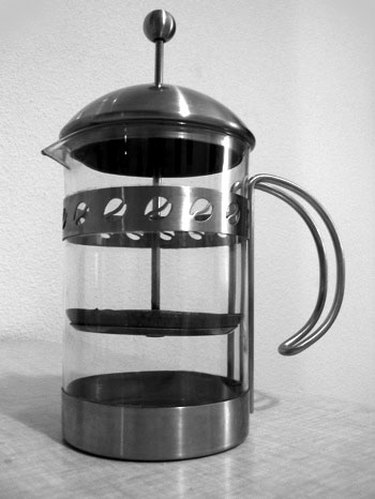
  • Coffee press

... Use a Coffee Press

Coffee press, French press, or press pot–call it what you will. It's a gadget that's easy to use and makes a delicious cup of rich coffee. Because there is no paper filter to absorb natural oils and flavors, pressed coffee has a more distinct flavor than drip coffee. And unlike drip coffee, a coffee press brews coffee with a more dense consistency.

Video of the Day

Step 1

Grind your beans if they're not already ground. While finely ground coffee beans are ideal for espresso drinks, it is much more effective to use coarsely ground beans in a French press.

Step 2

Remove the filter from the pot. Add one rounded tablespoon of ground coffee per four ounces of water to the pot.

Step 3

Boil water. Slowly pour over the coffee grounds in the pot so all the grounds are saturated. Be sure to add the right amount of water for the amount of coffee you used. You may need to stir the mixture to make sure the grounds are loose and not clumping.

Step 4

...

Place the filter and lid on the pot. For smaller presses, ones that make only one or two cups, allow the coffee to steep for two or three minutes. For larger presses, allow the coffee to steep about four minutes. With practice you'll be able to determine how long it will take to steep the coffee to your preference.

Step 5

...

Filter out the grounds. When the coffee has steeped to your liking, press the plunger down to the bottom of the pot to filter out the grounds. Use a slow, steady and straight hand. This is why you'll want the coarser grounds, fine ones will elude the filter and muck up the coffee. If the filter slips to the side it could cause coffee grounds to sneak into the brew.

Step 6

Pour and enjoy! As you're pouring your coffee, make sure to hold on to the lid to keep the grounds at the bottom of the pot in place.

Tip

If your coffee develops a bubbly foam on top it is because there is high carbon dioxide content in your beans. It may indicate that your beans are freshly roasted and haven't had the requisite few days to "cure." To avoid bitterness, don't allow coffee to steep more than 20 minutes. Coffee presses can also be used to brew loose leaf tea.


How to Get Beer Alcohol Out of Your System

Things You\’ll Need

  • Water, ginger ale or flat soda

  • Bread or rice

Group of people socializing indoors, holding drinks Friends drinking together. Image Credit: Kane Skennar/Photodisc/Getty Images

There are several factors that influence the amount of time it takes for one unit of alcohol and beer to leave any person's body. These factors include a person's age, weight, the amount of food in the person's system and the strength of the alcoholic beverages consumed. A single unit of beer is roughly equal to one half pint and generally one unit will be processed and removed from the body in one hour. There are several ways to help remove the beer faster, in order for anyone to sober up a little quicker.

Video of the Day

Step 1

Woman drinking water Consume water. Image Credit: Creatas Images/Creatas/Getty Images

Consume water, if possible. This will help flush the liquor and beer out of your system more quickly. If you are a little nauseated, skip the water and drink flat soda or ginger ale to help get liquids into your system and ease your stomach.

Step 2

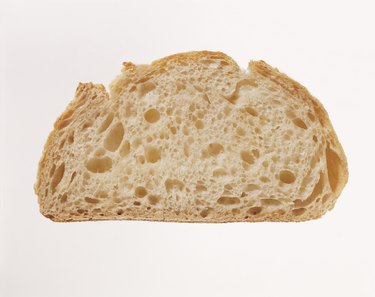
Slice of White Brad Slice of bread. Image Credit: Digital Vision./Photodisc/Getty Images

Eat foods that contain complex carbohydrates, such as breads and rice. This will help absorb the liquor from your system and it will also ease any nausea or stomach ache related to the drinking.

Step 3

Bartender pouring cocktail behind bar Consume one drink at a time. Image Credit: Digital Vision/Digital Vision/Getty Images

Avoid drinking large amounts of alcohol at once. Consuming one alcoholic unit per hour will help you remove the liquor from your system in a more uniform fashion and help you from becoming inebriated in the first place. Drinking a glass of water between each beer will also help you prevent becoming drunk too quickly.

Step 4

Woman walking on sidewalk in park Walking can help release alcohol. Image Credit: Jupiterimages/Photos.com/Getty Images
Exercise. Take a walk or do a few laps around your house. This will allow you to sweat the alcohol out of your system more quickly.

Tip

Avoid drinking liquor on an empty stomach. Eat a moderate-to-large meal before drinking to help slow the absorption of liquor, which will also help prevent a sore stomach later.

Spring Tortellini Recipe

0

Enjoy the best of spring with this tasty tortellini recipe. With seasonal veggies like asparagus and peas, it makes for a perfect warm weather meal. You'll love the combination of hearty tortellini, lemon cream sauce and crispy vegetables. Here's how to make it.

Spring tortellini recipe

Video of the Day

Things You\’ll Need

  • 12 ounces tortellini

  • 2 tablespoons butter

  • 1/2 medium yellow onion, diced

  • 1 teaspoon minced garlic

  • 1 1/2 cups asparagus, chopped into 1-inch pieces

  • 1 cup frozen or canned peas

  • 1/2 teaspoon ground black pepper

  • 1 teaspoon salt

  • 1 teaspoon dried parsley or oregano

  • 2 tablespoons all-purpose flour

  • 1 tsp 2 tablespoons fresh lemon juice

  • 1 cup broth

  • 1/4 cup heavy cream

  • 1/3 cup sundried tomatoes, chopped (optional)

  • Grated Parmesan cheese, crumbled bacon or lemon juice (for topping)

Ingredients for spring tortellini

Tip

Feel free to use any other spring veggies you have on hand. Delicious ideas include zucchini, broccoli and Brussels sprouts.

Step 1

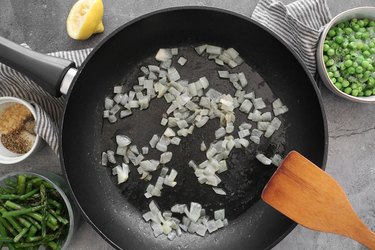
In a large pan over medium heat, melt the butter. Cook the onions until tender, about 5 to 7 minutes.

Cook onions in butter

Step 2

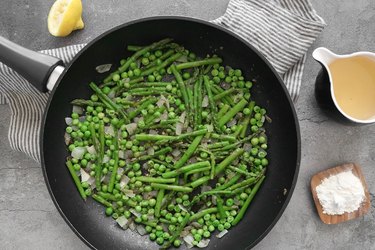
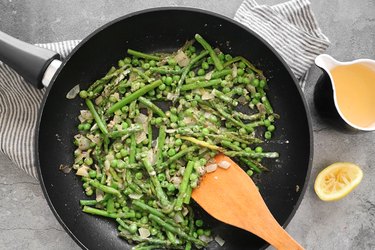
Add the asparagus, peas, garlic and spices. Cook until the asparagus is bright green and tender, about 5 to 7 minutes.

Add asparagus and peas

Step 3

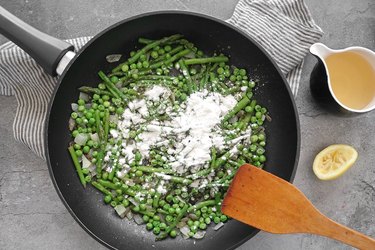
Add the all-purpose flour.

Add all-purpose flour

Mix well. Cook until the flour dissolves, about 1 minute.

Cook until flour dissolves

Step 4

Add the heavy cream, broth and lemon juice. Stir well and simmer until thick, about 5 to 7 minutes. Taste and add more salt and pepper, if needed.

Simmer cream sauce

Step 5

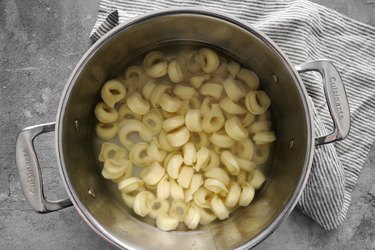
While the cream sauce is simmering, cook the tortellini according to the package's directions.

Cook the tortellini

Step 6

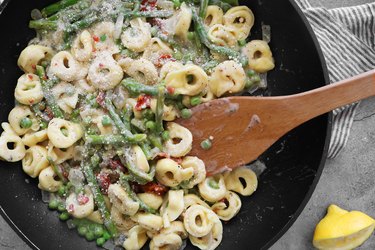
Stir in the tortellini and sundried tomatoes.

Mix in tortellini

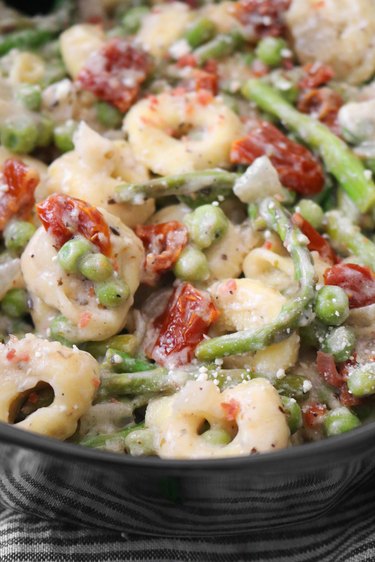
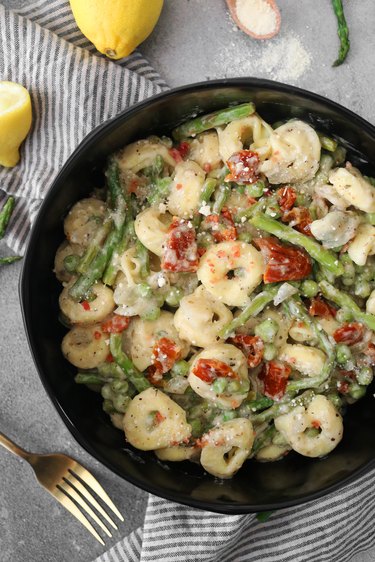
Top with Parmesan cheese or crumbled bacon. Serve warm.

Spring tortellini

You can also squeeze fresh lemon juice on top. Enjoy!

Spring tortellini

How to Make Lime Juice

Things You\’ll Need

  • Fresh, whole limes

  • A sharp knife a bowl or jar

  • A citrus juicer (optional)

  • A fine grater (optional, for making lime zest)

... Fresh limes

Lime juice is an important ingredient in many southwestern, Caribbean, and Latin America dishes. You can also combine it with water and sugar to make limeade, a puckery-sweet drink that rivals lemonade. It's easy to make your own lime juice from fresh limes, and freshly squeezed lime juice is far more flavorful than the bottled concentrate from the grocery store. Read on to learn how to make lime juice.

Video of the Day

Step 1

Select your limes. Limes are generally small—about half the size of your fist—and should have a glossy skin that is deep, bright green with a little bit of yellow. The fruit should be firm but with a little bit of give—not too squishy but not rock hard, either.

Step 2

Fresh, whole limes can be stored at room temperature and out of direct sunlight for a week or two, and even longer in a cool root cellar. They may also be stored in the refrigerator for two weeks or more, although their pungency will diminish over time. If you refrigerate your limes, allow them to come to room temperature before juicing.

Step 3

To make lime juice, first wash and dry your limes, then slice each one in half with a sharp knife.

Step 4

If you have a citrus juicer, press or squeeze the lime halves according to the directions of your juicer.

Step 5

Otherwise, simply squeeze each lime half over a bowl or jar until all the juice is extracted. If you are squeezing limes by hand, you might need to strain or scoop out any seeds or pulp that fell into the juice. Each lime will yield 1 to 2 tbsp. of juice.

Step 6

Freshly squeezed lime juice is best used immediately, but it can be stored in a tightly sealed container in the refrigerator for up to two weeks. You may also freeze lime juice in ice cube trays, then transfer the frozen cubes to a zipper-topped bag. Frozen lime juice can be kept for six months or more.

Step 7

Don't throw that rind away. You can use the spent lime peel to make lime zest. Gently rub the outside of the lime against a fine grater. Be sure to only grate off the very outside of the peel—the colored part—and not the bitter white pith. Fresh lime zest should be used immediately. You can also dry it in a food dehydrator or a very low-heat oven and store it for two to three months.

How to Make Dulce de Leche

0

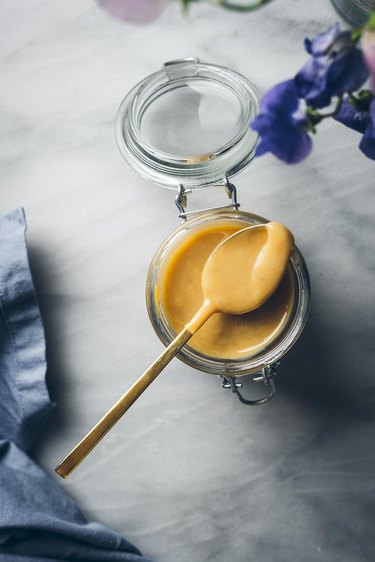
Dulce de Leche is essentially Mexican caramel. Its smooth, velvety texture and sweet, rich taste make it ideal for a variety of applications. Pour it on your waffles, mix it in with your cakes, or drizzle it over your doughnuts—there are so many options. And while there are a few different ways to make Dulce de Leche, making it in the oven has proven to be one of the simplest ways to make this decadent treat at home.

Final Final Image Credit: Kristan Raines

Video of the Day

Things You\’ll Need

  • 1, 14 oz can condensed milk

  • Aluminum foil

  • 1, 8 x 8 inch baking dish

  • 1, 9 x 13 inch baking dish

  • Boiling water

  • Whisk

  • Sealable jar

Step 1

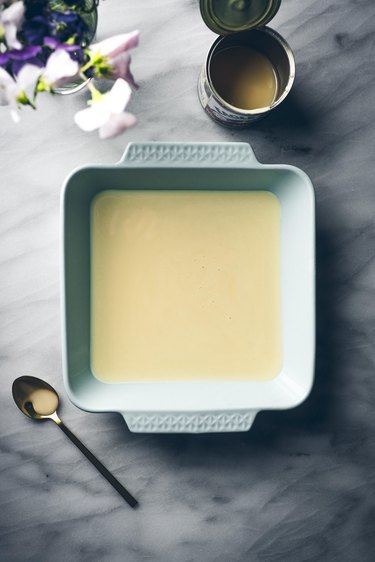
Pour the condensed milk into an 8×8 inch baking dish.

Fill with condensed milk Step 1 Image Credit: Kristan Raines

Step 2

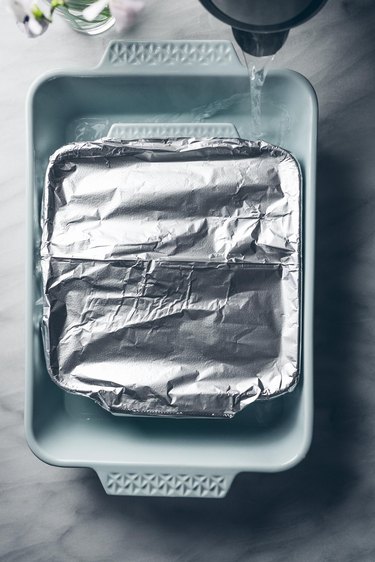
Cover the dish tightly with foil and place in a 9×13 inch baking dish. Fill the larger dish with boiling water until it reaches just over halfway up the side of the smaller dish. Carefully transfer the pan to the oven and cook at 425 degrees F for 60-75 minutes, or until the milk takes on a light caramel color.

Cover with Aluminum foil Step 2 Image Credit: Kristan Raines

Step 3

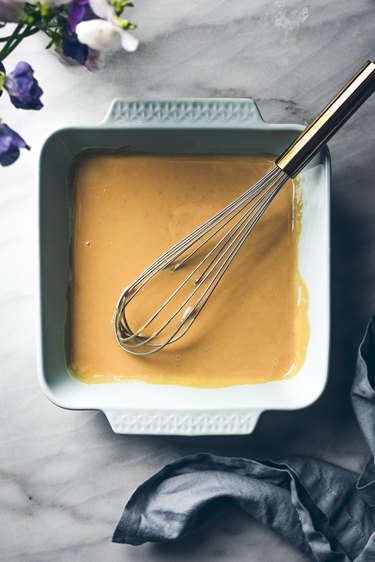
Carefully remove the small baking dish from the oven, remove the foil, and whisk the dulce de leche until smooth.

Whisk smooth Step 3 Image Credit: Kristan Raines

Step 4

While still warm, transfer the dulce de leche to a sealable container and enjoy!

Place into container Step 4 Image Credit: Kristan Raines

Tip

Once cooled to room temperature, the dulce de leche can be stored in the refrigerator for up to a week.

How to Cook a Boston Butt in a Oilless Fryer

0

Things You\’ll Need

  • Spice rub (optional)

  • Paper towels

  • Heavy-duty aluminum foil

  • Tongs

Close-up of barbecued meat Oilless fryers caramelize barbecue sauce as well as any smoker or barbecue grill. Image Credit: Hemera Technologies/AbleStock.com/Getty Images

Boston butt barbecue conjures images of tank-like barrel smokers chugging away for the better part of the day, but not if you use an oilless fryer. Oilless fryers transfer heat with infrared waves, so they operate more efficiently than charcoal grills and barbecues. If you want to add a smoke ring to that Boston butt — and why wouldn't you — a smoker-box attachment has that covered. You don't have to worry about controlling the heat like you do with a smoker, either; you just have to monitor the internal temperature of the pork.

Video of the Day

Step 1

Trim off any hanging fat from the Boston butt and season it with the spice rub of your choice about 24 hours before you want to cook it. Use a no- or low-sugar spice rub; oilless fryers generate enough heat to scorch sugar.

Step 2

Marinate the Boston butt in the spice rub overnight in the refrigerator. Remove it and place it on a tray lined with paper towels. Let the pork reach room temperature, which usually takes about 1 hour.

Step 3

Fill the smoker accessory with water-soaked wood chips if you want to add smoke during cooking. Attach the smoker box to the slot at the rear of the cooking chamber.

Step 4

Place the Boston butt in the cooking basket. Insert the supplied meat thermometer in the top of the meat. Turn the gas knob to "On" and ignite the fryer with the ignition switch.

Step 5

Cook the Boston butt until it reaches an internal temperature of 145 degrees Fahrenheit. Remove it with tongs.

Step 6

Remove the meat thermometer and wrap the Boston butt in heavy-duty aluminum foil. If using a barbecue sauce, coat the Boston butt with it first then wrap it with 2 or 3 layers of heavy-duty aluminum foil.

Step 7

Insert the meat thermometer in the Boston butt through the foil and return it to the fryer. Cook the Boston butt until the internal temperature reaches 200 F.

Step 8

Remove the cooking basket with the Boston butt in it and place it on a heat-proof surface. Let the basket and foil cool until you can handle it. Take the Boston butt out and unwrap it.

Step 9

Shred the Boston butt with two forks and serve. Return the cooking basket to the fryer.

Step 10

Cover the fryer with the lid and let it cook empty for 15 minutes to clean. Scrape the basket with a grill brush and empty the fryer of debris when it's cool enough to handle.

Tip

If it's the first you're using the fryer, coat the cooking basket and inside of the lid with cooking spray. Turn on the fryer and cook for 15 minutes to season it.

Substitutes for Korean Rice Syrup

0

Traditional asian rice cake on a wooden background. Vietnames dessert. Korean rice syrup flavors delicate dessert cakes Image Credit: AnnaPustynnikova/iStock/GettyImages

A staple in Asian pantries, Korean rice syrup flavors delicate dessert cakes and beef marinades, among other dishes. When you can't find the caramel-colored liquid sweetener, Western products can step into the breach. The sweetness and consistency of Korean rice syrups may vary, depending on how the product is processed. If you're trying to approximate a favorite Korean rice syrup brand, it may take some tinkering with a substitute sweetener to get a familiar recipe just right.

Video of the Day

Corny Confections

In Korea, rice syrup and corn syrup are used somewhat interchangeably, with the color the deciding factor. This is similar to the manner in which Western recipes call for either light or dark corn syrup, depending on the desired color of the final product. Use about the same amount of light or dark corn syrup, or slightly less if it is too sweet, when you need to substitute Korean rice syrup. If color is important, keep in mind that dark corn syrup is most similar in appearance to Korean rice syrup.

Brown Rice Syrup Substitute

Brown rice syrup is more likely to be found on health food store shelves than Korean rice syrup, because it is guaranteed to be made with the less-processed brown rice. In terms of basic cooking, both rice syrups typically contain about the same amount of sugars and calories. To use brown rice syrup as a replacement, substitute it directly on a one-to-one basis for the Korean rice syrup in a recipe. If your Korean rice syrup brand is much sweeter, use more of the brown rice syrup or add a bit of white sugar.

Sticky Substitutes

Although thicker than Korean rice syrup, sweeteners such as maple syrup, honey, barley syrup and molasses can be used in place of the Asian sweetener. They may need a bit of alteration in terms of amounts. Use about three-fourths the amount of maple syrup, honey or barley malt syrup as you would Korean rice syrup, and mix in some plain water. You might also choose to use another clear liquid already called for in the recipe, such as apple juice. If cooking with the even thicker molasses, cut the amount in half and whirl in enough water or another clear liquid to make its consistency more akin to rice syrup.

Solid Sweetener

White granulated sugar is sweeter than Korean rice syrup, while also being a dry sweetener. To make this readily available ingredient more like Korean rice syrup, use about four parts white sugar to one part liquid to approximate four parts of the rice syrup. Choose a liquid already incorporated in the recipe, when possible. For example, if a sauce uses apple juice, blend additional apple juice into the white sugar. Otherwise, blend water into the white sugar.

How to Can Green Beans Without a Pressure Cooker

0

Some Green Beans on wood Canning is an excellent way to preserve fresh green beans. Image Credit: HandmadePictures/iStock/Getty Images

Although many people hesitate to use pressure cookers, they are essential for safely processing fresh green beans. With a pH level of 4.6, green beans are considered a low-acid food, and all low-acid foods must be processed at higher temperatures than can be achieved by water bath methods. A pressure cooker is required.

Video of the Day

Canning is an excellent way to preserve fresh fruits and vegetables, but improper processing can cause sickness and even death. Home-canned vegetables are a leading cause of food-borne botulism, according to the National Institutes of Health.

If you don't have or don't want to use a pressure cooker, you can preserve green beans in other ways.

Step 1

Pickle the beans before canning them. A link to a recipe for pickled beans, which can be canned without a pressure cooker, is available in Resources.

Step 2

Freeze the green beans rather than canning them. A link to directions for freezing green beans is available in Resources.

Step 3

Dry the green beans. A link to directions for this old-fashioned technique is available in Resources.

How to Eat Persimmons

persimmons Persimmons for sale at a market. Image Credit: Quanthem/iStock/Getty Images

The national fruit of Japan — the persimmon — doesn't come with eating instructions, but it should. For the uninitiated, eating a persimmon can be a positive or an altogether unpleasant experience — depending on the type you choose. Persimmons, which resemble tomatoes with an overgrown flower-like leafy top, range in hue from golden-yellow to fiery orange. Most are produced in China, Korea and Japan, but growers are also in California, southern Europe and Britain. You'll also find them growing wild through the eastern United States, including the southern Gulf states and in the fruit-growing regions of the Great Lakes. Two types of persimmon are available: astringent hachiya or non-astringent fuyu. The type you choose determines the method for eating.

Video of the Day

Astringent Persimmons

Astringent persimmons are the type that grow wild in the United States. The most commonly found variety, the hachiyu persimmon, is almost inedible until it ripens; it has a tartness and astringency that dries your throat, with a flavor like an unripe banana. You can tell you have a hachiyu persimmon if its body is more elongated, like a plum tomato, and it boasts a deep orange color. Ripe hachiyus are incredibly soft and heavy. A week may pass before a hard hachiyu softens enough to eat. Ripen them faster by placing them in a brown paper bag with a banana or an apple.

Non-Astringent Persimmons

Fuyu persimmons appear more squat than hachiyu and tend to have a lighter orange or deep yellow color. These are popular in Japan and sold as an exotic fruit in American markets. Darker fruits usually have a sweeter taste. Fuyu persimmons, which are OK to eat when they are slightly underripe, have a crisp texture with a flavor reminiscent of an apricot. Fuyus should feel heavy for their size.

Hard to Handle

Peel a fully ripe hachiyu persimmon to reveal a jelly-like middle. They are too soft to slice, so you can cut the fruit in half — after removing the calyx, or stem — and scoop out the flesh. Use hachiyu puree in baked goods, jams, puddings or dessert sauces. You'll sometimes find dried hachiyu persimmons, too.

Out of Hand

Fuyu persimmons are more user-friendly when you try to eat them. Remove the calyx from these fruits as well, but then munch on them just like an apple — the skin is edible. Fuyu persimmons work well chopped into salads or made into a salsa. Chopped fuyu persimmons can also be incorporated into quick breads and muffins.

This Recipe for Homemade Sticky Lemon Rolls Is Simply Mouthwatering

0

I used to firmly believe that the pinnacle of celebratory breakfast was the homemade cinnamon roll. That was, however, before I had the lemon version. It's beyond delightful, and so much more fun than cinnamon. Move over cinnamon rolls, I'm replacing you with lemon sticky rolls!

Homemade Sticky Lemon Rolls Recipe

Make the Dough

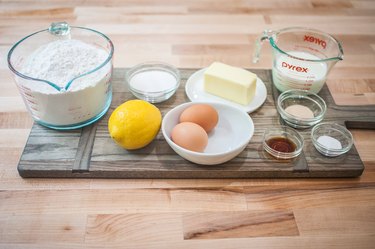
Things You\’ll Need

  • 4 ½ cups all-purpose flour

  • 2 ½ teaspoons (1 envelope) rapid rise yeast

  • ¼ cup granulated sugar

  • 2 large eggs

  • 1 teaspoon lemon zest

  • ¾ cup milk, warmed to 120°F

  • ½ cup softened butter

  • 2 teaspoons vanilla extract

  • 1 teaspoon salt

Homemade Sticky Lemon Rolls Recipe

Tip

Yeast is a beast! Always defer to the liquid temperature listed on the package of yeast, regardless of what the recipe says. Your yeast package says 105°F? Heat the milk to that temperature!

Step 1: Start the Dough

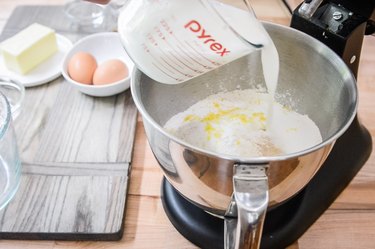
Add the flour, yeast, sugar, lemon zest, eggs, and warm milk to a stand mixer. Mix until most of the dough has been moistened.

Homemade Sticky Lemon Rolls Recipe

Step 2: Add the Remaining Ingredients

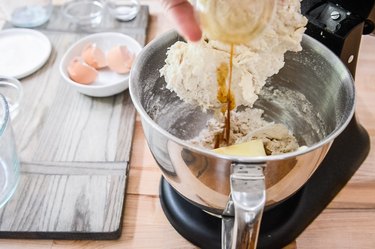
Add the butter, vanilla and salt. Continue to beat until the dough is no longer sticky and gathers around the hook, about 8 minutes.

Homemade Sticky Lemon Rolls Recipe

Step 3: Rise

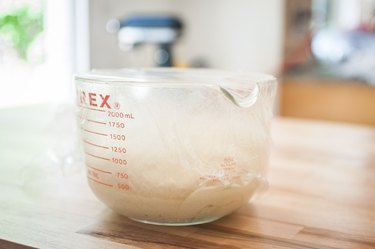
Add dough to a large, lightly oiled bowl. Cover and allow to rise until doubled in size, about 1 hour.

Homemade Sticky Lemon Rolls Recipe

Step 4: Roll

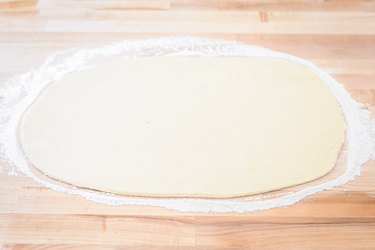
Add dough onto a lightly floured surface. Roll into a large rectangle about 9×13 inches in size.

Homemade Sticky Lemon Rolls Recipe

Make the Filling

Things You\’ll Need

  • 1 cup granulated sugar

  • ¼ cup light brown sugar

  • ½ cup unsalted butter, softened

  • 1 teaspoon lemon zest

  • 2 teaspoons lemon juice

  • 1 teaspoon salt

Step 1: Stir the Filling

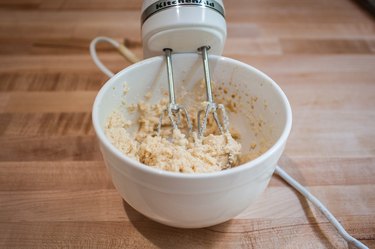
Add all the ingredients to a bowl, stir until well combined.

Homemade Sticky Lemon Rolls Recipe

Step 2: Spread the Filling

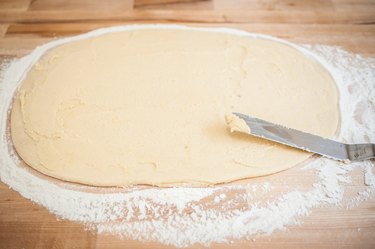
Spread the filling evenly across the dough.

Homemade Sticky Lemon Rolls Recipe

Step 3: Roll and Cut

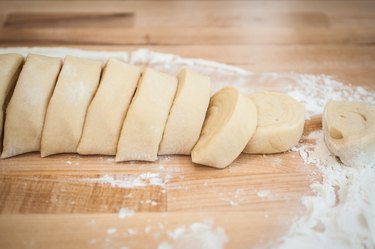
Starting with the long end, roll the dough tightly into a long log. Cut into 12 rolls about 1 ½ inches wide.

Homemade Sticky Lemon Rolls Recipe

Step 4: Add to a Pan

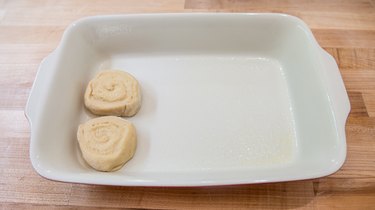
Add the rolls tightly into a baking dish, cut-side up.

Homemade Sticky Lemon Rolls Recipe

Tip

Want to make these in advance? Stop here! Wrap the pan tightly with plastic wrap and refrigerate for up to 24 hours. The second rise will take place in the fridge. Just take the pan out of the fridge about a hour before you want to bake to help them return to room temperature.

Step 5: Rise

Allow to rise until doubled in size, about 30 minutes.

Homemade Sticky Lemon Rolls Recipe

Step 6: Bake

Bake at 350°F until golden brown, about 35 minutes.

Homemade Sticky Lemon Rolls Recipe

Make the Frosting

Things You\’ll Need

  • 4 ounces cream cheese, softened

  • ½ cup butter, softened

  • 2 cups powdered sugar

  • 1 teaspoon vanilla extract

  • 1 tablespoon lemon juice

  • 1 teaspoon lemon zest

  • ½ teaspoon salt

Step 1: Beat the Frosting

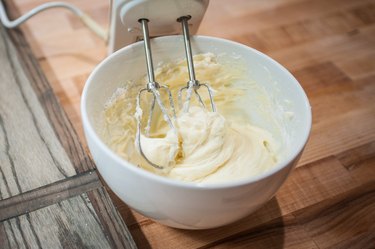
Beat together the butter and cream cheese until well combined. Add in the remaining ingredients, then beat until light and creamy.

Homemade Sticky Lemon Rolls Recipe

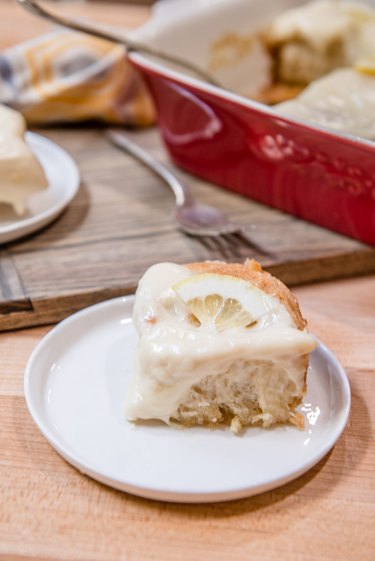
Step 2: Frost and Serve!

Homemade Sticky Lemon Rolls Recipe Homemade Sticky Lemon Rolls Recipe Homemade Sticky Lemon Rolls Recipe