
Home Blog Page 94

Apple Pie Dessert Pizza Recipe

0

If you're a fan of apple pie, you're going to love this dessert pizza. It features a sugar cookie crust topped with creamy frosting, chopped nuts and apple pie filling — lots of it! The pizza also calls for caramel sauce, which adds a rich and buttery flavor to the dish. Enjoy it during the fall and winter holidays or whenever you're craving a sweet treat.
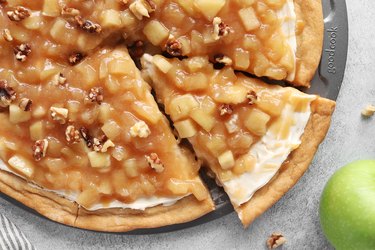
Apple pie dessert pizza

Video of the Day

Things You\’ll Need

  • 1 batch sugar cookie dough

  • 2 cups(16 ounces)

    cream cheese frosting

  • 2 1/4 cups apple pie filling

  • 1/3 cup chopped walnuts or pecans

  • 1/2 cup caramel sauce, plus more as needed
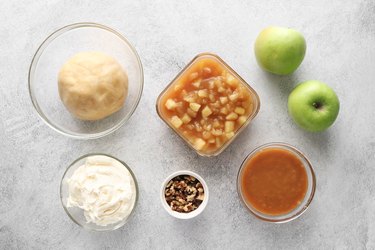
Ingredients for apple pie dessert pizza

Tip

Feel free to use homemade or store-bought cookie dough.

Step 1

Preheat the oven according to the sugar cookie recipe's directions. Meanwhile, press the dough onto a nonstick pizza pan, spreading it into an even layer.
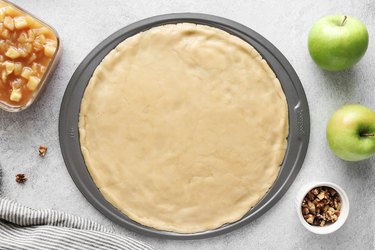
Add cookie dough to a nonstick pizza pan

Tip

To make this step easier, break up the dough into large chunks and then flatten each piece with a floured rolling pin. Add the pieces to the pizza pan and then press them together with your fingers.

Step 2

Bake until the edges are golden brown and the center starts turning gold. The exact timing will depend on your recipe, so be sure to keep a close watch on the cookie.

Let it cool for about 1 hour.
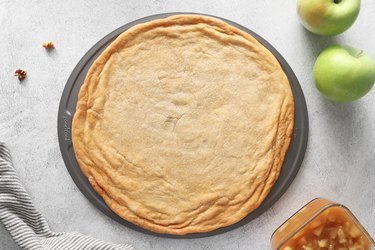
Bake sugar cookie pizza crust

Step 3

In a bowl, combine the cream cheese frosting and 1/4 cup caramel sauce. Taste it and add more caramel sauce if you'd like.
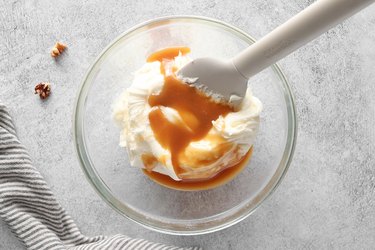
Combine caramel sauce and cream cheese frosting

Step 4

Spread the frosting onto the cooled cookie.
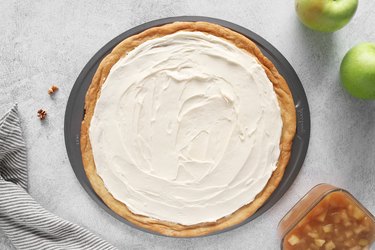
Spread cream cheese frosting on cookie

Step 5

Top with apple pie filling and chopped walnuts.
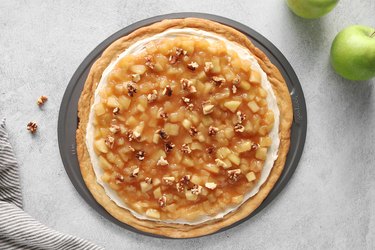
Add apple pie filling and chopped walnuts

Step 6

Drizzle caramel sauce on top and then slice with a pizza cutter. Enjoy with vanilla ice cream or as is!
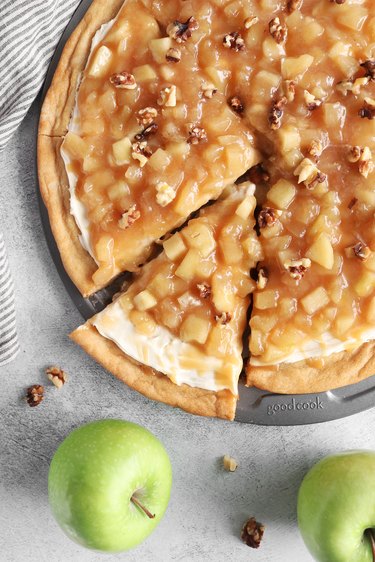
Finished apple pie dessert pizza

Can a Bag of Pinto Beans Have Worms in the Bag?

0

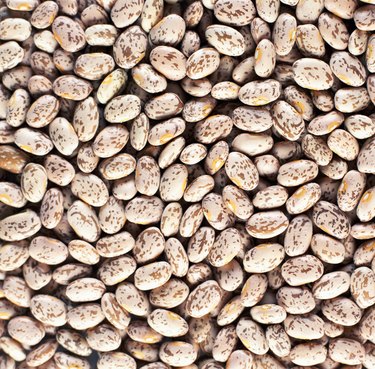
Pinto beans (full frame) Pintos and other dried beans are susceptible to insect pests. Image Credit: Ryan McVay/Photodisc/Getty Images

Dried beans are one of the most durable of all pantry staples, a reliable source of protein and carbohydrates that requires only a cool, dark, well-ventilated storage place. When properly stored, pintos and other dried beans can remain edible for years. But they're not indestructible. Water can make them susceptible to mold and spoilage, and otherwise-perfect beans can be damaged by worms.

Video of the Day

Guess Who Came to Dinner

Almost invariably, the pest that's taken up residence in your pinto beans is a variety of bean weevil. These are a small beetle, rather than a true weevil, though that distinction holds little importance once you've found the larvae in your pantry. The beetles make tiny, perfect holes in your beans; hollowing them out as they grow, pupate and produce new beetles. Left to their own devices, they'll quickly spread through the entire bag, reproducing briskly for as long as the beans can feed them. Throw out any infested bags, and any other beans that shared the same storage area should be carefully segregated and monitored for unwelcome guests.

Baby, It\’s Cold Inside

One way to ensure your pinto beans are safe from the bean beetle's domestic instincts is to freeze the beans. If you grow your own, you can bag them and freeze them as soon as they're dried. Four to seven days in a chest freezer is usually adequate to kill any larvae, eggs and adults. Once you've done that, you can open the beans and let them return to room temperature. If you live in a humid climate, they might display some condensation, but you can return them to their original arid condition in a food dehydrator or an oven at its lowest setting. Repackage them in bags, jars or airtight containers for storage.

Take Their Breath Away

The beetles and their larvae require oxygen for survival, just as humans do. A second way to protect your pintos from invasion is to deprive them of that necessity. Many food storage companies offer oxygen absorption strips, which bind up surprisingly large quantities of that gas and make it unavailable to insect pests. To use one, place the pintos in an airtight container and add an oxygen absorption strip or pellet. Seal the jar until it's needed, and any beetles or larvae will suffocate in the interim. Alternatively, place the beans in a container and add a piece of dry ice. The carbon dioxide will sink through the beans, suffocating the pests. When it disperses, package the beans for storage.

Toasty Warm

Although bean weevils appreciate a nice warm home, they don't tolerate higher temperatures well. If your oven is capable of maintaining a steady 130 degrees Fahrenheit, you can spread your pintos on a baking sheet and keep them at that temperature for 30 minutes or longer. This kills the beetles, larvae and eggs quite effectively. If you've used a food dehydrator to dry your beans, you shouldn't need to do this. Dehydrators typically operate at 140 F, which kills the weevils while the beans dry.

Cleaning Up

As insect pests go, bean weevils are relatively innocuous because they don't eat other foods. Once you've discarded the infested pintos, remove all other cans or packages from the infected shelf and vacuum carefully, especially in the corners. Wipe down the shelf with a disinfectant, and clean the foods you've removed before you put them back.

How to Make a Funfetti Cookie Cake

0

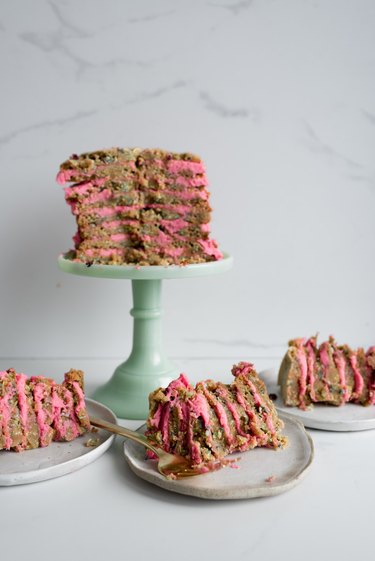
A funfetti cookie cake is the most decadent treat for a sweet celebration! This cake is made entirely of funfetti studded cookies that sandwich layers of a delicious pink buttercream. It's also topped with edible rose petals, too. It's the perfect birthday cake! Learn how to make this impressive funfetti cookie cake by following the easy recipe below.

This sweet cake is made entirely of cookies!

Video of the Day

Things You\’ll Need

  • 7 ounces (200 grams) unsalted butter, melted

  • 7 ounces (200 grams) light brown sugar

  • 3 1/2 ounces (100 grams) granulated sugar

  • 1 large egg

  • 1 teaspoon vanilla bean extract

  • 9 ounces (250 grams) all-purpose flour

  • 1 1/2 teaspoons baking soda

  • 1/2 teaspoon salt

  • 1/2 cup funfetti sprinkles

  • 2 sticks (215 grams) unsalted butter, at room temperature

  • 5.7 ounces (160 grams) powdered sugar

  • 1 tablespoon heavy cream

  • 1 teaspoon vanilla bean extract

  • 2-3 drops of pink food coloring, optional

  • Edible rose petals, optional

Step 1: Bake the cookies

Pre-heat the oven to 370 degrees Fahrenheit (180 degreesCelsius). Grease and line two baking sheets. Set them aside.

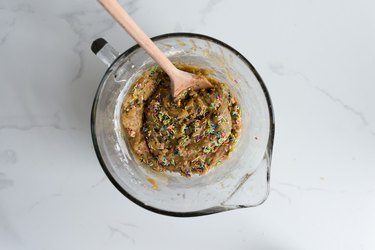
In a large sized mixing bowl, combine the melted butter, brown sugar and granulated sugar. Whisk until combined. Add in the egg and vanilla bean extract. Whisk until smooth and glossy. Add in the all-purpose flour, baking soda and salt. Mix with a wooden spoon until the dough is just beginning to come together. Add in the funfetti sprinkles. Stir until evenly combined.

Mix until the funfetti is evenly distributed throughout the cookie dough.

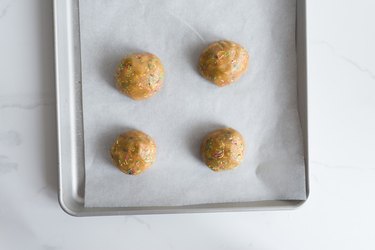
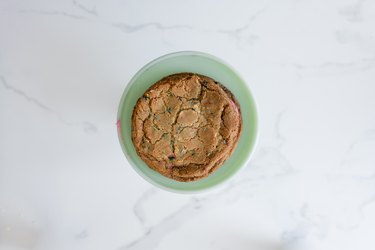
Using a large cookie scoop or two tablespoons as a measure, roll out the mixture to form 8 dough balls. Divide them evenly between the baking trays, making sure to leave enough room for spreading whilst baking.

Place the evenly sized cookie dough balls onto the baking trays.

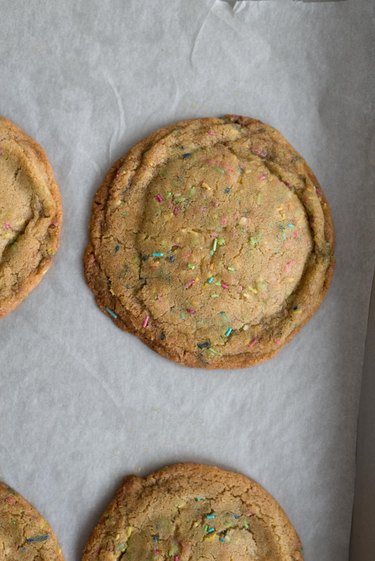
Bake for 10 to 12 minutes, or until golden and firm around the edges but still soft in the middle. Set the cookies aside to cool completely whilst you prepare the buttercream.

Bake until the cookies are golden brown and firm around the edges but still soft in the center.

Step 2: Make the buttercream

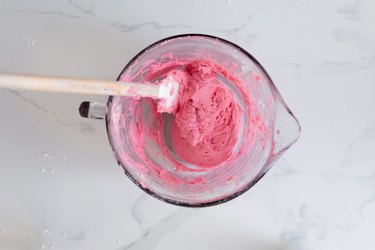
Place the soft butter, powdered sugar and heavy cream in a medium sized mixing bowl. Using electric beaters, beat until the mixture is very fluffy and light in color (about 3 minutes). Add in the vanilla bean extract and pink food coloring, if desired. Beat, for another 2 minutes, or until evenly combined and smooth. Set the buttercream aside for assembly.

Mix the buttercream until very smooth.

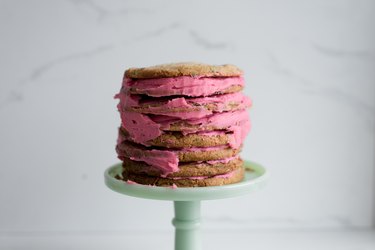
Place the first cookie on a cake stand or serving plate. Spread about 1 generous tablespoon of the buttercream over the top. Top with another cookie and use your fingers to gently press down to sandwich. Repeat this layering process until all of the cookies and the buttercream have been used. You will have a cookie cake that is 8 layers high.

Place the first cookie on a cake stand or serving plate. Continue to repeat the layering the process to form a cookie cake that\'s 8 layers high.

Set in the refrigerator to chill for 15 minutes to harden the buttercream and soften the cookies so that the cake is easier to slice.

Step 4: Slice and serve

When you are ready to serve the cake, remove it from the refrigerator and let it sit on the kitchen counter for 5-10 minutes, to just return back to room temperature before slicing.

Slice and serve the Funfetti Cookie Cake!

Serve and enjoy! The cookie cake will keep for up to 4 days in the refrigerator. You can also seal it in an airtight container and store it in the freezer for up to 2 months. Let the cake return to room temperature before serving.

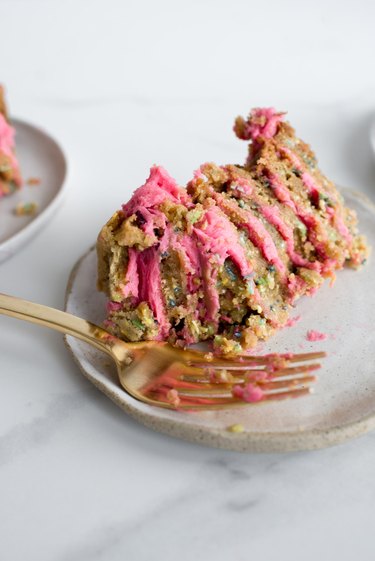
Slices of this Funfetti Cookie Cake reveals the most delicious interior.

What Flavors Are Swedish Fish?

0

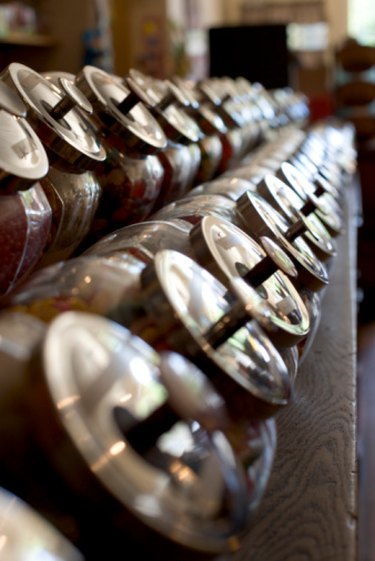
... Swedish Fish are often grouped with other gummy and chewy candy at candy stores.

Produced by the Swedish candy company Malaco, Swedish Fish were first imported into the United States in the late 1960s. The chewy, gummy candies are in the shape of a fish with the word "Swedish" embossed on the back of each candy. A fat-free candy, Swedish Fish are available in larger packages in places such as movie theaters, as well as specialty candy shops where you can purchase them by the oz. along with other loose pieces of candy.

Video of the Day

Cherry

The deep, bright red hue of Swedish Fish is the original color that made this candy so popular in the late 1960s. The actual flavor of the red candy is cherry, though some people refer to it as strawberry because of the coloring. The taste of the red fish, along with the other fish, is actually quite mild which is why there is some debate over the actual flavor profile of some of the fish.

Pineapple, Orange and Lime

Other flavors in the line that are often included with the cherry fish in a variety pack are pineapple, orange and lime. These fish are yellow, orange and green respectively. The pineapple has a very mild flavor. The orange has a distinctly sweet orange taste while the lime is mild and tangy all at the same time.

Grape

One interesting fact for Swedish Fish enthusiasts is that grape Swedish became part of the line along the way. This purple fish had an intense grape flavor. However, when the Cadbury Adams company purchased Leaf Malaco in 2006, it is rumored that they were the ones to discontinue the grape flavor. It sold on store shelves through 2008. Having become a collectors' item, there are people who will pay top dollar to get their hands on a box or even a package of the discontinued fish.

Lemon

A Swedish Fish that is often confused with the pineapple fish is the lemon fish. Slightly lighter in hue, the lemon fish has a tangy taste that balances nicely when eaten with the other fish in the line. The tang makes it popular amongst people who enjoy sweet and sour flavor candy.

Salmaik

This black, licorice fish is quite a departure from the other fish in the line. With heavy amounts of ammonium chloride, starch and licorice root extract, it is not as sweet as the other fish. In fact, some have dubbed it the "salted herring," mistaking the starchy taste for a salty taste. Also, rather than having "Swedish" embossed on the side, this fish has "Malaco" in its place.

Learn How to Cook Lobster Tails in the Oven (It\’s Easy!)

0

Lobster tails are one of my favorite meals to make at home on special occasions. While lobster tails can be made a variety of ways, such as steamed, cooking them in the oven is quick, easy and absolutely delicious.

How to cook lobster tails in the oven.

Video of the Day

Tip

If you're cooking with lobster tails that have been previously frozen, do not refreeze them — it will make the meat tough and gritty. If you're using frozen lobster tails, thaw them completely and cook them the day they are thawed. And of course, you can always use fresh lobster tails!

Things You\’ll Need

  • 6 lobster tails (use more or less to suit your needs)

  • 1 cup melted butter

  • Salt and pepper

  • 2 lemons, cut into wedges

Step 1

If using frozen lobster tails, defrost the lobster tails overnight in the refrigerator. To defrost the lobster tails, place them in the refrigerator for 8 to 10 hours; alternatively you can thaw them by placing them in a bowl of ice cold water until completely thawed.

Step 2

Once the lobster tails are defrosted (or if you're starting with fresh lobster tails), insert kitchen shears between the meat and the shell, and carefully cut the shell down the center of the back. Be sure to leave the tail intact. Loosen the meat from the shell and carefully lift the tail through the slit to rest on the top of the shell.

Cut the shell and loosen the meat.

Step 3

Preheat oven to 350 degrees (F). Place prepared lobster tails on a baking sheet. Brush each lobster tail with the melted butter, sprinkle with salt and pepper, and bake for 15 minutes.The internal temperature should be between 140 to 145 degrees (F). The cooked lobsters should be bright red in color and the meat should be firm.

Bake the lobsters for 15 minutes.

Serve immediately with melted butter and lemon wedges.

Serve warm with butter and lemon.

You Might Also Like…

These Side Dishes Are What You Need to Serve with Lobster Tails

Don't just stop with the lemon and butter. Serve your lobster tails with one (or more!) of these delicious side dishes.

Side dishes to serve with lobster tail.

How to Cook a Steak in a Cast Iron Skillet

For when you want to make surf n' turf…

Steak cooked in a cast iron skillet

How to Cook Crab Legs Perfectly

Make it a seafood night and cook up some crab legs with your lobster.

Recipe for crab legs cooked in the oven

Homemade Pupusas Recipe

0

Salvadoran papusas are made with masa corn flour and turn out crispy on the outside and soft on the inside — plus, they are absolutely delicious! You can fill papusas with your choice of cheese, refried or whole beans, shredded chicken, pork or beef. This easy, step-by-step tutorial brings inspiration to prepare the classic dish at home to share with family and friends.

Homemade Pupusas Recipe Homemade Pupusas Recipe Image Credit: Julia Mueller

Video of the Day

Things You\’ll Need

  • 2 cups instant corn masa flour

  • 1/2 tsp sea salt

  • 1/2 tsp ground cumin

  • 2 1/2 cups warm water

  • 2 cups grated cheddar cheese

  • 3 to 4 tablespoons high temperature cooking oil (such as canola oil)

Make the Papusa Dough

Step 1

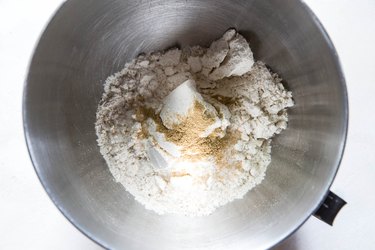
Add the dry ingredients to a stand mixer and mix until combined.

corn masa, salt and cumin in a mixing bowl. Add dry ingredients to a mixer or mixing bowl Image Credit: Julia Mueller
Step 2

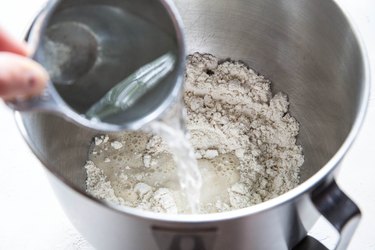
Add the hot water and use the paddle attachment to beat the mixture until a thick dough forms.

Water pouring into mixer Add the water and mix to form dough. Image Credit: Julia Mueller

Step 3

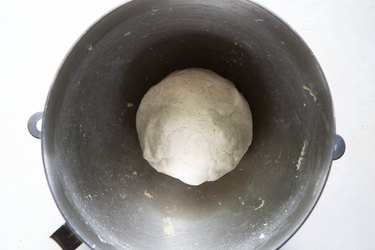
Use your hands to form the dough into a large ball and place back in the mixer bowl. Cover with a damp towel and allow dough to sit 15 to 20 minutes.

papusa dough in mixing bowl Form dough into a ball. Image Credit: Julia Mueller

Form the Papusas

Step 1

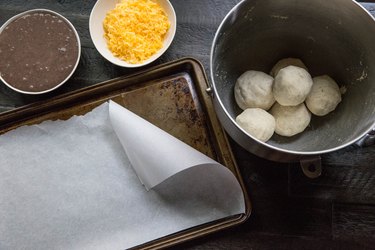
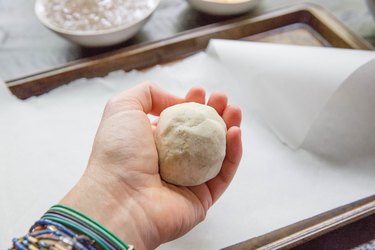
Divide the dough into 6 to 8 portions (depending on the size of papusa you'd like). Roll each portion into a ball.

dough balls Roll the papusa dough into 6 balls. Image Credit: Julia Mueller

Step 2

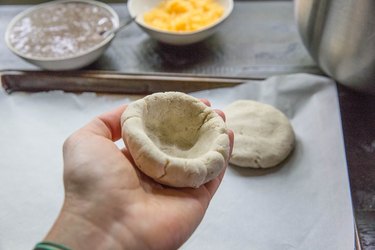
Press the dough to form a well. It should look like a small bowl with thick sides.

papusa dough with a well Form papusa dough into a well. Image Credit: Julia Mueller

Step 3

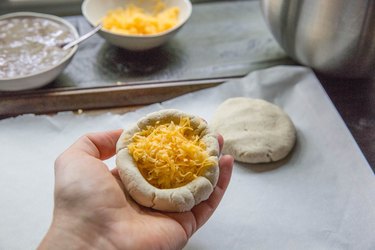
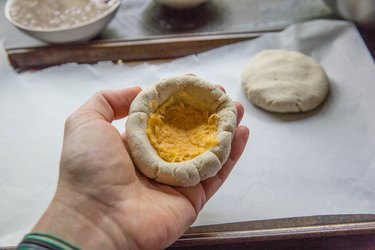
Place 2 to 3 tablespoons grated cheese into the well, then press the cheese down to make it easier to fold the dough over the top.

papusa with cheese in the center Add the cheese Image Credit: Julia Mueller papusa dough with cheese pressed in Press the cheese into the well. Image Credit: Julia Mueller

Step 4

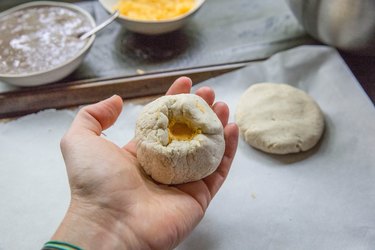
Using both hands, fold the corners of the papusa dough over the cheese filling. Keep pressing together until you're back to a ball of dough and the cheese filling is entirely enclosed.

Folding papusa dough over cheese filling Close the dough over the cheese Image Credit: Julia Mueller Ball of cheese-filled papusa dough Keep folding dough over the filling until you have a ball. Image Credit: Julia Mueller
Step 5

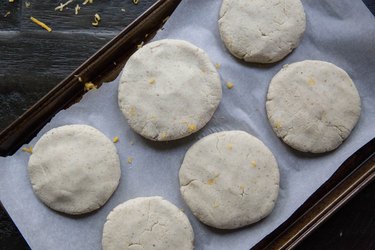
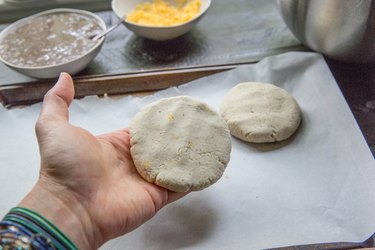
Press the dough into a disc, about 4 1/2 to 5 inches wide.

Papusa ready to cook Press dough into a disc. Image Credit: Julia Mueller

Repeat for remaining dough.

raw papusas on a baking sheet Repeat for all of the papusa dough. Image Credit: Julia Mueller

Step 6

Heat 2 to 4 tablespoons of high-temperature cooking oil (such as canola oil, avocado oil, or algae oil) in a large cast iron skillet over medium heat.

Once the skillet is completely hot, carefully place two to three papusas on the hot surface. Cook 2 to 3 minutes, carefully flip, then cook another 2 to 3 minutes until papusas are cooked through and crispy.

Papusas cooking in a skillet Fry the papusas in oil Image Credit: Julia Mueller

Serve papusas with choice of salsa, sauce, and/or bean dip!

holding a cheesy papusa Crispy cheese papusa Image Credit: Julia Mueller Cheese papusas on a plate Serve papusas with salsa Image Credit: Julia Mueller
Tip

Instead of grated cheddar cheese, you can use crumbled queso fresco/cotija cheese, or even mozzarella cheese.

Add 2 Tbsp refried black beans to the center of the papusas for a bean and cheese version.

Use shredded chicken, pork, or beef for a meat lover's version.

One Pot Taco Mac & Cheese Recipe

0

My husband was working from home as I made this. He kept wandering into the kitchen to figure out what smelled so good, and to see if he could have a bowl. After I was done, I brought him a big serving topped with all the garnishes, and it took him a little more than a minute to clean the bowl. His assessment is that this is the bowl of warm comfort food that we all need right now, and I certainly agree!

One Pot Taco Mac & Cheese Recipe

Video of the Day

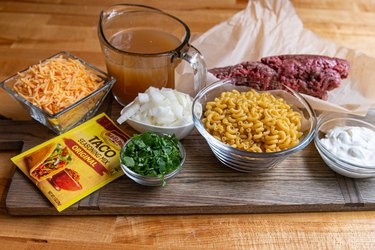
Things You\’ll Need

  • 1 tablespoon olive oil

  • 1 cup diced white onions

  • 1 pound lean ground beef

  • 1 packet taco seasoning

  • 1/2 pound (about 2 ½ cups) elbow macaroni

  • 1 cup water

  • 2 cups chicken broth

  • 2 cups grated cheddar cheese

  • ½ cup sour cream

  • ½ chopped tomatoes

  • ¼ chopped cilantro

One Pot Taco Mac & Cheese Recipe

Step 1: Brown the Onions

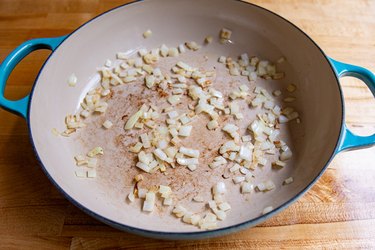
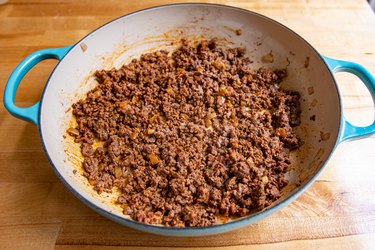
Add the olive oil and onions to a large pot over medium-high heat. Cook until the onions have started to brown.

One Pot Taco Mac & Cheese Recipe

Step 2: Cook the Beef

Add the beef, stirring and breaking it up until it's browned. Then stir in the seasoning packet.

One Pot Taco Mac & Cheese Recipe

Step 3: Cook the Mac

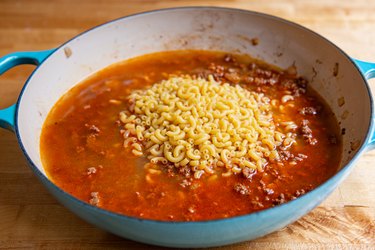
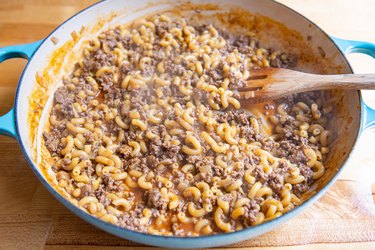
Add the macaroni, broth and water. Cook until the macaroni is cooked and the liquid is mostly gone.

One Pot Taco Mac & Cheese Recipe One Pot Taco Mac & Cheese Recipe

Step 4: Stir in the Cheese

Add the cheese and stir until the cheese has melted and combined.

One Pot Taco Mac & Cheese Recipe

Step 5: Plate and Garnish

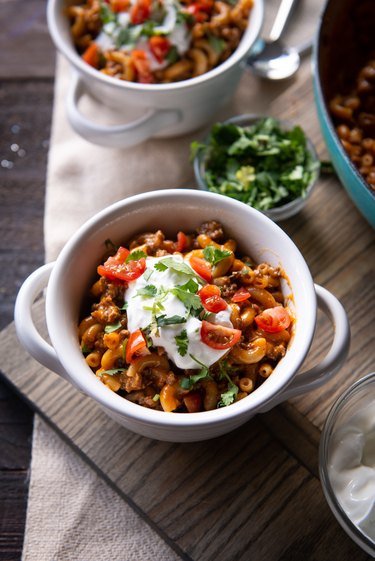
Spoon the Taco Mac into bowls, then top with sour cream, cilantro, and tomatoes.

One Pot Taco Mac & Cheese Recipe

What if Ganache Is Too Thick?

0

Chocolate ganache cake with raspberries Poured ganache makes an elegant glaze for cakes. Image Credit: Jupiterimages/Stockbyte/Getty Images

Although devotees of dark chocolate might disagree, most sweet-lovers find the richness of dairy products does good things for the flavor and texture of chocolate. One outstanding example of that beautiful marriage is ganache, a combination of cream and high-quality chocolate that's used in the pastry kitchen as a glaze, cake filling or even as centers for truffles. Its thickness varies with the ratio of chocolate to cream, and can easily be thinned if it's too thick.

Video of the Day

Smooth and Rich

Ganache is made by combining good-quality chocolate in varying percentages with boiling cream. A utilitarian, general-purpose ganache usually consists of 2 parts chocolate melted into 1 part cream, by weight. At this percentage, ganache can be poured over a cake as a glaze, cooled slightly and then whipped for icing or filling, or chilled and used as the filling in truffles. Equal parts chocolate and cream make a softer ganache, sometimes used as a filling in cakes, while 3 parts chocolate to 1 part of cream makes a thin, shiny glaze.

Check Your Temperature

When it's to be used as a glaze or filling, ganache is typically used at a temperature between 85 and 86 degrees Fahrenheit at the low end, and 90 to 91 F at the high end. If your ganache seems thicker than it should be, temperature is usually the first thing to check. Test its temperature with an instant-read thermometer inserted into the middle of the bowl, taking care that it doesn't touch the bowl itself. If your temperature is at or below 85 F, warm the ganache gently over a pan of hot — not boiling — water for a few seconds at a time, stirring frequently, until it thins to the correct temperature.

Thin It Physically

If temperature proves not to be the problem, your next option is to thin the ganache physically. The obvious ingredient to add is some extra cream, pre-heated to the same temperature as the ganache. If your ganache is just slightly thicker than you'd like, stir in cream, 1/2 tablespoon at a time, until it reaches the right consistency. If you're starting with a 3-to-1 ganache and want to make it a 2-to-1 ganache, weigh the correct amount of cream ahead of time and then heat it. You can also thin the ganache with small quantities of corn syrup or softened butter, which add a gentle sheen; or rum or liqueur, which add flavor.

Brand Matters

If you've made your ganache from a well-proven recipe and it's unexpectedly thick, sometimes the culprit is the chocolate you've used. Even among brands of comparable quality and cocoa content, melting characteristics can vary widely. For example Swiss-made Lindt dark chocolate melts to a thin and liquid consistency, while Belgian-made Callebaut is thicker and more viscous. Professional pastry chefs usually choose a favorite and stick with it, so they can count on a predictable result. At home, you don't need to be quite as exacting, but knowing the characteristics of your favorite brands can save you time and frustration.

Healthy Eating: How to Build a Buddha Bowl

0

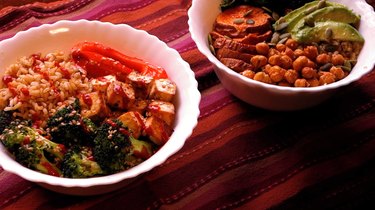
Buddha bowls (a.k.a. hippie bowls) — initially exclusive among the vegan and vegetarian community — have now gone mainstream because of their power to both nourish and satisfy, boosting health and aiding weight loss efforts. Plus, they're delicious. Though there are some variations on the formula (some allowing for non-vegan ingredients), many agree that each bowl should be "built" according to a winning superfood equation: whole grain + a nutrient rich green/veggies + lean protein + healthy fats = happiness in a bowl.

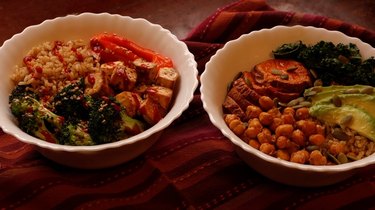
Two Buddha bowls: one with tofu broccoli and rice, another with chickpeas, avocado, quinoa, and sweet potato

Video of the Day

There are loads of Buddha bowl recipes online, but the greatest thing about these hearty meals is the ability to use the formula to create your own out of your favorite nutrient-dense foods. In fact, your kitchen may already have all the ingredients needed to create a winning combo!

Things You\’ll Need

  • A bowl

  • A whole grain of your choice

  • A dark green vegetable

  • One or more additional vegetables (go for color!)

  • A lean protein

  • A healthy fat (can be in the form of nutritious dressings and toppers like seeds and nuts)

  • Flavor boosters like herbs, spices, natural sauces (optional)

  • A grateful heart (optional, but highly recommended)

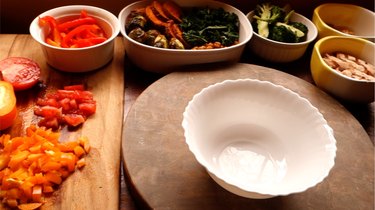
Ingredients and empty bowl in preparation for making a Buddha bowl.

Step 1: Choose a Healthy Whole Grain

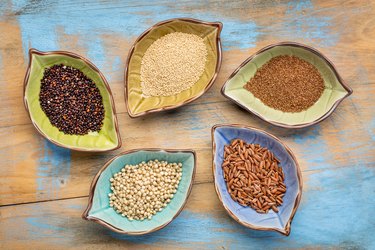
a set of five gluten free grains (sorghum, teff, amaranth,brown rice and quinoa) - top view of leaf shape bowl against grunge, painted wood

Whole grains provide a healthy source of nutrients like fiber, B vitamins, and minerals. The fiber, in particular, makes you feel fuller longer, so you're not reaching for that candy bar after a meal. Make sure you choose whole grains, not refined grains that have been processed to remove much of the fiber and increase the shelf life. Here are some suggestions:

  • Brown Rice
  • Barley
  • Farro
  • Millet
  • Wheat Berries
  • Amaranth
  • Quinoa (a "faux-grain" seed, but it counts!)

Step 2: Choose a Dark Green Vegetable

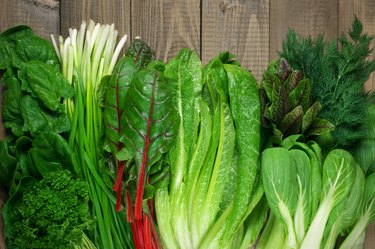
Spring vitamin set of various green leafy vegetables on rustic wooden table. Top view point.

I'm sure you know by now that dark green vegetables (especially leafy greens) are one of the world's premier superfoods. I mean, what can't they do? They help stave off heart disease, protect our cells from cancer, strengthen our bones, reduce inflammation, improve digestion, the list goes on. It's kind of a no-brainer that greens should take up some prime real estate in your Buddha bowl! For maximum nutrition, eat them steamed or raw. Some suggestions:

  • Kale
  • Collards
  • Beet greens
  • Turnip greens
  • Chard
  • Spinach
  • Arugula
  • Bok choy
  • Green beans
  • Broccoli

Step 3: Add Colorful Veggies

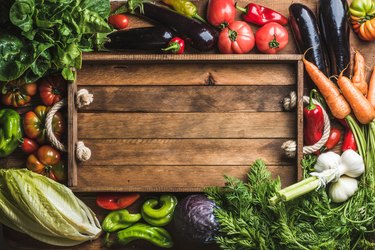
Fresh raw vegetable ingredients for healthy cooking or salad making with rustic wooden tray in center, top view, copy space. Diet or vegetarian food concept, horizontal composition

Technically, you've satisfied your Buddha bowl vegetable requirement with the greens, but when it comes to vegetables, the more colors, the more well-rounded your nutrient intake. Not to mention the prettier your bowl will be! Again, for maximum nutrition, we recommend steaming, baking, or lightly stir-frying in coconut oil.

  • Beets
  • Sweet Potato
  • Carrots
  • Squash
  • Red and Yellow Bell Peppers
  • Eggplant
  • Tomatoes

Step 4: Choose a Lean Protein

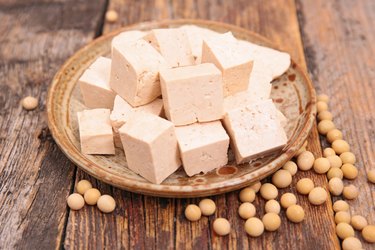
tofu and soybean

We learned it in elementary school — proteins are the building blocks for our muscles, bones, blood, skin…OK, well, our whole bodies. Just make sure to choose whole food protein with the least amount of processing. Since these were originally vegan dishes, meatless protein sources are the most popular:

  • Tofu
  • Tempeh
  • Chickpeas
  • Lentils
  • Soy beans
  • Black beans
  • Chicken breast (if not vegan/vegetarian)

Step 5: Choose Healthy Fats

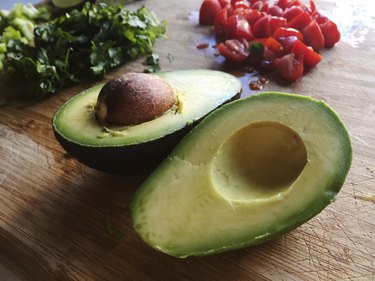
avocado with tomato and cilantro ingredients chopped

First of all, it's important to familiarize yourself with difference between healthy and unhealthy fats, and the proper ratios between Omega-3 and Omega 6 fats your diet should include. Fat's gotten a bad rap for a long time, but the truth is, fats are essential for brain health, vitamin absorption, energy, managing inflammation, among other important functions. Don't skip it! Some popular choices:

  • Avocado & avocado-based dressing
  • Tahini
  • Pumpkin seeds
  • Sesame seeds
  • Chia seeds
  • Walnuts
  • Olive oil dressings

Build It!

You could search the web for recipes, but why not pick some of your favorite foods in each of these categories and throw them together for the fun of it? Here are two examples of bowls created at random, but that turned out super delicious.

Two Buddha bowls: one with tofu broccoli and rice, another with chickpeas, avocado, quinoa, and sweet potato

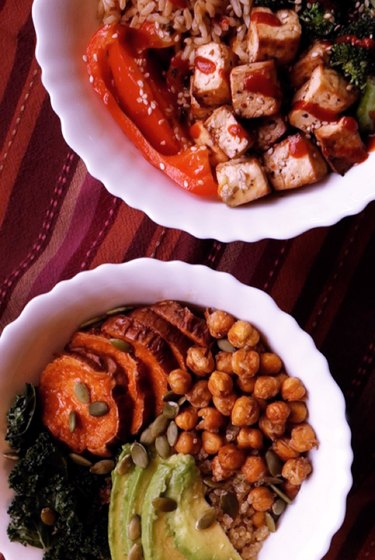
The bowl on the left includes brown rice, baked marinated tofu, steamed broccoli, and red peppers drizzled with sesame oil dressing and Sriracha sauce. The bowl on the right's got quinoa, roasted sweet potato, sautéed kale, roasted chickpeas, avocado, and pumpkin seeds drizzled with an olive oil vinaigrette. Your turn! Grab a bowl and get started.

Tip

Why are they called Buddha bowls? Because they're traditionally packed so full of clean-eating goodness, that the mound of food resembles Buddha's belly. You're also meant to eat them with a contemplative spirit of gratitude. Of course you have control over your own portioning (and spirit!), but since all ingredients pack a high nutritional punch, don't be scared to pile high if your own belly calls.

Two Buddha bowls: one with tofu broccoli and rice, another with chickpeas, avocado, quinoa, and sweet potato

Uses for Unripened Pears

0

... Transform unripe pears into tasty delicacies.

Those rock-hard pears that you may have passed over at the supermarket need not be relegated to non-use until they ripen. Use unripe pears now for a variety of culinary treatments that make virtues out of the pears' firmness, crisp texture and higher pectin levels compared to ripe pears.

Video of the Day

Poaching

An unripe pear that is neither sweet nor succulent undergoes a metamorphosis through poaching. Steep the pears in a fragrant bath of fruit-forward white wine, water, sugar, scraped vanilla bean and cinnamon, which yields tender, luscious pears when simmered for about 45 minutes. The poached pears can be served warm, cold or at room temperature, by themselves or accompanied with poaching syrup. Vanilla-bean ice cream and some additional wine for zing add an extra note of indulgence.

Appetizers, Sauces

The unripe pear may serve as a blank canvas for a number of treatments that capitalize on the less-sweet, more vegetable-like qualities of it. With a crisper texture and firmer give than riper pears, slices of unripe pear may act in lieu of crackers as canape foundations onto which smoked salmon and cream cheese may be spread. When sliced and toasted together with cheese and tomato, unripe pear adds texture to a grilled sandwich. Shredding unripe pear and combining it with shredded potato to make fritters can play off the clean, neutral flavors of each. Sauteing cubes of pear prior to adding it to a blue-cheese sauce can mellow out the raw taste of pear, for accompanying meat dishes.

Jelly

One unsung feature of under-ripe fruit is that it contains higher levels of natural pectin than do ripe fruit. When you have an abundance of unripe pears, make jelly from them by cutting them in half and boiling them for an hour. After draining the liquid overnight, you then add sugar and reduce the volume by half through boiling. You can test for doneness by running your finger down the middle of a dribble of jelly on a cold plate; if the line remains intact, it is done.

Baking

Similar to poaching in that it uses steady heat to tame a recalcitrant pear, baking unripe pears is another way to tackle a possibly bland unpalatable pear. This gives them the chance to develop further sweetness, in particular if you intend the dish for a dessert. Unripe pears are a good candidate for baking, as they will hold their shape and not fall apart as easily as softer, riper specimens. As with poaching, additional sweeteners, wine, and spices assist in bringing out the pears' flavors.