Home Blog Page 92

How to Know When Beer Has Spoiled

0

Glass beer on wood background A glass of beer. Image Credit: AnatolyTiplyashin/iStock/Getty Images

Nothing ruins a refreshing beer like the presence of an unwanted flavor or odor. Although most beers maintain their quality for long periods, a beer can be damaged by improper storage or by contaminants in the draft lines or brewing equipment. You can't do anything about it, so the best solution is to pour a new one and hope the whole batch wasn't ruined. You can identify a spoiled beer by several telltale signs.

Video of the Day

Flat Beer

Not all beers should be highly carbonated. However, when a beer that is supposed to be fizzy lacks bubbles or a head, this usually means that the container has been damaged, allowing the gas in the beer to leak out.

Skunked or Oxidative Flavors

A beer with an unexpected sour, buttery or papery taste may have been exposed to air, causing a chemical reaction called oxidation. This process alters the chemicals that give the beer its flavor, leading to a strange or unpleasant taste. Beer that has been exposed to direct sunlight can develop a strong unpleasant odor and flavor, or "skunked."

Precipitating Particles

A small amount of haze is normal in some beers, but if a lot of particles are floating in the bottle or glass, your beer has probably gone bad. Cloudiness may mean that the beer was not properly filtered or that some ingredients are precipitating out of the solution.

Easy to Make Chia Pudding Recipe

0

Chia seed pudding is a healthful, superfood dish that you'd never realize was nutritious! Full of fiber, antioxidants, protein, calcium, and other minerals, chia seeds secrete a gelatinous substance when soaked in liquid, resulting in a thick, creamy, guilt-free pudding. All it takes are a few basic ingredients and 5 minutes of time to prepare this delectable treat. Get creative with your add-ins and toppings for the ultimate healthy breakfast or dessert!

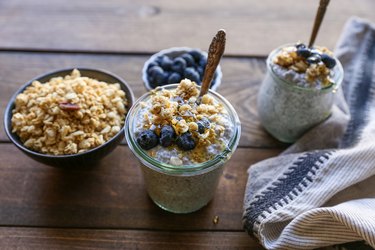
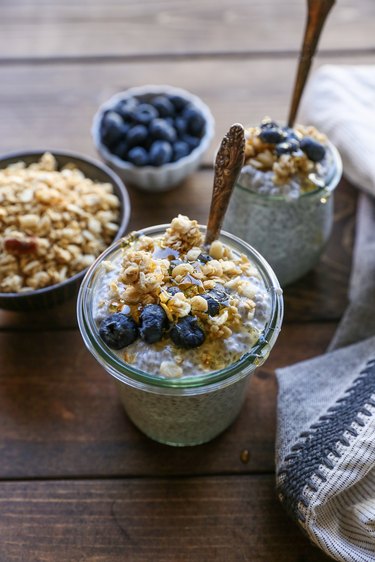
Two jars of chia seed pudding topped with blueberries and granola How to Make Chia Seed Pudding Image Credit: Julia Mueller

Video of the Day

Things You\’ll Need

  • 2-1/2 cups unsweetened almond milk (or milk of choice)

  • 1/2 cup chia seeds

  • 3 to 4 tablespoons pure maple syrup, honey, or agave

  • 1/2 teaspoon vanilla extract, optional

  • Pinch sea salt

Step 1: Add Ingredients to a Jar

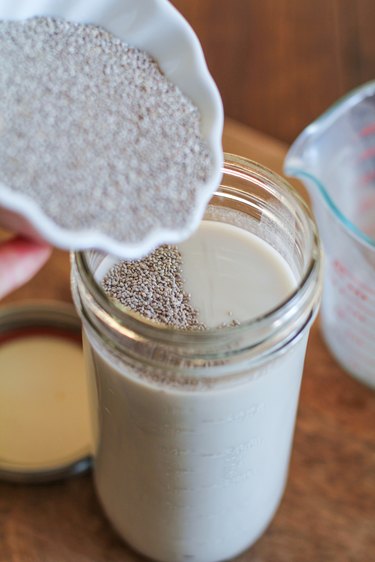
Pour the almond milk into a jar, or sealable container, followed by the chia seeds, pure maple syrup, vanilla extract, and sea salt.

Pouring chia seed pudding ingredients into a jar Pour ingredients into a jar Image Credit: Julia Mueller

Step 2: Seal the Jar and Shake

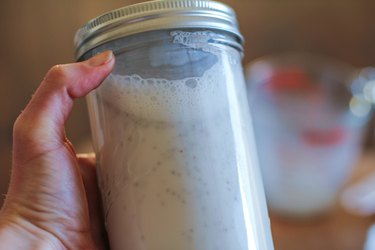
Secure the lid firmly on the jar and shake well until the contents are well combined.

Shaking the jar of chia seed pudding ingredients Shake well or stir to combine Image Credit: Julia Mueller

Step 3: Chill

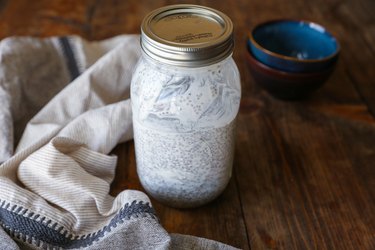
Refrigerate the pudding overnight, or until very thick, at least 4 hours. If possible, stir once or twice throughout the chilling process.

chia seed pudding in a jar finished chia seed pudding Image Credit: Julia Mueller

Step 4: Serve!

Once the pudding is thick, taste it for flavor and add sweetener to taste. Serve with your choice of fresh fruit, nuts, and/or granola.

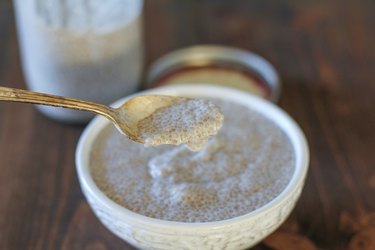
chia seed pudding in a bowl plain chia seed pudding Image Credit: Julia Mueller jar of chia seed pudding with blueberries, honey, and granola Chia Seed Pudding with blueberries, honey, and granola Image Credit: Julia Mueller

Tip

Use any type of milk to make this chia seed pudding, such as coconut milk, cashew milk, or cow's milk. To make this recipe vegan, use a non-dairy milk and any liquid sweetener other than honey.

Sweeten to taste using any type of liquid sweeteners. Pure maple syrup, honey, agave nectar, or coconut palm nectar are recommended to keep the dessert naturally sweetened.

To change up the flavor of the pudding, add ingredients to the jar prior to allowing the pudding to sit overnight. For instance, you can add chopped or pureed fruit or jam, cocoa powder, etc.

Finish off the pudding with your favorite toppings, such as chocolate chips, chopped nuts, a drizzle of pure maple syrup, granola, crunchy cereal, fresh seasonal fruit, or nuts.

How to Pickle Peppers in the Refrigerator

0

Things You\’ll Need

  • Cutting board

  • Knife

  • Cooking pot

  • Stove

  • Peppers

  • Vinegar

  • Salt

  • Sugar

  • Peeled garlic cloves

  • Oregano

  • Dill or dill seed

  • Whole coriander

  • Ladle

  • Canning funnel

  • Glass jars with lids

... Refrigerator pickles will keep for at least three weeks.

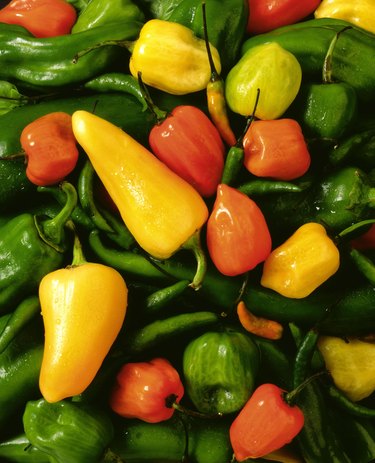
Whether you have a productive garden or scored a great deal at the grocery store, pickling can be a convenient way to preserve a bounty of peppers before they go bad. While the canning process can be intimidating if you've never done it before, refrigerator pickled peppers are a versatile and safe way to turn extra produce into a delicious snack or sandwich topping. You can adjust a pickled pepper recipe to reflect your spice preference by using spicy or mild peppers and by adding red pepper seeds or other spices to your pickling brine.

Video of the Day

Step 1

Wash your peppers thoroughly. Slice and de-seed them if you do not want to pickle them whole. Wear gloves if you are cutting spicy peppers.

Step 2

Add 3 cups of vinegar, ¼ cup of sugar, 1 tablespoon salt, several garlic cloves and the oregano, dill and coriander to your stock pot. Boil this mixture until the salt and sugar are both dissolved.

Step 3

Place peppers in the jars. Pack the jars with peppers before you add the brine.

Step 4

Ladle hot brine into the jars using the funnel to make it easier. Fill the jars almost to the top and put the lids on.

Step 5

Transfer the jars to the refrigerator when they are cool enough to handle.

Step 6

Brine the peppers for at least 24 hours before eating them.

Tip

Pickle fresh, crisp peppers. Varieties that work well are jalapenos, ancho chiles, bell peppers and sweet peppers, depending on the level of spiciness that you want.

Use any type or combination of vinegars that you have available. White vinegar, rice wine vinegar and red wine vinegar are all good choices.

You can pickle other vegetables along with your peppers. Carrots, onions and cauliflower work well.

Use or reuse any sturdy glass jar that you have available. Since these are not canned or processed you do not necessarily need canning jars.

Warning

These pickles are not water processed or canned so they need to be refrigerated. They will last at least 3 weeks and sometimes longer in the refrigerator.

Recipe Spotlight: Jaclyn Marie\’s Floral Focaccia Bread

0

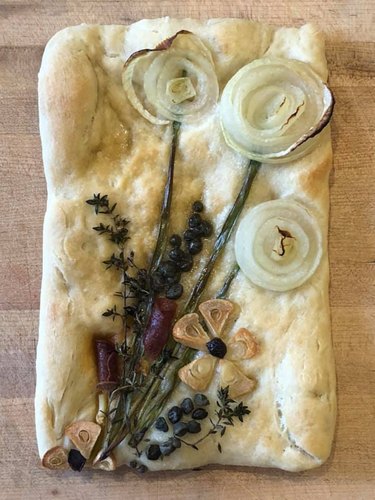
For a lot of people, more time at home means much more time in the kitchen. We asked our Facebook community to show off their best quarantine culinary creations and we were nothing short of amazed by the results!

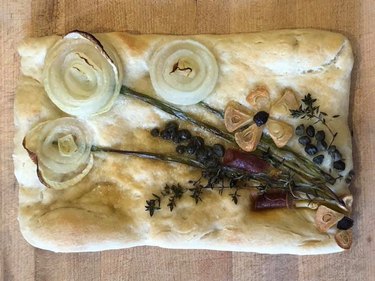
Recipe Spotlight: Jaclyn Marie\'s Floral Focaccia

Video of the Day

After weaving through a number of mouthwatering images and recipes, our team narrowed things down to two finalists; Jaclyn Marie's artistic focaccia and Areeba Azam's chicken burgers. The two went head to head in a Facebook poll, and we are thrilled to congratulate Jaclyn Marie for claiming the top spot with her edible work of art!

"I try to make my focaccia as appealing as possible by turning it into art," Jaclyn Marie shared. "People who don't typically enjoy vegetables might be intrigued enough to try this delightful focaccia. This Spring Bouquet design is simple and beautiful and the visual appearance should ensure that every bite is a little more enjoyable than it otherwise would be!"

Congratulations to Jaclyn Marie, and thank you to everyone who participated. Be sure to like and follow eHow's Facebook page to stay up-to-date on all of our latest contests and recipes!

Jaclyn Marie\'s Floral Focaccia

How to Dry Hazelnuts

0

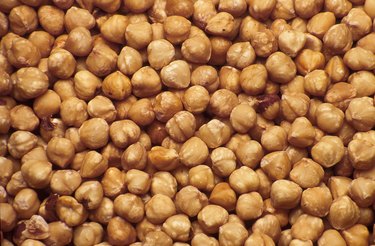
Hazelnuts, also called filbert nuts, are packed with nutrition and possibilities. Hazelnuts provide perfectly surprising pops of crunchy flavor for both sweet and savory dishes. So if you are fortunate enough to have hazelnuts growing in your own backyard, you are in for a treat. But, says the Oregon State University Extension Service, before you can enjoy your hazelnuts, or even store them for later use, it's important that you properly dry them within 24 hours of harvest.

Hazelnuts

Video of the Day

Things You\’ll Need

  • Heat Lamp

  • Screen- Or Mesh-Bottomed Drying Trays

Step 1

Wash dirty hazelnuts in warm water.

Step 2

Spread unshelled hazelnuts, up to two layers deep, on screen- or mesh-bottomed trays. The open bottoms allow for necessary air circulation.

Step 3

Place the trays in a hot room or under a heat lamp. Ideal drying temperature is between 90 and 105 degrees F.

Step 4

Stir the hazelnuts with your hands every other day. Depending on temperature stability and quality of air circulation, drying can take from two to four weeks.

Step 5

Test the hazelnuts. There are two ways to determine if your hazelnuts are ready. First, shake them; hazelnuts that have completed the drying process rattle in their shells. Second, crack one open; dried hazelnut kernels snap apart easily.

Step 6

Place dried hazelnuts in plastic bags. Store in the refrigerator for up to one year or in the freezer (at no higher than 0 degrees F) for up to two years.

Tip

When you are ready to eat or use your hazelnuts, shell them and roast them in your oven at 275 degrees F for 20 to 30 minutes or until their skins crack. Mesh-bottomed bird feeder trays are ideal for drying hazelnuts, as they allow for excellent air circulation. Do not, however, use trays that have been used to feed birds, as this could contaminate your nuts. New trays are a must.

Warning

Do not allow drying temperature to exceed 110 degrees F. Nut quality will be negatively affected.

How to Make Homemade Protein Shakes for Kids

0

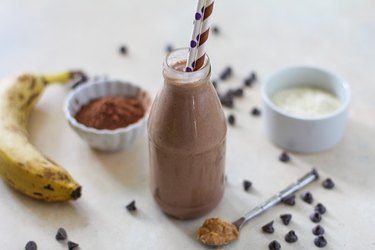
Whipping up a quick, healthful, and tasty protein shake that tastes like dessert is a great way of satisfying your kid's hunger and (sometimes picky) palate, while fueling them with protein.

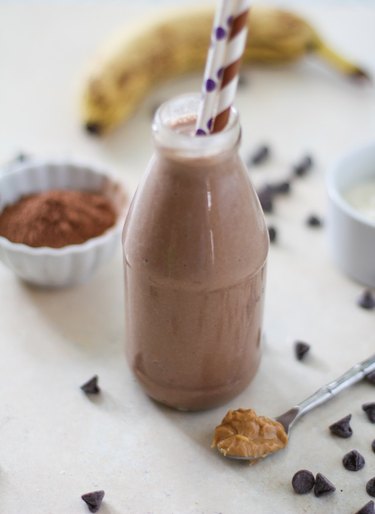
Chocolate protein shake

Video of the Day

Some easy-to-hide foods that are full of protein include nut butters, protein powders, scrambled eggs (it may sound strange, but you can't taste them in a smoothie), almond milk, and yogurt. A great fruit-flavored protein shake can include any combination of fresh or frozen fruit, nut milk, protein powder, and/or yogurt. As an alternative, a shake that tastes like dessert, such as a chocolate shake, is a brilliant way of tricking children into thinking they're consuming something decadent, when really, they're drinking something healthy. We've included a delicious recipe here, but feel free to mix and match a variety of flavors.

Things You\’ll Need

  • 1 large ripe banana, peeled and frozen

  • 2 tablespoons unsweetened almond butter

  • 1–2 tablespoons unsweetened cocoa powder (to taste)

  • 1 scant scoop vanilla protein powder (about 1 ½

    tablespoons)

  • ¼ teaspoon ground cinnamon

  • 1 cup unsweetened almond milk

  • 4 large ice cubes

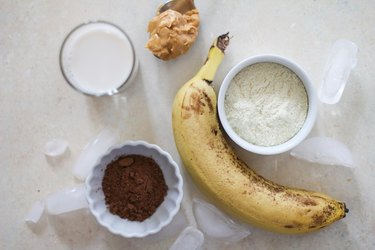
Step 1: Assemble Your Smoothie Ingredients

Choose your flavor scheme and add it to a high-powered blender. This high-in-protein recipe option calls for three sources of protein: protein powder, almond milk, and almond butter. If choosing a fruit smoothie, try adding blueberries or strawberries, banana, almond milk, and vanilla protein powder (and/or cashew butter or almond butter).

banana, cocoa powder, protein powder, almond butter

Step 2: Blend Until Smooth

Chocolate shake in a glass with two straws

Turn the blender on high or use the smoothie setting, if available. Blend until completely smooth, pour into a glass, and enjoy!

Moong Daal Quinoa Risotto Recipe

0

This humble recipe is a great one-pot protein-packed meal, ready in a jiffy and good for you. Growing up in an Indian household, daal has been a staple meal. This recipe marries Indian ingredients with non-traditional ones creating a healthy yet delicious meal.

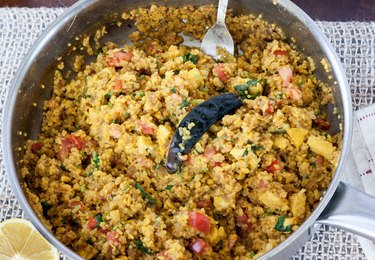
Moong Daal Quinoa Risotto

Video of the Day

Things You\’ll Need

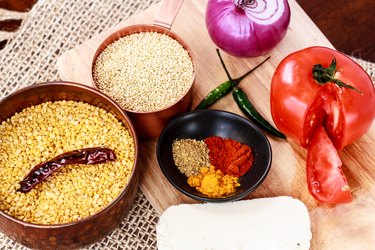
  • 1/2 cup split moong daal, washed and soaked for 20 minutes

  • 1/2 cup quinoa (I use the one that does not require soaking/washing)

  • 1/2 medium onion, sliced thin

  • 1 serrano pepper, diced (adjust to taste)

  • 1/2 teaspoon each of cumin seeds, turmeric, chili powder, coriander powder, garam masala, chaat masala

  • Salt to taste

  • Pinch of asafoetida

  • 2 tablespoon ginger garlic paste

  • 1-1/2 tablespoons oil or ghee (clarified butter)

  • 1/3 cup diced paneer or firm tofu (optional)

  • 1 medium tomato chopped

  • 1-3/4 cup water

  • 1/3 cup chopped cilantro

  • Juice of half a lemon

Tip

If you prefer less heat, don't dice the serrano pepper — leave it whole.

Ingredients

Step 1

In a saute pan with a lid, add the ghee and heat it up on medium high heat. Once hot, add the asafoetida and cumin seeds. Let it cook until the cumin is fragrant, around a minute.

Step 2

Add the sliced onion and pepper, and continue cooking for 3 to 4 minutes until the onion softens.

Step 3

Mix in the ginger garlic paste and saute for another 30 seconds to 1 minute. Add the turmeric, chili powder, coriander and salt, and saute for another 30 seconds.

Step 4

Add the quinoa and water to the pan and bring it to a boil. Once at a boil, add the drained moong daal (and diced paneer, if using), cover with a lid, and lower the flame to almost minimum/low. Let it cook for 15 minutes.

Tip

Paneer is an Indian cottage cheese. It's made out of milk and is considered a good protein food source for vegetarians.

Step 5

After 15 minutes, remove from the flame, but leave it covered for another 5 minutes. Then toss in the chopped tomatoes, cilantro, lemon juice, chaat masala and garam masala. Serve warm.

Moong Daal Quinoa Risotto Moong Daal Quinoa Risotto

How to Remove Wax From Fruits & Vegetables

Things You\’ll Need

  • (2) Bowls, large

  • Water, Warm

  • Vegetable brush

  • Paper towels

Mother and Daughter Washing Peppers at a Kitchen Sink

Waxes found on fruits and vegetables grow naturally to protect the fruits and vegetables from losing too much moisture. Businesses will commercially place approved wax coatings on fruits and vegetables during processing. These waxes extend shelf life during shipping and handling and help to keep the fruits or vegetables from bruising or drying out. It is always a good idea to remove these waxes before preparing or eating the fruits and vegetables because harmful bacteria can be trapped between the produce and the wax.

Video of the Day

Step 1

Wash your hands in hot soapy water for at least 20 seconds prior to beginning with the fruits and vegetables. Have the vegetables in a bowl near the sink. If the produce came in a closed bag and it's labeled as pre-washed, according the FDA, there is no need to rewash these items. However, the FDA does recommend if the fruits or vegetables are labeled as precut or prewashed and come in an open bag, these items should be rewashed before consuming.

Step 2

Turn on the water so that it's comfortably warm to hot.

Step 3

Scrub the outside of each fruit or vegetable by itself with the vegetable brush under the streaming water. For sprouts, simply wash them in warm running water. Scrub softer produce like tomatoes gently. Run fruits and vegetables still attached to the vine such as grapes gently under the warm water moving the individual pieces around to allow the water in between them.

Step 4

Place each piece of produce you rinsed and or scrubbed inside another large clean bowl as you finish.

Step 5

Dry each piece of produce with a paper towel to help remove further residue. For softer fruits like grapes, pat the outsides gently.

Tip

Washing the fruits and vegetables under running water will wash waxes and some bacteria away. Simply dunking the fruits and vegetables in a bowl or sink of warm water will give the waxy residue and bacteria a chance to reattach to the produce. Getting into the habit of removing wax from your fruits and vegetables will overall help to reduce your chances of consuming harmful bacteria found on produce. If you don’t have access to warm water, rinsing the produce well before preparing it is preferred over not washing the produce all. A clean unused scrubbing pad typically used to wash dishes can be substituted for a vegetable scrub brush.

Warning

The FDA does not recommend using soaps or detergents to wash fruits or vegetables as it can get into porous produce such as apples, lettuce, cabbage, plums and celery.Consuming soaps and detergents can cause serious illness.

How Far in Advance Can You Cook Creme Brulee?

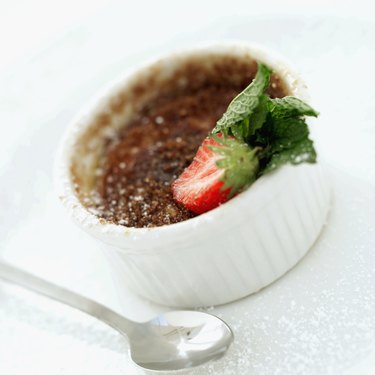
Close-up of a bowl of pudding with a strawberry garnish Creme brûlée with a crispy, sweet topping is a perfect dinner party dessert. Image Credit: Stockbyte/Stockbyte/Getty Images

When you want to serve an impressive dessert at a dinner party, creme brûlée is the perfect choice. You know exactly how much to make because each person gets an individual ramekin. Best of all, it can be made almost completely ahead of time and simply caramelized right before serving. In fact, the custard has to be made ahead of time, leaving you extra time with your guests instead of slaving in the kitchen.

Video of the Day

Choose a Recipe

You can make creme brûlée as far as three days or as close as six hours before serving. It must chill completely in the refrigerator before the final caramelization of the sugar on top. The classic vanilla bean creme brûlée is loved by almost everyone, but chocolate, pumpkin, coffee-caramel, lemon and many more flavors can be baked into the custard. Choose your recipe and gather the ingredients before cooking.

Cook as Directed

Follow the directions for the creme brûlée recipe that you chose. Make sure you follow them precisely. Creme brûlée isn't difficult to make, but it does require being careful with the steps. When the creme brûlée is finished cooking, remove carefully from the oven, making sure not to splash any of the hot water from the pan into the custard. Allow to cool.

Cover Tightly and Refrigerate

This next step will ensure that when you take the ramekins out of the refrigerator, your creme brûlée will still be in delicious, edible condition. When the ramekins are cool enough to touch, tightly cover each one with plastic wrap or foil and then refrigerate. If you'll be keeping them in the refrigerator for a couple of days, this step is especially important so that other odors or flavors don't get into your carefully prepared creme brûlée cups.

Caramelize before Serving

It will take you just a few minutes to put the finishing touches on the dessert you made days ago. About 30 minutes before serving the creme brûlée, remove it from the refrigerator to allow it to come to room temperature. Sprinkle with a fine sugar and caramelize the top by using a kitchen torch or placing the ramekins under the oven broiler. Serve to your appreciative guests.

Vietnamese Steak & Eggland’s Best Eggs feat. Nathaniel Nguyen

Vietnamese Steak & Eggland’s Best Eggs feat. Nathaniel Nguyen

Make It Egg-Cellent – in partnership with Eggland's Best, we asked our favorite chefs to take a breakfast, lunch, or dinner staple and make it better by adding EB eggs to it, and ended up with a few exclusive and delicious recipes that you can make at home.

Retelling the stories of my first visit to Vietnam wouldn't be complete without the mention of sizzling platter after sizzling platter of Bo Ne I consumed, better known as Vietnamese Steak & Eggs. If you're not alert when this dish is served to you, you'll catch the sting of spluttering hot grease and quickly learn why the Vietnamese name of the dish translates to 'dodging beef.'

This version is less modest than the ones I enjoyed street side squatting over a stool in Vietnam. My recipe calls for the careful caramelization of the onions, a chunky garlic-soy butter sauce that drapes the steak and eggs and sizzles table side, and the use of Eggland's Best Eggs for their superior taste and quality, compared to ordinary eggs. It's a bit more involved than your traditional steak and eggs, but well worth the effort.

If the sweet and savory contrast of the marbled steak and melt-in-your-mouth onions don't convince you to give this recipe a try; sopping up swirls of velvety egg yolk and fragrant butter sauce with a warm baguette will make sure this recipe is one you'll prepare time and time again.

Serves 2

For the Caramelized Onions:

Things You\’ll Need

  • 1 medium sweet onion, ¼” slices

  • 1 T grapeseed oil

  • A pinch of freshly cracked pepper

  • A pinch of kosher salt

  • A pinch of white granulated sugar

For the Garlic-Soy Butter:

Things You\’ll Need

  • ½ C unsalted butter, clarified

  • ¼ C garlic cloves, roughly chopped

  • ⅛ tsp sesame oil

  • 1 T soy sauce

For the Salt & Pepper Dipping Sauce:

Things You\’ll Need

  • ½ T kosher salt

  • 1 T freshly cracked black pepper

  • Lime juice, to taste

For the Vietnamese Steak & Eggland’s Best Eggs

Things You\’ll Need

  • 2 – 6-8 oz steak of your choice, per person

  • 1 garlic clove, cut in half

  • Freshly cracked pepper

  • Kosher salt

  • Grapeseed oil

  • 1-2 Eggland’s Best large eggs, per person

  • Caramelized onions

  • Garlic-soy butter

  • Individual cast iron pans or fajita skillets

To Serve:

Things You\’ll Need

  • Cilantro sprigs, for garnish

  • Green onions, sliced, for garnish

  • Pate, for garnish, optional, but highly recommended

  • 1 – 8” Vietnamese Baguette, toasted per person (can substitute for any light, airy Baguette)

  • Side salad of iceberg, romaine or green leaf, tomatoes, cucumbers & red onions, optional

  • Salt & pepper dipping sauce

To Make the Carmelized Onions:

Step 1

Gently heat grapeseed oil over medium heat in a small saute pan. Add in the onions, salt, pepper and white sugar.
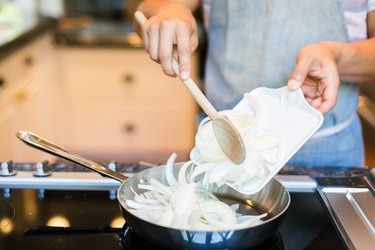
cartelized onions

Step 2

Sweat the onions over medium heat, stirring every 2-3 minutes to prevent burning. The onions are done when they are soft and brown in color. About 10-15 minutes. Set aside until ready to use.
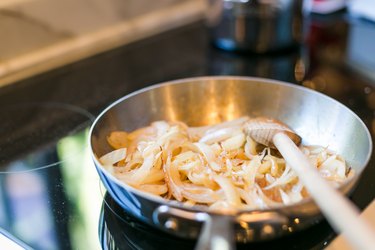
sweat the onions

To Make the Garlic-Soy Butter:

Step 1

Combine the clarified butter and garlic cloves in a small sauce pot and simmer until the garlic is soft, about 10-15 minutes. Be careful not to burn the garlic. Turn off the heat and stir in the soy sauce and sesame oil. Set aside until ready to use.
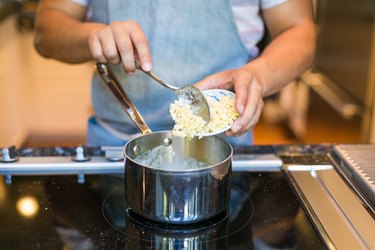
Combine the clarified butter & garlic cloves

To Make the Salt & Pepper Dipping Sauce:

Step 1

In a small mixing bowl, combine salt and pepper and squeeze in fresh lime juice to taste. Adjust the tartness by the amount of lime juice you add. I like the dipping sauce on the more acidic side to cut through all of the rich flavors found in this dish. Set the dipping sauce aside until ready to serve.
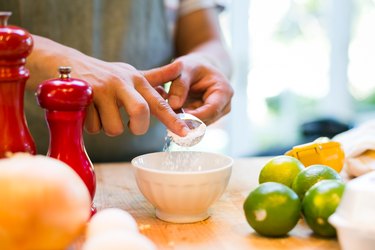
combine salt and pepper and squeeze in fresh lime juice

To Make the Steak & Eggs:

Step 1

To season the steak, rub a cut clove of garlic onto both sides. Season generously with salt and pepper.

Step 2

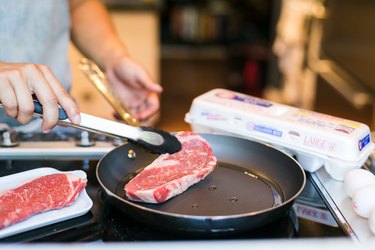
Heat a heavy bottom pan like a cast iron pan over high heat. Add in some grapeseed oil to cover the bottom until hot but not smoking.
Heat a heavy bottom pan

Cook the steak on both sides to your desired doneness. I like my steak on the rare side and cut thick to ensure enough cooking time to form a deeply browned crust. Be sure not to flip or agitate the steak unnecessarily during cooking to develop those coveted crispy edges. Set the steak aside to rest on a plate loosely covered with foil while you prepare the Eggland's Best eggs.

Step 3

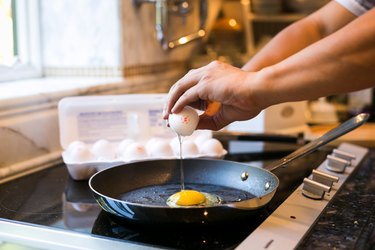
In the same pan, add some additional oil if needed or use the rendered fat from cooking the steak. Cook 1-2 Eggland's Best eggs sunny-side up per person in the same pan over medium heat. Remove the pan from the heat to prevent the eggs from overcooking. The runnier the yolk, the better.
Cook 1-2 Eggland’s Best eggs

To Serve:

Step 1

Heat up individual cast iron pans or fajita skillets until nice and hot. Remove the pans from the heat onto a heat safe surface or plate. Create a bed for the steak with half of the carmelized onions. Give the onions a quick stir to warm it through.

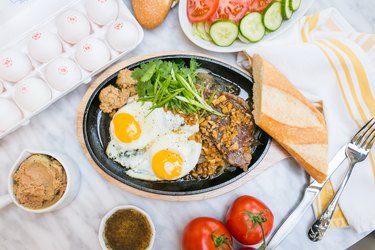
Place the rested steak over the bed of onions. Plate the Eggland's Best eggs off to the side of the steak in the same pan. Spoon a few tablespoons of the warm garlic-soy butter over the steak and eggs. Remove the pans from the heat onto a heat safe surface or plate to serve.

Step 2

To serve, garnish the steak and eggs with a dollop of pate, a few sprigs of cilantro and some sliced green onions. Serve the steak and eggs with a toasted Vietnamese baguette, salt and pepper dipping sauce and a side salad of iceberg, tomatoes, cucumber and red onions.

Vietnamese Steak & Eggland’s Best Eggs