Home Blog Page 75

Why Is Eating Healthy So Important?

0

Relaxed Young Woman in Park A healthy diet combats depression-causing nutrient deficiencies. Image Credit: XiXinXing/XiXinXing/Getty Images

Reaching for processed or fast food might be a convenient way to temporarily stave off hunger, but it's not your best move for long-term health. The quality of your diet — as well as other lifestyle habits — has a significant impact on your long-term health. Follow a balanced diet, and it'll help you look and feel your best.

Video of the Day

Maintain a Healthy Weight

An unhealthy diet is one of the biggest contributors to obesity, explains the Harvard School of Public Health, and eating healthy can make it easier to manage your weight. The healthy foods that form the foundation of a healthful diet — like fruits and veggies — are naturally low in calories. Produce, whole grains, nuts and legumes also offer lots of dietary fiber, a type of carb that keeps you full after your meals.

Keep in mind, though, that even healthy foods have calories. You'll still need to practice portion control if you want to lose or maintain your weight.

Lower Chronic Disease Risk

While the sugar, salt and trans fats found in many processed foods put you at a higher risk of disease, a healthy diet has the opposite effect. A diet rich in whole grains, for example, has been shown to lower the risk of type-2 diabetes, and whole grains might also reduce your risk of cancer. Fruits and veggies offer potassium and fiber — nutrients that lower blood pressure and improve blood cholesterol, respectively. That can translate to a lower risk of heart disease.

A healthy diet is also linked to a lower risk of other health issues, including stroke, dental cavities and osteoporosis, notes the Centers for Disease Control and Prevention.

Helps Maintain Energy and Happiness

A healthy diet can also help you feel your best because nutrient deficiencies can zap your energy or harm your mental health. Iron deficiency, a common nutritional deficiency caused by an unhealthy diet, reduces oxygen transport to your cells and tissues, causing fatigue. Low levels of omega-3 fatty acids — the healthy unsaturated fats found in fish, walnuts and flaxseeds — can cause fatigue, along with mood swings and depression.

A healthy, balanced diet prevents these, and other, nutrient deficiencies.

Following a Balanced Diet

The U.S. Department of Agriculture's dietary guidelines include five major food groups: vegetables, grains, fruits, protein foods and dairy. You should eat several servings of vegetables and fruits daily as the basis for a healthy diet, selecting produce in a variety of colors for the most health benefits. Your grain intake should come from whole grains — like quinoa, brown rice, oatmeal or 100-percent whole-wheat bread — instead of white bread or rice. Protein food intake should come from fatty fish, like salmon, as well as beans, nuts, eggs and lean meat and poultry. Meet your dairy intake with low- or nonfat options, like nonfat Greek yogurt, skim milk or low-fat milk alternatives.

The amount of food you'll need from each group depends on your age, gender and activity level. For help planning a balanced diet personalized to your needs, consult a registered dietitian.

Do Cookies Baked With Fruit Preserves Need to Be Refrigerated?

0

close-up of jam filled biscuits Fill the cookies either before or after you bake them, depending on the recipe. Image Credit: Stockbyte/Stockbyte/Getty Images

Jam-filled cookies are often the stars of holiday cookie platters, but they're too pretty to be relegated to once a year baking. Most start with a chilled shortbread dough that is filled with raspberry, cherry or apricot preserves, although any type of preserve will work. Don't use jelly, which doesn't melt well and avoid preserves with large chunks of fruit, which tend to spoil more quickly. Once the cookies have cooled, they can be stored at room temperature for a few days, refrigerated or frozen for longer storage.

Video of the Day

General Guidelines

In most cases, you can safely store cookies made with fruit preserves at room temperature for up to five days. Although the fruit in the preserves will eventually spoil at room temperature, its high sugar content acts as a temporary preservative. You can store cookies in glass jars, plastic containers or tins. Make sure any container you use has an airtight seal so the cookies stay fresh. Refrigerate or freeze cookies for longer storage. Place them in a plastic airtight container or sealed plastic bags.

Exceptions

If you're making cookies that use only a small amount of jam, such as thumbprint cookies, you can safely store them at room temperature. However, you should refrigerate cookies that contain more preserves, such as fruit bars or rugelach, or use them within a day or two. Refrigerate cookies that contain fruit preserves and cream cheese or other dairy products as soon as they cool. Allow refrigerated cookies to come to room temperature before serving them for the best flavor.

Storage Tips

How you store cookies is as important as where you store them. After the cookies come out of the oven, let them rest on the pan for about five minutes. Transfer them to a cooling rack and allow them to cool completely — usually 20 to 30 minutes — before you store them. If you store cookies while they're still warm, they'll stick together and become gooey. If using plastic bags, squeeze out as much of the air before you seal the bags, since air causes the cookies to go stale more quickly. When freezing cookies, label them with the date and use them within three months.

Alternatives

Cookies taste best when eaten within a day or two, and refrigerating them isn't ideal. Refrigerating almost any baked good causes them to develop a stale taste or dry out. Cut a recipe in half if you can't use all the cookies within a few days or freeze cookie dough and bake it as you need it. For thumbprint cookies, roll the dough into balls and freeze on a cookie sheet. Once the balls are frozen, you can transfer them to a sealed plastic bag. Don't thaw them before baking. Rolls of prepared, filled rugelach dough can even be frozen. Wrap them well with plastic and use them within one month. Allow them to thaw overnight in the refrigerator before baking them.

A List of Starchy & Non-Starchy Vegetables

0

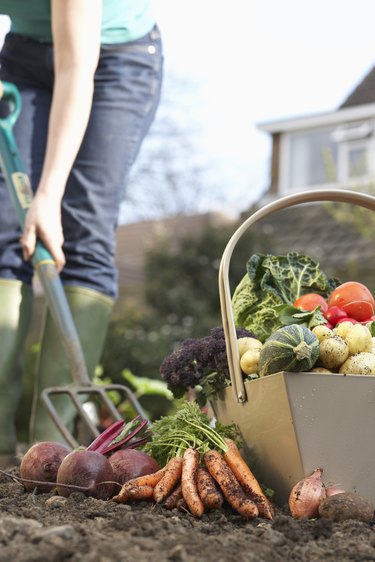
Unrecognizable person digging with pitchfork, low section, assorted vegetables in foreground root vegetables Image Credit: Martin Poole/Digital Vision/Getty Images

The glycemic index or GI measures how your blood sugar is affected within two to three hours of eating foods that contain carbohydrates. Foods that are rated as high GI have a glycemic index of 70 or above. Foods rated as low GI are 55 and under, while foods rated as medium GI are between 56 and 69 on the GI scale. Starch is a form of carbohydrate. Each serving of starchy vegetables contains approximately three times the carbohydrate content of non-starchy vegetables, according to the American Institute for Cancer Research.

Video of the Day

Tubers and Root Vegetables

Turnips Turnips Image Credit: Jupiterimages/Comstock/Getty Images

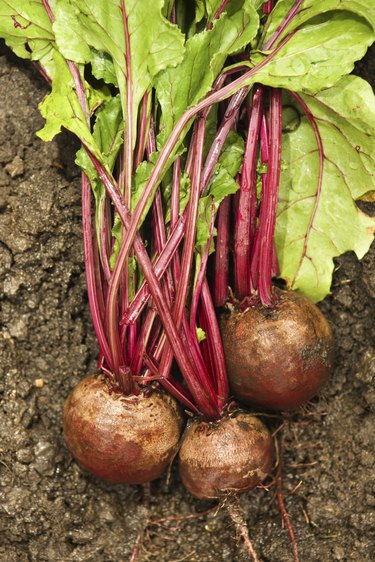
Starchy tubers, such as potatoes and sweet potatoes, are rated at 85 and 61, respectively, according to the Glycemic Index Chart, or GIC, on Glycemic-Index.org. Other members of the tuber family, such as pumpkins and squash, are also high in starch. The GIC rates pumpkin at 75. Parsnips and turnips are root vegetables that contain high amounts of starch and are rated at around 97, while beetroot is rated at 64.

Grains and Legumes

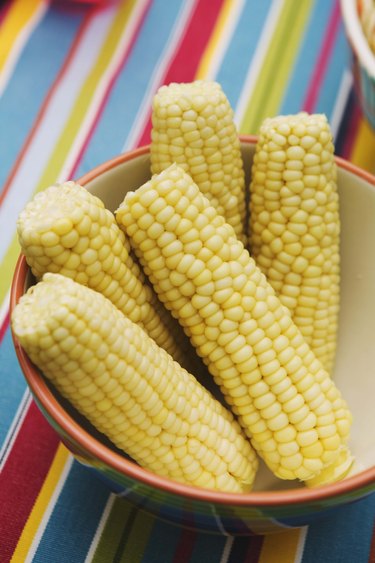
Corncobs Sweet corn Image Credit: Jupiterimages/Comstock/Getty Images

Sweet corn, or maize, is a variety of grain, but sweet corn cobs are picked when they are immature and soft, unlike other corn varieties that mature before harvesting. Sweet corn is classified as a starchy vegetable and has a medium GI rating of 54. Broad beans are a type of starchy legume with a relatively high GI rating of 79, while green peas are also classified as starchy but have a lower GI rating of 48.

Cruciferous Vegetables and Alliums

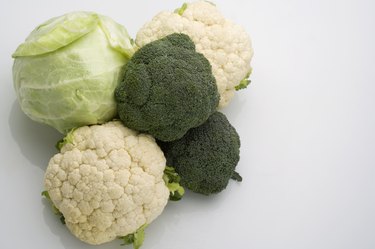
Broccoli, cauliflower and cabbage Brocoli, cabbage, cauliflower Image Credit: Blue Jean Images/Digital Vision/Getty Images

Cruciferous vegetables, or vegetables that belong to the Brassicaceae family, include broccoli and cabbage. These are non-starchy vegetables that contain phytochemicals, vitamins and minerals that link them to lower risk of diseases such as cancer, says registered dietitian Elaine Magee at WebMD. Brussels sprouts, cauliflower, bok choy, turnip greens, collard greens, watercress and radishes are also non-starchy vegetables in the Brassicaceae family. These vegetables have a low GI rating. For example, broccoli and cabbage have a rating of 6, according to the GIC. Non-starchy vegetables from the Allium family, which are also known as "bulb" vegetables, include onions, leeks, garlic and shallots.

Stem and Leaf Vegetables

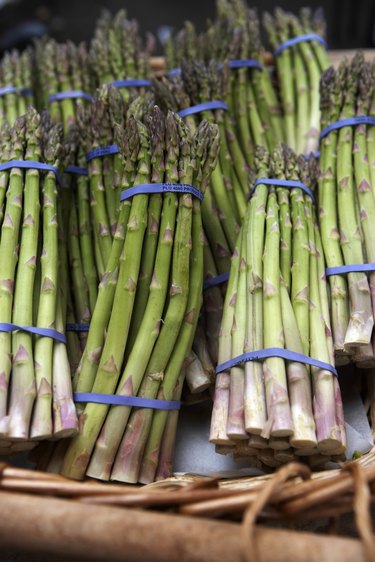
Basket of asparagus on market stall, close-up Asparagus Image Credit: Michael Blann/Digital Vision/Getty Images

Stem vegetables such as celery, asparagus and fennel are non-starchy vegetables. Their low amounts of starch give them a low GI rating. For example, asparagus is rated at 8, according to the GIC. Green leafy vegetables, such as lettuce, spinach, watercress and chard, are non-starchy vegetables that are often eaten raw in salads. Spinach has a low GI rating of 6. The American Diabetes Association recommends a daily intake of at least three to five servings of non-starchy vegetables, such as dark leafy greens, to maintain good health.

How to Double Brew Coffee

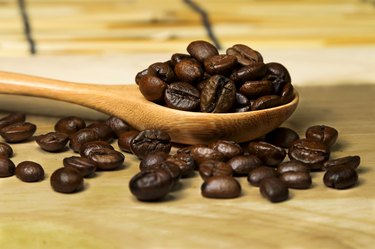
Coffee bean Start with the right beans, and increase your chances of getting the perfect double-brewed coffee. Image Credit: Kiattistock/iStock/Getty Images

A common misconception is that when you double brew coffee, you double the caffeine. You don't. Double-brewed coffee increases the caffeine only slightly; the biggest change is the stronger flavor. As "Perfect Coffee at Home" authors Michael Haft and Harrison Suarez wrote in The Atlantic, "strong coffee has almost … everything to do with the ratio of coffee to water in your cup." It also has something to do with the type of coffee beans you start with.

Video of the Day

The Beans

The fresher the coffee beans — or grinds — you start with, the more flavor they'll have. Seek out a bold, dark roast, and then keep the beans in an airtight container away from light, heat and moisture. If you're using whole beans, wait until the last minute to grind them; grinds lose more of their flavor over time.

The Water

Bad coffee of any kind can be just as due to the water as to the beans. Start with clean, clear, cold water when you're making double-brewed coffee, in particular. Tap water is fine, but if you have a purifier, use it. The purer the water, the purer the flavor of the beans.

Method 1: Brew Coffee Twice

This method of double brewing means doubling the steps and the time. Make coffee as you normally would in your coffee machine, with your normal ratios of coffee grinds to water — usually 1 to 2 tablespoons per 6 ounces of water.

When it's finished brewing, let the coffee cool to at least 200 degrees Fahrenheit. Clean the filter.

Add another 1 to 2 tablespoons of fresh grinds per 6 ounces of brewed coffee to the filter, and add the brewed coffee to the reservoir. Making this coffee with the fresh brew instead of water will double the concentration of the final result.

Method 2: Use More Coffee

The second method is simpler, and simply entails using more grinds. The higher the ratio of coffee to water, the stronger the coffee, so for a truly double-brewed coffee, use twice as many grinds as you normally would. For 6 ounces of water, this usually means 2 or 3 tablespoons of coffee grinds.

Tips

  • Everyone\’s tastes are different, so experiment with different coffee-to-water ratios to find the double brew for you. Make small changes to find the sweet spot, and write that method down.

  • If your coffee machine allows you to control the temperature of the water in the pot, brew it to about **200 degrees Fahrenheit**; hotter waters tend to burn the coffee, giving it a sour taste.

How to (Quickly) Chill a Cocktail Glass

0

We've all been there. You've got the perfect drink recipe, and a few willing and thirsty cocktail drinkers waiting for a sample. Presentation is as important as the drink, and a frosted glass would be ideal. Maybe you thought ahead and stored a few glasses in the freezer, or maybe your freezer is a wee bit stockpiled at the moment and that isn't an option for you. No worries, I have some cocktail glass chilling methods for you, just pick the one that suits you best. And don't forget to pour yourself a cocktail. After all, you've earned it.

How to Chill a Cocktail Glass

Video of the Day

Tip

Want to make crushed ice for your cocktail? Add ice cubes to a zip-top bag, smash with a rolling pin or heavy skillet until crushed. Perfectly crushed cocktail ice!

How to Chill a Cocktail Glass

Things You\’ll Need

  • Cocktail glasses to chill

  • Ice

  • Water

  • Paper towels

Method One

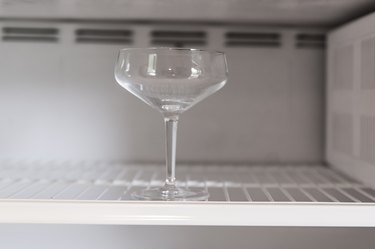
Just store your cocktail glasses in the freezer. Or place them in the freezer for 20 minutes. While this is clearly easy, it's a little inconvenient at the last minute.

How to Chill a Cocktail Glass

Method Two

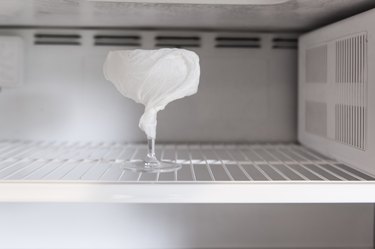
Wrap a wet paper towel around the glass you'd like frosted and add the glass to the freezer for 5 minutes. Remove from the freezer, remove the towel and you're all set.

How to Chill a Cocktail Glass

Method Three

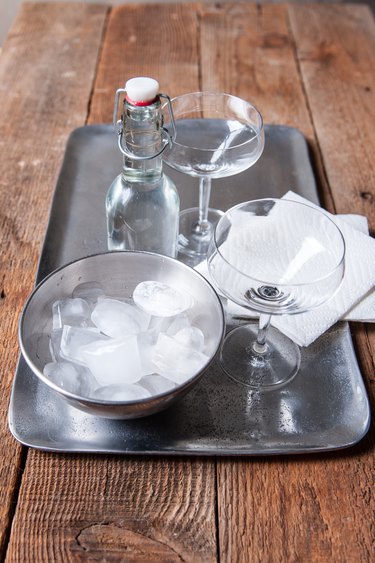
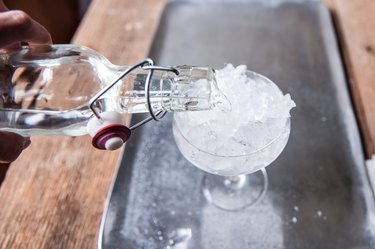
Fill the glass with crushed ice and add cold water. Let stand for 3 minutes, swirling occasionally. Pour out the ice and water and the glass will be frosted. This is the method used most often by bartenders in the field.

How to Chill a Cocktail Glass How to Chill a Cocktail Glass

How to Prepare Black Olives

0

Things You\’ll Need

  • Fresh black olives

  • Salt

  • Olive oil

  • Oregano, thyme, rosemary, dried pepper flakes, garlic cloves (these are optional)

  • Clean water

  • Sharp knife

  • Bucket or large bowl

  • Colander

  • Sterilized glass preserving jars with lids

... Black olives can be prepared at home.

Even though they are more ripe than their green counterparts, freshly picked black olives are much too bitter to eat and too hard to chew. You must cure them in order to eat them. There is a simple method for preparing black olives at home. Even though the method is time consuming, the final result will be homemade olives made with all natural ingredients and in accordance with your own preferences. These olives will last up to one year.

Video of the Day

Step 1

Rinse the olives and using the knife, make a cut along the side of each. Cutting the olives will speed the curing process. Place the olives in a pail or bowl and soak them in water, making sure that all of the olives are submerged. If necessary, you can place a plate or other object on top of them to weigh them down.

Step 2

Stir the olives and change the water every day for 21 days.

Step 3

Make a brine solution, using one part salt to 10 parts water. Make sure that the salt is completely dissolved in the water by warming the water and stirring. Drain the olives and place them in the brine solution. Leave them for three days, stirring periodically.

Step 4

Rinse a couple of the olives and taste them to see if they have lost enough of their bitterness to suit your taste. If not, add more salt and leave them for a few more days until they taste the way you want them to. Check them daily. When the olives are ready, rinse them. Let them drain for a couple of hours.

Step 5

Prepare a mixture of vinegar and water, using one part white wine vinegar to two parts water and soak the olives in the vinegar mixture for three days, stirring occasionally. The olives are now cured, so drain them again.

Step 6

Place the herbs, spices or other flavorings into the sterilized jars. These could include garlic cloves, oregano, rosemary, thyme or dried pepper flakes. The amount of these to include is up to you and using them is entirely optional.

Step 7

Pack the black olives into the prepared jars and pour olive oil over them until they are well covered. Seal the jars and store them in the refrigerator.

Tip

The olive oil that is used in this recipe will become flavorful. The Olive Market website says that this olive oil is excellent for salads once it is no longer needed for the black olives.

What Kind of Cooking Chocolate Is Used in Brownies?

0

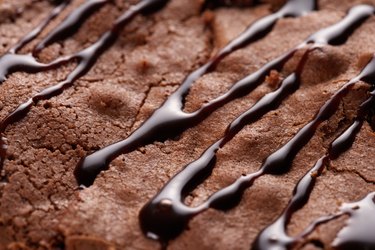
Chocolate sauce drizzled on brownie Brownies can be made with almost any type of chocolate — including cocoa powder. Image Credit: Jupiterimages/Photos.com/Getty Images

Brownies are a classic chocolate dessert — easy to make and easy to love. They are, essentially, a chocolate bar cookie. There's no standard recipe for this baking basic — rather, there are hundreds of variations. Different forms of the main ingredient, chocolate, can be used, depending on your preference. One tip, though: Save your fanciest chocolates for nibbling. Most of the subtleties of a gourmet chocolate will be lost once melted and baked into brownie form.

Video of the Day

Semisweet Chocolate

Semisweet chocolate is the classic chocolate chip chocolate — in fact, you can use melted chocolate chips or chunks for your brownies if you like. Semisweet chocolate contains about 40 to 60 percent cocoa solids, which gives it good flavor balanced with a pleasant sweetness.

Bittersweet Chocolate

Bittersweet chocolate is darker than semisweet, with more cocoa solids — about 60 to 85 percent. The higher the percentage, the stronger the chocolate flavor, as well as the bitterness. Bittersweet chocolate can provide a more intense brownie experience than semisweet. It's perfect for those who like their brownies dense and without add-ins.

Unsweetened Chocolate

Some brownie recipes call for unsweetened baking chocolate and compensate for the lack of sweetness by upping the sugar content of the recipe. Baking chocolate cannot be eaten straight from the bar. It is, essentially, 100 percent cocoa solids.

Cocoa Powder

Brownies can also be quite successfully made with cocoa powder rather than solid chocolate in the recipe. Cocoa powder is easier to handle than baking chocolate, as the latter must usually be carefully melted, usually in a double boiler, before being added to a brownie batter. Either Dutch-process cocoa or natural cocoa powder may be used to make brownies; Dutch-process cocoa will provide a richer flavor and darker color to the finished product.

The Best Coffee Grinders in 2022

0

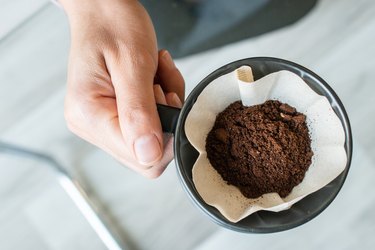
Cropped shot view of barista hand holding a cup with ground coffee inside with paper filter before drip it.

If you ask a coffee connoisseur why they prefer to grind their own coffee beans instead of using a store-bought bag of coffee grounds, they'll likely say that it makes a world of difference in the coffee's taste. For one, that bag of pre-ground coffee probably went stale long ago because coffee immediately begins to release aromas the minute it's ground.

Video of the Day

Additionally, the grind size of coffee beans directly affects the extraction of soluble molecules from the coffee beans, which affects coffee's taste. Having the right grind size for the type of coffee you're brewing allows you to take what's rich and flavorful from the beans and leave behind undesirable soluble molecules that cause coffee to taste bitter, sour or stale. By grinding your own coffee beans, you have more control over how your coffee turns out.

With a variety of coffee grinders on the market and multiple ways to brew coffee, it can be tricky to figure out which grinder is best for your needs. But one thing is clear: whether you're brewing drip coffee, French press coffee or using another method, having the ideal size and consistency of coffee grounds will elevate your cup of joe above the Average Joe cup of joe, so to speak. We've laid out what to look for in a coffee grinder and selected the best coffee grinders in 2022 to make your decision easier.
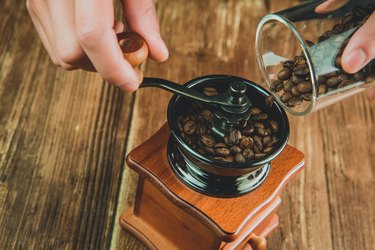
Coffee mills

What to Consider When Purchasing a Coffee Grinder

Blade Versus Burr​: There are two main types of coffee grinders: those that use blades to chop and slice, and those that use burrs, which are grinding discs that crush coffee beans instead of chopping them up. Most coffee experts discourage using blade coffee grinders because of their inconsistent results, producing a broad range of grind sizes from large pieces (boulders) to tiny particles (fines), most of which will not be suitable. Burr grinders are typically sharper and more capable of producing consistent grind sizes, but also tend to be pricier.

Flat Burr Versus Conical Burr​: If you're opting for a burr grinder (which coffee pros would suggest), there are also two different types: flat and conical. Flat burrs run parallel and use centrifugal force to propel coffee beans toward the burr teeth, and you can usually adjust your grind profile by moving the discs closer together or further apart. Conical burrs, on the other hand, provide a cutting angle of around 60 degrees and are more precise because you can adjust them by degrees. Flat burrs are cheaper than conical burrs, but need replacing considerably sooner.

Burr Materials:​ The most common burr materials are stainless steel and ceramic. One isn't necessarily better than the other. Steel tends to heat up but also cool down more quickly, while ceramic takes longer to heat up and longer to cool down. Ceramic burrs usually have a longer lifespan but are also more brittle—and more expensive.

Manual Versus Automatic:​ Manual coffee grinders require you to use a hand crank to crush your coffee beans, whereas an automatic grinder is electrically powered and does the job for you. If you don't mind a bit of an arm workout each time you make coffee, manual grinders are much quieter and less expensive, but take much longer to use. Manual grinders are often smaller than automatic grinders as well—useful if you're tight on kitchen space, but potentially a downside because they have smaller capacities.

Adjustable Grind Settings​: Look for a grinder that provides a wide range of grind sizes so you can adjust the coarseness or fineness of your coffee grounds depending on what type of coffee you're making. Grinders with 40 or more settings will allow you to brew nearly every style of coffee except for Turkish coffee, while grinders with around 30 settings will be enough for most popular styles with room for experimentation. Twenty settings or fewer will suffice for the standard styles like French press, pour-over and drip coffee.

Grind Functions​: Most automatic burr grinders will have a pulse function, which requires you to keep your finger on the button in order to grind, but it can be handy to have additional grinding functions. For example, some grinders have an "auto-grind" function that lets you do other tasks while the grinder is at work. Other grinders might have a timed grinding function and even programmable dosing so you can input the right amount for your style of coffee. These features aren't essential, but can be useful if you plan on preparing multiple cups of coffee per day.

Capacity:​ Capacity really depends on your needs. If you tend to make just one cup of coffee at a time, a single-person grinder that holds around seven to 10 grams of coffee beans would suffice. However, the more coffee you want to make each day, the more convenient a higher capacity will be. You'll need roughly 10 grams for each cup of coffee. Some coffee grinders come with a hopper, which is a container that holds the beans before they're ground. Most hoppers hold anywhere from 30 grams to 1 pound of beans.

Convenience​: Convenience encompasses many factors, but apart from a high capacity and versatility, look for materials that are easy and intuitive to assemble and take apart for cleaning. Some high-end grinders seem needlessly complex on the inside and can be difficult to maintain, while some less expensive options are easier. Speed is another thing to consider; while it's not a must, a grinder that gets the job done in 30 seconds can be particularly convenient on busy mornings, for example.

With these factors and criteria in mind, here's our list of the best coffee grinders in 2022.
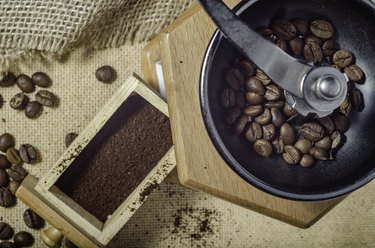
Coffee beans and freshly ground coffee

The Best Overall Coffee Grinder for Coffee Conoisseurs

Baratza Virtuoso+ Conical Burr Coffee Grinder

$249.95 at Amazon

The Baratza Virtuoso+ is a favorite among coffee connoisseurs, and for good reason. It's not ridiculously expensive (but not cheap, either), it's sturdily built using metal and plastic, and most importantly, its well-crafted 40-millimeter steel conical burrs provide extremely consistent results in a wide range of grind sizes. You can choose from 40 grind settings ranging from very fine to very coarse, suitable for nearly all of your coffee needs. Its 8-ounce hopper sits above a 5-ounce coffee grounds bin, which is illuminated by LED lights.

The Virtuoso+ features an LCD display and a digital timer that allows you to adjust the grind time from one to 40 seconds, down to one-tenth of a second for ultimate precision. Or, if you prefer, you can use the pulse mode instead by holding the button down for a few seconds. This advanced grinder is perfect for coffee experts who are familiar with concepts like flow rate, brewing time and extraction level and everything in between, as well as anyone who enjoys robust coffee flavor and is willing to experiment.
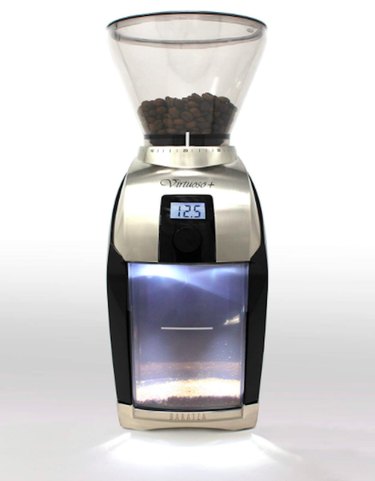
Baratza Virtuoso+ Conical Burr Coffee Grinder

Runner-Up for Best Overall Coffee Grinder

Breville Smart Grinder Pro

$199.95 at Amazon

Another excellent choice is the Breville Smart Grinder Pro, which costs less than the Baratza Virtuoso+ but still produces consistent results. Featuring a generous 60 grind settings, its grind tends to be even finer than that of the Virtuoso+, and its coarsest setting is probably more in line with the medium setting of other machines. This can make it less suited to making cold brew and French press coffee, but is ideal for most other brewing methods—even espresso, which requires very fine coffee grounds. Most home coffee grinders can't double as an espresso grinder, but the Breville Smart Pro comes quite close.

Other points in its favor include stainless steel conical burrs, an LCD display, an electronic timer that utilizes Dosing IQ technology to be adjustable down to 0.2 seconds, and the ability to grind directly into whatever appropriately-sized container you choose. It includes a 16-ounce hopper with a locking mechanism for security and easy removal. If you're a coffee enthusiast who isn't as likely to make French press or cold brew coffee, you can't go wrong with the Breville Smart Grinder Pro.
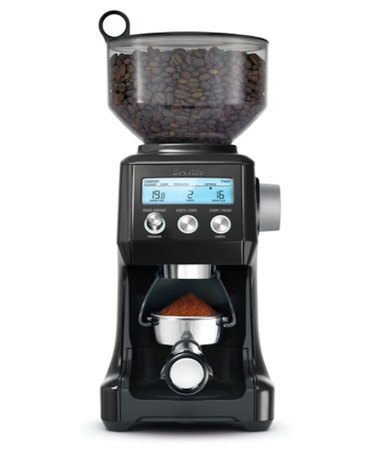
Breville Smart Grinder Pro

The Best Budget-Friendly Grinder for Coffee Conoisseurs

Baratza Encore Conical Burr Coffee Grinder

$169.95 at Amazon

For coffee geeks who aren't ready to shell out lots of cash, Baratza has another impressive option that's more affordable but covers most of your grinding needs quite skillfully. It uses the same motor as the Virtuoso+, but its burr set is slightly less effective and grinds more slowly. However, we're talking a matter of seconds, not minutes, so it's efficient enough for most people. You can adjust its 40-millimeter steel conical burrs to 40 different grind settings, allowing you to experiment with most brewing methods. It features an intuitive on/off switch for continuous grinding, as well as a pulse button on the front. The hopper holds up to 8 ounces of beans, and the clear coffee grounds bin below it has a fill line to indicate when it needs emptying. Overall, it's a lot of bang for your buck and not far off from the Virtuoso+ in efficiency and quality.
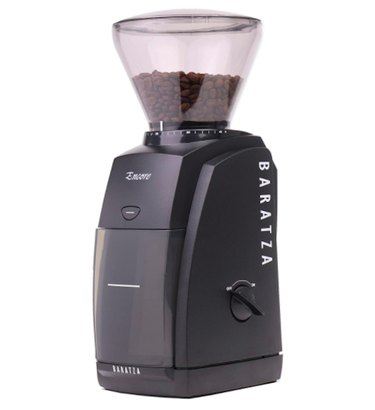
Baratza Encore Conical Burr Coffee Grinder

The Best Mid-Level Burr Grinder

OXO Brew Conical Burr Coffee Grinder

$104.18 at Amazon

This mid-level grinder is perfect for avid coffee drinkers who want to explore the world of home brewing but don't consider themselves experts and aren't ready to commit to a higher price tag. Its design is simple and easy to use, consisting of an adjuster with 15 settings (plus micro settings) and a one-touch start timer that keeps your last setting. The hopper holds 12 ounces of beans and the coffee grounds container below holds up to 110 grams—enough for up to 12 cups of coffee. The grinder features stainless steel conical burrs that produce admirably consistent results. When it comes to automatic burr grinders, it doesn't get much more inexpensive before the quality starts to noticeably drop off.
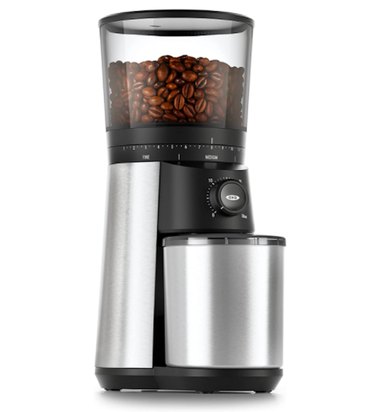
OXO Brew Conical Burr Coffee Grinder

The Best Budget Burr Grinder

KRUPS Professional Electric Burr Coffee Grinder

$58.99 at Amazon

This grinder can't compete with the likes of the Virtuoso+, but it's still a solid choice for coffee drinkers who aren't super picky when it comes to their brewing and don't want to spend a lot. In part because it features flat burrs instead of conical burrs, its grind isn't as consistent as that of previous entries on this list. Even so, its nine different grinding levels still offer you a decent amount of control over your coffee and it's a big step up from using a blade grinder. One neat feature is the ability to select from two to 12 cups to grind the exact amount you need. The clear bean container holds up to 8 ounces of coffee beans. It's easy to clean the removable burr part and the grinder comes with a cleaning brush.
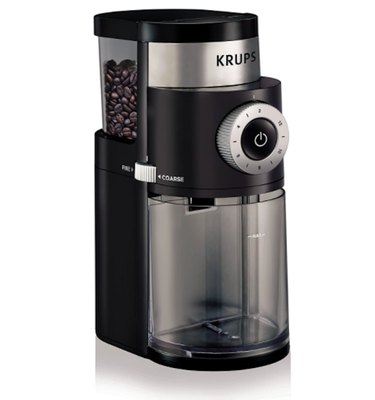
KRUPS Professional Electric Burr Coffee Grinder

The Best Manual Burr Grinder

MITBAK Manual Coffee Grinder With Adjustable Settings

$34.99 at Amazon

Automatic grinders may be significantly faster, but this manual grinder provides great value for the price point and is the best non-specialized manual grinder we found. While it requires a little elbow grease and around five minutes of cranking, it produces consistent results each time. Plus, it's easy to adjust the grind settings—simply turn the adjusting ring clockwise for finer grinding and counterclockwise for coarser grinding. Not to mention, it's quite elegant-looking for a coffee grinder, and quiet, too. Though it takes longer to use than an electric grinder, it's much less likely to overheat and affect the taste of your coffee grounds, ensuring a richer, cleaner taste. Its coffee grounds container is also clear so you can easily see when it's time to empty it.
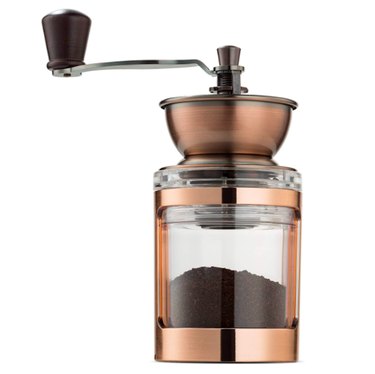
MITBAK Manual Coffee Grinder With Adjustable Settings

The Best Grinder for Turkish Coffee

Zassenhaus Santiago Coffee Mill Grinder

$101.75 at Amazon

Turkish coffee requires extremely fine coffee grounds—even finer than for espresso—so not many coffee grinders are equipped for the task. Fortunately, Zassenhaus designed this coffee grinder especially with Turkish coffee in mind. Its German-made, carbon steel conical burr grinding mechanism requires effort on your part (it's a manual grinder with a crank), but it yields seriously fine and consistent results. To operate the grinder, in a seated position, place the grinder in your lap between your thighs and turn the ergonomically-designed hand crank. You can use the adjustable knob below for a coarser or finer grind. Crafted from natural varnish beechwood and steel, the grinder is also quite a sight to behold. For coffee lovers who long to brew their own Turkish coffee, this is an excellent and effective choice.
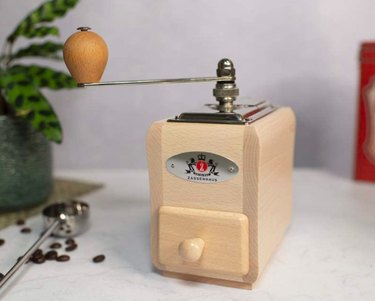
Zassenhaus Santiago Coffee Mill Grinder

The Best Blade Grinder

KRUPS Silent Vortex Electric Grinder

$35.91 at Amazon

While some coffee experts frown upon blade grinders, if you prefer a blade grinder for its lower cost or versatility (as you can use it to grind spices and other ingredients), the KRUPS Silent Vortex is the way to go. It's quiet, powerful and fast. All it takes is 15 seconds to grind enough coffee beans for 12 cups of drip coffee. And if you're not worried about cross-taste contamination, you can use it to grind hard spices like peppercorns and dry herbs, as well. With its quick and easy one-touch operation for continuous or pulse grinding, it doesn't get much more convenient than this. The downside is that you can't adjust grind settings and the results won't be as uniform as those of a burr grinder, leaving you with more boulders and fines that may be unusable. However, for its speed and versatility, it's worth it for the coffee brewing novice.
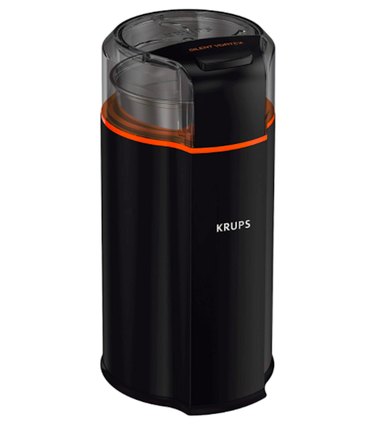

KRUPS Silent Vortex Electric Grinder

How to Keep Peppers Crispy When Canning

0

Things You\’ll Need

  • 1 gallon boiling water

  • 1/2 cup kosher salt

  • Distilled water

  • Sea salt

... When you\’re preparing to can, choose young, fresh peppers.

It's no fun to bite into soggy, lifeless pickled pepper. The process of canning peppers, from mild green to the hottest jalapenos, is arduous and requires the correct conditions and equipment. The peppers are pickled in an acidic mixture to prevent botulism, a potentially fatal bacterium. This process usually breaks down the peppers, causing them to become limp. There are several ways, however, to help you keep your pickled peppers firm and tasty.

Video of the Day

Step 1

Choose peppers that are healthy and crisp to begin with. Attempting to can old, rotten or limp limp peppers will lead to pickled peppers that are also limp and lifeless.

Step 2

Create brine from 1 gallon boiling water and 1/2 cup kosher salt. Allow the brine to boil down for 20 minutes before adding the peppers. Refrigerate the brine and peppers for one to two days. Remove the peppers from the brine and rinse them well under a cool tap.

Step 3

Can the pickles in distilled water. Hard water contains minerals that break down canned peppers.

Step 4

Add kosher or sea salt to the mixture instead of iodized salt. These salts are less likely to cause limp pickled peppers than regular table salt.

Mini Shepherd\’s Pot Pies Recipe

0

If you love comfort food, you're about to meet your new favorite recipe. These mini shepherd's pies are filling, delicious, and hearty! They're also made with buttery pie crust dough, which gives them a "pot pie" spin that can't be beat. Think of it like a cross between your two favorite pies. Plus, thanks to the size of these little pies, they're perfect for feeding a hungry crowd.

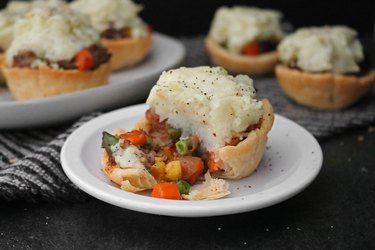
Mini shepherd\'s pot pies

Video of the Day

Mashed Potato Topping

Things You\’ll Need

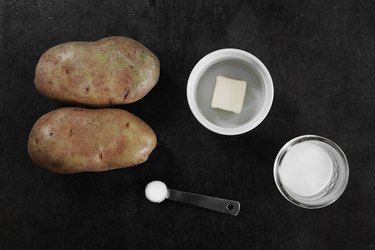
  • 2 medium russet potatoes

  • 2 tablespoons butter

  • 2 to 3 tablespoons milk

  • 1 teaspoon salt

  • Dash of ground black pepper

Ingredients for mashed potatoes

Step 1

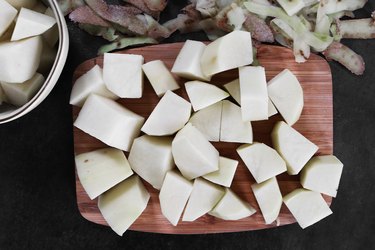
Peel and cube the potatoes.

Peel and cut the potatoes

Step 2

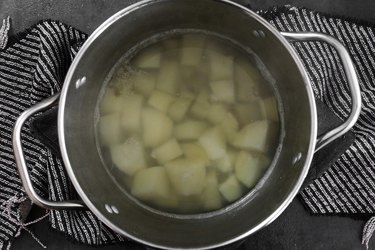
Over medium-high heat, bring a large pot of water to a boil. Add the potatoes and cook for 20 minutes, or until the potatoes are soft. You should be able to easily pierce them with a fork.

Boil the potatoes

Step 3

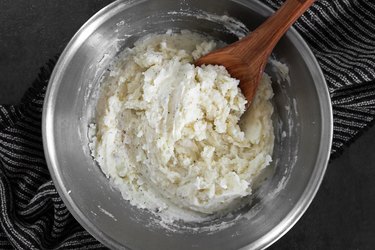
Drain the potatoes and place them in a large bowl. With a large fork or potato masher, mash the potatoes. Add the milk, butter, salt, and black pepper. Mix well.

Mash the potatoes

Tip

You can adjust the milk and butter according to your preferences. The more milk you add, the creamier the mashed potatoes will be.

Crust and Shepherd\’s Pie Filling

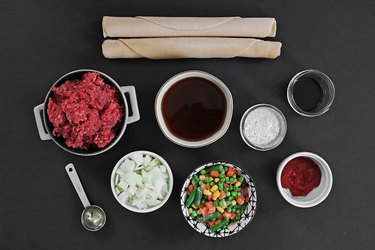
Things You\’ll Need

  • 2 pre-made pie crusts

  • 1 pound lean ground beef

  • 1 small onion, chopped

  • 1 tablespoon olive oil

  • 1 cup beef broth

  • 1 cup frozen mixed vegetables

  • 2 tablespoons all-purpose flour

  • 2 tablespoons ketchup

  • 2 tablespoons Worcestershire sauce

Ingredients for mini shepherd\'s pot pies

Step 1

Pre-heat the oven to 400° Fahrenheit.

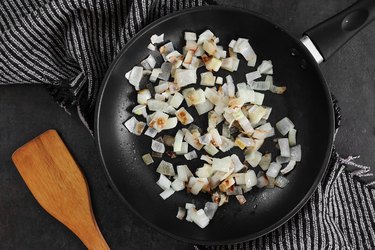
In a pan over medium heat, cook the onions in olive oil. Sauté for 5 minutes or until slightly brown and fragrant.

Cook the onions

Step 2

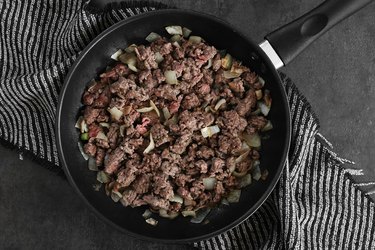
Add the ground beef. Cook for 5 to 7 minutes, or until most of the beef has browned. Make sure to break apart the beef with a spatula.

Cook ground beef

Step 3

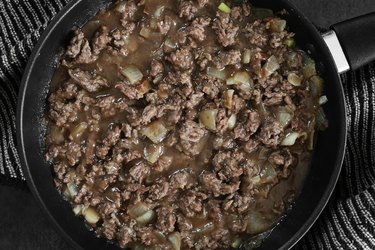
Add the flour, beef broth, salt, and pepper. Mix well and simmer until the mixture thickens, about 10 minutes.

Mak gravy

Step 4

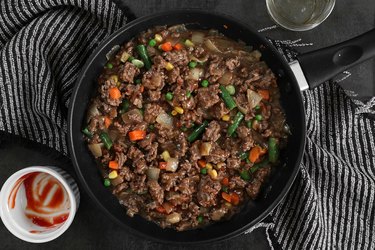
Add the ketchup, Worcestershire sauce, and mixed vegetables. Cook for another 1 minute.

Add frozen vegetables

Step 5

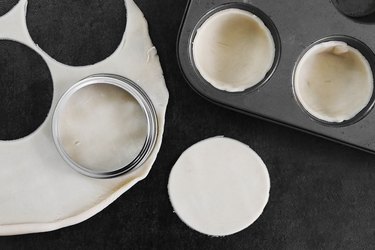
Cut the pie dough into 3.5 to 4-inch wide circles. You can use a cookie cutter, mason jar lid, or drinking glass. Press the dough circles into a cupcake tin, making sure to press the dough up and towards the edge.

Cut pie dough circles

Tip

To save time, prepare the pie dough as the ground beef cooks.

Step 6

Bake the pie dough for 8 to 10 minutes or until golden brown.

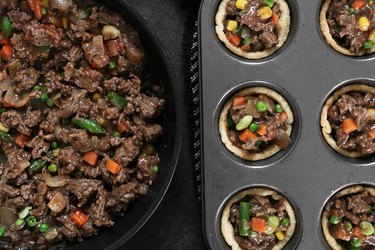
Spoon the meat mixture into each cavity.

Add shepherd\'s pie filling

Step 7

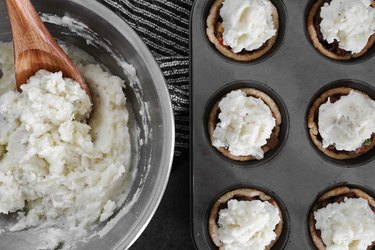
Add a heaping spoonful of mashed potatoes on top of each mini pie. If you'd like, garnish the mashed potatoes with a sprinkling of ground black pepper.

Add mashed potatoes

Step 8

Return to the oven and bake for 15 for 20 minutes, or until the potato topping is light golden brown. The pie crust should be slightly darker, too.

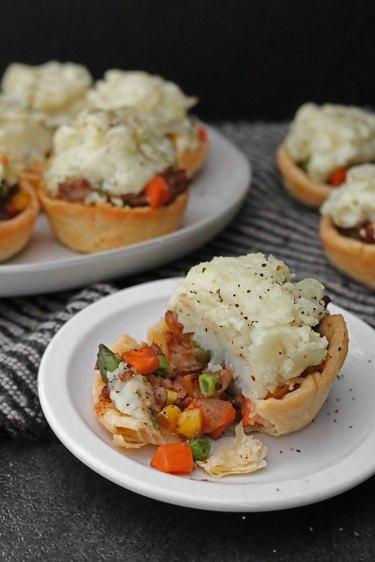
Your mini shepherd's pot pies are ready to enjoy! Depending on the size of your dough circles, this recipe yields 16 to 18 mini pies.

Mini shepherd\'s pot pies