
Home Blog Page 70

How to Make Bunny Cinnamon Rolls

0

This spring, welcome the new season with bunny cinnamon rolls. Made with homemade dough and cream cheese icing, these cinnamon rolls are both darling and delicious. You can even garnish each bunny with sprinkles, decorating gel and fabric bows for a charming treat.

Bunny cinnamon rolls

Video of the Day

Cinnamon Rolls

Things You\’ll Need

  • 1 cup whole milk, lukewarm (about 110° F)

  • 1/4-ounce packet active dry yeast (2 1/4 teaspoons)

  • 1/2 cup granulated sugar

  • 1 teaspoon salt

  • 3 to 4 cups all-purpose flour (plus more for kneading)

  • 2 large eggs, room temperature

  • 5 tablespoons + 3 tablespoons unsalted butter, melted (separated)

  • 3/4 cup dark or light brown sugar

  • 3 tablespoons ground cinnamon

  • 3 to 4 tablespoons unsalted butter, softened
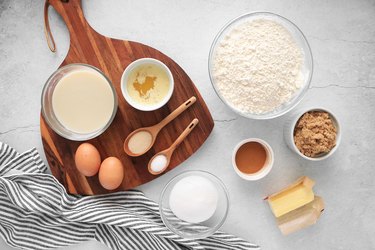
Ingredients for bunny cinnamon rolls

Step 1

In a large bowl, combine the lukewarm milk, yeast and a pinch of sugar. Let it sit for 5 minutes or until the yeast becomes puffy. It should also smell "yeasty."

If the yeast doesn't puff up, it means that it's dead. Discard the mixture and repeat with another 1/4-ounce packet of yeast.
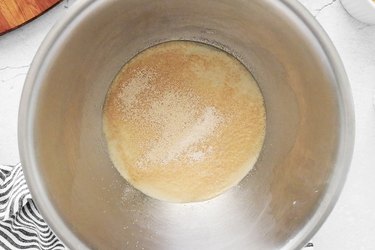
Yeast in bowl

Tip

Make sure the milk is lukewarm, not hot. The heat will kill the yeast, and the dough won't rise. Similarly, if the milk is too cold, the dough won't rise.

Step 2

In a separate large bowl, combine the remaining sugar, salt and 1 cup of flour.
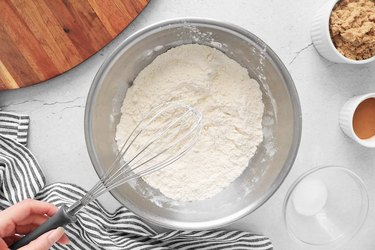
Combine dry ingredients

Step 3

Add the yeast mixture to the dry ingredients.
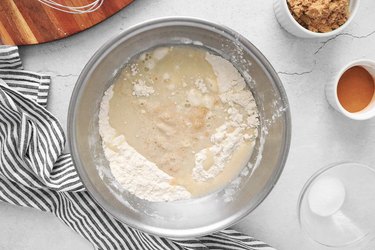
Add yeast mixture

Mix well to form a sticky dough.

Sticky dough

Step 4

In a small bowl, lightly beat the eggs.
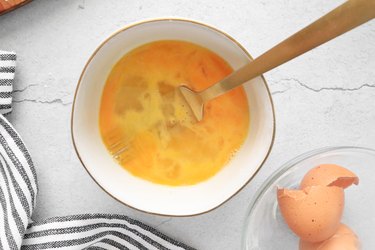
Beating eggs

Step 5

Add the lightly beaten eggs and melted butter to the dough. Stir until mostly creamy.
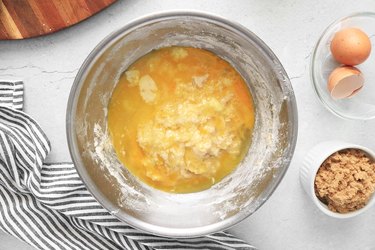
Add eggs and melted butter

Step 6

Add 1 cup flour and then mix until completely combined. Repeat with another cup of flour.
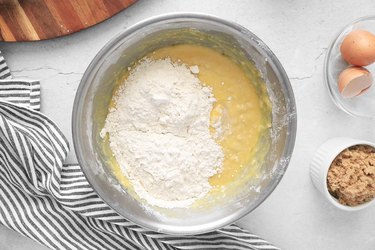
Add flour in increments

Step 7

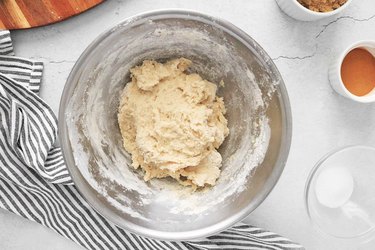
Gradually add the last cup of flour, about 1 tablespoon at a time. Add just enough to form the mixture into a tacky dough. You might not use the last full cup of flour.
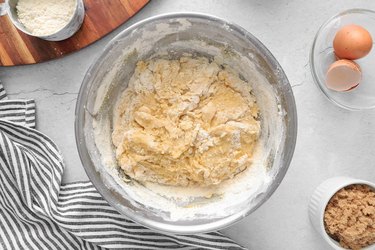
Add flour to dough

Tip

Using too much flour can make the finished cinnamon rolls dry. By adding the remaining flour 1 tablespoon at a time, you can avoid using too much.

Step 8

On a lightly floured surface, knead the dough until smooth, about 8 minutes.
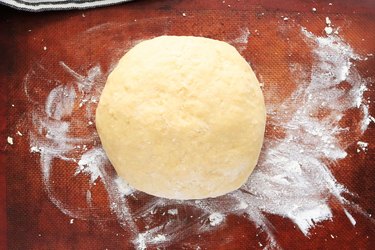
Knead dough

Step 9

Place the dough in a large, greased bowl. Rotate the dough once or twice to grease each side. Cover with a clean, damp towel. Let it rise in a warm area for about 1 hour or until it doubles in size.
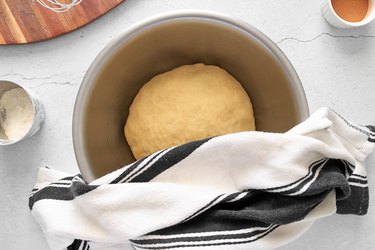
Let dough sit until doubled in size

Step 10

Gently punch down the dough. On a lightly floured surface, roll out the dough into a rectangle. Cut the dough into 2/3 and 1/3 sections, slicing from one long edge to the other.
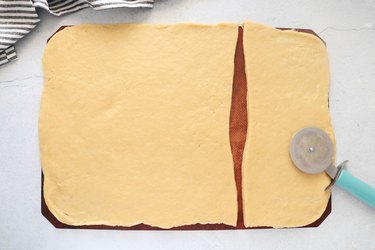
Roll out dough and slice

Step 11

Combine the brown sugar and ground cinnamon in a small bowl. Mix well.
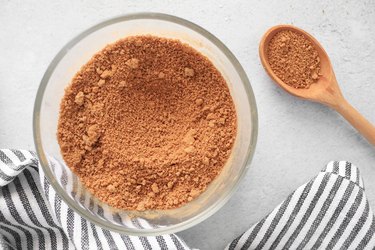
Mix brown sugar and cinnamon

Step 12

Spread softened butter on the larger section of dough. Add the brown sugar mixture on top.
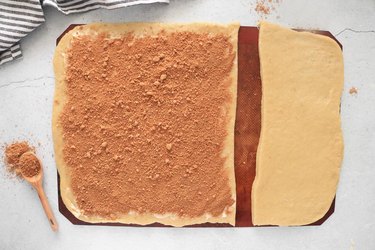
Add butter and cinnamon sugar

Step 13

Slice the larger section of dough into 10 strips and the smaller section into 5 strips.
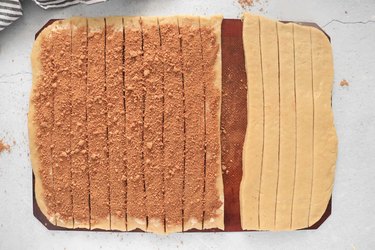
Slice into strips

Step 14

Roll the cinnamon sugar strips into tight, compact pinwheels. Secure the ends of the dough by dipping your finger into water and pinching the dough. Place them on a large baking sheet lined with parchment paper.
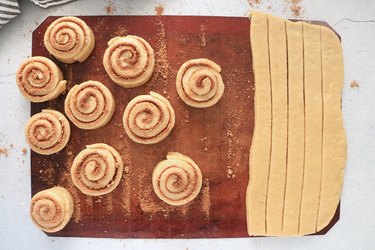
Roll dough into pinwheels

Step 15

Trim the edges of the smaller section. Cut across the strips in half widthwise to create 10 shorter strips.
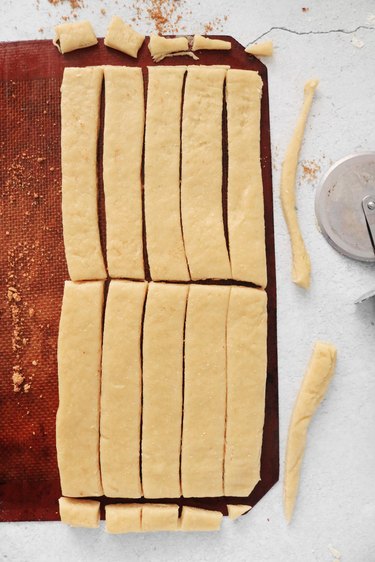
Slice the strips in half

Step 16

There are several ways to turn the strips into ears. You can form each strip into a "V" shape and pinch it to the top of each roll, or you can slice each strip in half lengthwise and form the two separate ears. Don't be afraid to experiment!
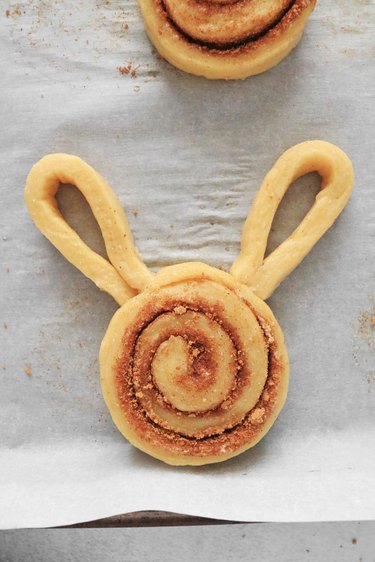
Add ears to rolls

Tip

Use a bit of water to attach the ears to each roll.

Step 17

Let the rolls rise for 30 minutes. Preheat the oven to 350° F. Brush the rolls with melted butter and sprinkle leftover cinnamon sugar on top. Bake for 15 to 20 minutes or until golden brown.

While the rolls are baking, make the cream cheese icing.
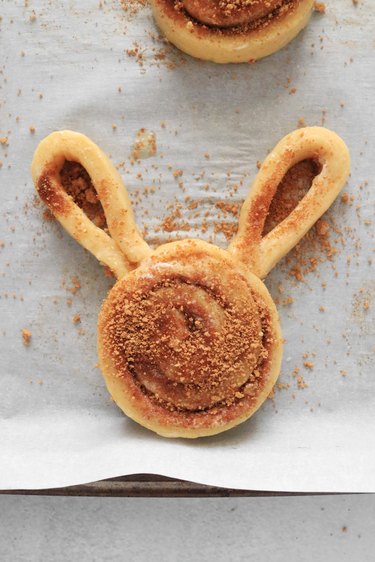
Bake cinnamon rolls

Cream Cheese Icing

Things You\’ll Need

  • 8 ounces cream cheese, softened

  • 2 tablespoons butter, melted

  • 1 teaspoon vanilla extract

  • Pinch of salt

  • 3 tablespoons milk or heavy cream (plus more as needed)

  • 2 cups powered sugar (plus more as needed)

Ingredients for cream cheese icing

Step 1

In a large bowl, beat all the ingredients except the powdered sugar.

Beat softened cream cheese

Step 2

Gradually add the powdered sugar 1/2 cup at a time until the icing reaches your desired sweetness and consistency. You might need more or less than 2 cups of powdered sugar.

Add powdered sugar

Step 3

Beat until smooth. If you prefer a thinner icing that can be drizzled, add more milk 1 tablespoon at a time.

Beat cream cheese icing

Spread or drizzle the icing on the bunny cinnamon rolls. Store leftovers in an airtight container in the refrigerator. To reheat, warm the rolls in the microwave.

Completed bunny cinnamon rolls

How to Make Piñata Cupcakes

0

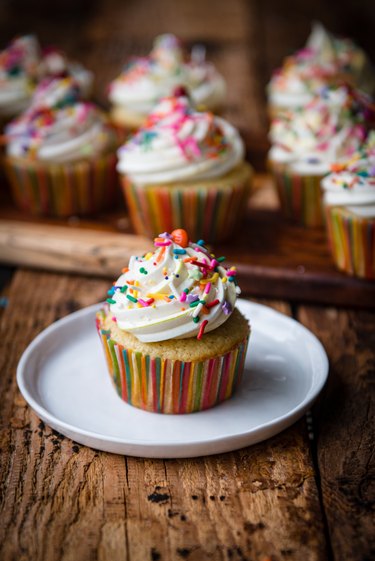
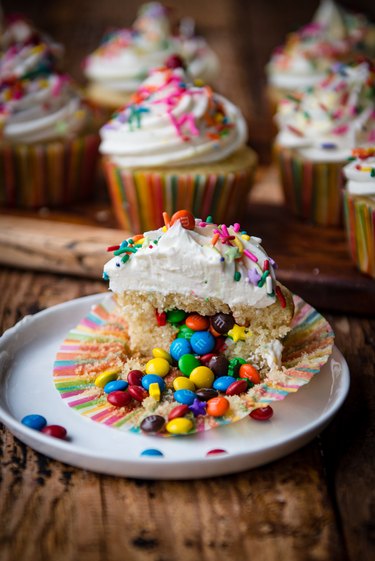
Even with an easy, one-bowl cupcake and the best whipped cream-cheese frosting, these little beauties will be upstaged by the secret hidden treasure trove of candy in the center. Even if you want to make cheater cupcakes and just use a box mix and premade frosting, you will still get oooohs and aaaahs when your guests discover their little secret.

Piñata cupcakes

Video of the Day

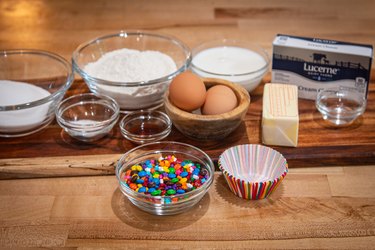
Cupcakes (Makes 12):

Things You\’ll Need

  • 1/2 cup softened butter

  • 3/4 cup sugar

  • 2 large eggs

  • 2 teaspoons vanilla extract

  • 2/3 cup whole milk

  • 1 tablespoon white vinegar

  • 1 1/2 cups all-purpose flour

  • 1 teaspoon baking soda

  • 1/2 teaspoon salt

Frosting/Filling:

Things You\’ll Need

  • 1 cup sprinkles or small candy (I used mini M&Ms and star sprinkles)

  • 8 ounces cream cheese

  • 1 cup heavy cream

  • 1 teaspoon vanilla extract

  • 1 cup powdered sugar

Ingredients for piñata cupcakes

Tip

Make it easy! You can use a box cake mix and premade frosting to make this project super simple.

Step 1: Beat the Butter and Sugar

Preheat the oven to 350°F. Add the softened butter to a mixing bowl and beat until creamy. Add the sugar and beat until well combined.

Beating the butter and sugar

Step 2: Add the Wet Ingredients

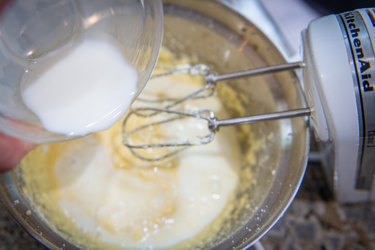
Beat in the eggs and vanilla until well combined. Then, add the milk and white vinegar.

Adding wet ingredients

Step 3: Add the Dry Ingredients

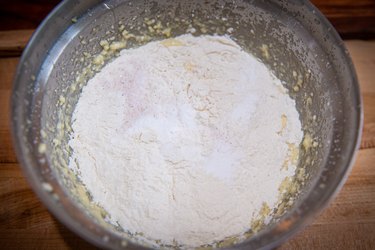
Sprinkle with the flour, baking soda and salt and stir until just combined.

Adding dry ingredients

Step 4: Scoop

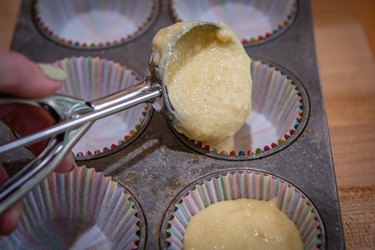
Scoop the mixture into cupcake papers until 2/3 full (an ice cream scoop works well).

Scooping mixture into cupcake papers

Step 5: Bake

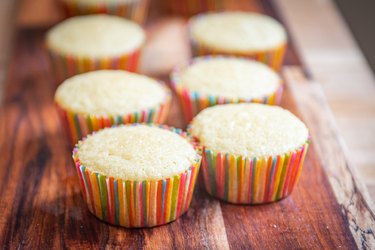
Bake for 12 to 14 minutes or until the top springs back when lightly touched. Allow the cupcakes to cool completely.

Baked cupcakes in colorful paper

Step 6: Cut

Using a paring knife, cut a circle out of the center of each cupcake, making sure that the walls and bottom of the cupcake are still intact.

Cutting circles in the cupcakes

Step 7: Slice

Slice the bottom off the cake plug, keeping the top portion.

Slicing the cake plug in half

Step 8: Fill

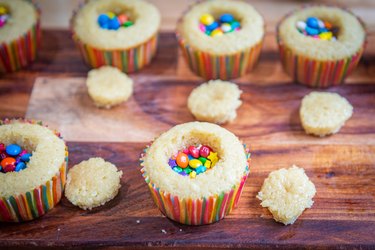
Fill the hole with candy and/or sprinkles.

Cupcakes with candy in center hole

Step 9: Cover

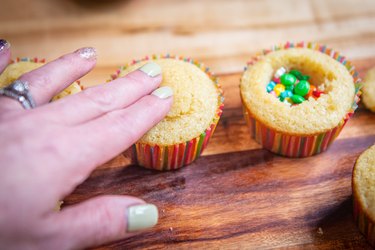
Place the top of the cake plug back on the top of the hole.

Placing cake plug top over candy

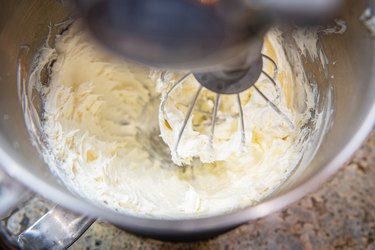
Step 10: Beat the Cream Cheese

Add the cream cheese to the bowl of a stand mixer and beat on high until light and fluffy. This may take several minutes.

Beating cream cheese

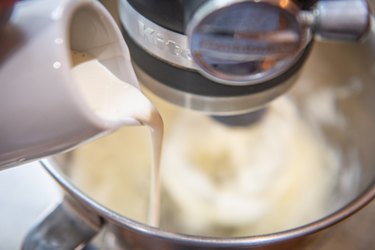
Step 11: Add the Cream

While the mixer is running on high, slowly add the cream a few tablespoons at a time until incorporated before adding more. Then, add the vanilla extract.

Adding the cream

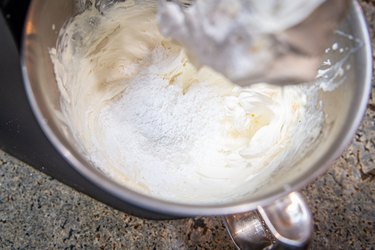
Step 12: Add the Powdered Sugar

Add the powdered sugar and beat until well combined.

Adding powdered sugar

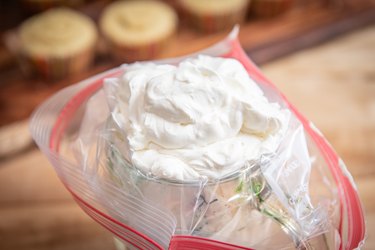
Step 13: Add the Frosting to a Piping Bag

Fill a piping bag with the frosting. This works best if you put the piping bag in a large mug.

Piping bag in mug

Step 14: Frost and Sprinkle

Frost the cupcakes and add sprinkles if desired.

Cupcake with frosting and sprinkles

Step 15: Serve

Serve the piñata cupcakes and watch smiles appear when their secret is discovered!

Completed piñata cupcakes

Instant Pot Recipe: Easy Chicken Alfredo

0

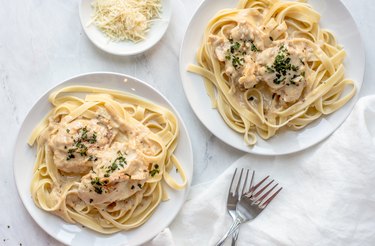
The Instant Pot is a hot trend right now (literally and figuratively) because it makes meals fast and fool-proof. Now you can browse through your feeds while your dinner is cooking, without the anxiety of burning your food in the background. #hallelujah! This easy chicken Alfredo definitely needs to be at the top of your pressure cooker recipe list.

chicken Alfredo

Video of the Day

Things You\’ll Need

  • 4 tablespoons butter

  • 4 chicken breasts

  • 2 cloves garlic, minced

  • 1 1/2 cups heavy cream

  • 1 teaspoon salt

  • 1/2 teaspoon pepper

  • 1 cup fresh grated Parmesan cheese

  • 1 cup mozzarella cheese

  • 16 oz fettuccine pasta

  • Chopped basil parsley for garnish

Step 1: Brown Chicken

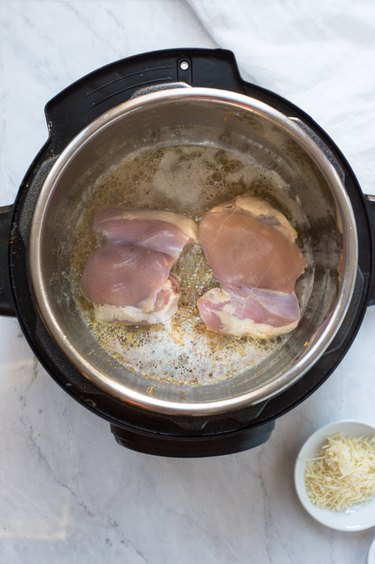
Press the "Saute" button on your Instant Pot. Place butter in the pot, along with chicken breasts. Allow them to brown, about 2 to 3 minutes each side. Press "Cancel" to turn off.

brown chicken

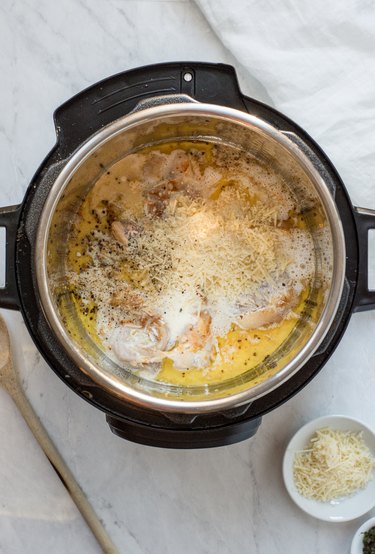
Step 2: Make the Alfredo Sauce

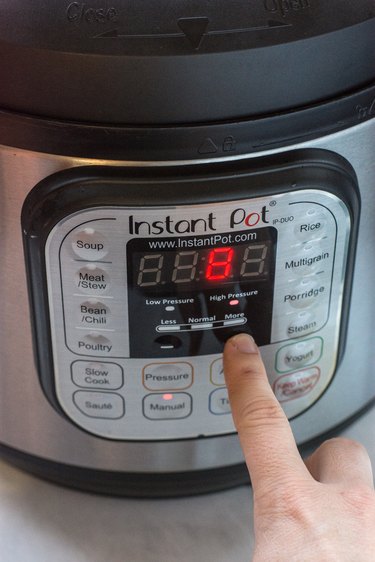
Add in the garlic, heavy cream, salt, pepper, and Parmesan cheese. Lock the lid into place and seal the valve on the lid. Select "Manual" on high pressure, and set to 8 minutes.

Alfredo sauce

Tip

If chicken breasts are frozen, set timer to 10 minutes.

tip

Step 3: Prepare Pasta

While chicken Alfredo is cooking, make fettuccine pasta in a pot until al dente.

Step 4: Add Cheese and Serve

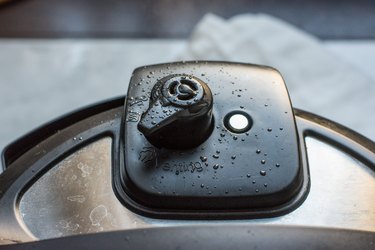
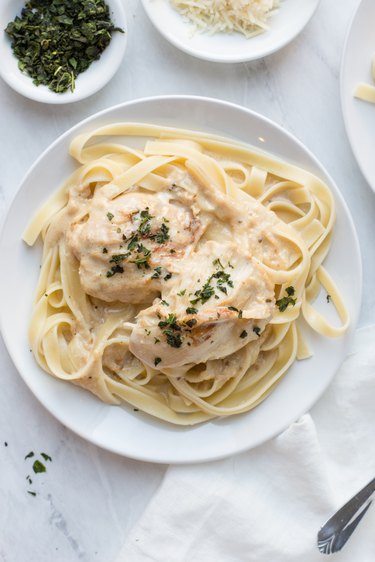
When the Instant Pot beeps and is done cooking, quick release the valve to "Venting." Once pressure is released, remove lid, and stir in mozzarella cheese until melted. Add the cooked fettuccine to the pot and mix well. Serve while warm and garnish with basil or parsley.

serve pasta

Tip

Place a kitchen towel over the "Venting" valve when quick releasing the pressure. This will help avoid the hot steam (especially if you're new to pressure cooking).

chicken alfredo

How to Replace a Stick of Butter With Shortening

0

Novice bakers are often intimidated by the idea of substituting a major ingredient, such as butter, in their baked goods. Baking holds a reputation as a stern taskmaster, demanding precision and punishing any deviation from the recipe. There is a kernel of truth in this. You can't blindly make changes to a recipe's chemistry and expect it to work, but — and this is important — you can make informed changes. So, if your recipe calls for butter and all you have is shortening, you just need to know how they differ.

Apples and Oranges

A stick of butter measures 1/2 cup, so a half-cup of shortening might appear to be its direct replacement. That's not true in real-life baking, because shortening is a pure fat and butter is not. Most butter is roughly 80 percent fat, with water accounting for most of the remainder.

Video of the Day

If your recipe calls for just one stick of butter you can usually get away with substituting shortening, but you'll see differences in the texture of the finished baked good. For example, cookies that spread and develop crisp edges when made with butter will be puffy and cake-like when made with shortening. It's not quite an apples-to-oranges difference, but some adjustments will definitely give you a better result.

Tweaking the Recipe

Adjusting a commercial-sized recipe requires careful calculation, but you don't need to be that precise in a home recipe. A stick of butter equals 8 tablespoons, of which something close to 1 tablespoon is water. To make a close substitution, remove one tablespoon of shortening from your half-cup and replace it with water or milk. This restores the fat and liquid to approximately their original proportions, and should result in perfectly acceptable quick breads or cakes.

The Temperature Issue

Cookies are more problematic. Even after adding liquid, you still might find that your cookies bake up puffy and cake-like rather than flat and crisp. That's because shortening melts at a higher temperature than butter, so the cookies begin to "set" before the dough softens and spreads.

Tip

You can counter this by flattening the cookies by hand, rather than simply dropping balls onto the sheet, or by resting each sheet for a few minutes on the warm-from-baking stovetop before it goes into the oven. Cookies made with shortening will usually be paler than butter cookies, as well.

Other Differences

Shortening is a superior baking fat in many respects. Any cake or quickbread that calls for its fat to be creamed with sugar will be lighter and more appealing when it's made with shortening. Shortening stays stiffer at room temperature than butter does, so it traps more air and leavens the goods more effectively. It also contains emulsifiers that help the shortening mix better with the flour, sugar and other ingredients.

The Flavor Comparison

Its major shortcoming is its lack of flavor. Butter has a distinctively rich taste, and many recipes — such as shortbread cookies — rely on it almost entirely for their flavor. Shortening-based baked goods lack that. Also, cookies and frostings made with shortening can leave your mouth feeling greasy. That's because butter melts at body temperature and shortening doesn't; so the treats leave a film of shortening in your mouth. Some bakers compromise by mixing butter and shortening in the recipe, gaining the creaming prowess of the shortening but keeping the butter's rich flavor.

Does Homemade Peanut Butter Cost Less Than Store-Bought?

0

close-up of a slice of bread with peanut butter Peanut butter is a simple blend of peanuts and oil. Image Credit: Stockbyte/Stockbyte/Getty Images

While commercial brands of peanut butter contain ingredients that preserve its texture and extend its shelf life, making your own guarantees that you know exactly what goes into it. Whether it is cheaper to make your own than to buy a store-bought brand depends on the price of the peanuts and the cost of processing them. Learn what it takes to make peanut butter to determine whether your effort is worth the time.

Video of the Day

Cost Comparison

According to the U.S. Department of Labor's average price index, the cost for a 16-ounce jar of peanut butter averaged $2.73 in July 2013. The average price for a pound of shelled roasted peanuts averaged $2.49 if purchased in bulk. A pound of raw peanuts purchased in bulk can cost $2 or more. With the cost of the oil needed to turn the nuts into butter factored in, as well as the addition of salt, you may conclude that making your own is not more economical than buying a jar at the store.

Peanut Facts

Technically speaking, the peanut is not a nut but a legume related to beans and peas. It grows beneath the soil in a shell that contains two whole seeds encased in a thin brownish skin. While you can use just about any type of peanut to make butter, most recipes call for raw or unsalted roasted peanuts. Butter made with raw peanuts tends to be bland and relatively tasteless, but you can adjust this by boiling or roasting the nuts before processing them into butter.

Preparation

You need about 1 pound of shelled peanuts to make 1 pound, or 16 ounces, of peanut butter. A small amount of cooking oil makes the mixture creamy. Roast raw peanuts by spreading about 2 cups of them on a sheet or cookie pan and salting them lightly, if desired. Roast them for about 25 minutes at 350 degrees Fahrenheit, stirring them a few times until they start smelling nutty. Remove them from the oven and let them cool before using them to make peanut butter.

Blending and Storing

To make peanut butter, place the peanuts in a food processor equipped with the chopping blade in the bottom. Process the peanuts until they start breaking down and forming a loose wet mass, which can take as long as 10 minutes. Add about a tablespoon of peanut, corn, sunflower or safflower oil to the blender and pulse until it reaches the consistency that you like. Adjust the amount of oil as needed, adding it in 1/2-teaspoon increments so the butter doesn't get soupy. Refrigerate homemade peanut butter for as long as two weeks in a covered container.

How Long Is Almond Milk Good for Once Opened?

0

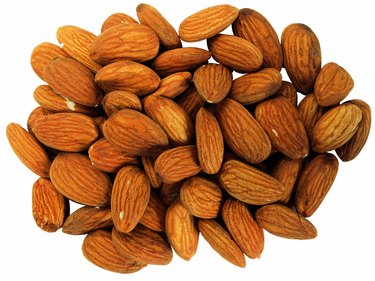
close-up of unpeeled almonds Almond milk is made from ground almonds and water. Image Credit: Stockbyte/Stockbyte/Getty Images

Almond milk is a dairy-free milk substitute that you can store in much the same manner as cow's milk. It has a creamy texture and a mild nutty flavor. Storage times for opened packages of almond milk depend on the type of almond milk and whether it's stored properly. Check the dates on the packages before purchase to ensure the longest storage life possible.

Video of the Day

Types of Almond Milk

The type of almond milk affects how long it will keep. Commercially produced almond milk has a "use by" or "best before" date stamped on the carton. It's good practice to use the milk by the date listed on the container to ensure the best quality, but the milk may stay safe to drink for several days past this date. Homemade almond milk generally has a shorter shelf life than commercially produced milk, so you must use it more quickly.

Storage Method

Commercially produced almond milk comes in refrigerated or shelf-stable varieties. Both varieties require refrigeration after you open the carton. Leave the almond milk in its original packaging but close the carton after each use. Store homemade almond milk in a sealed container, such as a glass jar or a pitcher with a lid. Keep the almond milk in the center of the refrigerator, where the temperature remains the most constant.

Storage Time

Commercially produced almond milk stores well in the refrigerator for about seven days after opening, if it is kept properly packaged and refrigerated. Shelf-stable varieties typically last for seven to 10 days after opening when kept refrigerated. This storage time may extend beyond the "best before" date on the package so spoilage isn't usually an issue, although the flavor quality may decline. Homemade almond milk should be used within two days of making it.

Signs of Spoilage

Your eyes and nose provide the best guide for determining spoilage of almond milk. If the milk develops an off odor or flavor, discard it and open a new carton. Almond milk often develops a sour odor or flavor, similar to cow's milk, when it spoils. The carton may also become bloated as the milk spoils. Curdled milk, lumps or a slimy texture also indicate spoilage. Visible mold growth is also a telltale sign of spoiled milk.

How to Know if Mushrooms Are Bad

0

Fresh whole white button mushrooms How to Know if Mushrooms Are Bad. Image Credit: budgetstockphoto/iStock/GettyImages

Mushrooms are full of health benefits, and they add a unique flavor to any meal. With so many different varieties available, from shiitake mushrooms to oyster mushrooms, it's definitely worth keeping a package or two of these fungi around. Sometimes, though, you might leave them in the fridge for slightly longer than intended, only to rediscover them a short while later. If you're wondering whether your mushrooms are still safe to eat, there are a few foolproof ways to figure it out.

Video of the Day

How Long Do Mushrooms Last in the Fridge?

Mushrooms have a high water content, so they spoil rather quickly if not properly stored. Many varieties are sold in shrink-wrapped plastic at the grocery store, but this isn't the best method of at-home storage. Plastic and air-tight containers speed up the spoiling process. Instead, transfer your mushrooms to a paper bag. Opt to buy whole mushrooms rather than sliced, and do not wash the mushrooms until you're ready to use them.

Properly stored whole mushrooms typically last for four to seven days in the fridge. Sliced mushrooms, on the other hand, generally last for one or two days.

You can preserve your mushrooms for much longer by freezing them. First, sauté the mushrooms until they're mostly cooked, and then pack them tightly into an air-tight container. They'll last in the freezer for about a year.

How Can You Tell if Mushrooms Are Bad?

Mushrooms are often a little dirty already, and they come in so many different shapes and sizes. It can be tricky to tell whether they look how they're supposed to look. However, you can use a few different methods to pinpoint any signs of spoilage.

Check the Expiration Date

First thing is first: Is there an expiration date on the container of mushrooms? If so, it's a good idea to chuck the mushrooms once that date has passed, particularly if you're unsure of whether they seem spoiled or not.

Examine the Surface

If the mushrooms appear quite dry or wrinkly, they're likely too old to eat. Also, if the color has changed in any way since you first bought them, that's a telltale sign of spoilage. Examples include darkened gills, discolored spots or spots of mold.

One easy method is to flip the mushrooms over and look at the gills. Spoiled mushrooms often have darkened, shriveled or wet gills.

Use Your Nose

Spoiled mushrooms may emit a foul, ammonia-like odor. Fresh mushrooms should mostly smell like dirt and fungi. If you get a whiff of something foul when you open the container, the mushrooms are spoiled.

Feel the Texture

Lastly, spoiled mushrooms are frequently covered in a coating of slime. Fresh mushrooms should be dry and firm; they may be a bit damp, but they are never slimy. On the opposite end of the spectrum, some mushrooms dry out when they're spoiled rather than become slimy. In either case, it's best to throw them away.

What Does a Bad Mushroom Look Like?

There are hundreds of different mushroom varieties out there, so there is no defining visual characteristic of a bad mushroom. An enoki mushroom that has gone bad may look quite different than a bad baby bella mushroom. However, bad mushrooms often exhibit a few of the same signs. They may be covered in slime, have discolored spots, have darkened gills or look dry and wrinkly.

Can You Cook With Spoiled Mushrooms?

Never cook with spoiled mushrooms. It's not worth the risk. Contaminated food can cause serious illness, with symptoms including vomiting, diarrhea and abdominal pain. If you notice that your mushrooms are starting to lose their freshness, cook them immediately and freeze them before they spoil.

Fruits & Vegetables in Season by Month

0

... Buy food when in season to experience the fullest taste.

Fruits and vegetables have certain months when they are in season. Planning your meals around in-season fruits and vegetables will make shopping much easier. Likewise, foods that are fresh will taste better and will be better for you because they do not need as many chemicals to preserve them.

Video of the Day

Start of the Year

The following fruits are in season from January to March: asparagus, avocados, beets, broccoli, cabbage, carambola, cauliflower, celery, chard, blood orange, grapefruit, kumquats, lemons, navel oranges, tangerines, medjool dates, kale, kohlrabi, mushrooms, mustard, green onion, passion fruit, green peas and strawberries.

Spring

fruit and vegetables in season between April and June include: apricots, Asian pears, basil, green beans, chard, cherries, collards, corn, cucumber, eggplants, figs, nectarines, okra, peaches, plums, potatoes, raspberries, spinach, summer squash, tomatoes, turnips, Valencia oranges.

Summer

Fruits and vegetables in season from July to September include: apples, Brussels sprouts, celery, chili peppers, grapes, guava, melons, pears, persimmons, pineapple, sapote, summer squash and tomatillos

August fruits and vegetables are: Apples, Asparagus, Avocados, Basil, Green Beans, Beets, Broccoli, Cabbage, Carrots, Cauliflower, Celery, Chili Pepper, Grapefruit, Lemons, Valencia Oranges, Collards, Corn, Cucumber, Eggplant, Figs, Grapes, Kale, Kohlrabi, Lettuce, Melon, Mushroom, Mustard, Nectarines, Okra, dry Onion, Green Onion, Passion Fruit, Peaches, Pears, Asian Pears, Black-eyed Peas, Peppers, Persimmons, Plums, Potatoes, Raspberries, Sapote, Spinach, Summer Squash, Winter Squash, Strawberries, Tomatillos, Tomatoes and Turnips.

Fruits in season during the mont of September include: Apples, Asparagus, Avocados, Basil, Green Beans, Beets, Brussels Sprout, Cabbage, Carrots, Celery, Chili Pepper, Grapefruits, Lemons, Valencia Oranges, Oranges, Collards, Corn, Cucumber, Eggplant, Grapes, Pineapple Guava, Kale, Kohlrabi, Lettuce, Mushroom, Mustard, Nectarines, Okra, dry Onion, Green Onion, Passion Fruit, Peaches, Pears, Asian Pears, Black-eyed Peas, Peppers, Persimmons, Plums, Potatoes, Raspberries, Sapote, Spinach, Summer Squash, Winter Squash, Strawberries, Tomatillos, Tomatoes and Turnips.

Autumn and Winter

Vegetables and fruits grown from October to December include: artichokes, cherimoyas, kiwi, pomegranates, Potatoes, winter squash, turnips and yams.

Beer Keg Sizes & Types

...

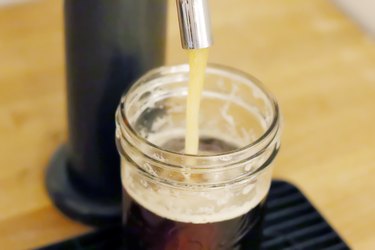
Draught beer is beer that is dispensed from a pressurized container, either a cask or more often a keg. Large amounts of alcohol can be transported, stored and served from a keg, so for taverns, bars and pubs, kegs are essential. Sometimes events with many guests such as class reunions or weddings will also provide kegs, as they are available for rental through many bars, brewers, and distributors.

Video of the Day

U.S. Keg Sizes

...

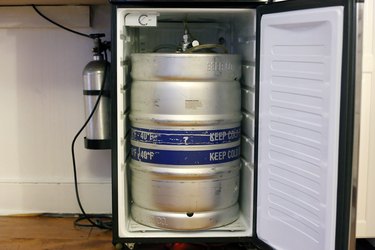
There are only a few different sizes of kegs available for purchase or rental in the U.S. Generally these sizes are: ½ keg which holds 15.5 gallons, a ¼ keg, which holds 7.75 gallons, and a 1/6 keg, which holds 5 gallons. These sizes are equal to about 165, 82, and 54 bottles of beer, respectively. More modestly-sized kegs are also sometimes available, such as the mini-keg, or "bubba," which holds only 1.32 gallons.

International Keg Sizes

...

In Europe the keg sizing is different because of the metric system. There, kegs are classified on a scale using 50 liters as equal to a keg; thus, the 1/2 keg is equal to 25 liters. However, different countries may have different regulations about keg size, such as in Germany where the sizes are 20 liters and 30 liters. In the U.K., a keg is equal to 11 imperial gallons, since they do not use the metric system.

Types of Keg Valve

...

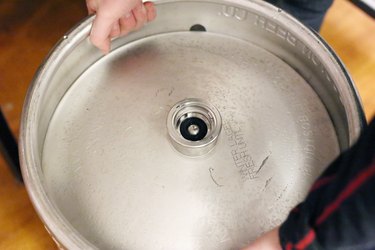
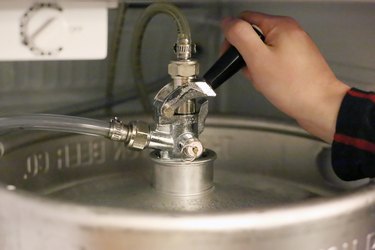
All kegs have a single hole in the top that acts as a two-way valve to allow the beer to be pumped either into or out of the container. There are five different valve possibilities for U.S. kegs: D, S, U, A, and G. In order to tap a keg to get the beer out, you must know what type of valve it has and use the correct "coupling" tools. Each beer company generally sticks to one type of keg valve; for instance, St.Pauli Girl uses an S valve, Guiness uses a U valve, and Pabst uses a D valve. Most U.S. brewers use the D valve. The valves differ in whether the necks are slotted or threaded, and will also vary in length, depending on the height of the keg.

The Best Way to Frost a Beer Mug

0

Beer lovers prefer to slake their thirst from the lip of a frosted beer mug. The ice-cold glass delivers a bracing chill to the beer and feels good in the hand on a hot day. You can spend hundreds of dollars on a chiller for your barware, or you can do it at home with appliances you aready own in about an hour.

Clean Glassware

Whether you prefer to serve beer in a monstrous glass with a curved handle, a tapered Pilsner glass or a pint mug, the trick to getting a good layer of frost is to clean your glassware first. Wash and rinse the glasses so there is no trace of soapy liquid. If you run them through the dishwasher, allow your glasses to cool to room temperature before frosting.

Video of the Day

Add Water

Run cold tapwater over the glasses one at a time, inside and out, pour out excess water and place them immediately in the freezer, right side up. Do not wipe off or shake water off the glasses. Wet glassware is what gets a good frost building on your mug.

Circulate Cold Air

Leave some space between the mugs so air can circulate around them. Allow at least an hour for the frost to accumulate before you pour the beer. If you're in a hurry, pour crushed ice into your mugs and swirl it around to build a layer of frost, then pop the glasses in the freezer for a few minutes.