Home Blog Page 61

Coca-Cola Chicken Wings Recipe

0

Equal parts sweet and savory, these Coca-Cola chicken wings will surely hit the spot. The sauce calls for Coca-Cola, soy sauce and tomato paste, resulting in a sticky and satisfying glaze. You can pair the wings with rice or serve them as an appetizer — you really can't go wrong!

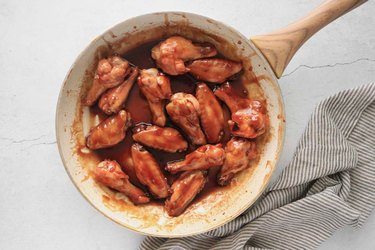
Finished Coca-Cola chicken wings

Video of the Day

Things You\’ll Need

  • 2 pounds chicken wings

  • 12 ounces Coca-Cola (1 to 1 1/2 cans depending on the size)

  • 1 cup dark brown sugar, packed

  • 2 garlic cloves, minced

  • 1 tablespoon tomato paste

  • 1 tablespoon soy sauce or tamari

  • 1/2 teaspoon onion powder

  • 1 tablespoon cornstarch

  • 3 tablespoons cold water

  • Sliced scallions or sesame seeds

  • Oil

Ingredients for Coca-Cola chicken wings

Step 1

Preheat the oven to 425°F. Line a large baking sheet with parchment paper and then place a wire rack on top. Pat the chicken wings dry, lay them on the rack and brush them with oil.

Chicken wings on baking sheet

Step 2

Bake the chicken wings for 20 minutes and then flip them and brush them with oil. Bake for another 15 to 20 minutes or until crispy.

Baked chicken wings

Step 3

Once you flip the chicken wings, start making the sauce. Combine the Coca-Cola, brown sugar, minced garlic, tomato paste, soy sauce and onion powder in a large pan. Bring it to a boil and then reduce the heat and simmer until thick, about 10 minutes.

Combine sauce ingredients

Step 4

In a small bowl, combine the cornstarch and cold water. Whisk to create a slurry.

Mix cornstarch and cold water

Step 5

Add the slurry to the sauce. Whisk well and continue heating until thick, or until it's the consistency of thin syrup.

Whisk sauce

Tip

If the sauce isn't thickening, it means the ingredients haven't gotten hot enough. Bring the mixture to a boil, making sure it bubbles, and then reduce the heat. Also, the sauce will thicken as it cools.

Step 6

Add the cooked chicken wings to the pan. Toss to coat them in sauce.

Toss chicken wings in sauce

Step 7

Transfer the wings to a serving plate and garnish them with sliced scallions, sesame seeds or both.

Finished Coca-Cola chicken wings

How to Make a Tear-Apart Pigs in a Blanket Wreath

0

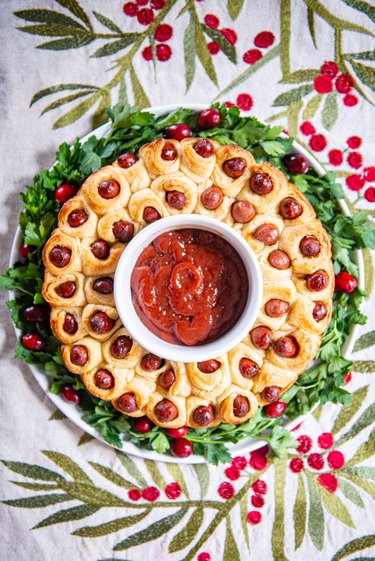
There isn't a holiday recipe out there as simple and impressive as this two-ingredient wreath! With the buttery dough and the savory little sausages, this is sure to be a huge hit at your next holiday party.

Tear-Apart Pigs in a Blanket Wreath Recipe

Things You\’ll Need

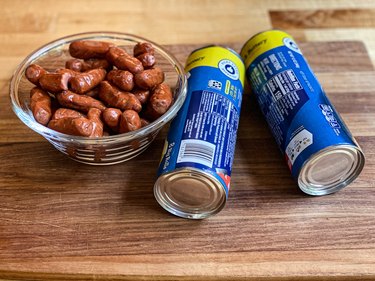
  • 2 packages crescent roll dough

  • 24 lil' smokies miniature sausages

Tear-Apart Pigs in a Blanket Wreath Recipe

Step 1

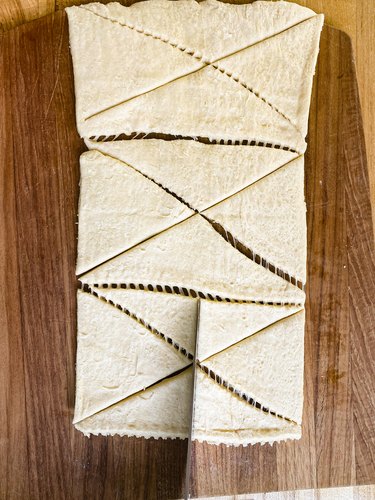
Cut each triangle of dough in half diagonally, then cut each new triangle into equal halves.

Tear-Apart Pigs in a Blanket Wreath Recipe

Step 2

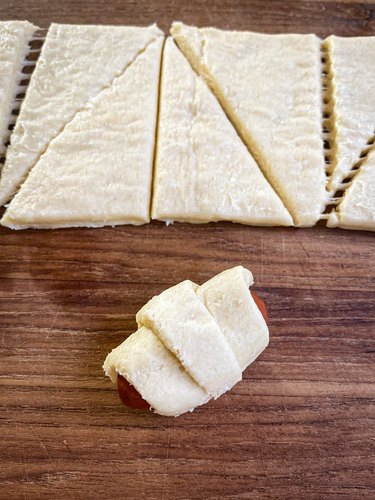
Wrap each of the lil' smokies with a triangle of dough.

Tear-Apart Pigs in a Blanket Wreath Recipe

Step 3

Place an oven-safe dip bowl in the center of a 10-inch springform pan. Then add the wrapped lil' smokies in two tight rows, standing on end.

Tear-Apart Pigs in a Blanket Wreath Recipe

Step 4

Bake at 400° for 15 minutes or until the dough has turned golden brown. Add to a serving plate and add dip (such as ketchup or honey mustard) to the dip bowl.

Tear-Apart Pigs in a Blanket Wreath Recipe

How to Make Beanie Weenie Popsicles

0

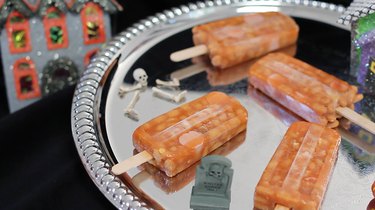
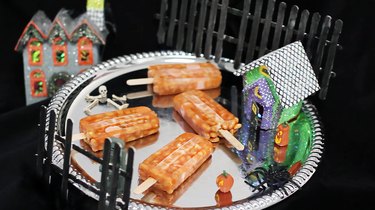
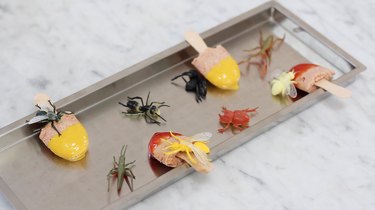
Searching for the perfect ghoulish goodies to creep out your guests on Halloween? Well, search no more. We give you the ultimate gross-out food: meat popsicles. And lucky you, we have not one, but two freaky frozen pops for you try!

Beanie weenie popsicles on a serving platter

Video of the Day

Beanie Weenie Popsicles

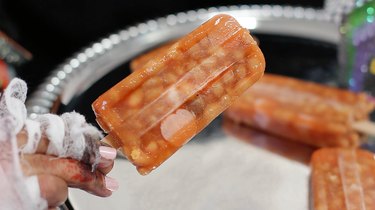
Close up of Beanie weenie popsicle

Things You\’ll Need

  • Vienna sausages

  • Popsicle mold

  • Popsicle sticks

  • Pork and beans

Step 1

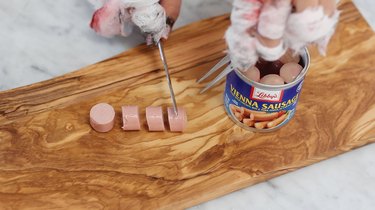
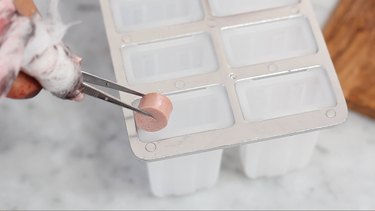
Slice Vienna sausages into fourths.

Slicing Vienna sausage

Step 2

Add a few slices of sausages to each popsicle mold.

Adding Vienna sausage to popsicle mold

Step 3

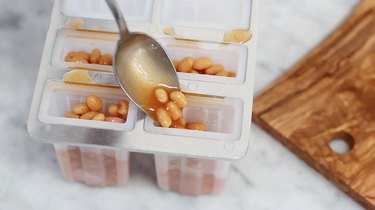
Add a spoonful of pork and beans on top of the sausages. Then continue layering the sausage and pork and beans until you fill each mold. Try to keep some of the sausages pressed against the side of each popsicle mold so they'll be visible once frozen.

Spooning pork and beans into popsicle mold

Step 4

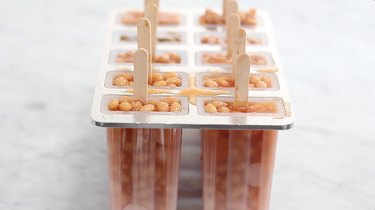
Insert popsicle sticks into the center of each mold and freeze.

Popsicle mold filled with pork and beans and Vienna sausages

Step 5

Remove the popsicles from the mold and serve.

Beanie weenie popsicles on serving platter

Tongue Popsicles

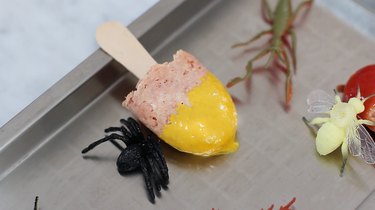
Frozen tongue popsicle dipped in mustard

Things You\’ll Need

  • Deviled ham

  • Mini popsicle mold

  • Mini popsicle sticks

Step 1

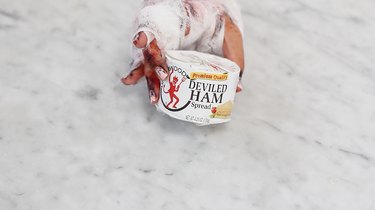
Open up a can of deviled ham.

Can of deviled ham

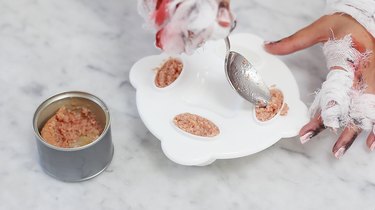
Spoon the ham into the popsicle mold. Fill each mold to the top and press down to make sure the ham is really packed in there.

Filling popsicle mold with ham

Step 2

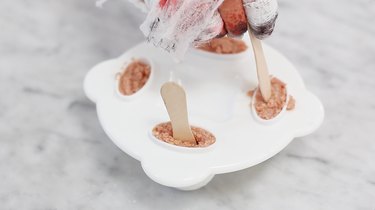
Insert popsicle sticks in the center of each mold and freeze.

Inserting popsicle stick into ham

Step 3

You may need to run warm water on the outside of the popsicle mold for a few seconds to remove the frozen popsicles.

Dip them in ketchup and mustard and serve.

Frozen tongue popsicles on serving tray

How to Make Frozen Yogurt Bark With Berries

0

It's always great to have a cool and refreshing treat on hand during the hot summer season, and this frozen yogurt bark is about as good as it gets. This recipe combines lightly sweetened yet delightfully tangy Greek yogurt with fresh, juicy summer berries—it's so refreshing. In just few simple steps, you'll be beating the heat in no time.

final Final 1 Image Credit: Kristan Little

Video of the Day

Things You\’ll Need

  • 2 1/2 cups plain Greek yogurt

  • 3-4 tbs maple syrup

  • 1 1/4 tsp vanilla extract

  • 6 strawberries, hulled and sliced

  • 10 raspberries, cut in half

  • 1/4 cup blueberries

  • 1 tbs cocoa nibs or mini chocolate chips

  • medium bowl

  • baking sheet lined with parchment paper

Step 1

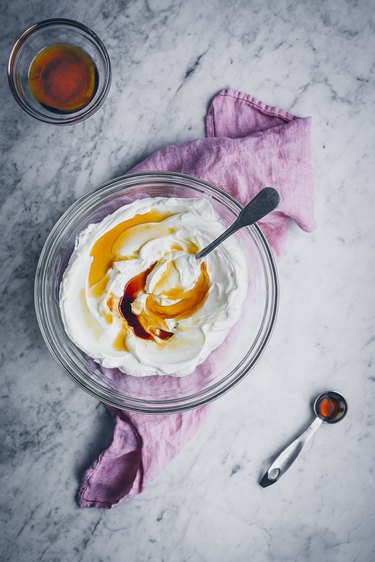
Add the yogurt, maple syrup and vanilla extract to a medium bowl and mix until combined. Taste and add remaning tablespoon of maple syrup if a sweeter yogurt base is preferred.

Preparing base Step 1 Image Credit: Kristan Little

Step 2

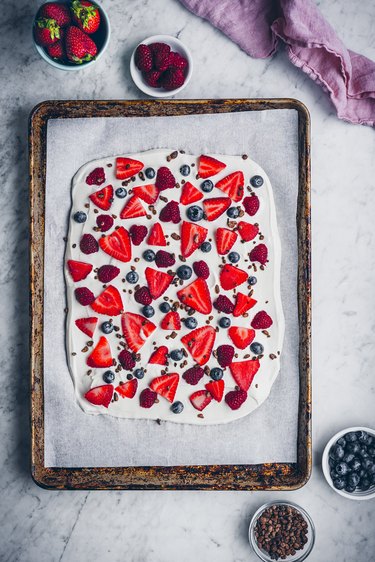
Pour the yogurt onto the prepared baking sheet and spread into a 10-by-13-inch rectangle. Top the yogurt with the berries and cocoa nibs.

Topped with berries Step 2 Image Credit: Kristan Little

Step 3

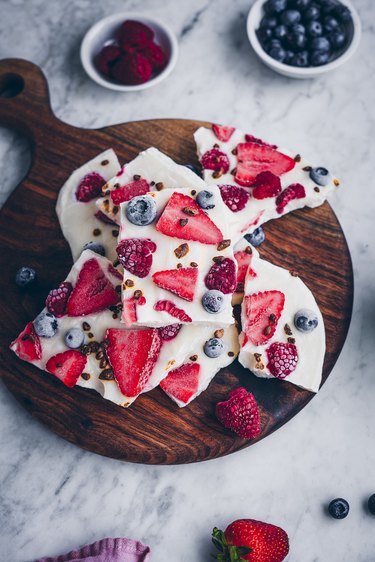
Freeze for 2-3 hours, or until frozen solid. When ready to enjoy, simply break up the bark up into desired-sized pieces and enjoy!

Finished bark Step 3 Image Credit: Kristan Little

Delicious Marbled Chocolate Bark Recipe

0

This marbled bark recipe, made with three layers of chocolate instead of one, is so delicious you'll be sneaking pieces out of the fridge for days. The bottom layer of espresso-flavored bittersweet dark chocolate is swirled with chopped almonds, followed by a layer of smooth white chocolate, and then topped with more dark chocolate. And we've added in some sweet, salty, crunchy surprises to finish it all off. It's a perfect treat to savor for holidays, celebrations, or basically any ol' day of the week.

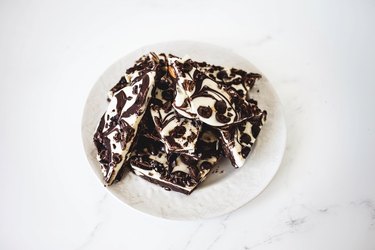
The most delicious Marbled Chocolate Bark!

Video of the Day

Things You\’ll Need

  • 4 cups bittersweet (dark) chocolate, finely chopped

  • 2 cups white chocolate, finely chopped

  • 1/4 cup almonds

  • 1/4 cup chocolate coated espresso beans

  • 2 tablespoons cacao nibs

  • 1 teaspoon fine espresso powder

  • Fleur de sel or flaked sea salt, for finishing

Step 1: Prepare Your Ingredients

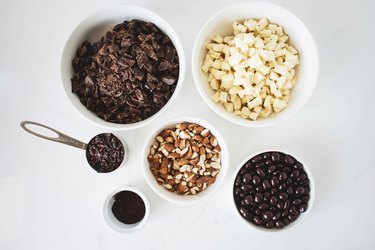
Before you begin, measure out all the ingredients needed. Line a baking sheet with parchment paper and set aside.

Ingredients measured in bowls.

Step 2: Prepare Your Add-Ins

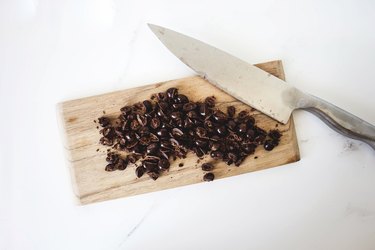
Prepare the additional accents you have chosen. If you are following this recipe exactly, roughly chop the whole almonds and chocolate coated espresso beans and set them aside in separate small bowls.

Tip

Be creative with your additions and flavor combinations. Some ideas include: Crushed nuts, dried fruits, chopped candy bars, pretzels, cereal, pomegranate seeds or even grains such as quinoa!

Roughly chopped chocolate coated espresso beans.

Step 3: Make the Bittersweet (Dark) Chocolate Layer

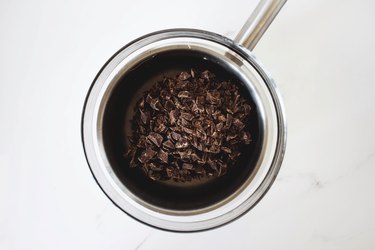
Place 3 cups of the bittersweet (dark) chocolate in a medium heatproof bowl and set it over a saucepan of barely simmering water over medium to low heat. Stir the chocolate occasionally until it is melted and smooth then stir in the roughly chopped almonds and 1/2 teaspoon of the espresso powder.

Finely chopped dark chocolate set in a heatproof bowl and saucepan.

Tip

Do not let the water touch the base of the bowl.

Remove the bowl from the heat and using a spatula, spread the chocolate almond mixture into a rough rectangle on the prepared baking sheet, approximately 8 x 10 inches / 20 x 25 centimeters. Chill the baking sheet until the chocolate has hardened completely into a slab.

Chilled chocolate and almond slab.

Step 4: Make the White Chocolate Layer

When the bittersweet chocolate slab has set, melt the white chocolate until smooth the same way as the dark chocolate, as directed in Step 3 above.

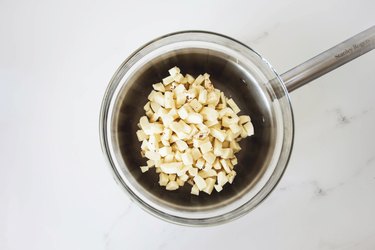
Finely chopped white chocolate set over a saucepan.

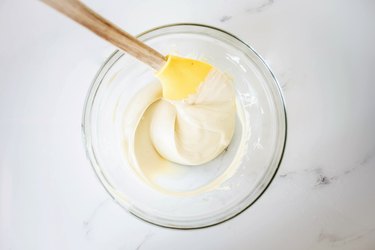
Set the white chocolate aside to cool slightly, giving it a good occasional stir with a spatula.

Melted white chocolate set in a bowl to cool.

Step 5: Make the Bittersweet (Dark) Chocolate Marble Drizzle

Meanwhile, melt the remaining 1 cup of bittersweet (dark) chocolate in a small heatproof bowl, again, as directed above in Step 3. Once the chocolate is smooth and melted, stir in the remaining espresso powder.

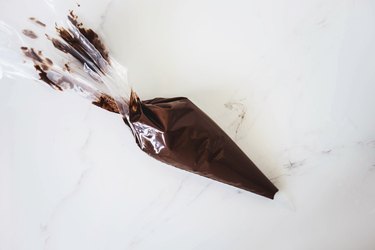
Transfer the mixture to a piping bag. If you do not have a piping bag, use a plastic zip-lock bag with a snippet cut off at one of the corners to turn it into a makeshift piping bag.

Chocolate in a piping bag.

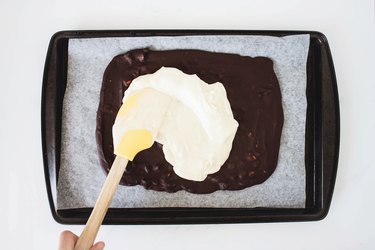
Step 6: Spread the White Chocolate.

With a spatula, gently spread the cooled white chocolate over the chocolate slab.

Using a spatula to spread the white chocolate.

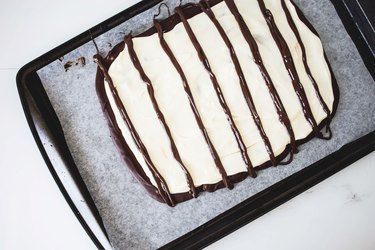
Step 7: Drizzle With the Bittersweet (Dark) Chocolate

Using your chocolate filled piping bag, pipe several vertical even lines of desired thickness and width across the white chocolate.

Piped vertical chocolate lines.

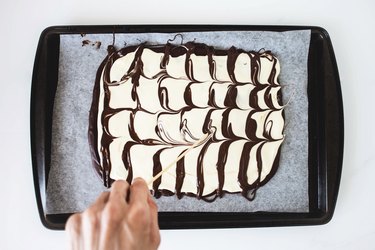
Step 8: Marble the Chocolate

Using a wooden skewer, begin to draw 'U' shaped swirls through the chocolate drizzle and white chocolate.

Drawing \'U\' shapes into the chocolate with a skewer.

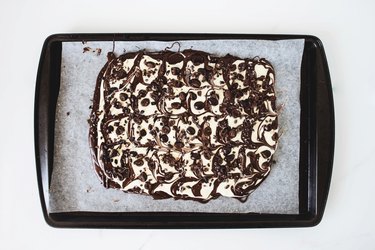
Step 9: Sprinkle with Add-Ins

You can now choose to sprinkle the marbled chocolate with your choice of additions. Once they've been added, set the baking sheet in the freezer to set the chocolate until hardened, about 25 to 35 minutes.

Additions sprinkled onto the chocolate slab.

Step 10: Slice.

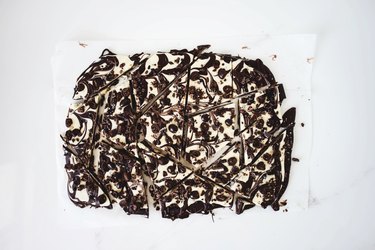
When the marbled chocolate slab is completely set, slice or break it into bark-like pieces.

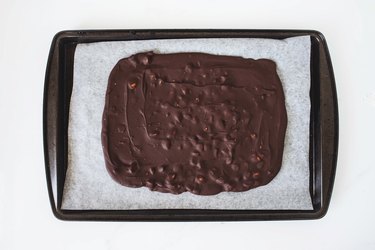
Marble chocolate slab broken into pieces.

Now you can serve or save for later. This chocolate is delicious both chilled and crisp straight out of the refrigerator, or warmer and slightly melted at room temperature.

Tip

If you plan on enjoying on it later, store the bark in an airtight container in the fridge for up to three weeks.

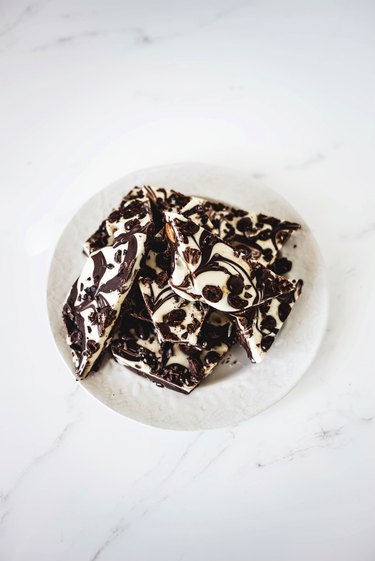
Serve the Marble Chocolate Bark either chilled or at room temperature!

How to Soften Overly Hard Bread

0

Things You\’ll Need

  • Paper towels

  • Aluminum foil

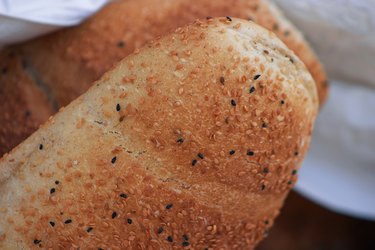
0 Don\’t let hardened bread go to waste. Image Credit: Photos.com/Photos.com/Getty Images

When that loaf you picked up from the bakery the other day has because hard as a brick, it doesn't necessarily mean it's time to toss it. Crusty artisan breads, such as French and Italian baguettes and sourdough loaves, are notorious for drying out and getting very hard relatively quickly. This happens even when it's tightly wrapped in plastic wrap or foil. In most cases, however, even the hardest bread can be revived and softened with the help of heat in the oven or microwave.

Video of the Day

In the Microwave

Step 1

Dampen a a few sheets of paper towels. They should be sufficiently damp but not dripping wet.

Step 2

Wrap the hard bread in a damp towel and place it in the microwave.

Step 3

Microwave the wrapped bread in 10- to 15-second intervals until the bread has softened. Check the bread for softness in between each heating session. Remove the bread as soon as it feels sufficiently soft, as overcooking in the microwave could cause the bread to harden further.

In the Oven

Step 1

Preheat the oven to 350 degrees Fahrenheit.

Step 2

Lightly wet the surface of the bread all over with your hands, then wrap it loosely in aluminum foil.

Step 3

Place the wrapped bread in the oven to heat for about 10 minutes, until the bread is soft and hot. Eat it while it's still hot.

Tip

Serve bread softened by heat right away. It will harden again as it cools.

Spread softened butter and garlic on hardened bread to make garlic toasts in the oven. The butter will melt into the bread and help soften it.

If the bread does not get soft enough to your liking, break it into chunks and pulse it into bread crumbs in food processor, which you can toast and use for other purposes.

Warning

Discard bread if it has any signs of mold.

How to Keep an Avocado From Turning Brown

0

...

Choosing a ripe avocado is difficult enough without the despair of having it oxidize and turn brown within minutes of peeling it. Avocados are basically big, fleshy berries full of polyphenol oxidase, an enzyme that, when exposed to oxygen, converts to melanin, the same pigment that colors skin. Melanin isn't the bad guy here, oxygen is. Oxidation and enzymatic browning are inevitable after you slice an avocado — they're part of the ripening process — so you have to incorporate an oxygen insulator, such as oil, or an enzymatic inhibitor, such as acid, to stave them off as long as possible.

Video of the Day

These instructions talk about how to keep your cut avocados fresh for a few hours. If you want to store cut avocados for days at a time, read this for more options.

Acid

Step 1

...

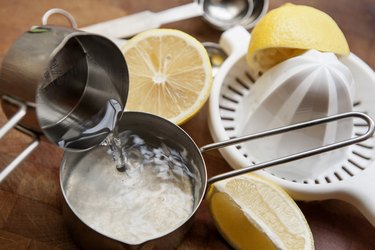
Mix together equal parts water and food acid in a bowl. Lemon juice, lime juice or vinegar work best here.

Step 2

...

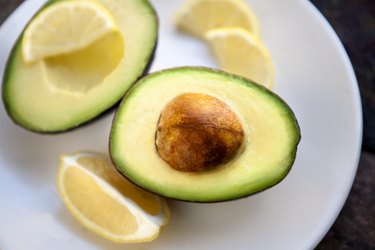
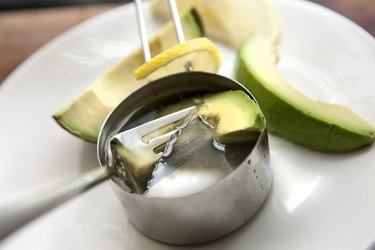
Slice the avocado in half lengthwise and spoon out the seed. Dip the cut surfaces of the avocado halves in the acidulated water, then peel the skin from the halves and dip the other sides in the water.

Step 3

...

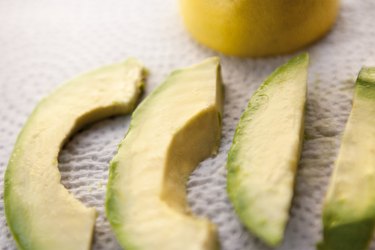
Slice the avocado as desired. Dip each slice in the acidulated water after cutting it then place it on a paper towel to drain. Use the avocado as soon as possible.

Oil

Step 1

...

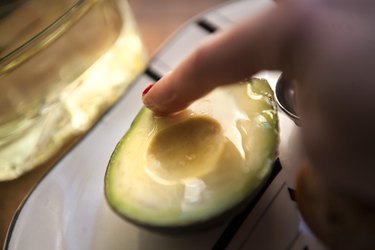
Slice the avocado in half lengthwise and spoon out the seed. Dip the tip of your finger in vegetable oil and coat the cut surfaces of the avocado in a thin sheen.

Step 2

...

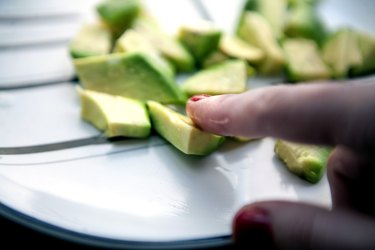
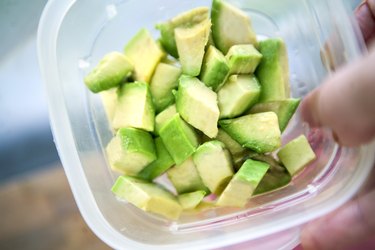
Chop the avocado into cubes then lightly oil your fingertips. Coat the facets of each cube with a thin sheen of oil.

Step 3

...

Transfer the avocado to an airtight food-storage container. Store the avocado in the refrigerator up to 3 hours.

Tip

You can also store a halved avocado with an unpeeled onion to temporarily prevent oxidation. Pick off the tip of the stem on the bottom of the avocados before you buy to determine their ripeness. If the exposed tissue is yellow or green, the flesh is fresh. If the exposed tissue is brown, the flesh had over-ripened. Store avocados in the refrigerator instead of on the counter to slow ripening and browning.

How to Boil Chestnuts at Home

0

Things You\’ll Need

  • Medium-sized saucepan

  • Water

  • Paper towel

  • Sharp knife

...

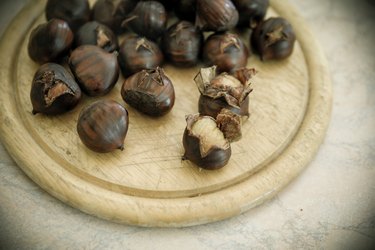
Many celebrate the holiday season by roasting chestnuts over an open fire, but this is not the only way to prepare chestnuts for consumption. Boiling chestnuts will also allow you to enjoy the vitamins and minerals that the nuts possess, including vitamin C, fiber, iron, calcium, magnesium and zinc. Choose chestnuts at the store that are fresh and large. Once they are purchased, boil and consume the chestnuts within a few days because these starchy nuts spoil quickly.

Video of the Day

Step 1

...

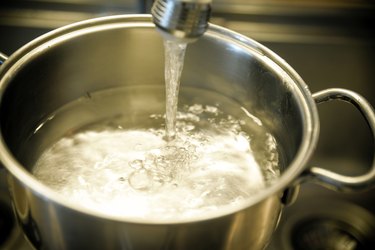
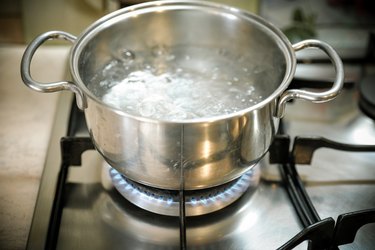
Fill a medium-sized saucepan to the halfway point with plain water.

Step 2

...

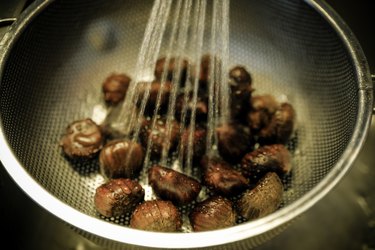
Rinse the chestnuts under cool water and dry them with a paper towel.

Step 3

...

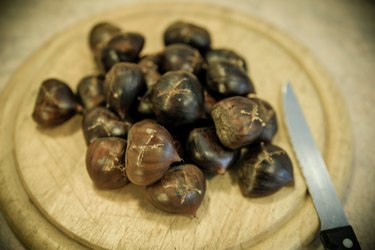
Cut an "X"-shaped mark onto the side of each chestnut with a sharp knife. This will allow the steam that builds up during the boiling process to escape the chestnut's shell.

Step 4

...

Bring the water in the saucepan to a boil on high heat.

Step 5

...

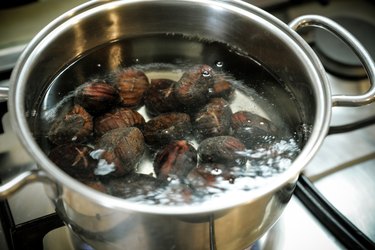
Lower the chestnuts into the water and reduce the temperature under the saucepan to a medium heat.

Step 6

...

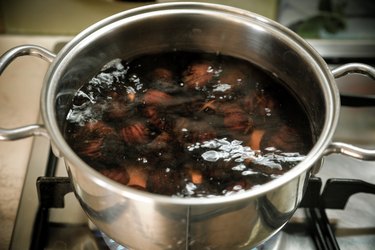
Allow the chestnuts to simmer for 10 to 20 minutes before removing the pan from the heat.

Step 7

...

Drain the water from the chestnuts and allow them to cool completely before peeling away the shell and enjoying the nuts inside.

Can You Eat Guacamole When It Has Been Left Unrefrigerated?

0

close-up of a bowl of nachos with dip Store guacamole in the refrigerator. Image Credit: Stockbyte/Stockbyte/Getty Images

Guacamole contains a mash of avocados, peppers, tomatoes, cilantro and seasonings that require refrigeration after preparation. If it's left unrefrigerated, bacteria is a primary concern for the raw mix. These bacteria can include salmonella and E. coli, both of which cause serious illness. At room temperature, these bacteria multiply at rapid rates, rendering the guacamole unsafe to eat within a matter of hours. If you have no idea how long the guacamole has been sitting out, don't eat it.

Video of the Day

Air Temperature Matters

Guacamole can only sit at room temperature a short while before it begins to spoil. Outside of refrigeration, guacamole keeps for about two hours before the microbes that lead to foodborne illness begin to multiply to dangerous levels. If the air temperature is 90 degrees Fahrenheit and above, the guacamole requires refrigeration after one hour. If you eat unrefrigerated guacamole after these recommended safe times, you risk getting sick.

If It’s Brown

If you notice that the guacamole that you are serving has turned brown, don't fret. Just because unrefrigerated guacamole turns brown, that doesn't mean it's bad. The brown that you see is caused by oxidation, a reaction between the guacamole and the surrounding air. Use a spoon to skim away the browned top layer — as long as it hasn't been sitting longer than the recommended times.

Play it Safe

After preparing guacamole, put it in the refrigerator and leave it there until serving time. Refrigerate once again within two hours of serving — one hour if its a hot day. Store the mixture in a bowl with a piece of plastic wrap spread over top. Press the plastic wrap lightly against the surface of the guacamole to keep the air out. Homemade guacamole keeps up to three days in the refrigerator. Commercially prepared varieties keep up to five days.

Refrigeration Aside

Refrigeration doesn't help if the guacamole is contaminated with bacteria from the start. While small amounts of bacteria are naturally present on foods, in high amounts they become dangerous. Wash your hands with warm water and soap, scrubbing for a full 20 seconds before handling guacamole ingredients. Rinse the ingredients prior to preparation and make sure all cutting boards, utensils and serving containers are clean and sanitized before you begin.

7 Best After-Workout Foods to Eat

0

When you just killed it at the gym (or at home, or on the track…) you deserve to eat. But not all post-workout meals are created equal. The best options contain plenty of protein, which supplies the amino acids you need to repair and rebuild those tired muscles, along with carbohydrates to replenish your glycogen stores so that your muscles won't feel too fatigued tomorrow.

These seven snack (and meal) ideas fit the bill perfectly, so they're all great options to help make tomorrow's workout as good as today's.

best after-workout foods

1. Chocolate Milk

A post-workout meal doesn't have to be complicated — if you're in a pinch, pouring yourself a glass of chocolate milk will do. Milk supplies complete protein (meaning you'll get all the amino acids needed for muscle repair) and has natural sugar which your body can use to replenish your glycogen levels. And because liquids digest so quickly, you'll get that boost of energy ASAP.

Fresh made Chocolate Milk on a bright wooden background

If you're limiting your added sugar intake, opt for reduced-sugar chocolate milk. For a fun twist, turn your chocolate milk into a delicious slushy.

2. Greek Yogurt Parfait

If you're more in the mood for a sit-down snack, refuel after a tough workout with a DIY Greek yogurt parfait. Greek yogurt has almost double the protein of regular yogurt and, like milk, it's a complete protein that has everything you need for muscle repair. Fruit adds healthy natural sugar, without the need for added sweetener, and a spoonful of granola on top adds complex carbohydrates for longer-lasting energy.
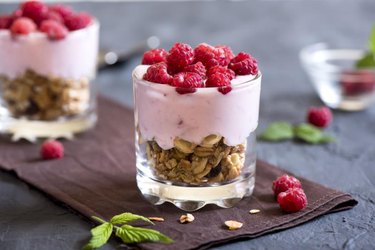
Homemade organic fresh parfait dessert with raspberries and granola, selective focus

Store-bought granolas are often loaded with added sugar and preservatives, so your best bet is to make your own granola at home. Use this recipe — it's full of heart-healthy ingredients to supplement the cardiovascular benefits of your workout. Also, try your hand at making your very own Greek yogurt at home. It's easier than you think!

3. Cottage Cheese Tuna Melt

An intense workout is the perfect excuse to enjoy some crispy, cheesy comfort food — and, thankfully, a cheesy tuna melt is actually great for post-workout recovery as well! On top of offering loads of protein, tuna supplies omega-3 fatty acids, healthy fats that might actually help reduce muscle soreness after a workout. Serving your tuna melt on whole-grain toast means you'll get high-quality carbs and fiber, which will both refuel your muscles and keep you full until your next meal.
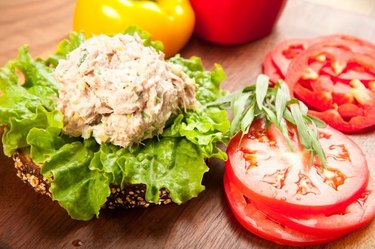
Tuna fish sandwich on multigrain bread with lettuce and tomato

Make your toast by modifying this recipe to use cottage cheese in place of mayo. If you want a little extra nutrition, serve your toast garnished with microgreens for a vitamin boost.

4. Protein Muffins

Coffee shop muffins might look ultra-tantalizing when you're hungry after a workout, but they're typically full of processed sugar and low in essential protein. Instead, whip up your own high-protein versions at home to enjoy after your workouts. We recommend these sweet potato muffins, which get their healthy carbs from sweet potato and oatmeal, plus muscle-building protein from Greek yogurt and protein powder.
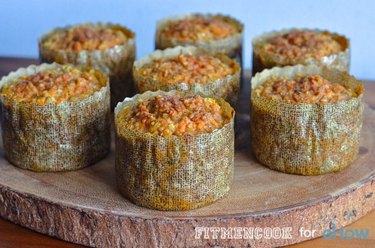
Sweet potato protein casseroles.

These muffins have 270 calories per serving, and you can modify the recipe if you need more calories after the gym. Try adding chopped walnuts or pecans, or shredded unsweetened coconut for more calories, protein and healthy fats.

5. Apples with Almond Butter

Apple slices drizzled with almond butter is a classic for a reason — the almond butter supplies lots of high-quality protein and fat, while apples add natural sugar, antioxidants and lots of dietary fiber.
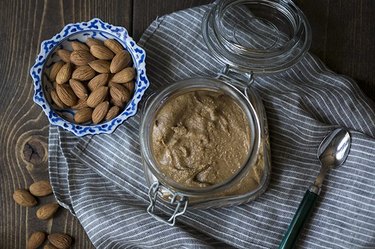
Homemade almond butter.

The best way to serve this is using your own homemade almond butter, so you can ensure you're not getting a lot of added salt or sugar. Try our almond butter recipe, and feel free to modify it to your tastes — try adding cacao, cinnamon, chai spice mix or even a little coconut to add extra flavor!

6. A High-Protein Smoothie Bowl

That juice bar at your gym might be convenient, but chances are the smoothies there are packed with sugar — and, since some juice bar smoothies top out at 1,200 calories or more, you may end up eating way more than you burned during your workout. Instead, serve up a smoothie bowl at home, piled high with nutrient-dense toppings.
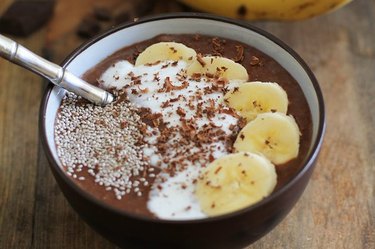
Cacao banana smoothie bowl.

Modify one of these recipes to include a scoop of your favorite protein powder. And feel free to add a drizzle of walnut butter or a spoonful of chia seeds — both supply omega-3 fatty acids to help stave off soreness tomorrow (because you don't need to feel like it's the day after leg day, right?)

7. Baked Eggs

If you have a little time to devote to cooking after your workout, whipping up some baked eggs in tomatoes is a great way to recover. Eggs supply complete protein that's also incredibly easily digested, so you can get those amino acids to your muscles ASAP to stimulate recovery. Eggs also contain iron — a nutrient that helps carry energizing oxygen to your muscles — while the tomatoes add vitamin C to keep your muscles and connective tissues strong. Cheddar adds satisfying cheesiness (really, we never say no to cheese!) along with even more protein.
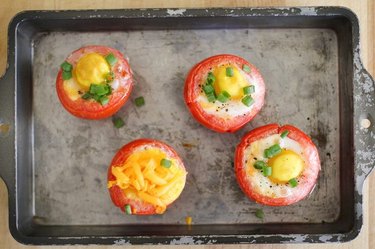

Eggs baked in tomatoes.