Home Blog Page 60

Homemade Strawberry Ice Cream Recipe

0

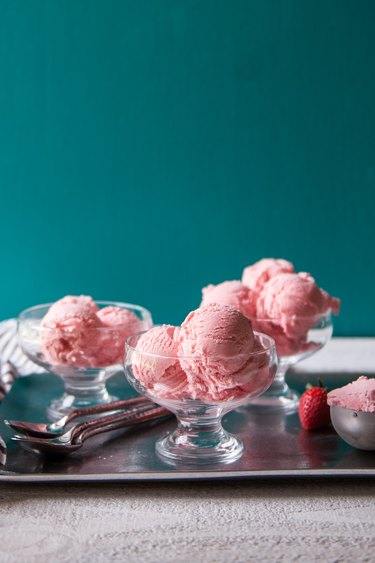
Making the perfect homemade strawberry ice cream can be tricky for something so simple. (Really, I blame the berries!) But have no fear: I've got not one, but two secrets to making the best, most perfect strawberry ice cream. It's such a simple and easy, no-cook method, you'll want to make this all summer long.

Homemade Strawberry Ice Cream Recipe

Video of the Day

The same beauties that give us that delicious flavor and gorgeous color are at fault here. First, there is the issue of water. Strawberries are an incredibly water dense fruit which can cause the ice cream to crystalize. "So, I'll just cook them first!" you say? Well, you can but you'll be removing the beautiful bright pop of that fresh berry flavor. And isn't that why we're all here? Lucky for us a super sneaky ingredient helps us tackle that issue: corn syrup. This sly little sweetener impedes crystallization. Problem solved. Second, that distinctive flavor can get lost in a rich ice cream base. You want it creamy, but not so dense that you can't taste the star ingredient. The answer: use an eggless base.

Tip

Strawberries will not ripen off the vine. Buy the ripest you can find and use them right away!

Homemade Strawberry Ice Cream Recipe

Things You\’ll Need

  • 1 lb fresh strawberries, sliced

  • 3/4 cup granulated sugar

  • 1/2 teaspoon salt

  • 1 teaspoon lemon juice

  • 1/4 cup corn syrup

  • 2 cups heavy cream

Step 1: Macerate the Strawberries

Add the strawberries, sugar, salt and lemon juice to a bowl. Stir to combine. Allow to sit at room temperature for 20 minutes while you prepare the rest of the ice cream.

Homemade Strawberry Ice Cream Recipe

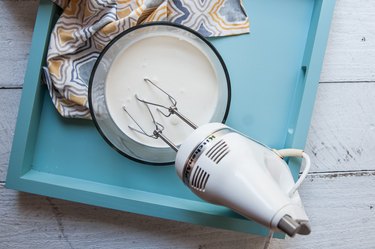
Step 2: Beat the Cream

Add the cream to a medium bowl and beat until soft peaks form.

Homemade Strawberry Ice Cream Recipe

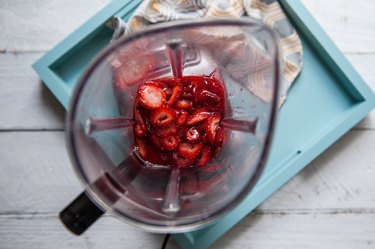
Step 3: Blend the Strawberries

Add the corn syrup, strawberries, and any liquid that has collected in the bowl, to a blender. Blend until smooth.

Homemade Strawberry Ice Cream Recipe

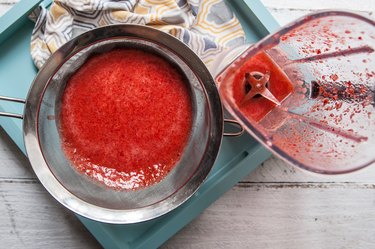
Step 4: Strain

Pass the strawberry mixture through a strainer to remove the seeds.

Homemade Strawberry Ice Cream Recipe

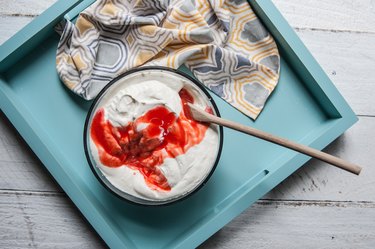
Step 5: Mix

Add the strawberry mixture to the cream, and mix until well combined.

Homemade Strawberry Ice Cream Recipe

Step 6: Chill

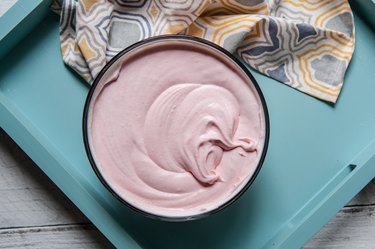
Cover and refrigerate until chilled, about 1 hour.

Homemade Strawberry Ice Cream Recipe

Step 7: Churn

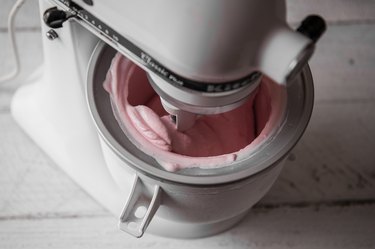
Churn in your ice cream maker according to manufacture specifications. Add to a freezer safe container and freeze until hardened, about 2 hours.

Homemade Strawberry Ice Cream Recipe Homemade Strawberry Ice Cream Recipe

These 10 Fruit Hacks Will Blow Your Mind

0

You know you should be eating more fruit, but oftentimes, eating enough fruits and veggies is more hassle than it's worth. With these quick and easy hacks, you'll no longer have any excuse for eating fruit snacks in place of the real thing, and there will be no more underripe melons or hard-to-peel mangoes in your future.

Halved Pink Grapefruit On Table

Video of the Day

1. Judge Ripeness by Weight

Good things often come in heavy packages, at least where fruit is concerned. When choosing fruits that get juicy – think oranges, melons and pineapples – compare pieces by weight. If you're holding two oranges of similar size, choose the one that feels heavier. It's probably riper and juicier.

Choosing tangerine at market

2. Master the Thump Test

Finding the perfect watermelon feels like a crapshoot sometimes. Use the thump test to determine whether a melon is truly ripe. Tap or flick the fruit with one finger. If it's ripe, you should hear a hollow sound; an underripe or overripe watermelon will make more of a thudding sound.

woman picking watermelon in grocery store

3. Pit Cherries With Chopsticks

If not for the pesky pits, cherries would be the perfect fruit. You don't need to buy a special tool to make pitting cherries fast and easy. Find a clean glass bottle with a small opening through which a cherry won't fit. Place a cherry on the opening and push a chopstick through the fruit to push the pit into the bottle opening.

Pitted and whole red cherries

4. Speed Ripening in a Paper Bag

You can't hurry nature, but you can help it along a little. Force fruit to ripen quicker by placing it in a folded paper bag. Closing the bag traps the ethylene gas that the fruit produces as it ripens, speeding the process. This works with any fruit that continues to ripen after it is picked, like bananas and avocados.

Avocados next to paper bag

5. Try Rice to Force Ripening

No paper bag? No problem. Uncooked rice can also be used to artificially speed the ripening process. Submerge unripened fruit in a container of white or brown rice and the fruit should be softer after a day or two.

White rice background

6. Blanch Stone Fruit Before Peeling

Peeling peaches and nectarines is a notoriously frustrating job. The skin is thin and slippery; making a peach pie just isn't worth the trouble. Here's a trick to make life so much simpler. Carve an X shape (about 1 inch in size) into the fruit's peel. Plunge the fruit into boiling water for about 30 seconds and then immediately transfer it into an ice bath to cool. The peel should slip off easily.

Peeled peach on a wood cutting board

7. Whack Seeds Out of Pomegranates

Pomegranates are one of those delicious fruits that people tend to avoid because they're so labor intensive. Don't deny yourself the sweet, tart juiciness of pomegranate seeds. First, roll the fruit around the counter under your palms to loosen the seeds. Cut the pomegranate in half and hold it upside down over a bowl. Use a wooden spoon to firmly and repeatedly whack the fruit; this should cause it to release its seeds.

Pomegranate fruit and seeds

8. Soften Grapefruit Sourness With Salt

It sounds counterintuitive, but you're just going to have to trust us: Grapefruit and salt really are a match made in heaven. Sprinkling a section of grapefruit with just a little table salt should cut the bitterness and actually make the fruit taste sweeter.

Fresh grapefruit on chopping board

9. Use a Rubber Band on Sliced Apple

If you cut an apple for the kids' lunch in the morning, they may reject the browned fruit at noon. Cut apple starts to turn brown when it's exposed to air. Counteract that effect by cutting a whole apple into slices or wedges and then reassembling it and wrapping a rubber band around the whole thing. When you slide off the band hours later, the fruit should still be crisp and white.

Cut apple and ball of rubber bands

10. Peel Mango on Drinking Glasses

A sweet and tangy bite of ripe mango is worth any effort it takes to remove the fruit from its peel and central pit. One easy way to do this is to slice down the middle of the fruit, cutting two large sections of mango off either side of the pit. Grasp one half in your hand with the peel side against your palm and slide the fruit down the edge of a drinking glass. The glass should easily separate the flesh from the peel.

Mango fruit and mango slices

How to Store Butternut Squash

0

...

Butternut squash has a firm rind that insulates it against cool temperatures and other environmental stressors when it's off the vine. Store a whole butternut in a 50-degree-Fahrenheit room, and it lasts 2 to 3 months, with no special care needed. Ideally, you want to keep squash whole as long as possible; it develops a complex sweetness as it matures. If you still haven't used the squash after a month or so, preserve it. Squash stores for a year in the freezer and indefinitely if canned.

Video of the Day

Uncooked Cubed Squash

...

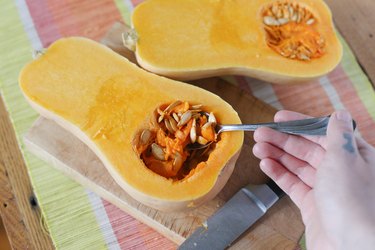
To prep uncooked butternut squash for freezing or refrigerator storage, make it easier to handle. Set it on a moist kitchen towel, and use a heavy chef's knife to slice off the thick stem and about 1/2 inch of the flesh below it. Next, slice the squash in half lengthwise, or, if it's too long to slice comfortably, slice it in half crosswise first; then slice it lengthwise. Scoop out the seeds using a spoon, and peel the skin with a vegetable peeler or paring knife.

Slice the squash into equal-sized pieces — 1/2- or 1-inch-cubes or slices work, just slice them as evenly as you can. To store the squash in the refrigerator, pack it in an airtight container — it will stay fresh about 5 days. To freeze, seal the squash in heavy-duty freezer bags, pressing out the air as you do, and store in the freezer up to 6 months.

Storing Cooked Squash

...

You don't need to peel the squash if you plan to roast it; the skin pulls away easily, and you can slice it in pieces of the desired size after that. Heat the oven 425 degrees Fahrenheit. Cut off the stem; slice the squash lengthwise and scoop out the seeds. Roast the butternut skin-side-up until tender, about 1 hour. While the squash is still very warm, peel the skin away and discard it. Puree, slice or chop, and serve or store it.

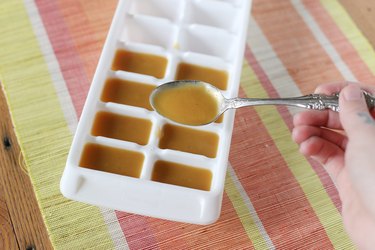
To store, cut the squash into equal-sized pieces or puree it and pack it in an airtight container or freezer bag. You can also spoon the puree into ice-cube trays to make portioning more efficient; simply pop a few pieces out of the tray as needed. If you choose ice-cube trays, wrap each one in a freezer bag. Cooked squash stays fresh about 2 days in the refrigerator and up 1 month in the freezer.

Thawing and Cooking

...

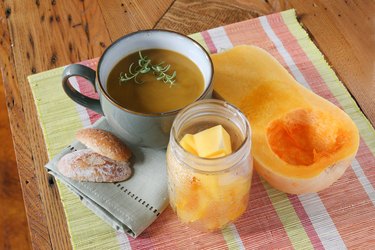
You can cook raw squash straight from the freezer; simply toss it in a soup or heat it in a 350-F oven until it's hot. After you heat the squash, you can puree it and transfer it to a saucepan for use as a soup base or add herbs and spices and serve it as a stand-alone dish. You can use cooked squash straight from the freezer as well, but you must heat it to 165 F before serving.

Dehydrating

...

Very dry food — with less than 5 percent moisture — stores almost indefinitely. It's difficult, however, to get dense vegetables like butternut squash down to 5 percent moisture unless you slice it almost paper thin; a mandolin works best for this, but at the very least, you need a sharp knife.

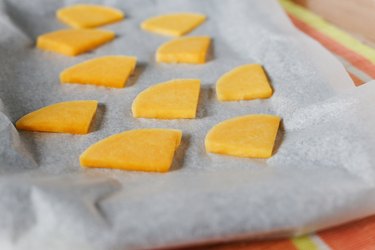
Heat the dehydrator to 145 F; if you're using a regular oven, heat it to the lowest setting and wedge a towel in the door to keep it open 1 to 2 inches. Peel and slice the squash in 1/8-inch-thick pieces and lay them in an even layer on the drying trays; use a sheet pan lined with parchment paper for oven drying. You can overlap the slices by about 1/4 inch. Dry the squash for 10 to 16 hours, or until it has a very tough to brittle texture.

Canning

...

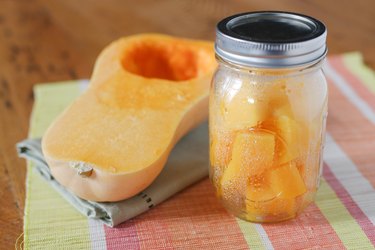
Peel and cut the squash into 1-inch pieces and blanch them in boiling water for 2 minutes. Drain the squash in a colander and pack them into sterilized canning jars — leave an inch of space at the top and add water or stock to barely cover. Seal the jars and process them in a pressure canner: 55 minutes for pint jars and 90 minutes for quart jars.

Baked Strawberry Champagne Donuts Recipe

0

On New Year's Eve, nothing beats a glass of bubbly with a side of sweets. So, why not make a champagne-infused recipe and enjoy both in one bite? These baked strawberry champagne donuts will let you do just that. They're decadent, sweet and pair perfectly with champagne glaze. Plus, since they're baked, you won't have to deal with a greasy mess. Your guests will adore this festive recipe! Read on to learn how to make baked strawberry champagne donuts for New Year's Eve.

Baked strawberry champagne donuts

Video of the Day

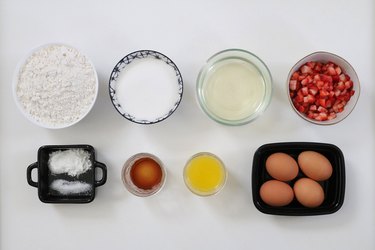
Things You\’ll Need

  • 2 1/4 cups all-purpose flour

  • 2 teaspoons baking powder

  • 1/2 teaspoon fine salt

  • 1 cup white sugar

  • 2 teaspoons vanilla extract

  • 1/4 cup melted butter or oil

  • 4 eggs

  • 1 cup extra dry champagne

  • 3/4 cup finely chopped strawberries

  • Butter or oil for greasing

Ingredients for baked strawberry champagne donuts

Tip

This recipe makes 18 donuts. Depending on the size of your donut molds, you may need one or more pans. You can also use this recipe to make mini donuts.

To avoid "spongy" donuts, use flat champagne.

Step 1

Pre-heat the oven to 375° Fahrenheit.

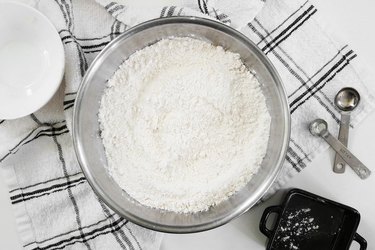
In a large bowl, combine the flour, sugar, baking powder and salt. Mix well.

Mix dry ingredients

Step 2

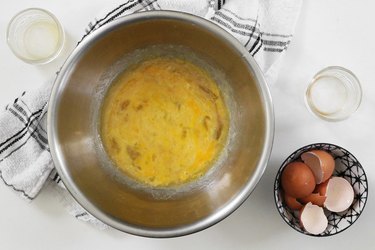
In a separate bowl, combine the eggs, melted butter and vanilla. Whisk until the eggs are gently beaten.

Combine eggs, butter and vanilla

Step 3

Add the wet ingredients to the dry ingredients and mix. The batter will seem dry and clumpy; this is normal.

Add champagne to batter

Step 4

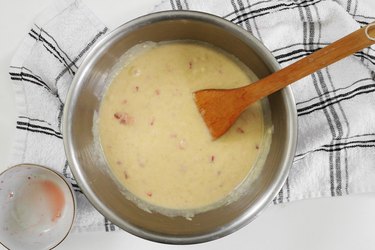
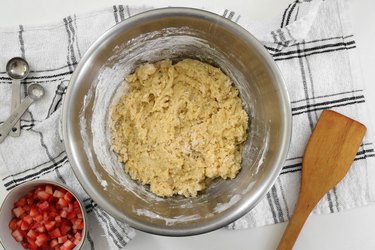
Slowly add the champagne. Stir until the ingredients are evenly combined. At this point, the batter will be similar to cake batter.

Fold in the chopped strawberries.

Mix batter and add strawberries

Tip

Typically, donut batter is piped into a pan. If you want to use a piping bag, make sure the strawberries are very finely chopped. The opening of your piping bag should also be larger than usual. Another option is to pipe the batter (without strawberries) into the pan and stir chopped strawberries into each individual mold.

Step 5

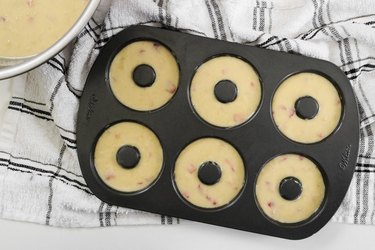
Scoop or pipe the batter into greased donut pans.

Bake for 10 to 12 minutes or until a toothpick comes out clean. Leave to cool completely.

Scoop batter into donut pan

Champagne Glaze

Things You\’ll Need

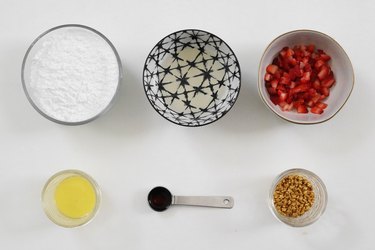
  • 3 cups powdered sugar

  • 7 to 10 tablespoons extra dry champagne

  • 1 1/2 tablespoons melted butter

  • 1 to 2 teaspoons vanilla extract

  • Chopped strawberries and sprinkles for topping

Ingredients for champagne glaze

Step 1

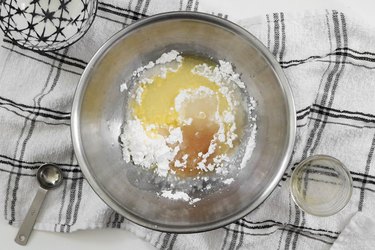
In a large bowl, combine the powdered sugar, champagne, melted butter and vanilla extract. You can adjust the ingredients according to your desired flavor.

Combine the champagne glaze ingredients

Step 2

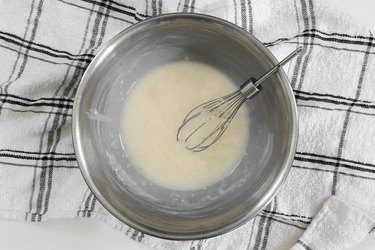
Whisk together until thoroughly combined.

You can easily adjust the champagne glaze to suit your preferred consistency. For a thicker glaze, add more powdered sugar. For a thinner glaze, add more champagne.

Whisk champagne glaze

Step 3

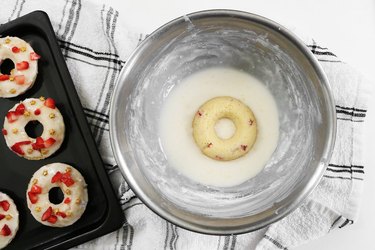
Dip the cooled donuts into the champagne glaze. Sprinkle with chopped strawberries, star sprinkles or your favorite toppings.

Dip donuts in champagne glaze

Tip

If using freshly chopped strawberries, gently pat them dry before adding to the donuts. Otherwise, the natural juices might make the glaze soggy. You can also use dehydrated strawberries instead.

Don't be afraid to experiment with your favorite toppings. These baked donuts pair well with coconut flakes, lemon zest, crushed Oreos and of course—chocolate! You can also add a personal touch with festive sprinkles or edible glitter. Happy New Year!

Baked strawberry champagne donuts

How to Buy Tomatillos

How to Buy Tomatillos. Tomatillos are growing in popularity, as their use spreads outside of Mexican restaurants and into more upscale establishments. Most people believe that it is just a greener version of the tomato. However, this husked green fruit is closer in relation to a gooseberry than a tomato. The tomatillo is said to have a tart flavor with a hint of citrus. It is easily used and easily found. Read on to learn how to buy tomatillos.

Step 1

Go directly to your local chain grocery store. Nowadays, just about every major grocery chain carries tomatillos, especially if there is an abundant Hispanic population nearby. The tomatillos are usually displayed in the produce section either with the exotic produce or with the near the avocados and jalapeños.

Video of the Day

Step 2

Look at the fruit closely. It should have a green papery husk that completely covers the fruit. Inside, the tomatillo fruit should be green and may have a slight purple tone. It should not be yellow or brown.

Step 3

Look for spots, mold, and other blemishes on both the fruit and the husk.

Step 4

Feel the fruit, gently, for firmness. The tomatillos should be firmer than a tomato, but not hard.

Step 5

Bypass the soft fruits, but the ones that are too hard can be taken home to further ripen in the husk.

Tip

The tomatillo will have a sticky film on the inside. It will wash off when you get home. Store tomatillos in a paper bag or paper wrap in the refrigerator for up to three weeks.

10 Brilliant Hacks for Cooking Corn on the Cob

0

There's a lot to like about summer, from the outdoor fun to the long, warm evenings. One of the very best things is the arrival of fresh, seasonal produce, whether it's from your own backyard garden or the farmers' market up the road. Sweet corn is one of those seasonal summer favorites, and for a lot of us, it just doesn't feel like summer until we bite into a cob of fresh corn slathered with butter. Here are 10 of our favorite ways to maximize the eating and minimize the prep.

Corn in basket

Video of the Day

1. Corn for One? Use Your Microwave

The most common way to prepare corn on the cob is by boiling it, but that's a lot of fuss when you just want to cook a single cob for yourself. When those moments roll around, turn to your microwave instead of pulling out a pot. Place the whole cob inside your microwave shuck and all and cook it on high for four minutes or longer if you have a low-powered microwave. Once it's done, use an oven mitt to remove it. Chop off the stem end of the cob with a sturdy knife and then squeeze the corn from its husk. It will come away cleanly, leaving the husk (and the troublesome silk) behind.
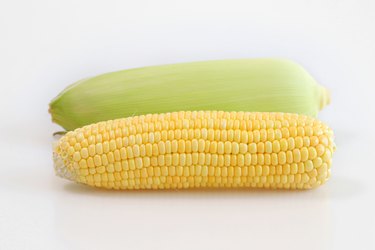
Closeup of corn next to husk A microwaved cob will slide neatly out of its husk. Image Credit: Poh Kim Yeoh / EyeEm/EyeEm/GettyImages

2. Brush Away That Silk

Corn isn't hard to cook, but it does require some work. First, you need to shuck the husks and perhaps trim the stem so it will fit into your pot, and then there's the silk. The silk may be the most time-consuming part of the whole process, clinging to the tip of each ear with stubborn persistence. If you keep a small brush on hand for cleaning vegetables before they're cooked, that's the easy answer to silk removal. Just hold the ear under running water and brush between the rows of kernels to dislodge the silk. The flowing water will wash away the strands, leaving a neatly cleaned ear.
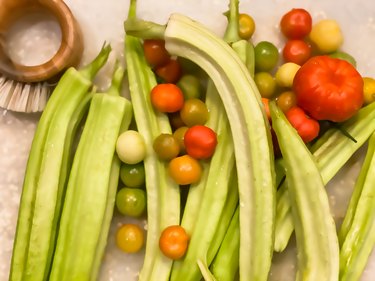
Fresh homegrown okra and heirloom tomatoes from the vegetable garden The same brush you use to clean your fresh veggies will strip the silk from your corn. Image Credit: Catherine McQueen/Moment/GettyImages

3. Use Your Slow Cooker

If you find that the midsummer weather already skews too much toward heat and humidity, having a big pot boiling away on your stove top might not sound appealing. Standing over that pot while it boils probably sounds even worse. If you have a slow cooker, it's a great hands-off alternative to heating up your kitchen. Just load up the cooker with your corn – a standard 6-quart model will hold six to eight ears – add 1/4 cup of water and cook it on high for 2 1/2 to 3 hours. Once it's done, you can use the cooker to keep it warm or apply butter and serve it right away.
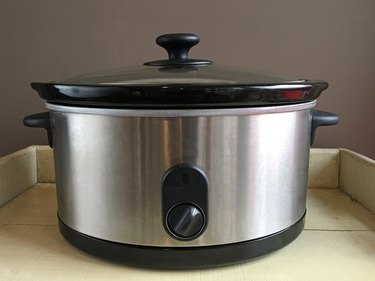
Electric slow cooker Slow cookers provide an easy, hands-off prep method. Image Credit: Rafael Ben-Ari/Photodisc/GettyImages

4. Use Your Pressure Cooker

A faster alternative to the traditional pot of boiling water is your pressure cooker. Put the trivet (wire rack) into the bottom of your cooker and stack the ears at right angles like firewood: two on the bottom and two crosswise on top in a small model or three and three in a larger pot. Pour a cup of water into the cooker and lock the lid in place. Set it to high if you're using an electronic model or bring it up to pressure if you're using a stove top pressure cooker. Cook under pressure for two minutes and then use the quick-release valve to rapidly depressurize and stop cooking.
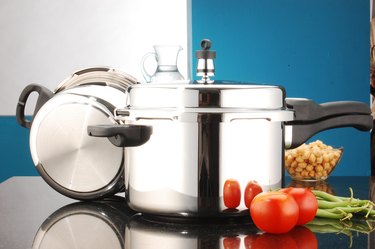
Pressure cooker Your pressure cooker provides a fast, convenient way to cook corn. Image Credit: Rithwik photography/Moment/GettyImages

5. Keep Corn Hot in a Cooler

Picnic coolers are wonderfully versatile. Their normal use (as the name suggests) is for keeping things cool, but they're just as adept at keeping things hot. That's good to know if you're going to prepare corn for a crowd. Instead of steaming out the house while guests are there or dragging your pot to someone else's house, use your cooler to keep the corn warm until it's needed. Cook the corn using your favorite method, wrap each ear in foil and drop them into the cooler. Top them with microwaveable heating packs – the kind you use for sore muscles – and a blanket if necessary to take up the remaining space. They'll stay hot for a surprisingly long time.

Two large coolers on wheels Whether you\’re tailgating or having a backyard celebration, coolers are paradoxically great for keeping corn hot. Image Credit: Douglas Sacha/Moment/GettyImages

6. Cook Corn in a Picnic Cooler

If you have a large family or an active social life, there's a strong possibility that one day, you'll find yourself cooking corn for way too many people. There are a few ways to approach this – buy a bigger pot, bake them in the oven, grill them endlessly – but none of those is a really appealing option. The best hack for cooking corn in volume uses a picnic cooler. The technique is pretty simple: Shuck and clean the ears, load up your cooler and pour in enough boiling water to cover the corn. Close the lid, wait a half hour and you're ready to serve!

Corn cobs for sale in market When you need to cook corn in bulk, a picnic cooler can be your best friend. Image Credit: Mohd Azri Suratmin / EyeEm/EyeEm/GettyImages

7. Buttering Corn for a Crowd

One of the best things about fresh, tasty corn is how well it goes with butter. Managing the butter supply is easy when you're only cooking for one or two, but the logistics get complicated when you're cooking lots of corn. Sure, you can set out butter dishes or put a pat of butter with each plate, but that's time-consuming. A better option is to simply melt a few sticks of butter into your pot or your picnic cooler if you're using that method. The melted butter floats on top of the water, so as you pull out each ear, it butters itself easily and thoroughly.

Butter slice melting on hot corn Buttering corn can be a logistical challenge when you\’re cooking a lot. Image Credit: FotografiaBasica/E+/GettyImages

8. Spice Things Up

Corn is perfectly delicious with just a smear of butter and a generous pinch of salt and pepper, but that doesn't mean you should stop there. Its fresh sweetness goes with lots of other flavors, so give your guests some options. Knead fresh garden herbs or ground spices into plain butter and then melt the seasoned butter on your corn. It tastes great, and it's a fine way to preserve herbs from your garden for later use. You can also make up dips with varying flavor profiles – Thai, for example, or Mexican ​elote​ style – to spread or squirt on your ears to broaden the available options. The possibilities are endless!

Grilled corn with toppings Plain butter is good, but flavored butters and spicy dips take corn to a different level. Image Credit: Eugene Mymrin/Moment/GettyImages

9. Freeze Your Leftovers for Later

Although it may seem endless while it's happening, especially if you were overzealous when you planted your garden, corn's peak season doesn't last all that long. If you've bought too much, it makes sense to cook it and freeze any excess so you can enjoy a taste of summer later in the year. Cook the corn as you normally would or perhaps a bit less to allow for reheating. Once it's cool enough to handle, cut the kernels from the cob and spread them in a single layer on a sheet pan. Freeze the corn and then bag it once frozen so the kernels won't make a solid lump. When you want some, open the bag, pour out a meal's worth and reseal the bag.

Sweet corn or boiled corn on the cob Cook lots of corn while it\’s fresh and then freeze it to enjoy months later. Image Credit: Rapeepong Puttakumwong/Moment/GettyImages

10. Use the Bundt Pan Trick

Cutting away the kernels for freezing or for "corn off the cob" is usually a messy and clumsy process. You can simplify that task if you have a Bundt pan or angel food cake pan. When you have corn to cut, stand up your ear with its tip resting in the tube in the middle of the pan. The tube holds the ear in place, and the round pan itself captures the kernels as they fall (and wherever they fall). If you don't have a Bundt pan, you can improvise a substitute by turning a small mixing bowl or ramekin upside down inside a larger mixing bowl.
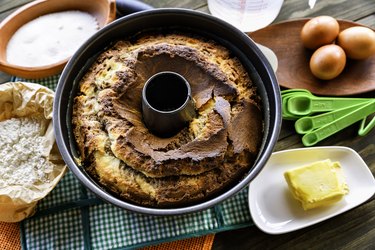
Artisanal home-baked cake with ingredients Your favorite Bundt pan is a great corn-cutting tool. Image Credit: apomares/E+/GettyImages

Linguica vs. Andouille Sausage

0

Sausages Linguica and andouille are both spicy pork sausages. Image Credit: Hemera Technologies/AbleStock.com/Getty Images
Recipes that call for spicy sausage often give the cook a choice between linguica or andouille. Both sausages are made from pork and a pungent mix of spices, so they share a similar flavor profile. Even so, there are important distinctions in the origin, ingredients and techniques for each sausage.
Video of the Day

Origins

Despite sharing some similar characteristics, linguica and andouille have very different histories. Linguica is a Portuguese specialty that is closely related to Spanish-style chorizo or Portuguese chouriҫo. It's also a prominent ingredient in Brazilian cuisine, reflecting influences from early Portuguese colonists in Brazil. Andouille sausage, on the other hand, has roots in Medieval France. French Acadians later brought the idea to the American South, where it developed into the smoky, Cajun-style sausage that is most common today.

Ingredients

Both linguica and andouille are spicy pork sausages, but they contain marginally different blends of ingredients. Andouille traditionally includes chitterlings and tripe – pig intestines and stomach – though modern producers sometimes skip the offal. Linguica, by contrast, is a more standard mix of pork meat and chunks of pork fat. Linguica also features a heavy dose of garlic and spicy paprika, while andouille typically contains a mix of classic Cajun spices, including cayenne, sweet paprika and thyme.

Techniques

Linguica is a dry-cured sausage, which means that it is salted and hung to dry and harden before it comes to market. This process gives it a slightly firmer texture than andouille sausage, which is usually smoked rather than dry-cured. Some producers lightly smoke linguica after curing it, but andouille is more well-known for its smoky flavor. Linguica also has a rather slim width, compared to the more standard-sized andouille sausage.

Uses

Andouille and linguica are both sold ready to eat, without further cooking. Simply slice them into bite-size pieces for a spicy hors d'oeuvre. Both sausages are also essential to a variety of classic cooked dishes, such as Cajun gumbo with andouille and Portuguese caldo verde with linguica. If you need to substitute for one or the other, Spanish-style chorizo is a good choice, especially for linguica. They can also serve as comparable substitutes for each other.
How to Make Vegan Avocado Chocolate Mousse

0

Did you know that you can make creamy, chocolatey mousse using avocados? That's right! For those of you looking for a way to enjoy chocolate mousse without dairy or eggs, look no further. It's kind of crazy, but this dessert not only looks like chocolate mousse, but also tastes like it, too. Using avocados gives this dessert the creamy texture it needs, and transforms this cup of chocolatey goodness into a tasty vegan treat that's actually much better for your body than its traditional counterpart.
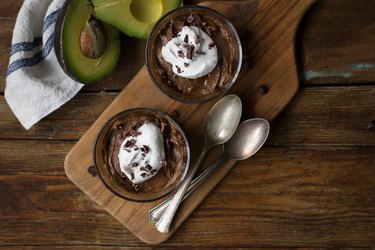
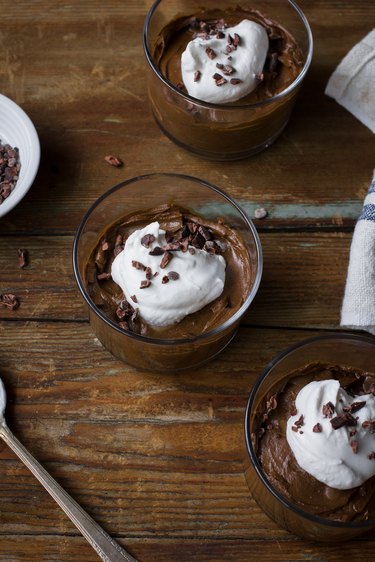
finished mousse

Video of the Day

Things You\’ll Need

  • Flesh of 2 ripe avocados

  • 3 1/2 oz 70% cocoa vegan chocolate, melted

  • 3 1/2 tablespoons cocoa powder

  • 1/4 cup honey, more to taste

  • 1 1/2 teaspoon vanilla extract

  • 1/4 teaspoon cinnamon

  • 3 tablespoons hazelnut milk, or other non-dairy milk of choice

  • 1/8 teaspoon fine sea salt

  • Coconut whipped cream, or other non-dairy whipped topping, optional garnish

  • Cocoa nibs, optional garnish

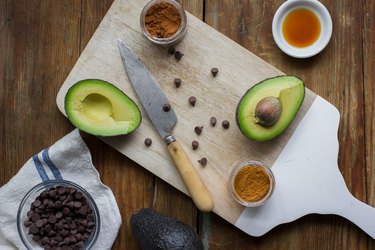
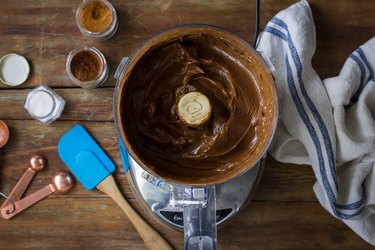
prep shot

Step 1

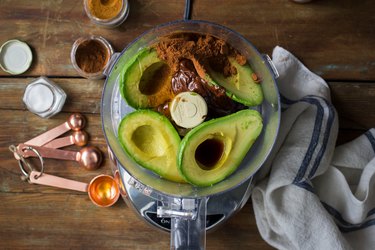
Add all of the ingredients to a food processor or blender, and blend until smooth. Scrape down the sides of the blender or food processor as necessary.

gathering ingredients

Step 2

Taste the mousse, adding more honey to taste. Blend for a few more seconds until smooth, then divide the mousse between 3-4 short glasses. Place the mousse in the refrigerator for about 45 minutes to chill before serving.

blending

Tip

If you want a creamier mousse, simply add a little extra hazelnut milk.

Step 3

Before serving, garnish each cup with a dollop of coconut whipped cream, and a light sprinkling of cocoa nibs.

finish dessert

Easy Tuna Macaroni Salad Recipe

0

This easy tuna macaroni salad is a great way of putting a classic dish together out of items you likely have in your pantry. The simplicity of this dish is one to be admired, since after only a small amount of work, each bite packs a surprising punch of flavor. This particular recipe really lets the flavor of tuna shine, complimented by the bright notes of lemon and onion all throughout. It's perfect for lunch all on its own, or as a side dish to any meal—plus, you'll have leftovers for days!

Final final dish Image Credit: Kristan Raines

Video of the Day

Things You\’ll Need

  • 8 oz dry elbow macaroni

  • 2, 7 oz cans of light tuna, drained

  • ½ cup + 2 tbs mayonnaise

  • ½ cup +2 tbs greek yogurt

  • 1/2 cup diced red onion

  • 1 cup frozen petit peas

  • zest of one lemon

  • 1 tbs lemon juice

  • 1 tbs freshly chopped dill, plus a bit extra for garnish

  • salt and pepper, to taste

  • large pot

  • colander

  • zester

  • large mixing bowl

Step 1

Cook the pasta according to instructions until al dente. Add the peas about one minute before the pasta is finished cooking. Drain, rinse under cold water and set aside.

Step 1 cooked and drained pasta Image Credit: Kristan Raines

Step 2

To a large bowl add the cooled pasta, tuna, mayo, yogurt, onion, peas, lemon zest, lemon juice, dill, and a few pinches of salt and pepper.

Step 2 Prepping ingredients Image Credit: Kristan Raines

Step 3

Gently fold everything together until well coated. Season with additional salt and pepper as needed. Cover the bowl, and place in the refrigerator for 30-45 minutes before serving.

Step 3 Mixing ingredients Image Credit: Kristan Raines

Tip

The pasta will absorb the mayo-yogurt mixture, so the longer the salad chills, the more dry it will become. If this happens, just add a little extra mayo, yogurt, or a mix of both, until desired texture is achieved.

Step 4

Transfer the tuna pasta salad to a serving dish and garnish with a bit of freshly chopped dill and enjoy! Serves 6-8.

Step 4 Finished dish Image Credit: Kristan Raines

DIY Marshmallow Tutu Treat Pops

These marshmallow tutu treats are easy to make for any birthday party, baby shower or other ballerina themed event you have coming up. Use them as centerpieces, treats to dress up your dessert table or party favors — the possibilities are endless.

DIY Marshmallow Tutu Treat Pops DIY Marshmallow Tutu Treat Pops Image Credit: Kalia Silva-Phillips
Video of the Day

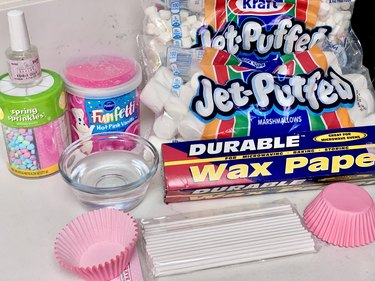
Things You\’ll Need

  • Lollipop Sticks

  • Marshmallows (large and small)

  • Wax paper

  • Pink Sugar Sprinkles/Pink Pearl Sprinkles

  • Pink Cupcake Liners

  • Water, Edible Glue or Frosting

  • Decorative box & foam to store lollipop sticks

  • Plastic serving gloves

DIY Marshmallow Tutu Treat Pops Supplies Image Credit: Kalia DIY Marshmallow Tutu Treat Pops Supplies Image Credit: Kalia

Step 1

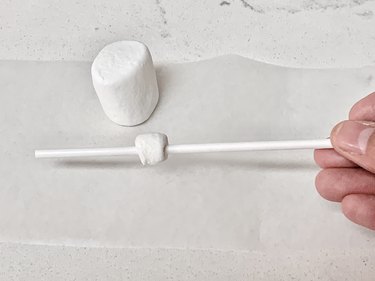
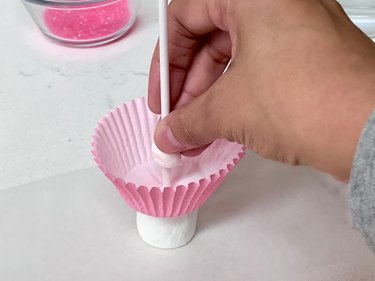
To create the base of your ballerina tutu treat, place a small and large marshmallow on top of a piece of wax paper. Push the lollipop stick through the center of a small marshmallow so it sits on the stick right below the space that the large marshmallow will sit.

DIY Marshmallow Tutu Treat Pops DIY Marshmallow Tutu Treat Pops Image Credit: Kalia
Tip

Using two cupcake liners together, instead of one, will give the tutu a more defined shape.

Step 2

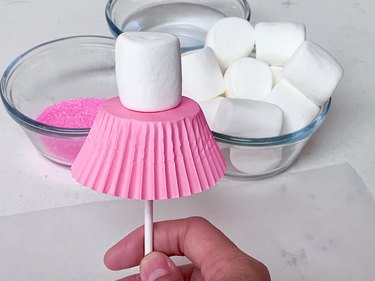
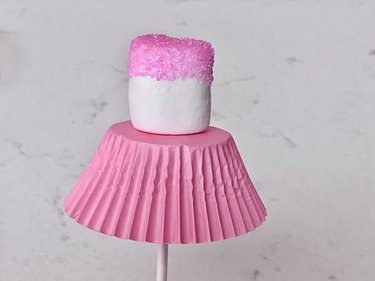
Place the cupcake liner directly on top of the large marshmallow. Then line up the lollipop stick with the center of cupcake liner and press down so it pierces through the liner and large marshmallow. Push the small marshmallow toward the cupcake liner so there is no space between the liner and large marshmallow. The small marshmallow acts as a stopper that doesn't allow the cupcake skirt to slide down and separate from the large marshmallow.

DIY Marshmallow Tutu Treat Pops DIY Marshmallow Tutu Treat Pops Image Credit: Kalia DIY Marshmallow Tutu Treat Pops DIY Marshmallow Tutu Treat Pops Image Credit: Kalia Silva-Phillips
Tip

You can also pierce a small hole in the center of the cupcake liner prior to inserting the lollipop stick to help the stick glide through the liner and marshmallow more smoothly.

Step 3

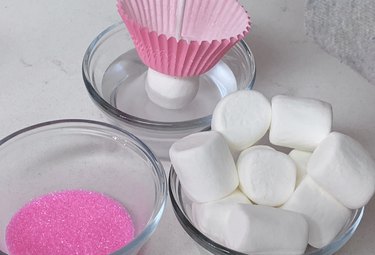
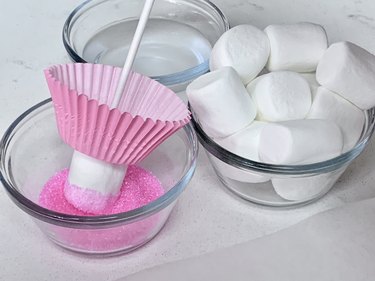
Cover the marshmallows with as much adhesive as you want the sprinkles to cover. For example, if you would like to cover half of the marshmallow as pictured, dip the top half of the marshmallow in water, edible glue or frosting (we used water). Shake off excess water.

DIY Marshmallow Tutu Treat Pops DIY Marshmallow Tutu Treat Pops Image Credit: Kalia
Step 4

Immediately dip the top of the damp marshmallow into a bowl of pink sprinkles and swirl around. Shake off any excess.

DIY Marshmallow Tutu Treat Pops DIY Marshmallow Tutu Treat Pops Image Credit: Kalia Silva-Phillips DIY Marshmallow Tutu Treat Pops DIY Marshmallow Tutu Treat Pops Image Credit: Kalia Silva-Phillips


Step 5

Turn your marshmallow tutu treats upright and place the sticks into styrofoam insert covered by tissue paper and placed inside a decorative box. Make as many of these beautiful treats as you desire! When grouped together, the presentation is absolutely gorgeous. Try it for your next event — you won't be disappointed.

DIY Marshmallow Tutu Treat Pops DIY Marshmallow Tutu Treat Pops Image Credit: Kalia DIY Marshmallow Tutu Treat Pops DIY Marshmallow Tutu Treat Pops Image Credit: Kalia Silva-Phillips DIY Marshmallow Tutu Treat Pops DIY Marshmallow Tutu Treat Pops Image Credit: Kalia Silva-Phillips DIY Marshmallow Tutu Treat Pops DIY Marshmallow Tutu Treat Pops Image Credit: Kalia Silva-Phillips DIY Marshmallow Tutu Treat Pops DIY Marshmallow Tutu Treat Pops Image Credit: Kalia Silva-Phillips