Home Blog Page 53

Slow Cooker Pot Roast with Veggies Recipe

0

For those chilly winter evenings and busy week nights, slow cooker meals are comforting and help simplify mealtime. While many pot roast recipes can be high maintenance and arduous, this one is anything but! This easy slow cooker pot roast recipe requires just 15 minutes of prep time, a few straight-forward ingredients, and 3 steps to come together. Mix up the type of vegetables and seasonings you use according to your own personal taste. Serve with toasted bread for the ultimate cozy experience.

Pot roast and veggies How to make pot roast in a slow cooker Image Credit: Julia Mueller

Video of the Day

Things You\’ll Need

  • 3 to 4 pound beef chuck roast, (1)

  • 1 large yellow onion, chopped

  • 2 large carrots, peeled and chopped

  • 1 medium sweet potato, peeled and chopped

  • 1 large parsnip, peeled and chopped

  • 6 baby bella mushrooms, quartered

  • 1 teaspoon sea salt, to taste

  • 2 teaspoons dried oregano

  • 2 teaspoons dried thyme

  • 2 teaspoons dried parsley

  • 1/2 teaspoon paprika

  • 1 cup dry red wine (such as Malbec or Cabernet Sauvignon)

  • 3 to 4 cups low-sodium beef broth (see instructions)

Tip

The sweet potato can be replaced with 2 large Yukon gold potatoes.

Omit the parsnips and replace with a different hearty vegetable of choice, such as turnip, celery, or rutabaga.

Be creative with your seasonings. You can add a variety of your favorites, such as chili powder, Cajun seasoning, ground cumin, or coriander to change up the flavors.

Step 1: Add Ingredients to Slow Cooker

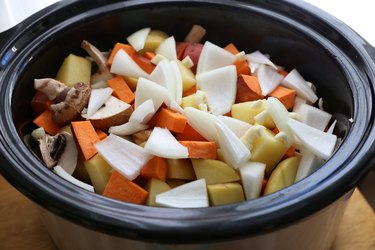
Plug in your slow cooker (you'll need a 6-quart slow cooker or larger), and remove the meat from its packaging. Sprinkle liberally with sea salt and place inside the slow cooker. Add all of the remaining ingredients in the same order as they appear on the ingredient list. Add enough broth so that the beef and most of the vegetables are fully submerged, about 3 to 4 cups.

beef pot roast ingredients in slow cooker Add pot roast ingredients to slow cooker Image Credit: Julia Mueller

Step 2: Set It and Forget It

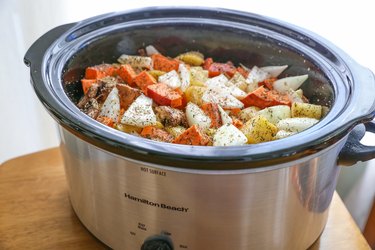
Secure the lid on the slow cooker and turn it on the lowest setting. Cook for 8 hours, until the vegetables and roast are cooked through and tender.

All pot roast ingredients in a slow cooker Add everything to the slow cooker and give it a good stir Image Credit: Julia Mueller

Step 3: Serve!

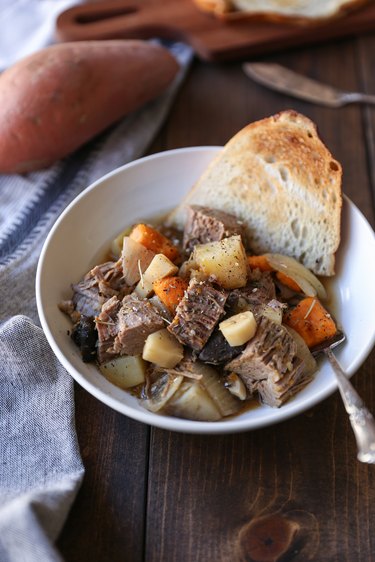
Transfer the roast to a cutting board and allow it to sit 10 minutes. Cut into slices or chop. Place the meat back in the crock pot and allow it to sit at least 10 minutes to absorb some of the liquid. Serve desired amount of beef, vegetables, and broth in bowls with toasted bread. Season with salt to taste.

slow cooker post roast in a bowl with toast chop meat and serve Image Credit: Julia Mueller

Bonus: Make Gravy

If desired, you can make a thick gravy out of the broth mixture. To do so, heat 2 tablespoons of butter and 2 tablespoons of flour in a small skillet over medium heat. Add 1 cup of the broth mixture a small amount at a time until a thick roux is formed. Transfer the roux to the crock pot, and stir well to combine. The liquid will continue to thicken the longer it sits.

Are Wonton Wrappers Made With Rice Flour?

0

Pork and shrimp balls and wonton blossoms Huidun, Chinese for chaos, is the original name for wontons. Image Credit: Jupiterimages/Stockbyte/Getty Images

Chinese history is at the heart of a stuffed wonton wrapper. Wontons are mentioned in Chinese literature as early as the sixth century. Today, wonton wrappers serve as ravioli skins, mini hors d'oeuvres wrappers and chips. Their universal appeal rests in their simplicity: A plain square of thin dough you can stuff with anything, cook however you wish or slice into ribbons and toss into soup.

Video of the Day

Wonton Upon a Time

North China is the birthplace of wonton wrappers, where they began as stuffed, sealed dumplings called jiao-zhi. Jiao-zhi refers to currency; during the New Year, citizens ate dumplings as a metaphor for eating money, acting out their hopes for prosperity in the coming year. Wheat flour and water comprised the original ingredients of their wonton wrappers. In the south, especially in and around Shanghai, wontons swiftly gained in popularity, and wheat flour, eggs and water made up their core ingredients. The Tang Dynasty found wontons distinguished by the shape of their wrapper, square as opposed to round, which was the shape of traditional dumpling wrappers. After that, wontons took on their own life and a multitude of regional variations.

Rapt Attention to Wontons

Today, store-bought wonton wrappers are typically made of enriched white or whole-wheat flour, egg, water and occasionally salt, sharing this basic recipe with Asian egg noodles. At your grocer, wonton wrappers are usually in the produce section, not far from other Asian ingredients. They come in a variety of sizes, starting at 3-inch squares. When stuffed and added to cilantro and sesame oil broth, wontons are sometimes listed on Chinese restaurant menus as hun tun. They are essentially a vehicle for combining and presenting other ingredients, and as such, you can use them interchangeably with similar Asian flour-based wrappers, like slightly thicker egg roll wraps or rice papers.

Rice-Based Wonton Wannabe

If you've ever eaten spring rolls, you've eaten rice paper. Food-grade rice papers are made of rice and tapioca flour, and refer to a family of edible, papery materials used in Asian cuisines. Rice papers are square or round and require some soaking before you can use them. They become transparent after soaking. The tapioca and rice they're made of give them a certain degree of resilience, and rice papers are a reliable, gluten-free alternative to wonton wrappers.

Whip Up Wonton Wrappers

Wonton wrapper dough is a basic pasta dough: flour and water with optional eggs and salt. Just like you might prepare a rice flour pasta, mix a handful of rice flour, a scant teaspoon of xanthan gum and several splashes of water and knead until you get a smooth, stiff consistency. The xanthan gum mimics the properties of gluten, contributing volume, viscosity, elasticity and strength. You'll need to roll the dough out to a thin sheet, flouring as you go along to prevent sticking. Work quickly on a cool, dry surface and use a knife or pizza cutter to cut the desired shapes.

Homemade Chicken Pot Pie Recipe

0

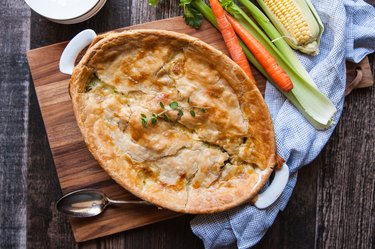
Chicken pot pie is a recipe that needs to be added to every home cook's "go-to meals" list. It's simple, quick to prepare, delicious and the perfect way to repurpose leftover chicken in a way that might get your family actually excited about leftovers night. You can get the entire dish prepped and ready to go the night before, cover it, and bake it to golden perfection the next night. With the chicken and veggies baked right in, you don't even need to worry about a side dish.

Homemade Chicken Pot Pie Recipe

Video of the Day

Tip

For a quick and easy chicken pot pie, pick up a pre-cooked rotisserie chicken, or use leftover chicken legs from a recent cookout! Just pull the chicken off the bones, discard the bones and skin and you're all set.

Homemade Chicken Pot Pie Recipe

Things You\’ll Need

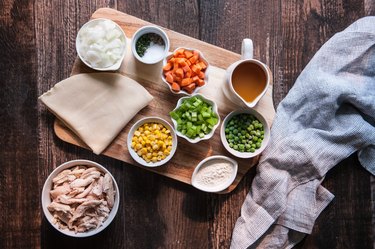
  • 1/4 cup unsalted butter

  • 1/2 cup diced white onion

  • 1/2 cup diced carrot

  • 1/2 cup diced celery

  • 3 cups shredded cooked chicken

  • ½ teaspoon garlic powder

  • 1 teaspoon salt

  • ½ teaspoon black pepper

  • 1 teaspoon chopped fresh thyme (or rosemary)

  • 1/4 cup all-purpose flour

  • 3 cups low salt chicken broth

  • 1/4 cup heavy cream

  • 1 pastry dough (enough for one pie crust)

  • Egg wash (1 egg, 1 tablespoon water, beaten)

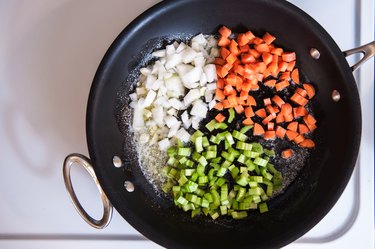
Step 1: Cook the Vegetables

Preheat the oven to 350 degrees F. Melt the butter in a saucepan over medium-high heat. Add the onions, carrots and celery, cooking until the vegetables have softened, about 5 minutes.

Homemade Chicken Pot Pie Recipe

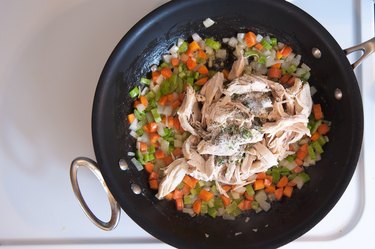
Step 2: Add the Chicken and Spices

Add the chicken, garlic powder, salt, pepper and thyme; stir until combined.

Homemade Chicken Pot Pie Recipe

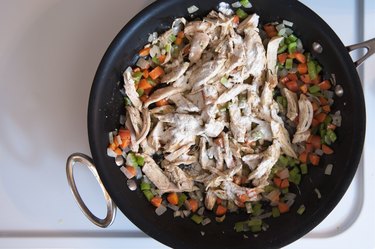
Step 3: Sprinkle with Flour

Sprinkle with flour, stirring until the flour has combined with the butter and cooked slightly.

Homemade Chicken Pot Pie Recipe

Step 4: Add the Broth, Corn and Peas

Stir in the chicken broth, corn and peas. Stir until completely combined.

Homemade Chicken Pot Pie Recipe

Step 5: Stir in the Cream

Add the cream, stirring until combined. Allow to simmer until slightly thickened, about 3 minutes.

Homemade Chicken Pot Pie Recipe

Step 6: Add to a Baking Dish and Cover with Dough

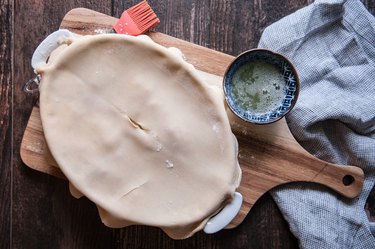
Pour into a 2-quart baking dish. Roll the pie crust out on a lightly floured surface, large enough to completely cover the dish. Transfer the dough to the top of the dish, pressing around the edges. Slit a small hole in the center of the pastry. Brush with egg wash.

Homemade Chicken Pot Pie Recipe

Step 7: Bake

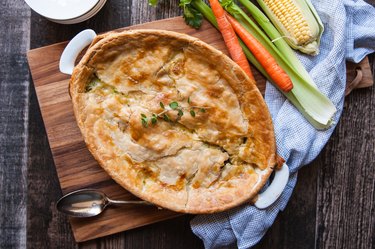
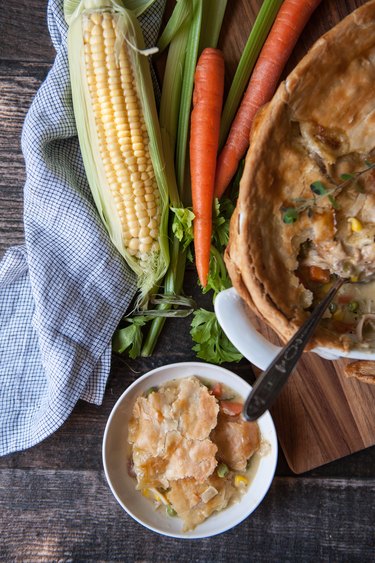
Bake until the crust is golden brown, about 30 minutes. Serve warm.

Homemade Chicken Pot Pie Recipe Homemade Chicken Pot Pie Recipe

How to Make Tomato & Mozzarella Tulips

0

If you love tomato and mozzarella, you'll love this unique take on the classic pairing. It calls for nothing more than grape tomato tulips, mozzarella pearls and fresh scallion stems. When styled together, the dish looks just like a beautiful bouquet of tulips! This charming appetizer idea is perfect for celebrations like baby showers, Easter and Mother's Day. Read on to learn how to make it.

Tomato and mozzarella tulips

Video of the Day

Things You\’ll Need

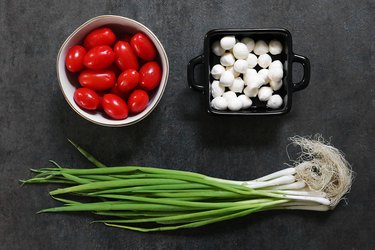
  • 12 large grape tomatoes

  • 12 mozzarella pearls

  • 12 scallion (green onion) stalks

  • Skewer

  • 1/4 teaspoon measuring spoon

Ingredients for tomato and mozzarella tulips

Step 1

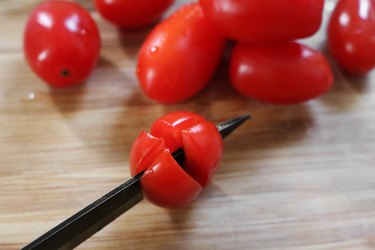
Turn the tomato upside down (the stem, or the part where the stem was, is the top side). With a sharp knife, slice an "X" about 3/4 down.

Slice grape tomatoes

Warning

Be sure to use a sharp knife. If the knife is too blunt, it can slip and hurt your hand.

Step 2

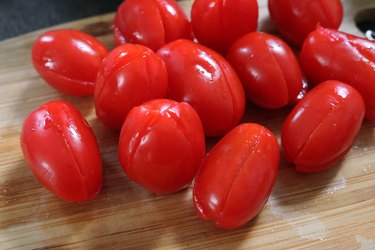
Repeat with the remaining grape tomatoes.

Cut the grape tomatoes

Step 3

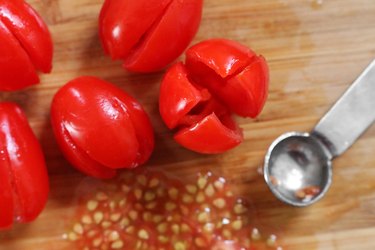
With a 1/4 teaspoon, gently remove any watery pulp and seeds that have separated from the tomatoes.

It's likely that some of the tomatoes' insides won't separate during slicing. You can leave these firmer parts. Scooping out these parts might squish the tomato, so just try to remove whatever naturally falls out. The goal is to simply clean up the tomatoes and remove loose pulp.

Scoop out pulp and loose seeds

Step 4

With the pointed end of a skewer, pierce the bottom ends of the tomatoes.

Poke hole with skewer

Step 5

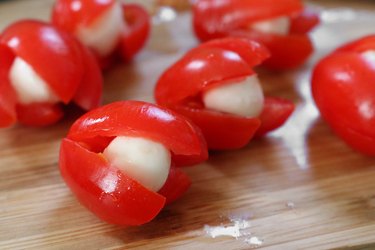
Gently place a mozzarella pearl in each tomato.

Add mozzarella pearls

Step 6

Insert the pointy ends of the scallions into the holes. For thicker scallion ends, use the flat end of the skewer to gently push the scallion into the tomato.

Add scallions

Tip

Lay out the scallions first. Once you're happy with the arrangement, you can add the tomatoes accordingly.

Pressed for time? Simply place the tomatoes on top of the scallions to create a similar visual (the scallions don't need to actually hold up the tomatoes)!

Tomato and mozzarella tulips

If you'd like to make multiple bouquets, simply double or triple this recipe. You can also make one big bouquet for an eye-catching spread. Serve with balsamic vinaigrette, pesto or your favorite dip.

Tomato and mozzarella tulips

What Can You Substitute for Oil in Salad Dressing?

0

Oil is just one on many ingredients that can be used to make tasty salad dressings. Sure, it adds subtle flavor and enticing body to your dressing, but it also adds a significant amount of fat and calories to your healthy salad. Whip up a batch of oil-free salad dressing that gets your taste buds singing by combining fresh herbs and seasonings with vinegar or citrus juice and an oil substitute to help it cling to your greens.

Thickeners

To compensate for the viscosity that oil adds to salad dressing, you can substitute one of the following thickeners:

Video of the Day

  • Co**rnstarch:** Combine 1 teaspoon cornstarch with 1/2 cup of water or broth in a saucepan. Bring the mixture to a boil over medium-high heat and simmer it until the liquid is clear and thickened. Allow it to cool before using.
  • Cooking Water: The authors of the book No More Bull recommend using the cooled cooking liquid leftover after cooking potatoes, chickpeas or cannellini beans to thicken dressing in place of oil.
  • Xanthan Gum: This ingredient is frequently used to replace gluten in gluten-free baking. Used here, it provides thickening and emulsification in place of the oil. (Ref 2, page 298) To use it as an oil substitute in your salad dressing, add 1/8 to 1/4 teaspoon of xanthan gum for every 1 teaspoon of liquid used in your salad dressing recipe. (Ref 3)

Mustard

Just as mustard can be used in an oil-based dressing to emulsify the oil and vinegar, it can add flavor and body to your oil-free salad dressing without extra fat. Use Dijon mustard for a kicky flavor, or use simple yellow mustard for a smoother taste. To make a mustard vinaigrette, mix 1/3 cup mustard with 1/4 cup vinegar, 1/2 teaspoon sweetener, 1 teaspoon freshly ground black pepper and 2 tablespoons water. Blend the mixture in a blender, food processor or with a hand blender and season it to taste with salt.

Fruit Purees

Just as fruit purees can be used to replace the fat in baking, you can also use them as an oil substitute in your salad dressing. Some examples include canned pumpkin and applesauce. For every 3 tablespoons of vinegar, try blending in approximately 1/4 cup of unsweetened applesauce. Season the mixture with your favorite herbs or seasonings, such as cumin, salt and pepper. Play up the sweetness with a little maple syrup, or add a kick of spice with a dash of cayenne and some minced garlic.

Nut Butters

Add body and flavor to your dressing by combining your ingredients with protein-rich nut butter instead of oil. Although many recipes call for a small amount of additional oil, you can leave it out without sacrificing quality or flavor. For example, to make an Asian peanut dressing, combine 1/4 cup nut butter with an equal amount of water, 1 tablespoon vinegar, 2 tablespoons fresh lime or lemon juice, 1 tablespoon soy sauce, 2 cloves garlic, 3 tablespoons honey and 1 to 2 tablespoons fresh ginger. Add crushed red pepper flakes or a little Sriracha for heat, if desired.

Tahini

Admittedly, this can be a bit of a cheat since many brands, and even homemade tahini, contains a small amount of oil for smoothness. It adds a depth of flavor and creamy quality to your salad dressing without any extra oil, though — making it worthy of mentioning. To make a tangy, rich tahini dressing, combine 2 tablespoons tahini with 1 tablespoon freshly squeezed lime or lemon juice, 3 tablespoons freshly squeezed orange juice, 1 tablespoon apple cider vinegar, 2 teaspoons Dijon mustard, 2 tablespoons maple syrup or agave nectar, and salt and pepper to taste. (Ref 4) Ideally, mix the ingredients together with a blender or an immersion blender for optimal consistency. Add flavorful extras, such as herbs, fresh ginger or garlic to vary the taste of your tahini dressing.

Creamy Ingredients

When you want to add creaminess and richness to your dressing without any oil or dairy, try adding one of the following creamy ingredients to thicken your dressing:

Avocado: A little goes a long way when you use avocado to make a quick, creamy dressing. Swap the oil in your dressing recipe with 1/4 of an avocado. Blend it with citrus juice or vinegar, herbs, salt and pepper for a quick dressing.

Silken Tofu: The Kitchn recommends blending in a small amount of silken tofu with your favorite vinegar and herbs to make a flavorful, creamy vinaigrette.

Yogurt: Greek yogurt, in particular, helps add thickness and body to your dressing in addition to giving it a creamy flavor with subtle tang. Add a spoonful or two to other ingredients to make anything from Caesar dressing to ranch, green goddess, honey mustard or poppy seed dressings.

11 County Fair Foods You Can Make at Home

0

Hot dogs, corn dogs, donuts and deep fried snickers. 1 of 12

From the food to the rides and endless entertainment, an all-around good time to celebrate summer is when the county fair is in town. While the fair provides patrons with a smorgasbord of one-of-a-kind street foods and sinfully delicious treats, you can also make and enjoy them at home.

Image Credit: Demand Media Golden funnel cake drizzled with powdered sugar and fresh strawberries. 2 of 12

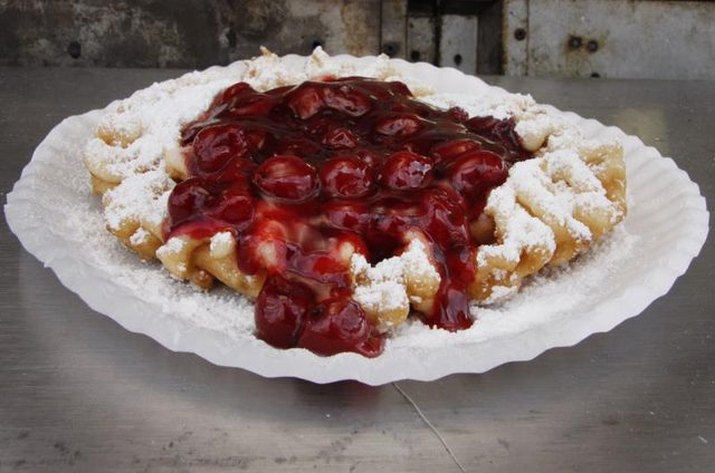
Funnel Cake

Funnel cake is as fun to make as it is to eat. The irresistible smell of freshly fried funnel cake can fill up an entire fairground, and now it can fill up your whole house with this easy recipe.

Image Credit: Jdwfoto/iStock/Getty Images Two deep fried Snickers sprinkled with powdered sugar. 3 of 12

Deep-Fried Snickers

The county fair is the home of deep-fried everything — and that includes deep-fried Snickers bars. To make this peanut, caramel goodness in your own kitchen, all you need is a deep fryer, some batter mix and Snickers bars. You can even deep fry miniature Snickers for the kids, and save the larger bars for yourself.

Image Credit: CRP photo Golden brown corn dog. 4 of 12

Corn Dogs

Corn dogs are a classic summer fair food. This recipe lets you can save money on fair admission and make your own homemade corn dogs with two common kitchen items: pancake batter and hot dogs.

Image Credit: Victor Holguin/Demand Media Deep-fried Coke topped with whipped cream and a cherry. 5 of 12

Deep-Fried Coke

They say you can deep fry anything these days — even Coke. In case the fair isn't in town, you can still prepare and serve up this delicious dessert at home anytime.

Image Credit: Victor Holguin/Demand Media A classic, southwestern Sonoran dog topped with pinto beans, onions, jalapenos, cream sauce and mustard. 6 of 12

Hot Dogs

Between baseball season and National Hot Dog Month in July, summer is the perfect time to enjoy a tasty, homemade frank. From flavorful danger dogs in Los Angeles to cream cheese Seattle dogs, you can customize this street food staple in many savory ways.

Image Credit: Courtney O\’Dell A plate of shredded chicken, jalapenos, tomatoes, black beans and sour cream on a bed of tortilla chips 7 of 12

Chicken Nachos

Add some heat to your summer with these Mexican chicken nachos. Simply combine and bake your favorite nacho ingredients like black beans, shredded chicken, cheese, tomatoes and jalapenos for a snack that's muy caliente.

Image Credit: Kate Van Vleck/Demand Media A freshly deep-fried grilled cheese sandwich emerging from hot oil. 8 of 12

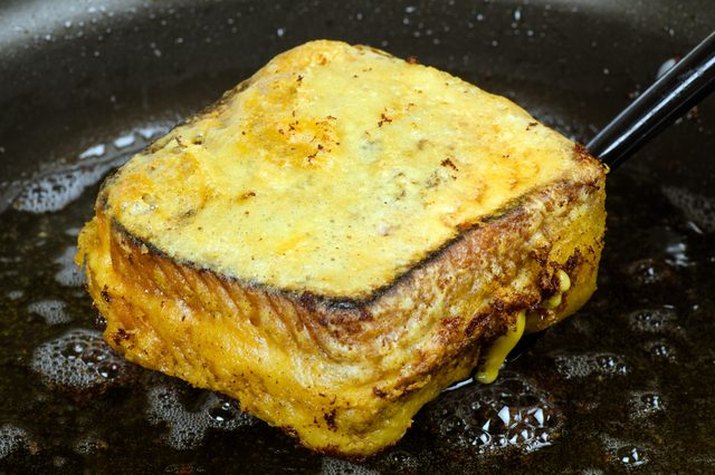
Deep-Fried Grilled Cheese Sandwich

Grilled cheese sandwiches are great, but this recipe takes the all-American classic to the next level. Simply deep fry the sandwich for three to four minutes to add a fair food-themed twist.

Image Credit: Rob Hainer/Demand Media Golden-fried doughnuts sprinkled with granulated sugar 9 of 12

Doughnuts

These doughnuts are so good, they'll be sure to take home the top prize. You don't even need fancy kitchen tools or a county fair-sized fryer.

Image Credit: Pohian Khouw/Demand Media Cola slush in glass with straw 10 of 12

Soda Slush

Why pay $3 for a soda slush when you can create one in your own freezer? Grab a bottle of your favorite soda, shake it to wake up the carbonation and let it freeze for three hours. Pour it into a glass, and now you can chill out with an icy slush without even crossing the county line.

Image Credit: eHow Deep-fried homemade doughnuts sprinkled with cinnamon and sugar. 11 of 12

Doughnut Holes

If you prefer your fair food in bite-sized portions, try this simple recipe for cinnamon-sugar doughnut holes made out of pancake mix.

Image Credit: Karen Maze/Demand Media Ice cream soda glasses filled with blue-colored ginger ale, whipped cream and a cherry on top. 12 of 12

Ice Cream Float

Cool things down this summer with a do-it-yourself ice cream float. This patriotic ice cream float is the perfect summer treat for you and the family, and you don't even have to wait in line.

Image Credit: Jamie Shields/Demand Media

The Best Pizza Ovens in 2022

0

Making homemade pizza in portable high temperature pizza oven.

If you've ever made pizza in your oven at home—especially a Neapolitan style—you probably weren't wowed by the results. And every time you eat one from a restaurant, you wonder, "Why don't mine come out like this?" Well, the main reason is that you didn't use a pizza oven.

Video of the Day

A typical commercial pizza oven cooks at about 700 to 800 degrees Fahrenheit. Some, like many wood-fired pizza ovens, cook at temperatures of up to around 900 degrees Fahrenheit. But most home ovens top out at around 500 degrees Fahrenheit, which just isn't hot enough to properly cook pizza. That extra-high heat is what gets the crust nice and crispy on the outside while maintaining a pleasant chewiness on the inside, and it helps quickly develop the flavors of other ingredients.

It wasn't long ago when home cooks who wanted their own pizza oven had to spring for an expensive and relatively large one (usually brick) as part of an outdoor kitchen setup. Today though, there are lots of more affordable, manageable options. Outdoor pizza ovens come in a wide range of prices and sizes—even tabletop—and most run on propane, wood or coal. There are countertop indoor pizza ovens available as well.

What to Consider When Purchasing a Pizza Oven

Indoor or Outdoor:​ Indoor pizza ovens are convenient if you have the kitchen space or don't have outdoor space for cooking. But they also tend to be smaller and more expensive, and you don't get to choose the fuel source. If you can cook outside, there's a greater variety of outdoor pizza ovens to pick from. They need some space though, as most are set up on a standalone table.

Fuel Source:​ Indoor pizza ovens are electric; outdoor pizza ovens are fueled by propane, wood pellets or charcoal. If you're a griller, you undoubtedly already have a preference. In general, propane gives you more precise temperature control, while wood pellets and charcoal are good for imparting their smoky flavors.

Size:​ Most home pizza ovens have the capacity to make a 12-inch pizza. But there are models—mostly outdoor—that make a 16-inch pizza, which is better suited to feeding multiple people with one pie. It's helpful if the oven has extra space for easily sliding and rotating the pizza. And consider the total size and weight to be sure you can accommodate it where you intend to put it.

Price:​ As is always the case with cooking appliances, prices for home pizza ovens range widely. You can pay double digits for the most basic models, but most quality indoor and outdoor pizza ovens will run you at least a few hundred dollars. And, of course, there are high-end models that can exceed $1,000.

These are the most basic considerations when buying a pizza oven for home use. Other factors, like preheating requirements and cook time, are worth looking at. Generally, though, pizza ovens deliver (no pun intended) much faster than traditional ovens.

Hands adding black olives to the top of a home-made pizza

The Best Outdoor Pizza Oven

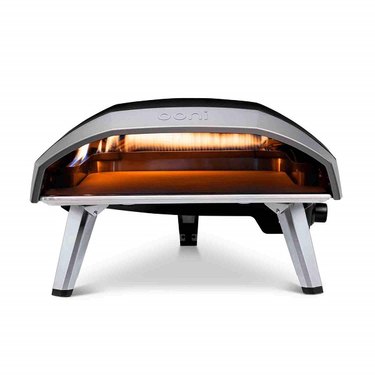
Ooni Koda 16 Gas Powered Pizza Oven

$599.00 at Ooni

Ooni is one of the best-known names in pizza ovens. This propane-powered outdoor pizza oven provides great temperature control with its heat dial, and its unique L-shaped flame promotes even cooking with only one turn of the pie. It reaches up to 950 degrees Fahrenheit with 20 minutes of preheating, providing an authentic, stone-baked cook in about 1 minute (perfect for Neapolitan-style pizza). Because this oven cooks so fast and gives you a lot of control over the flames and temperature, it takes some trial-and-error pies to get the hang of it. But once you do, you'll never look back. Or for another pizza oven.

Setup is simple, requiring placement on a stable surface, inserting the baking stone and connecting to a propane tank. This larger model lets you prepare 16-inch pies, as well as different cuts of meat, bread, veggies and more. Also, the sleek, attractive design and high-end look match the price point. It's light and highly portable, too, and the legs collapse for convenient storage.

At a Glance:

  • Manufacturer:​ Ooni
  • Style:​ Outdoor, standalone
  • Fuel:​ Propane
  • Size:​ 25" x 25" x 20"
  • Max Pie Size:​ 16"

Ooni Koda 16 Gas Powered Pizza Oven

The Best Indoor Pizza Oven

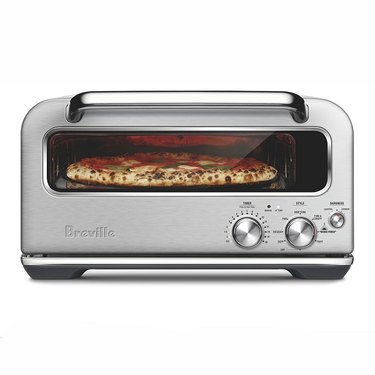
Breville Smart Oven Pizzaiolo

$999.95 at Sur La Table

If you're willing to invest in a fantastic, high-quality indoor countertop pizza oven, this model is worth it. It reaches 750 degrees Fahrenheit (which you don't always get with indoor models) and perfectly cooks a 12-inch pie in about 2 minutes. There are two temperature sensors, and various presets let you select the type of pizza you're preparing (with options like New York, thin crust, pan, frozen and others), removing the guesswork from the process.

This technologically advanced appliance mimics the cooking style of a brick wood-fired oven, giving your pizzas a certain traditional quality, even if they don't benefit from actual wood smoke. The natural cordierite baking stone and underlying Incoloy heating element create that desirable "leopard" charred spotting that's hard to get without a real wood-fired pizza oven. It fits right in to any high-end kitchen, and its exterior doesn't get hot during cooking, making it a safer option if the kids are helping make dinner.

At a Glance:

  • Manufacturer:​ Breville
  • Style:​ Indoor, countertop
  • Fuel:​ N/A (electric appliance)
  • Size:​ 18.1" x 18.5" x 10.6"
  • Max pie size:​ 12"

Breville Smart Oven Pizzaiolo pizza oven

The Best Budget Pizza Oven

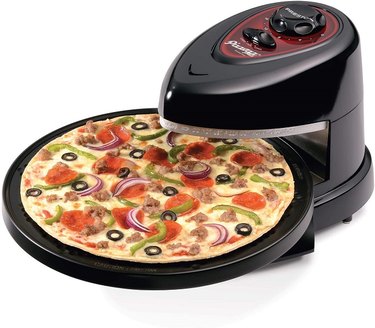
Presto Pizzazz Plus Rotating Oven

$64.28 at Amazon

If you're looking for a simple, budget-friendly indoor pizza oven, look no further. This model is easy to set up and use. It may not be an oven in the traditional sense, but its top and bottom heating elements and rotating tray do a good job evenly cooking fresh and frozen pizza, turning out bubbly crust. Achieve greater cooking control by using just the top or bottom heating element or using both. And it works well for heating other frozen appetizers and snacks, too.

A convenient set-it-and-forget-it appliance, its heating elements even shut off when the timer goes off. It does take up to about 30 minutes, which is a long cook time for a pizza oven. But it doesn't require preheating, which can add 15 minutes or more to the total time with faster-cooking models. Cleanup is a breeze with just a removable nonstick pan to wash.

At a Glance:

  • Manufacturer:​ Presto
  • Style:​ Indoor, countertop
  • Fuel:​ N/A (electric appliance)
  • Size:​ 15.8" x 14.5" x 10.3"
  • Max pie size:​ 12"

Presto Pizzazz Plus Rotating Pizza Oven

The Best Wood-Fired Pizza Oven

Ooni Fyra 12 Wood Fired Pizza Oven

$329.95 at Amazon

For home cooks who want pizza with that unmistakable smoky, wood-fired flavor, this flagship wood-burning model from a leading pizza oven brand is a smart pick. It reaches 950 degrees Fahrenheit in 15 to 20 minutes, has great heat retention thanks to its powder-coated carbon steel shell, and it cooks a 12-inch pizza in about 1 minute. It has a high-end look and a fair price point for the aesthetics, user-friendliness, durability and quality.

This outdoor appliance's unique hopper and loading chute for wood pellets is thoughtfully designed and easy to use. There's even a small viewing hole so you can monitor your fire, which will provide that proper leopard-spotted charred look. The chimney and hopper have a lid, another nice touch, just in case it starts raining while you're putting the oven to work. As with other Ooni pizza ovens, there's very little assembly required, it's light and highly portable, and its legs fold down for convenient storage.

At a Glance:

  • Manufacturer:​ Ooni
  • Style:​ Outdoor, standalone
  • Fuel:​ Wood pellets
  • Size:​ 18.9" x 10.24" x 27.17"
  • Max pie size:​ 12"

Ooni Fyra 12 Wood Fired Pizza Oven

The Best Charcoal Pizza Oven

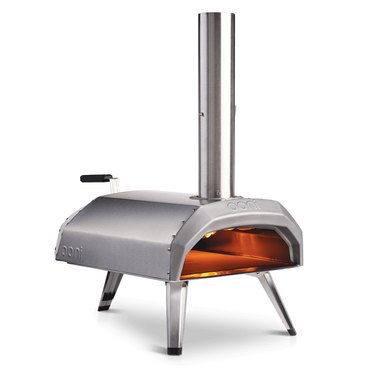
Ooni Karu 12 Multi-Fuel Pizza Oven

$399.00 at Ooni

Ooni is once again the name to turn to if you want a charcoal-fueled outdoor pizza oven. This model actually burns charcoal and wood, and it can even run on propane with the purchase of a separate gas attachment. So, you get options for two or three fuel types in one reliable, long-lasting appliance, and at a pretty good price for all those capabilities, too.

This model offers many of the same benefits mentioned in previous Ooni entries on the list, including excellent heat retention, the ability to hit 950 degrees Fahrenheit within 15 to 20 minutes of preheating, and cook times as quick as 1 minute. It also has the trademark sleek look of Ooni pizza ovens, the minimal assembly requirements, the relatively light weight, the great portability, and the collapsible legs for easier storage.

At a Glance:

  • Manufacturer:​ Ooni
  • Style:​ Outdoor, standalone
  • Fuel:​ Charcoal, wood (and gas with additional equipment)
  • Size:​ 25.2" x 16.14" x 7.9"
  • Max pie size:​ 12"

Ooni Karu 12 Multi-Fuel Pizza Oven

Easy to Make Pumpkin Pie Magic Cake Recipe

0

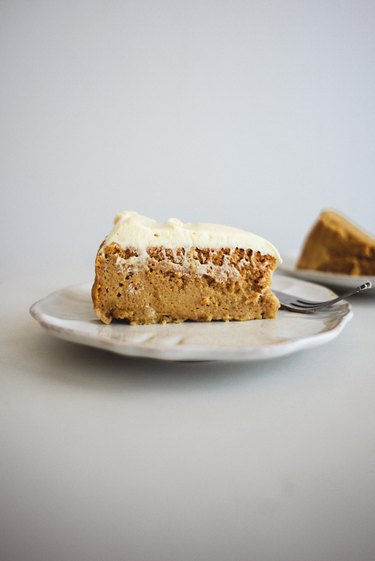
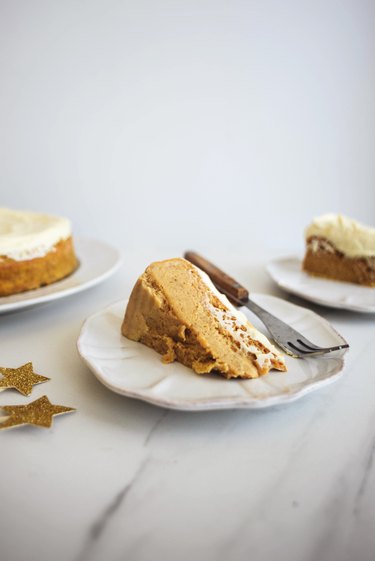
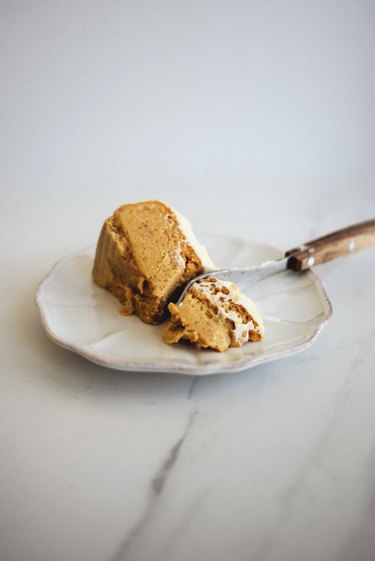
This Pumpkin Pie Magic Cake isn't your ordinary cake! It starts off as a normal cake, but during baking it turns into three layers, each with it's own intense flavor and unique texture. The bottom layer is thin and dense, much like a standard cake. The middle layer is made of a rich and creamy custard-like spiced pumpkin filling — it's very delicate, soft and delicious. The top layer tastes like a light sponge cake, with a slightly crisp crust. Then, on-top of it all is a thick blanket of sweet cream cheese frosting that pairs perfectly with all the spiced pumpkin pie flavors.

Pumpkin Pie Magic Cake is so easy to make and comes together quickly with little preparation needed.

Video of the Day

This Pumpkin Pie Magic Cake is incredibly delicious, especially with all that cream cheese frosting!

Things You\’ll Need

  • 4 large eggs, separated and at room temperature

  • 4.7 ounces (135 grams) granulated sugar

  • 2.1 ounces (60 millilitres) maple syrup

  • 13.2 ounces (375 grams) pumpkin pie pureé

  • 4.6 ounces (130 grams) plain flour, sifted

  • 1 1/2 teaspoons ground cinnamon

  • 1/4 teaspoon ground nutmeg

  • 1/8 teaspoon ground cloves

  • 1/2 teaspoon salt

  • 4.4 ounces (125 grams) unsalted butter, melted

  • 17.6 ounces (500 millilitres) whole milk, at room temperature

  • 4 ounces (115 grams) cream cheese, at room temperature

  • 4 ounces (115 grams) unsalted butter, at room temperature

  • 5.3 ounces (150 grams) confectioner's sugar, sifted

  • 1 teaspoon vanilla bean extract

Step 1: Make the Cake

Pre-heat the oven to 300 degrees Fahrenheit (150 C). Grease and line a 9-inch (24 cm) round or square baking pan with parchment paper. Set aside.

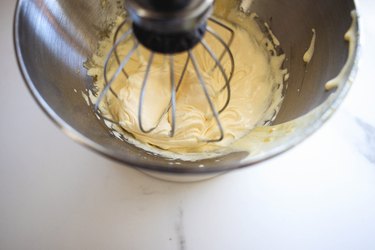
Place the egg yolks in the bowl of a stand mixer fitted with the whisk attachment. Whisk the egg yolks on medium speed until foamy and just combined. Pour in the sugar and increase the mixer speed to medium-high. Whisk until the mixture is thick, lightened in color and leaves a trail when the whisk is lifted, about 3 minutes.

Whisk the egg yolks and sugar until they are light in color and thick in texture.

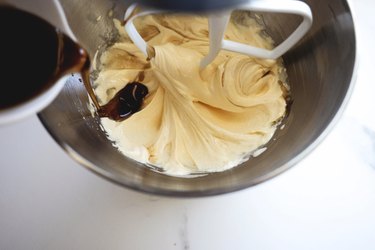
Swap the whisk attachment with the beater attachment. Add the maple syrup and beat until combined.

Pour in the maple syrup and beat well to combine.

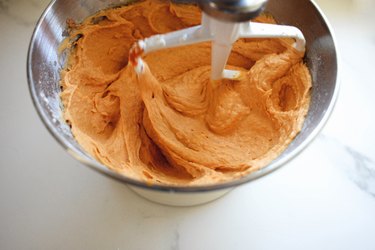
Add the pumpkin pie mix, flour, 1 teaspoon of ground cinnamon, ground nutmeg, ground cloves and 1/4 teaspoon of salt. Pour in the melted butter and beat until well combined, about 4 minutes.

Beat well. The batter should be thick and lightened in color.

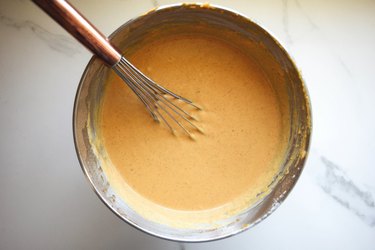
Remove the bowl from the stand mixer and slowly pour in the milk, whisking with a large balloon whisk to gently incorporate it into the batter. The batter should be very liquid and runny. Set the bowl aside.

Whisk well. The batter should be very runny.

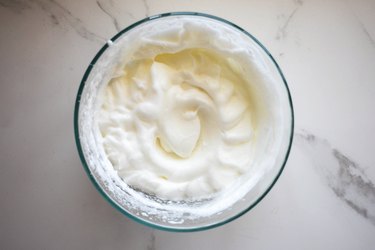
In a separate medium sized bowl or in the bowl of a stand mixer fitted with the whisk attachment, whisk the egg whites on medium-high speed until they form that of pale and stiff peaks.

Whisk the whites until they form firm peaks.

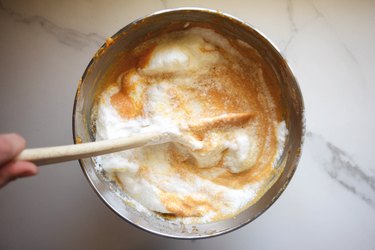
Using a large rubber spatula, fold half of the egg whites into the pumpkin batter to loosen. Then, gently, fold in the remaining half of the egg whites until just combined.

Fold the whisked egg whites gently into the cake batter.

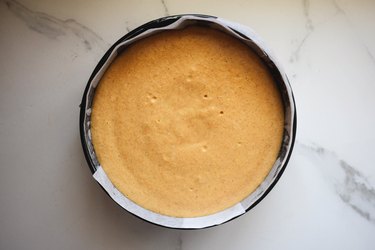
Pour the batter into the prepared baking pan and bake, for 45 to 55 minutes, or until set around the edges but still slightly soft in the middle.

Carefully pour the batter into the prepared cake pan.

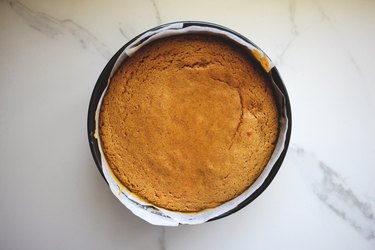
Remove from the oven and set the cake on a wire rack to cool to room temperature, then place it in the refrigerator to chill and set for a further 2 hours before frosting.

The cake should be firm around the edges and beginning to crack but still soft in the center.

Step 2: Make the Cream Cheese Frosting

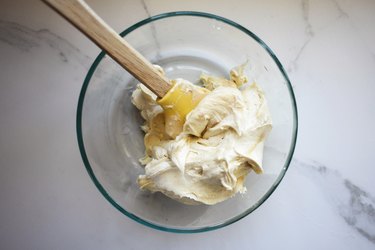
Place the cream cheese, butter, confectioner's sugar, 1/2 teaspoon of ground cinnamon and 1/4 teaspoon of salt in a medium sized mixing bowl or bowl of a stand mixer fitted with the beater attachment. Beat, on medium-high speed, until thick, smooth and fluffy.

Beat the frosting until smooth and thick.

Step 3: Frost the Cake

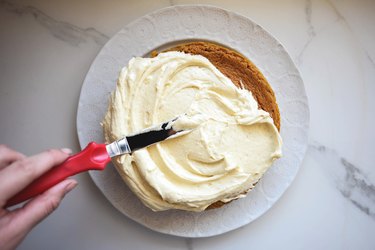
Remove the cake from the refrigerator. It should be completely cold. Set the cake on a serving plate or cake stand. Then, using an offset spatula, generously coat the top of the cake with a thick layer of the cream cheese frosting.

Set the cake back in the refrigerator for 15 to 30 minutes for the icing to chill and harden.

Generously frost the top of the cake.

Step 4: Serve.

Slice and serve! This Pumpkin Pie Magic Cake is best eaten on the day of making but will keep stored in an airtight container for up to 3 days. Serve cold.

Be careful when slicing! The inside of the Pumpkin Pie Magic Cake will be very soft, much like custard. Pumpkin Pie Magic Cake will keep for up to 3 days and is best served cold!

Coquito (Puerto Rican Eggnog) Recipe

0

If you're not a fan of classic eggnog, try making a batch of traditional Coquito or "Puerto Rican Eggnog." It's coconut-based and perfectly rich and creamy. And while Coquito is normally made with rum, you can easily leave it out for kids or people who don't drink. Either way, all you need to do is blend, chill and enjoy. Cheers!

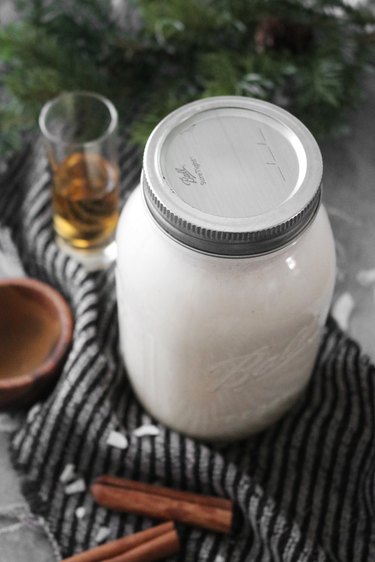
Coquito (Puerto Rican Eggnog)

Video of the Day

Things You\’ll Need

  • 14 ounces sweetened condensed milk

  • 13.5 ounces canned coconut milk

  • 15 ounces cream of coconut

  • 1/2 cup evaporated milk

  • 1 teaspoon ground cinnamon

  • 1/4 teaspoon ground nutmeg

  • 1 teaspoon vanilla extract

  • 1/4 to 1 cup dark or white rum

  • Cinnamon sticks, for garnish

  • 1/4 cup coconut flakes (optional)

Coquito ingredients

Tip

Cream of coconut can be found in Latin grocery stores, international markets or online retailers like Amazon.

Step 1

Combine all the ingredients in a high-powered blender. Depending on the size of your blender, you might need to work in batches. If so, add half of all the ingredients then repeat once more.

Blend ingredients together

Tip

You can adjust the amount of alcohol based on your preference. If you've never made Coquito before, start with 2 shots (about 1/4 cup) and increase from there. You can always mix in more alcohol later on.

Blend until the texture is smooth and consistent.

Blend Coquito ingredients

Step 2

Transfer the Coquito to a large glass container. Secure with a lid and chill for at least 1 hour.

Store in large glass container

Step 3

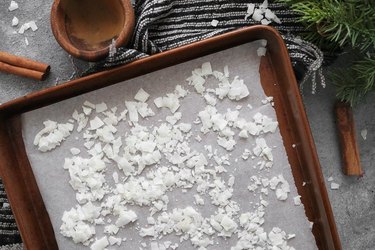
If you'd like to garnish the Coquito with toasted coconut, preheat the oven to 325° Fahrenheit. Line a large baking sheet with parchment paper or a silicone mat. Spread the coconut flakes onto the sheet.

Toast coconut flakes

Step 4

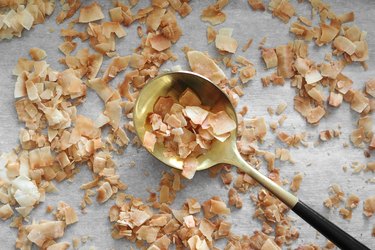
Bake the coconut flakes for 3 minutes. The flakes will toast very quickly, so watch them closely.

Toast coconut flakes

Step 5

To decorate the rim of the glasses, add a spoonful of Coquito onto one plate and the toasted coconut flakes onto another.

Prepare toasted coconut flakes

Step 6

Dip the rim into the Coquito.

Dip glass into liquid

Step 7

Next, dip the rim into the coconut flakes until coated.

Garnish with coconut flakes

Step 8

Shake or mix the Coquito before serving. Pour into the glasses and sprinkle toasted coconut flakes on top. Place a cinnamon stick on each glass or in the drink. Enjoy!

Coquito recipe

How to Depressurize a Beer Keg

Things You\’ll Need

  • Beer keg

  • Keg tap

... One way to depressurize a keg.

A beer keg is a large pressurized steel container for holding beer. Many home brewers purchase used kegs to put their own brew into, saving them the trouble of washing and sterilizing bottles every time they wish to brew some beer. If you have purchased a used keg, the first thing you will want to do before washing and sterilizing the keg is to depressurize it. Depressurizing a keg is quite simple, it is the same process as tapping a fresh keg.

Video of the Day

Step 1

Check to ensure that you have the right tap for your keg. If you are unsure, ask what tap the keg takes while purchasing it, or call on an experienced home brewer friend to come over and have a look.

Step 2

Press the end of the tap into the round opening located on top of the keg. Line up the notches that are on the keg opening with those on the tap.

Step 3

Turn the tap clockwise until you feel it lock into position.

Step 4

Push down the lever on the tap.

Step 5

Hold down the small lever on the nozzle exactly as if you were filling a beer. Do this until no air comes out, this indicates that the tank is now depressurized.

Tip

If you simply want to depressurize a keg for drinking, follow the instructions above, but stop once beer starts to come out. After this pump the keg until beer comes out the nozzle at the desired pressure.

Warning

Do not push down the lever until the tap is locked into place.