Home Blog Page 50

Recipe for How to Make a Delicious Vanilla Iced Coffee

0

Summer can be a finicky time for those of us who need our daily caffeine fix. Who wants a hot drink during a heat wave? Iced coffee is a perfect solution. If you have a sweet tooth, vanilla iced coffee takes things to the next level. More often than not, vanilla iced coffee is simply iced coffee with the additions of vanilla simple syrup and a bit of cream or milk. This is different than, say, a vanilla frappe, which adds vanilla ice cream and whipped cream. At that point you're getting more into dessert territory. Vanilla iced coffee is simple, sweet, caffeinated deliciousness.

How to Make a Delicious Vanilla Iced Coffee | eHow

Video of the Day

Things You\’ll Need

  • 1 cup coffee, freshly brewed and chilled or cold brewed (see step 1)

  • Cream, half & half or milk to taste

  • Option A: 1 to 2 tablespoons good quality vanilla syrup, such as Torani

  • Option B: 1 to 2 tablespoons homemade vanilla simple syrup (see step 1)

  • Ice

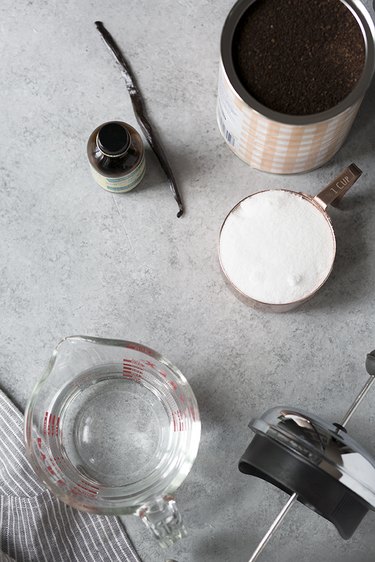
Step 1: Gather Your Ingredients

There are many ways to prepare iced coffee. You can use a French press or a regular drip machine, and then pour the coffee over ice. You can also use espresso for a stronger drink. Another option is cold brewed coffee.

Bottled vanilla syrup is fine to use. That's what many cafes put in your vanilla coffee drinks. But since it's very easy, let's go over how to make a homemade vanilla simple syrup. It will keep for months so you can make vanilla iced coffee all summer long. For this recipe you will need:

  • 1 cup water
  • 1 cup granulated sugar
  • 1 vanilla bean (or 1 1/2 teaspoons pure vanilla extract)

(Note: if using bottled syrup, skip to the end).

How to Make a Delicious Vanilla Iced Coffee | eHow

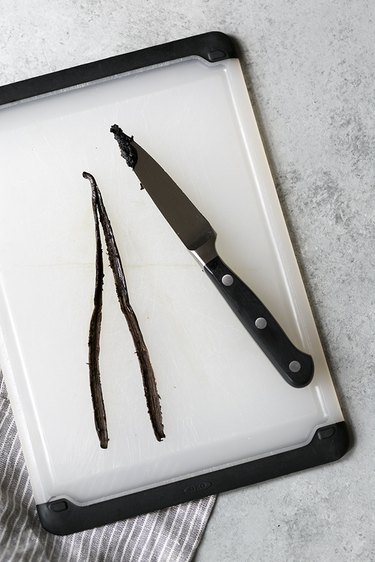
Step 2: Scrape the Vanilla Bean

Using a small paring knife, slice the vanilla bean in half lengthwise, leaving one end attached. Using the flat, non-sharp side of the blade, scrape out the seeds from both sides.

How to Make a Delicious Vanilla Iced Coffee | eHow

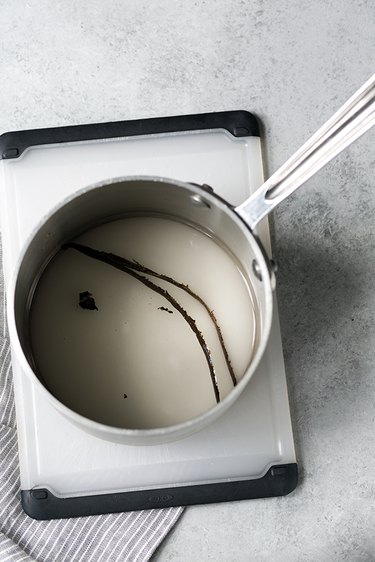
Step 3: Cook the Simple Syrup

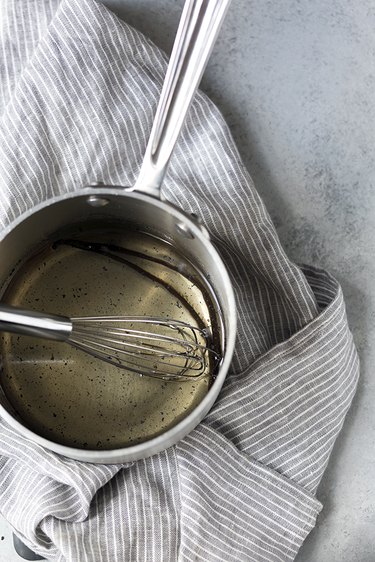
Place the water, sugar, seeds, and scraped vanilla bean in a medium saucepan (if using vanilla extract, add it here instead of the bean/seeds). Place over medium-heat and bring the mixture to a simmer. Cook until the sugar has dissolved, and then give it an extra minute or two before removing from the heat.

How to Make a Delicious Vanilla Iced Coffee | eHow

Step 4: Cool the Syrup

Allow the syrup to cool. Once the syrup has cooled, gently whisk any clumps of seeds to help separate them.

How to Make a Delicious Vanilla Iced Coffee | eHow

Step 5: Strain the Syrup

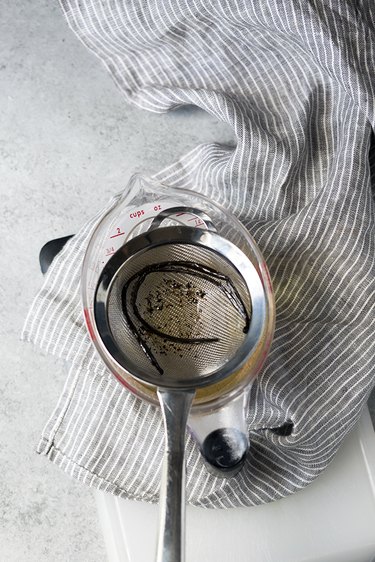
Pour the syrup through a fine mesh strainer to remove the bean and any larger clumps of vanilla that still remain.

How to Make a Delicious Vanilla Iced Coffee | eHow

Step 6: Prepare the Coffee

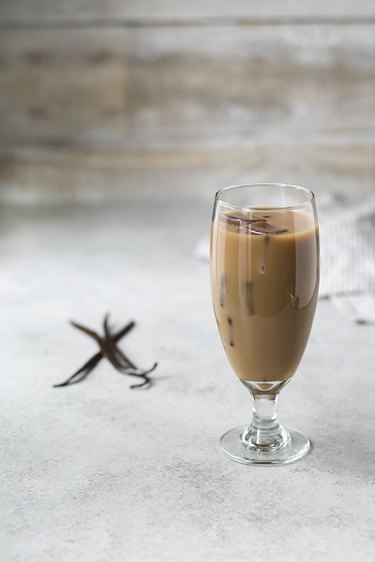
Fill a large cup with ice. Stir in the coffee, cream, and vanilla syrup. Serve immediately.

How to Make a Delicious Vanilla Iced Coffee | eHow

DIY Cupcake Cheeseburgers & Cookie Fries

0

eHow may earn compensation through affiliate links in this article.

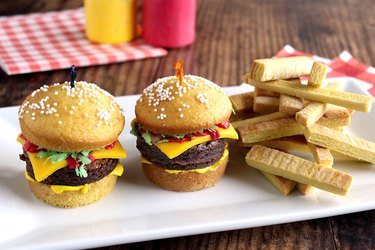
Here's a sweet treat that's as fun for the eyes as it is for the tastebuds. You may think you're looking at some juicy cheeseburgers and crispy french fries, but don't let your eyes fool you. These are actually cupcakes cut in half to resemble hamburger buns with a chocolate brownie as the patty. And the french fries are sugar cookies in disguise. They're sure to be a hit at any outdoor barbecue or a kids' party. Or take them into the office and amaze your co-workers with your dessert decorating wizardry. With cheeseburger cupcakes this adorable, no one will be asking, "Where's the beef?"

Video of the Day
cheeseburger cupcakes

Things You\’ll Need

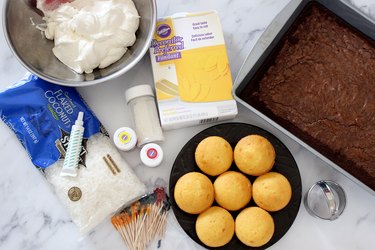
  • Yellow cupcakes

  • White sprinkles

  • Brownies

  • 2-inch round cookie cutter

  • Buttercream frosting

  • Red and green icing color

  • Yellow fondant

  • Rolling pin

  • Pizza cutter

  • Coconut flakes

  • Green food coloring

  • Frill toothpicks

  • Sugar cookie dough

  • Yellow food coloring

  • Piping bags

materials

Making the Cupcake Burger

Step 1: Prepare the Cupcake Buns

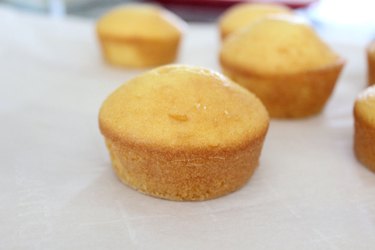
Bake a batch of cupcakes using a cake mix or from scratch (I found it easier to use a yellow cake mix). The key to making cupcakes that look like buns is to not use the paper liners. Grease and flour your muffin tin and place the batter directly in the compartments.
cupcakes

Slice the cupcakes horizontally to create the two bun halves.
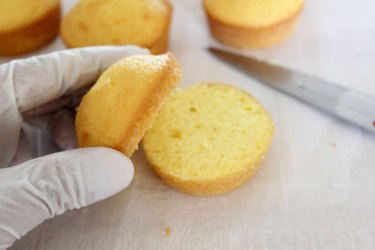
buns

Let's add some "sesame seeds." Place some white sprinkles onto a plate. Hold the top of the cupcake bun upside down, and press it onto the white sprinkles. If the surface of the cupcake is moist, the sprinkles will adhere. If they don't stick, just brush on some sugar water before adhering the sprinkles.
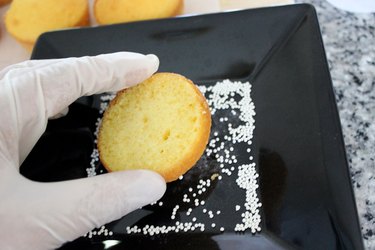
sprinkles

Gently press the sprinkles into the cupcake to make sure they stay on. Set the buns aside for now.

sprinkles on bun

Step 2: Prepare the Brownie Patties

Bake a tray of brownies, either from a box mix or from scratch. Again, I used a mix. Make sure you pour the batter into a 13 x 9 inch baking dish rather than a smaller 9 x 9, as you want the brownies to be thin, not thick. Line the bottom with parchment paper so the brownies will lift up easily.

When cool, cut out patties using a round cookie cutter. Select a cookie cutter that is approximately 2 inches in diameter, as this is the ideal patty size to complement the cupcake bun.
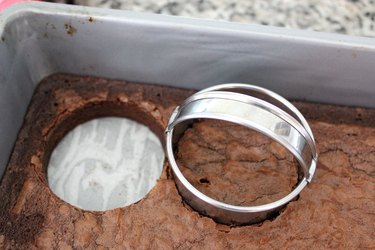
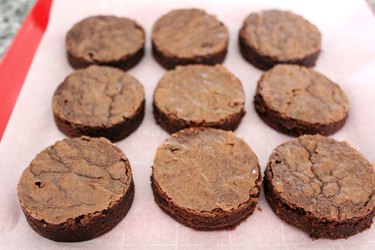
brownies burger patties

Step 3: Make the Ketchup and Mustard Frosting

The condiments for the cheeseburger cupcakes will be buttercream frosting dyed with red icing color for the ketchup and yellow icing color for the mustard. Since I used box mixes to make the cupcakes and brownies, I decided to make the frosting from scratch, but you can use a tub of store-bought frosting for convenience.

Divide the frosting in half and mix red icing color in one. It takes quite a bit of coloring to get the color of ketchup.
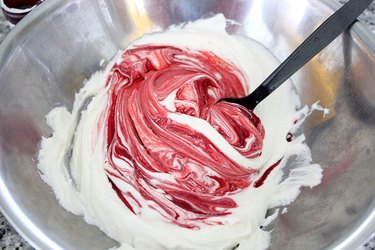
red frosting

Mix yellow icing color to the rest of the frosting to make the faux mustard.
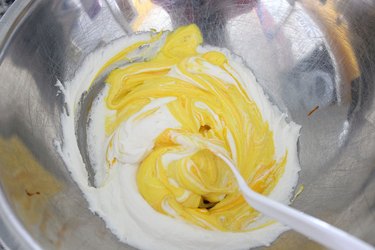
yellow frosting

Spoon the frosting into two separate piping bags. Cut off the tips of the bags to create a quarter-inch opening.
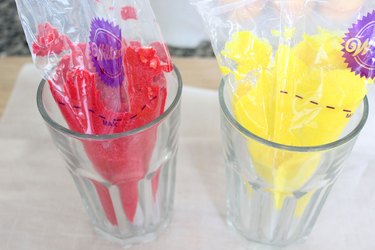
pastry bags

Tip

For a quick and easy shortcut, you can also look for pre-colored icing in the bakery aisle of your supermarket. It comes in squeezable tubes ready for dispensing.

Step 4: Roll Out the Fondant Cheese

For our cheese slices, we're using yellow fondant. Place the fondant between two pieces of parchment paper, and flatten it as thin as you can with a rolling pin.
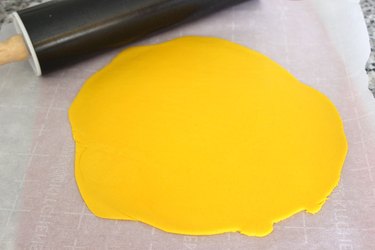
roll fondant

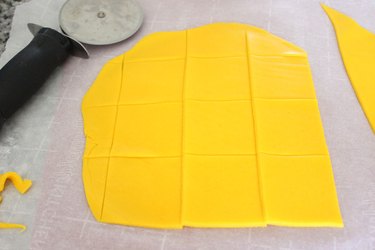
Cut the fondant into 2-inch squares with a pizza cutter. My parchment paper is lightly printed with 2-inch markings, so I was able to use them as a guide.
cut fondant

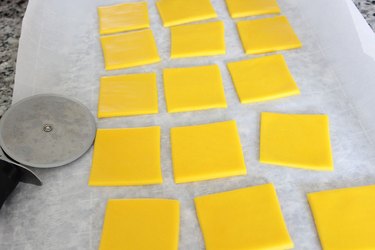
The fondant squares look just like slices of American cheese, don't they?
cheese slices

Step 5: Make the Coconut Lettuce

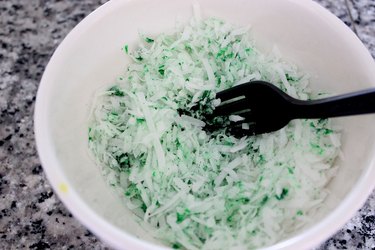
Coconut flakes look just like shredded lettuce when dyed with green food coloring. Pour some coconut flakes into a bowl, and add a little food color to start, mixing with a fork.
green food coloring

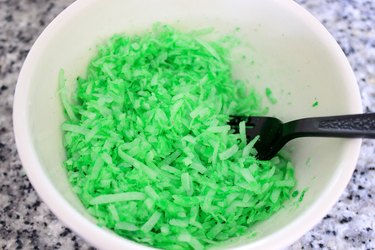
Keep adding color until you achieve your desired shade of green.
coconut flakes

Step 6: Assemble the Cheeseburger Cupcakes

Now that all of the components are ready, assembling the cheeseburger cupcakes is fun and easy. Let's start with the bottom of the bun. Squeeze some yellow frosting onto the bun for the mustard. Make sure you go all the way to the edges so it will be visible.
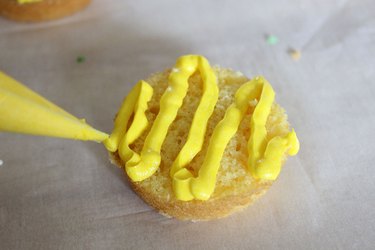
mustard frosting

Place the brownie patty on top of the mustard.
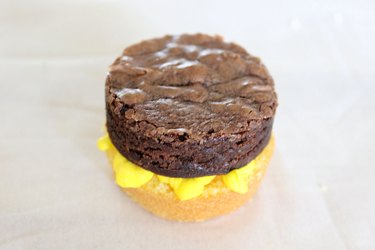
brownie patty

Position the yellow fondant square on top of the brownie patty, folding down the four corners to make it look like the cheese has melted.
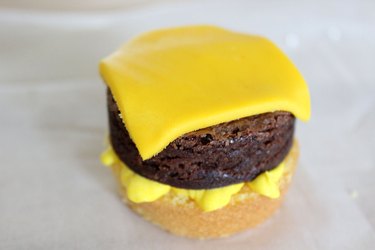
melted cheese

Squeeze some red frosting back and forth across the yellow fondant. Again, make sure you go to the edges so it will be visible.

ketchup on burger

Place some green coconut flakes on top of the ketchup.

shredded lettuce

The top of the bun goes on last. Poke a frill toothpick through the middle of the cupcake burger to hold all the elements together and give it a festive finishing touch.

toothpick

Making the Cookie Fries

Start with sugar cookie dough, either from scratch or in a pre-made tube. I made mine from scratch.

cookie dough

Because we want the fries to look cooked instead of pale, add some yellow food coloring to the dough. Start with a small amount of coloring.

yellow food color

Knead the dough until the food color is incorporated. Add more food color until the dough is a nice butter yellow.

knead dough

Step 2: Roll Out the Dough

Liberally flour your surface and rolling pin, and roll out the dough until it is about 1/4 inch thick.

rolled dough

Step 3: Cut Into French Fry Shapes

Using a pizza cutter, cut the dough into thin strips of 1/4 – 1/2 inch wide. Then cut across diagonally to form the individual french fry shapes.

cut fries

Place the cookie dough strips on a parchment or silicone-lined cookie sheet. However, before popping them in the oven, refrigerate them on the cookie sheet for about 30 minutes to harden the dough. Refrigerating the dough helps keep the cookies from spreading.

bake fries

When finished, the cookie fries make a perfect accompaniment to the cheeseburger cupcakes.

cookie fries burger and fries

Pour your extra frosting into ketchup and mustard bottles so people can squeeze some onto their fries and burger!

mustard and ketchup

You can also display the cheeseburger cupcakes and cookie fries in a burger basket for a visual presentation that will make everyone smile — if not mess with their minds.


burger basket

Can I Refreeze Sausage?

0

Close-up of sausages Remove the casings when you cook frozen sausage. Image Credit: Stockbyte/Stockbyte/Getty Images

Sausage of any kind — cooked, raw, in casings or in bulk — can be refrozen after being thawed — as long as you follow some rules. Freezing doesn't destroy bacteria and ground meat products, like sausage, are more easily contaminated than whole cuts of meat. For this reason, you should be extra careful whenever you cook with sausages. When you follow safe food handling practices, you can safely refreeze those sausages for later use.

Video of the Day

Handle With Care

You can refreeze sausage, if you handle it safely. First, buy sausage at the end of your shopping trip so it stays cold longer. Refrigerate it as soon as you get home at 40 degrees Fahrenheit and freeze it within two days. Thaw sausage overnight in the refrigerator, never at room temperature, which promotes bacterial growth. Pork and beef sausage should be cooked to a minimum temperature of 160 F. Cook sausage containing poultry to 165 F. Once cooked, the sausage should be cooled quickly and frozen or refrigerated within two hours. Following these steps cuts the risk of foodborne pathogens contaminating the sausage, making it safe to refreeze.

Pack It Up

To refreeze previously frozen raw or cooked sausage, pack it loosely into airtight freezer boxes or plastic bags. Squeeze out as much of the air as you can and seal it tightly. Label the packages with the date and pack them in a freezer set at 0 F or colder.

Taste Test

Food stays safe indefinitely in the freezer, but that doesn't mean it will taste good after years in the freezer. Sausage and other ground meats tend to lose quality faster than larger cuts of frozen meat, especially if they've been frozen and thawed already. The process of freezing, thawing and refreezing causes moisture loss, and may make the meat more prone to freezer burn or an unpleasant taste. Your best bet is to use the sausages within one month. After that, the meat might not taste as fresh as it should.

Use It Up

When it's time to use refrozen sausage, thaw it in the refrigerator overnight. Heat it in a skillet, slow cooker or baking dish to 160 F. Sausage that's been thawed several times tastes best when combined with other ingredients in a savory casserole, soup or pasta dish. The moisture in sauces and broths will help alleviate any dryness and flavorful ingredients mask the "frozen" taste.

How to Make White Sangria

0

White sangria ingredients White sangria is a refreshing cocktail anytime. Image Credit: Julia Mueller

White sangria is a crisp and refreshing wine-based cocktail you can enjoy year-round. This drink is often prepared ahead of time in a large batch so the fruit can absorb some of the alcohol flavor and in turn provide flavor to the cocktail. The longer the sangria sits in the refrigerator before serving, the more flavorful it becomes.

Video of the Day

Basic White Wine Sangria Recipe

Things You\’ll Need

  • 1 750-milliliter bottle of white wine, such as chardonnay, sauvignon blanc, or pinot grigio

  • 1 to 2 cups peeled and chopped fresh fruit

  • 1/4 to 1/2 cup brandy, triple sec or rum

  • 1/2 to 1 cup juice, such as orange, pineapple, blueberry, pomegranate, apple

  • 2 to 4 tablespoons sweetener of choice, such as agave, honey, maple syrup or sugar

Method: Stir together all ingredients in a large pitcher, preferably glass. Cover the mouth of the pitcher with plastic wrap, and refrigerate 2 to 12 hours before serving. When ready to serve, fill glasses with ice and pour the sangria over the ice. Be sure to add some of the fruit to each glass.

Tip

You can also add herbs and spices such as cinnamon, fresh mint, basil or rosemary.

For the best result, be sure to use seasonal fresh fruit and 100 percent fruit juice in your white sangria recipe.

Pineapple Kiwi Sangria

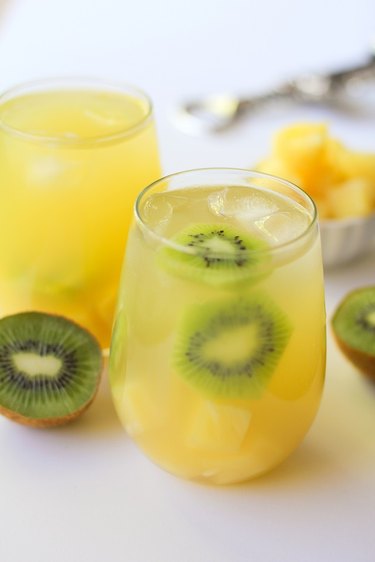
Two glasses of pineapple kiwi sangria. Pineapple kiwi sangria is a colorful summery cocktail. Image Credit: Julia Mueller

Things You\’ll Need

  • 1 750-milliliter bottle of white wine

  • 1/4 cup white rum

  • 1 cup pineapple juice

  • 1 1/2 cups pineapple (fresh or canned)

  • 1/2 cup kiwi, peeled and sliced

  • 2 tablespoons agave nectar

Method: Combine all of the ingredients in a large pitcher and stir well. Cover the mouth of the pitcher with plastic wrap and refrigerate at least 2 hours before serving. Serve with ice, and make sure some of the fruit gets into each glass.

Pomegranate Citrus Sangria

Two glasses of pomegranate citrus sangria. Pomegranate citrus sangria has a hint of cinnamon. Image Credit: Julia Mueller
Things You\’ll Need

  • 1 750-milliliter bottle of white wine

  • 1/4 cup brandy

  • 1 cup pure pomegranate juice

  • 1 cup apple juice

  • 1/4 cup pure maple syrup

  • 1/8 teaspoon ground cinnamon

  • 2 cinnamon sticks

  • 1 navel orange, peeled and chopped

  • 1 honey crisp apple, peeled, cored and chopped

Method: Combine all of the ingredients in a large pitcher and stir vigorously. Cover the mouth of the pitcher with plastic wrap, and allow it to sit at least 6 hours before serving in order to ensure the cinnamon sticks infuse the cocktail with flavor. When ready to serve, pour the liquid and some of the fruit into glasses filled with ice.

Tropical White Sangria

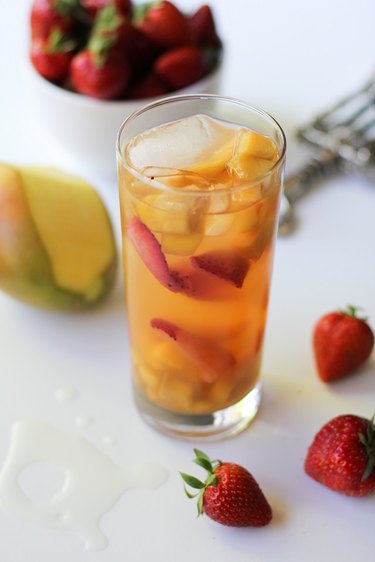
Glass of tropical sangria next to some fresh strawberries. Enjoy tropical white sangria with a variety of fruit. Image Credit: Julia Mueller

Things You\’ll Need

  • 1 750-milliliter bottle of white wine

  • 1 1/2 cups orange juice

  • 1/4 cup Grand Marnier or Cointreau

  • 1/4 cup white rum

  • 1 cup prosecco

  • 3 tablespoons agave nectar

  • 2/3 cup pineapple chunks

  • 2/3 cup fresh mango, peeled and chopped

  • 2/3 cup fresh strawberries, chopped

Method: Combine all of the ingredients in a large pitcher and stir well. Cover the mouth of the pitcher with plastic wrap, and refrigerate at least 2 hours before serving. To serve, fill glasses with ice and pour the sangria over the ice, including some of the fruit.

How to Make Easter Egg Nest Cookie Cups

0

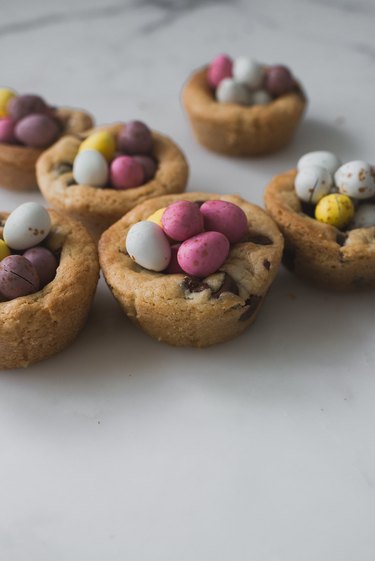
Easter Egg Nest Cookie Cups make for the sweetest springtime treat! Made with the most decadent chocolate chip studded cookie dough and filled with a generous handful of pastel mini speckled egg candies, they are fun, delicious and oh-so addictive. The recipe couldn't be easier, too. Learn how to make them below!

Easter Egg Nest Cookie Cups

Video of the Day

Things You\’ll Need

  • 8.8 ounces (250 grams) unsalted butter, cubed

  • 6.2 ounces (175 grams) light brown sugar

  • 4.4 ounces (125 grams) granulated sugar

  • 2 medium eggs

  • 1 tablespoon vanilla bean extract

  • 12.5 ounces (355 grams) all-purpose flour

  • 1 1/2 teaspoons baking powder

  • 3/4 teaspoon salt

  • 7 ounces (200 grams) dark chocolate chips

  • 12.3 ounces (350 grams) mini speckled egg candies

Pre-heat the oven to 350 degrees Fahrenheit (180 degrees Celsius). Grease and flour 2 x 12 hole cupcake pans. Set aside.

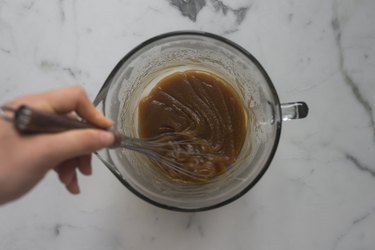
Place the butter into a medium sized saucepan set over medium-low heat. Heat, stirring often, until the butter is golden and melted. Remove the butter from the heat and pour it into a large mixing bowl. Add in the light brown sugar and granulated sugar. Whisk until very well combined. Add in the eggs and vanilla bean extract. Whisk until combined. Set the bowl aside.

Whisk until very smooth, glossy, and combined.

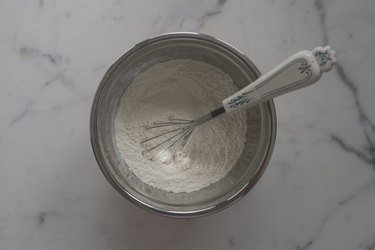
In a separate medium sized mixing bowl, whisk together the all-purpose flour, baking powder, and salt.

Whisk together the dry ingredients.

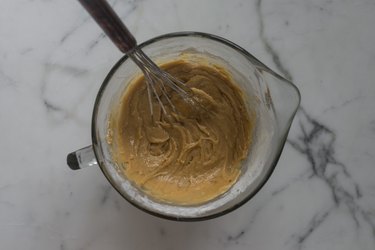
Add the dry flour ingredients into the bowl with the butter and sugar mixture. Whisk until just combined.

Mix until just combined.

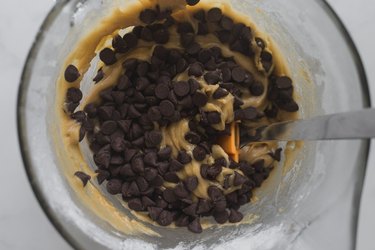
Fold in the dark chocolate chips.

Fold through the chocolate chips.

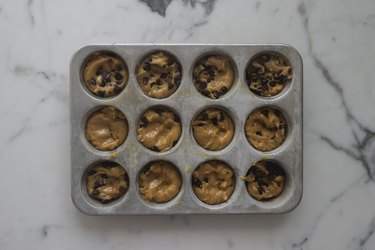
Using a small cookie scoop, or a generous tablespoon as a measure, scoop out the dough and divide it evenly between the cupcake pans.

Divide the cookie dough between the cupcake pans.

Step 2: Bake

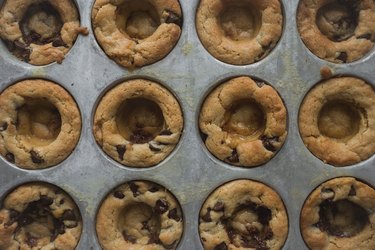
Bake for 12 minutes, or until golden and just firm. Remove from the oven and use the back of a small shot glass or a teaspoon to form a small indentation in the middle of the cookie cups.

Use the back of a shot glass to form indents in the middle of the cookie cups.

Let cool for 10 minutes, before carefully transferring the cookie cups out and onto a wire rack to cool completely.

Let the cookie cups cool.

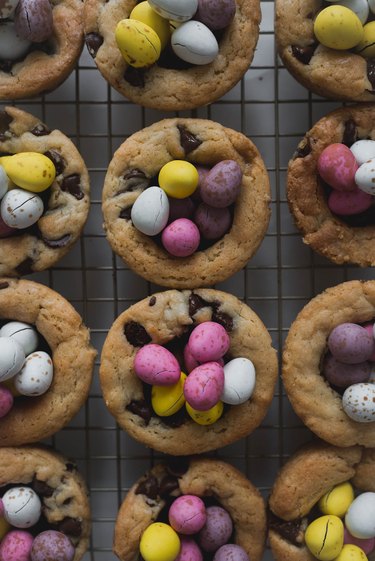
Divide the mini speckled egg candies between the cookie cups to form little easter egg "nests".

Divide the speckled eggs between the cookie cups. The cookie cups should resemble little easter egg "nests".

Step 4: Serve & Enjoy

Serve and enjoy the Easter Egg Nest Cookie Cups. They can be stored in an airtight container at room temperature for up to three days, or in the refrigerator. You can also make the cookie dough in advance and freeze it for up to two months.

Serve and enjoy the Easter Egg Nest Cookie Cups! These cookie cups are the perfect sweet treat for Easter!

How to Know When White Mushrooms Have Gone Bad

0

... A rough texture and blemished appearance in white mushrooms indicates spoilage.

Mushrooms are an edible fungus with a rich, earthy flavor. There are several varieties of wild and cultivated mushrooms that you can use fresh or dried to prepare tasty and nutritious meals. Exotic mushrooms, such as maitake and shiitake can be found dried rather than fresh, unlike white mushrooms such as button mushrooms and cup mushrooms, which are widely available fresh. Fresh white mushrooms have a short shelf-life and degrade easily in the presence of light, heat and air. Carefully inspect white mushrooms when purchasing and before cooking, to determine whether they are safe for consumption.

Video of the Day

Step 1

Examine the color and texture of the white mushrooms. Mushrooms that are old and spoiled due to dehydration have a dried, grayish tinge and are shriveled. White mushrooms should be unblemished with a smooth texture and bright white color.

Step 2

Check the cap of white button mushrooms and cup mushrooms. Turn the mushrooms over to examine the caps. Open caps indicate that the mushrooms are old, whereas closed caps are a sign that the mushrooms are young and tender. Mushroom caps open up as the mushrooms age.

Step 3

Observe the surface of the white mushrooms. If you notice mold and a thin layer of slime covering the mushrooms, they are spoiled.

Tip

Store mushrooms in a paper bag in the refrigerator, at a temperature of around 40 degrees F. Use the mushrooms within three days of purchase or by the use-by date on the packaging.

Warning

Do not keep mushrooms in plastic bags to prevent them from spoilage due to excess moisture created in the bags.

How to Open a Beer Can From the Bottom

Things You\’ll Need

  • Vise

  • Phillips-head screwdriver or ice pick

  • Hammer

... Open a beer can from the bottom to display it.

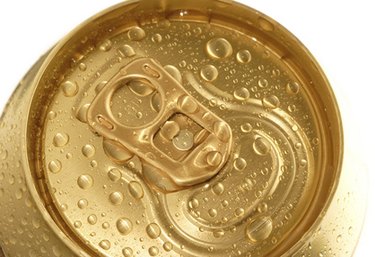
A beer can collector will quickly tell you that bottom-opened cans are the best cans for display. By opening beer cans from the bottom, you preserve the top of the can and it appears unopened. An empty beer can is desirable as opposed to a full beer can because empty cans will withstand bumps and dents much more readily than full beer cans. Open a beer can from the bottom to create a beer can display—you can enjoy the process of emptying the beer cans as well.

Video of the Day

Step 1

Place the beer can gently into the vise and tighten the vise to secure the beer can. If you do not have a vise, sit with the upside-down beer can between your knees to hold it.

Step 2

Position the point of the screwdriver or ice pick on the bottom of the beer can directly inside the side rim of the bottom of the can.

Step 3

Tap the end of the screwdriver or ice pick with the hammer to pierce through the aluminum. When the point of the screwdriver or ice pick pierces through the metal, continue tapping until the hole is approximately one-quarter inch in diameter. Remove the implement from the hole.

Step 4

Reposition the point of the screwdriver or ice pick on the opposite side of the bottom of the beer can, again directly inside the side rim of the bottom of the can.

Step 5

Tap the end of the screwdriver or ice pick with the hammer again to make the second hole the same size as the first hole.

Step 6

Pour the beer out of the can through one of the holes. The second hole will serve as an air hole that will enable you to pour the beer faster through the small hole.

Step 7

Rinse the can out before putting it on display.

How to Heat Lemons Before Juicing

Things You\’ll Need

  • Strainer

  • Citrus juicer or reamer, optional

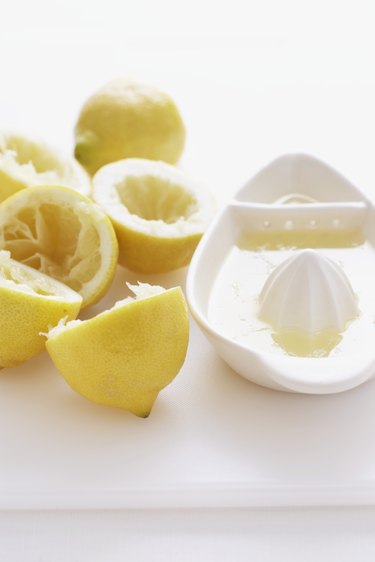
Lemon halves by juice squeezer, close-up The scent of freshly squeezed lemon is a pick-me-up. Image Credit: Martin Poole/Digital Vision/Getty Images

Fresh lemon juice has many uses. Beyond making lemonade and other beverages, a squeeze or two from a fresh lemon adds brightness to pasta, salads, seafood and other dishes. You can also use fresh lemon juice to make your own buttermilk or to add a citrus flavor to iced tea. Though you can find bottled lemon juice at most grocery stores, fresh lemon juice has a brighter taste. Heating the lemon makes it easier to squeeze and will yield more juice.

Video of the Day

Step 1

Rinse the lemons under running water to remove any residue. Pat dry.

Step 2

Roll each lemon back and forth a few times on a counter top or table. This helps break down some of the fibrous flesh of the fruit, and will get more juice out of the lemon.

Step 3

Heat the lemons in a microwave for 20 to 30 seconds at full power. Actual heating time is determined by the wattage and temperature settings of your microwave. Fruit heated in smaller microwaves, which are typically 600 to 800 watts, will take slightly longer to warm. Midsize and larger microwaves are usually rated between 850 to 1,650 watts, and will heat the lemons slightly faster. The lemon should feel just warm to the touch, but not hot. Heating the lemon coaxes out as much juice as possible and makes it easier to juice the fruit.

Step 4

Cut each lemon in half. Using your hands, squeeze the juice out of each lemon over a strainer to catch seeds. Alternately, you can use a handheld or automatic juicer or citrus reamer to get the most juice out of each one. A reamer is a small wooden or metal tool that helps dislodge seeds while juicing the lemon. Relatively affordable, you can buy them at most cookware shops and larger grocery stores.

Tip

Select small to medium-sized lemons that are smooth, unblemished and have a bright yellow color. Smaller, heavier lemons have more juice than larger ones. Lemons that are smooth, as opposed to textured, have thinner skins, and tend to be the juiciest. Avoid lemons that have tinges of green or are pale yellow. Green indicates an unripe fruit, while pale yellow lemons are older. Both will contain less juice. Fresh lemon zest is often called for in baked goods and other foods. Before juicing, use a microplane or regular grater with small holes to grate the lemon before juicing. Rub the grater against the skin of the lemon, being careful not to grate any of the white pith, as that is the bitter part of a lemon.

The Difference Between a Stout & an Extra Stout Guinness

Pints of Guinness beer are pictured in L The Difference Between a Stout & an Extra Stout Guinness Image Credit: LEON NEAL/AFP/GettyImages

Arguably Ireland's most famous export, Guinness beer is a malty delight on tap at great pubs. When pub draft is hard to find, bottled Guinness is a beer shop staple, but its various styles may make you want to better understand Guinness Extra Stout vs. Stout beer.

Video of the Day

Understanding Stout Beer

Modern craft variations on stout aside, the one trouble with Guinness is that it seems to taste best because of how it's poured. A "real" pint of Guinness takes as long as five minutes to properly pour for its famously creamy texture, which is what makes it different from that sold in shops. While beers like pale ales and many lagers are hop-forward, it's the malts and barley that define a stout's flavor.

As beer reviewer Kate Bernot explains, "Classic Guinness has always been dry, roasty, clean, not at all syrupy. Its flavors of light chocolate, espresso, and dry almond shell derive from the specialty malts used, not from additions of chocolate powder or coffee beans."

Guinness: What’s in a Name?

Since 1759, Guinness has been brewed in Dublin but now is brewed in over 50 countries. "I'll have a Guinness" used to be a straight-up order, but now Guinness has a whole slate of beer styles, and only a few are stouts. The stout you may know best is Guinness Draught, or what most people consider "Guinness Stout," the variety consumed around the world since 1959. It's nitrogenated and not carbonated like most beers, and that's why it has the creamy head.

Some variations of Guinness include a couple porters, an IPA, two lagers, a golden ale, and the Guinness Africa Special, a malt and sorghum beer brewed in Nigeria. However, what you're really after are the four main stouts: the Guinness Draught, Guinness Extra Stout, Guinness Special Export Stout and Guinness Foreign Extra Stout.

There's also Guinness Smooth, another stout made since 2003, possibly as a response to when Guinness sales began dropping off in 2000. Guinness Smooth is considered a "beginner" stout — lighter, less bitter and not favored by diehard stout fans.

Guinness Draught Beer

Despite what people think, the classic stout you'll find on tap and in bottles worldwide is not the original Guinness Stout. It was born in 1959, celebrating the 200th anniversary of Arthur Guinness signing his 9,000-year lease for the brewery at St. James's Gate in Dublin. It boasts a dark, creamy head and is a balance of sweet meets bitter at 4.2 percent ABV (alcohol by volume).

Guinness Extra Stout Beer

In 1821, Arthur Guinness II conjured this recipe — sharp and crisp, still packing those Guinness flavors you love but without the same mouthfeel. That's partly where the "extra" stout comes from.

However, if you really want to understand the "extra stout" meaning, you need to go way back to colonial Britain, when Empire Brits in India and the Caribbean wanted their Guinness too. The beer maker explains that these "extra" stouts were "brewed with more hops to preserve the beer in the ships' holds during voyages of four-to-five weeks in tropical climes."

Guinness Foreign Extra Stout Beer

This beer began life as a "West India Porter," hopped-up for its cross-ocean journey. These days, this Guinness extra stout's ABV is 7.5 percent. Harder to find, this version is available throughout Africa, Asia and the Americas, and it's considered the closest tasting to the original recipe of Guinness Stout.

Guinness Special Export Stout Beer

This version has a big mouthfeel, complex flavors with toffee, butterscotch and blackcurrant notes and it's notable for having been created in 1944 by expat John Martin for the Belgian market. It's a whopping 8 percent ABV, but the strong body still delivers the creamy, rich taste people have come to love in Guinness. As the brewer says, it's a Irish stout with a continental edge.

Crock Pot Beer Mac and Cheese Recipe

0

Sorry kids, but this mac and cheese recipe is for adults only. Slow cooked in a crock pot, it's the ultimate comfort food made in the easiest way. Perfect for game day, holidays, potluck dinners, or after a day spent in the snow.

Slow cooker beer mac and cheese

Video of the Day

Things You\’ll Need

  • 4 tablespoons melted butter

  • 3 cups (8.5 ounces) freshly grated cheddar cheese

  • ½ cup sour cream

  • 1 cup whole milk

  • 12 ounces beer

  • ¾ cup broth (chicken or vegetable)

  • ½ teaspoon mustard powder

  • ½ teaspoon salt

  • ½ teaspoon pepper

  • ½ teaspoon garlic powder

  • ½ teaspoon onion powder

  • 2 tablespoons cornstarch (this keeps the sauce from separating)

  • 3 tablespoons flour (this helps thicken the sauce)

  • 3 1/2 cups uncooked large elbow macaroni

Step 1

Add all ingredients except the elbow macaroni to a blender; blend until smooth.

Step 2

Add the sauce and the dry macaroni noodles to a slow cooker; stir to combine.

Step 3

Cook on low for 2 hours, stirring every 30 minutes.

Step 4

Remove the macaroni from the slow cooker as soon as the sauce has thickened and the noodles are cooked through (leaving them in the slow cooker on the warm setting will cause the dish to burn and curdle.)

slow cooker mac and cheese with beer