Home Blog Page 38

How to Cook Sirloin Tips on a Stove

0

Sirloin tips are rich in beef flavor but tend to be a lean, often not-very-tender, cut of meat. In order to take advantage of the flavor but still have a tender beef experience, take some time to prepare the meat. You can either marinate the steaks ahead of time (buttermilk marinades work great!), or cut the steak into small pieces and cook it in a great deal of oil or butter. For best results, either sear the steak over high heat, or take the extra step to simmer the seared steak bits in a homemade sauce until the pieces are nice and tender. The butter-garlic combination is your friend when it comes to cooking sirloin tips.

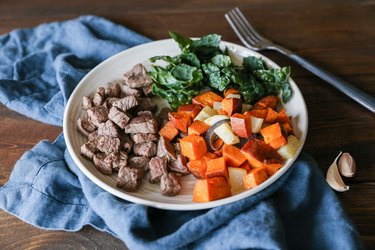
Beef on a plate with sweet potatoes and kale salad

Video of the Day

Things You\’ll Need

  • 1/2 pound beef sirloin tip steak

  • 3 tablespoons unsalted butter

  • 2 large cloves garlic, minced

  • 1/2 teaspoon Herbs de Provence or Italian Seasoning

  • Sea salt to taste

Tip

Get creative with flavoring your steak! You can use seasonings of your choosing, teriyaki sauce, soy sauce, or make your own steak sauce for giving the meat flavor. You can also marinate the steak in soy or sauce of your choosing ahead of time for maximum flavor.

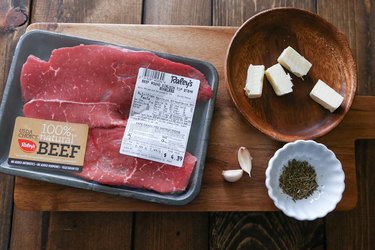
beef tips ingredients

Step 1: Cut the Steak

Bring the meat to room temperature, remove steak from packaging and place on a cutting board. Note: If leaving the beef in steak form, see How to Cook Sirloin Steaks or How to Grill Sirloin Tip Steaks.

steak on a cutting board

Using a sharp knife, cut the sirloin tip steak into small bite sizes. Because sirloin tips is a leaner cut of meat, you'll want to cook the beef in fat for flavor. You can use butter, olive oil, canola oil, or grapeseed oil.

small chunks of beef on a cutting board

Step 2: Heat Butter

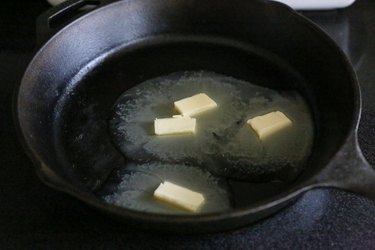
Place a cast iron skillet (or regular non-stick skillet) on the stove top. Add the butter and heat to medium-high.

butter melting in skillet

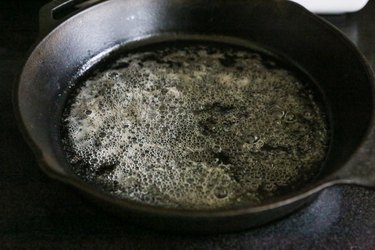
Allow the butter to melt completely until it is sizzling and bubbling. Careful not to burn the butter.

butter bubbling in skillet

Step 3: Cook the Steak

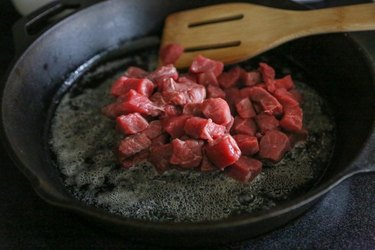
Once the butter is completely melted and is bubbling (but not burning), add the steak.

steak chunks in a skillet

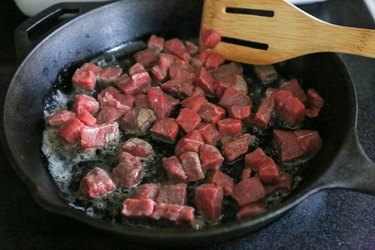
Spread the beef over the full surface of the skillet, giving the chunks room in between to cook. Allow the beef to sit undisturbed for 45 seconds to 1 minute.

beef cooking in a skillet

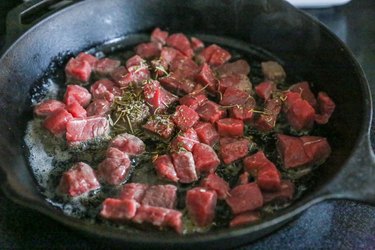
Add the garlic and seasoning and stir.

Beef in a skillet with seasoning

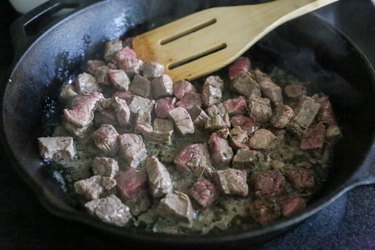
Continue cooking until the outside of the cubes are seared and liquid is seeping out of the meat.

beef cooking in a skillet

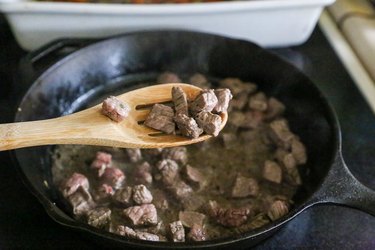
You can cook the beef to desired doneness. For tender meat, cook to medium or medium-rare, or make a sauce for the sirloin tips and slow cook the meat until it's tender. Transfer the beef to a plate using a slotted spoon. From here, you can either be finished with the process and serve, or you can transfer it to a plate using a slotted spoon and prepare a sauce for simmering the meat. If going this route, wipe out the skillet, prepare your sauce, and then simmer the meat in the sauce for 30 minutes to 1 hour over low heat, until tender.

slotted spoon of beef

Step 4: Serve!

Once the sirloin tips are cooked to desired doneness, serve alongside your favorite side dishes.

sirloin steak with sweet potatoes

The Best Coffee Makers in 2022

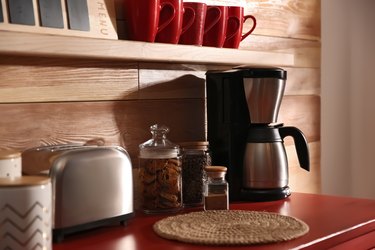
Modern coffeemaker and toaster on red table near wooden wall

It's become a habit around the world—waking up to a freshly brewed cup of coffee. For those who can't stand the idea of getting a cup of instant coffee, there are numerous options. You could choose the French press method, or just enjoy a pure moment of flavor awakening with a pour-over brewer. But on busy mornings when you don't have the time or energy for a coffee shop-quality brew, a drip coffee maker provides ultimate convenience.

Video of the Day

Before we get into the best models on the market, let's talk about what criteria a drip coffee maker needs to meet in advance of loading it into your online shopping cart.

What To Consider When Purchasing a Drip Coffee Maker

Location:​ It's important to select a drip coffee maker for the environment it'll be living in. Most of us will be purchasing this machine for our own kitchens, others for their office space or dorm room. If you're purchasing a coffee maker for your professional space, efficiency, brewing capacity and speed all matter. For those placing it in a dorm room, the coffee maker needs to be robust, operate without a paper filter and be budget-friendly.

Consistency:​ A major factor when reviewing drip coffee makers is the consistency in brewing temperature. You also want to have a maker with a wide range of temperature control, so you can fine-tune the brewing process for the type of beans you're using.

Ease of Use:​ Another element to consider is the ease of use—you want a machine that helps you get your daily fix without causing a headache. Consider how easy it is to clean, how user-friendly the control panel is, and how long the coffee takes to brew. The coffee pot should also pour easily without splashing or spilling.

Warming Capabilities:​ Some drip coffee makers use a warming tray to keep the brew warm, while others feature an insulated carafe to maintain the desired temperature. An automatic shutoff feature is also important if you're running late and forget to turn off the coffee maker before you head out the door.

Man reading book with coffee

The Best Small Batch Drip Coffee Maker

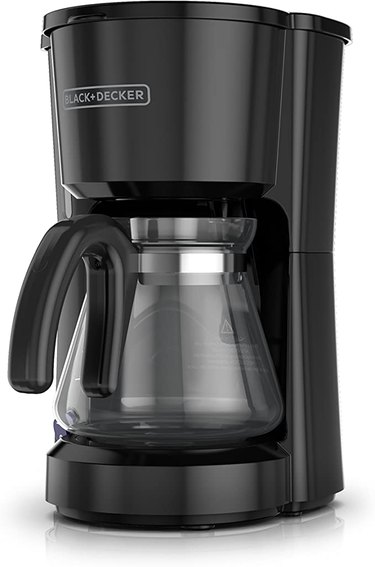
Black+Decker 5-Cup Coffeemaker

$19.99 at Amazon

The Black+Decker 5-Cup Coffeemaker is a small, compact and easy-to-use machine. It comes with the "Sneak-a-Cup" feature, which pauses the brewing process to allow the user to fill up their cup. It also boasts a permanent ground filter, meaning there's no need for paper filters (although you could still add one if you wish). There's also an on/off switch with a light, which for coffee machines, is not always a given.

This Black+Decker model brews 5 cups, approximately 5 ounces each. The glass carafe has an ergonomic handle and a keep-hot plate helps maintain your coffee's temperature. Measuring 7.25 inches long, 8.2 inches wide and 10.75 inches high, it's suitable for small spaces like a studio apartment or RV.

small drip coffee maker

The Best Large Batch Drip Coffee Maker

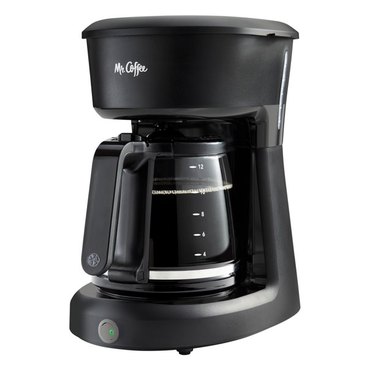
Mr. Coffee 12-Cup Coffee Maker

$18.18 at Walmart

If you're looking at brewing a big pot of coffee for an entire office, the Mr. Coffee 12-Cup Coffee Maker is exactly what you need. It also boasts the "grab a cup auto-pause" function for those who can't wait until the end of the brewing cycle. Unfortunately, this model doesn't allow for direct brewing from its basket and requires paper filters. That being said, it's easy to clean and straightforward to operate.

To ensure you don't overfill the tank, there are two transparent windows that allow you to monitor the water level. It also has a light-up on/off switch light. The warming tray maintains a consistent temperature for around two hours and the glass carafe has clear markings so you know exactly how many cups of joe are left. This drip coffee maker yields four to 12 cups or 20 to 60 ounces.

large batch drip coffee maker

The Best High-End Drip Coffee Maker

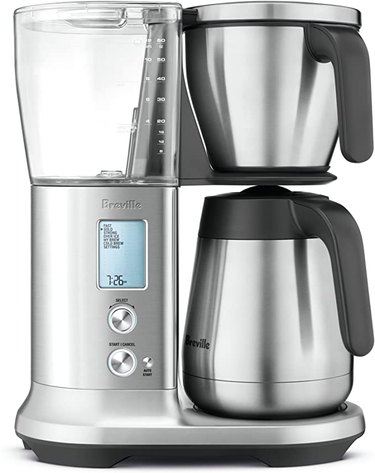
Breville Precision Brewer

$299.99 at Best Buy

With its 60-ounce (12-cup) thermal carafe, numerous presets and ability to adjust the temperature, the Breville Precision Brewer is well worth the splurge. It offers six presets, some of which are even customizable. These presets include Gold Cup, Fast, Strong, Iced, Cold Brew and My Brew. The latter option allows you to set your preferred bloom time, brew temperature and flow rate, while Gold Cup automatically adjusts the machine to meet the standards set out by the Specialty Coffee Association (SCA).

You can adjust the temperature using the digital display, select between three flow rates (this determines the contact time with the grounds), and reap the benefits of the Thermo Coil Heating System, which delivers purer boiled water. Then, there's the auto steep and release technology that "controls water and coffee contact time" to deliver fantastic flavor when you're brewing a single cup of coffee. The machine also comes with a dual filter basket, thermal carafe and coffee spoon. Although pricy, the Breville Precision Brewer is the best machine for the coffee connoisseur who craves both convenience and customization.

breville coffee maker

The Best Design-Forward Drip Coffee Maker

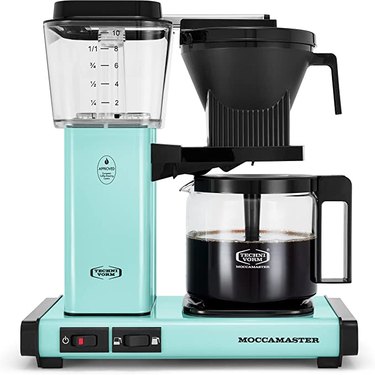
Moccamaster KBGV Select 10 Cup Coffee Maker

$349.00 – $369.00 on Amazon

This might not be the "most 2022" machine on the market, but it's a timeless, luxurious classic that promises to deliver only the best flavors. Available in 21 colors (nine of which are sold on Amazon), it makes for a cheerful addition to any kitchen. With the flip of a switch, it can brew up to 10 cups (40 ounces) in just four to six minutes.

Using only the best materials, it has that quality feel that many of us search for. The Moccamaster doesn't use pumps, but rather a copper boiling element that rapidly heats the water in the reservoir to its desired temperature, which is then slowly released into the cone-shaped brew basket. The flavor-extracting basket also has a drip-stopper that pauses the flow of coffee when the carafe is taken away for a pour.

A new feature on the Moccamaster is the option to select between a full or half-full carafe. The on/off switch has a light, and most importantly, the hotplate automatically shuts off after 100 minutes. Handmade in the Netherlands, this well-designed drip coffee maker is approved by the Specialty Coffee Association and the European Coffee Brewing Centre.

retro coffee maker

The Best Single-Serve and Carafe Coffee Maker

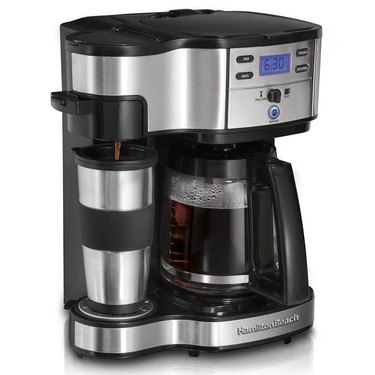
Hamilton Beach 2-Way Brewer Coffee Maker

$69.99 at Walmart

If you're looking for a machine that will brew a full 12-cup pot for a long morning, or a single cup because you're heading out the door, this brewer is for you. Unlike other single-serve coffee makers that only take pods, the Hamilton Beach 2-Way Brewer can utilize ground coffee or pre-packaged soft pods. It also has a 2-hour automatic shutoff function, so if you're in a real hurry, there's no need to panic when you realize it's still on at home.

The single-serve function lets you choose between a standard-size cup or a travel mug-size cup. The machine is also programmable up to 24 hours in advance so you can wake up to a fresh pot every morning. Another great feature is that you can control how strong you want your cup of joe—there's an option for regular or bold on either side of the coffee maker.

dual function coffee maker

The Most Versatile Drip Coffee Maker

Ninja Specialty Coffee Maker

$299.00 at Amazon

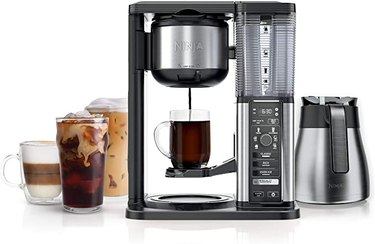
The Ninja Specialty Coffee Maker is a drip coffee maker with all the bells and whistles. You can brew six different sizes, four different brew types, and it has a built-in frother for making a delicious café au lait. On hot days, you can even brew your coffee over ice and add cold froth.

There's no heating plate with the Ninja Specialty Coffee Maker, but it comes with a well-insulated, thermal carafe that will keep your drinks hot or cold for hours. It also has a removable water reserve, a self-cleaning cycle and many of the components are dishwasher-safe. And finally, with its Thermal Flavor Extraction technology, which "controls the bloom time, the level of saturation, and the water temperature," you can be sure that every cup is brewed to perfection.

Ninja coffee maker

How to Make the Best Sugar Cookie Icing

0

There are a variety of ways to prepare sugar cookie icing that range from basic to more advanced. Many recipes call for egg whites or meringue powder (this is often referred to as royal icing). These ingredients create a stiff icing that can be useful for intricate piping, but are not necessary for basic decorating. If you're not frequently decorating cookies and want to keep things easy, you most likely have everything you need in your pantry, or can find the ingredients at a local grocery store. The best recipes are often the easiest, and this is a perfect example.

How to Make the Best Sugar Cookie Icing | eHow

Video of the Day

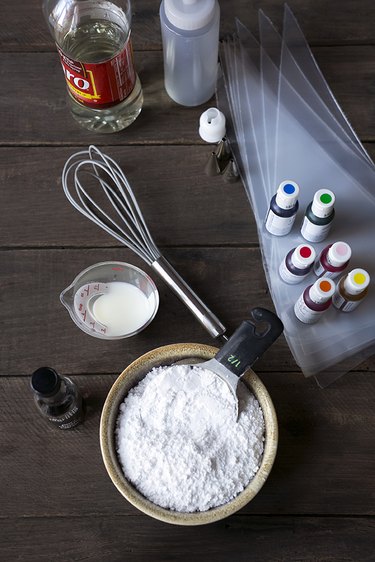
Things You\’ll Need

  • 3 cups confectioners’ sugar

  • 4 to 5 tablespoons water or milk

  • 1 1/2 teaspoons pure vanilla extract

  • 2 1/2 teaspoons corn syrup

  • Fresh squeezed lemon juice, strained (optional)

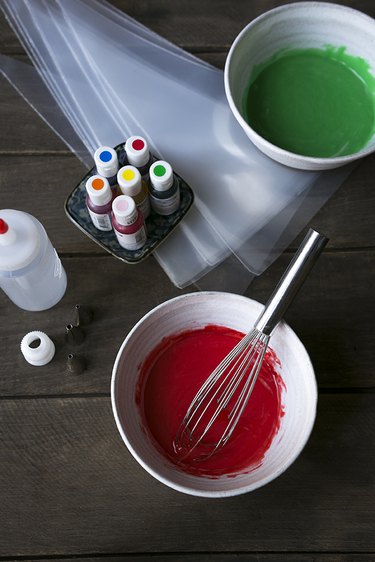
  • Liquid gel food coloring (optional)

  • Whisk

  • Mixing bowl

  • Piping bag, small tips and coupler (optional)

  • Squeeze bottle (optional)

Tip

One optional ingredient I recommend is gel food coloring, which you can find at local craft supply stores or online. A few drops will give your icing a vibrant color without changing the consistency. However, coloring can be omitted completely for a beautiful white icing.

Step 1: Gather Your Ingredients

When deciding whether to use water or milk, keep this in mind: Milk will add a touch of creaminess, but the icing cannot be left at room temperature for longer than 4 hours. This is fine if the cookies will be consumed immediately, but icing prepared with water can be left at room temperature indefinitely.

How to Make the Best Sugar Cookie Icing | eHow

Tip

To add lemon flavor to the icing, use a mixture of water and lemon juice, replacing half of the water with lemon juice. Make sure to thoroughly strain out any pulp or seed residue.

Step 2: Combine the Ingredients

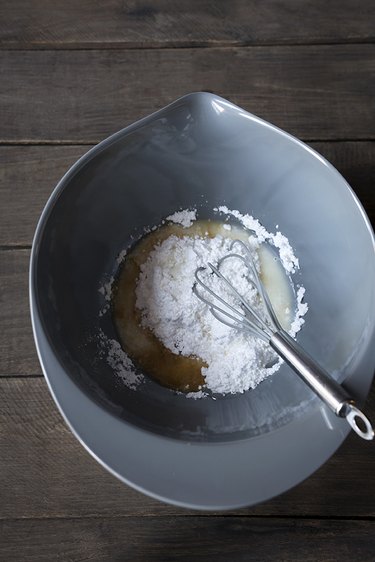
In a large mixing bowl, whisk together the confectioners' sugar, 4 tablespoons water or milk, vanilla, and corn syrup. Vigorously whisk together until the mixture is very smooth and there are no lumps.

How to Make the Best Sugar Cookie Icing | eHow

Step 3: Adjust for Proper Consistency

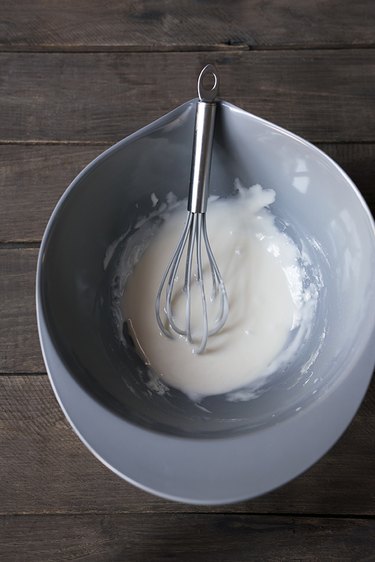
The icing should be thick enough to hold its shape while drying, but not so thick that it cannot be piped onto cookies. It should be about the consistency of Elmer's Glue. If necessary, add an additional tablespoon of water or sugar to reach the desired consistency.

The icing should be thick enough to hold it’s shape while drying, but not so thick that it cannot be piped onto cookies. It should be about the consistency of Elmer’s Glue. If necessary, add an additional tablespoon of water or sugar to reach the desired consistency.

Step 4: Optional: Add Gel Food Coloring

To add gel food coloring, divide the icing into smaller bowls and whisk in approximately 1 to 3 drops per 1/2 cup of icing until the desired color is reached. Keep in mind that gel coloring is much stronger than regular food coloring so you don't need much for vibrant results!

How to Make the Best Sugar Cookie Icing | eHow

Step 5: Decorate the Cookies

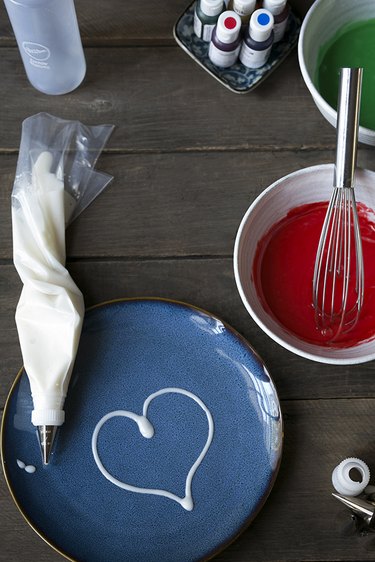
The easiest way to decorate cookies is with a squeeze bottle. For more control over the design, use disposable piping bags and small piping tips, which you can purchase (along with squeeze bottles) at a craft supply store or online. If you want to get fancy you can also purchase couplers, which allow you to easily switch between tips without changing the bags. Either way, it's good to practice icing on a plate or cutting board before decorating the cookies.

Once piped, the icing will take a few hours to completely set (but that doesn't mean you can't eat the cookies before then).

How to Make the Best Sugar Cookie Icing | eHow

Cute Reindeer Cake Pops Tutorial

0

This Christmas, give Santa something different than the same old cookies. When you make these adorable reindeer cake pops, you'll definitely get on the "nice" list. They'll also be a hit at all your holiday gatherings, so make plenty for friends, family and guests. They'll shout out with glee that these cake pops will go down in his-to-ry.

reindeer cake pops

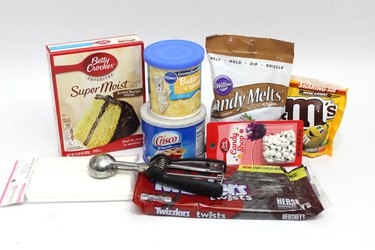
Things You\’ll Need

  • Packaged cake mix

  • Canned frosting

  • Cookie dough scoop, 1 1/4-inch diameter

  • Chocolate candy melts

  • Vegetable shortening

  • Treat sticks, 6-inch lengths

  • Sheets of styrofoam, at least 1 inch thick

  • Candy eyeballs

  • M&Ms

  • Chocolate licorice twists

materials

Step 1: Bake the Cake

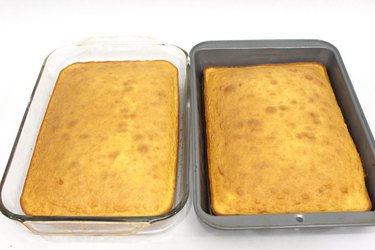
Bake a cake according to the instructions on the box. Choose any flavor you would like — the color of the cake will be covered up anyway after you dip the cake pops in chocolate. One cake will make about 30 cake pops, so bake two of them if you'd like to make more. Allow the cake to cool for about an hour.

cakes

Step 2: Scrape Off the Edges

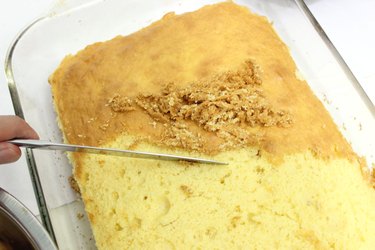
Use a knife to scrape off the browned edges on the top, sides and bottoms of the cake. Removing the edges will help make your cake pops consistent in texture and color.

scraping

Step 3: Break the Cake Apart

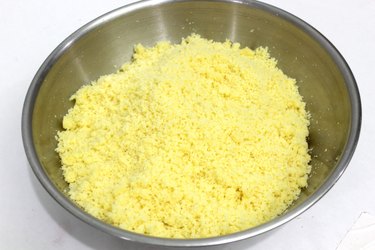
Run the cake through your fingers to crumble it until it has the consistency of moist bread crumbs.

crumble

Step 4: Add the Frosting

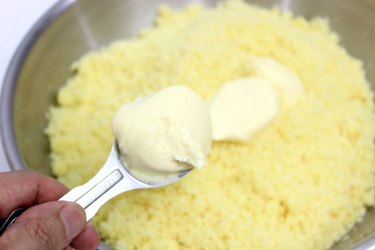
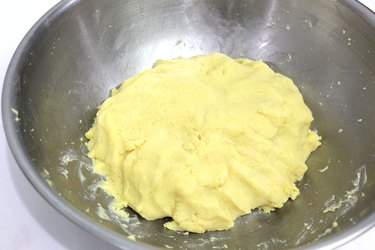
Add three to four tablespoons of prepackaged canned frosting to the cake crumb. Knead the mixture with your hands, adding additional frosting if necessary, until you have what looks and feels like a mound of cookie dough.

frosting mixed frosting

Step 5: Roll Into Balls

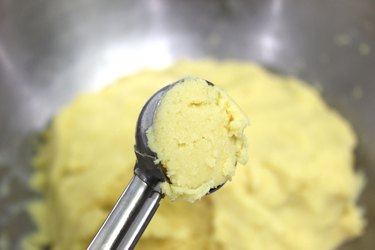
Use a 1 1/4-inch diameter scoop, which is normally used for ice cream, cookie dough or melons, to scoop out evenly-sized amounts of the cake mixture.

scoop

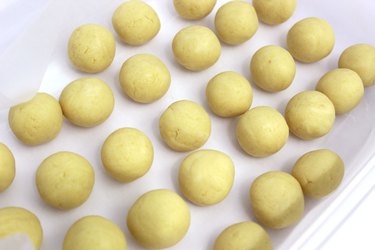
Roll the cake mixture between your hands to form balls. Place them in the freezer for about an hour to harden.

balls

Step 6: Melt the Chocolate

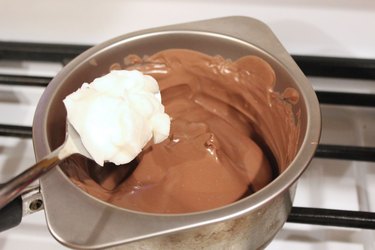
Melt a bag of chocolate candy melts in a double boiler, or microwave it according to the package instructions. Chocolate candy melts, which you can find at the crafts store in the baking aisle, usually come in a light or dark variety. I selected the lighter chocolate, which is closer to the color of real reindeer (or at least that's what I've been told). To thin the chocolate and make it easier to coat, stir in a tablespoon of vegetable shortening.

chocolate melts

Step 7: Insert the Sticks

Take the rolled up cake balls out of the freezer. Dip about one half inch of the stick in the melted chocolate, and then insert the stick in the cake ball. The chocolate on the stick will act like a glue to lock the cake pop into place. Place the cake pops back in the freezer for about 15 minutes for the chocolate to harden.

sticks

Step 8: Dip the Cake Pops

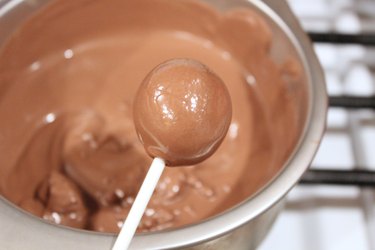
Keep stirring the melted chocolate to give it an even consistency. Dip the cake pop in the chocolate, turning the stick so all sides are coated. Gently tap the stick on the side of the pan to allow extra chocolate to drip off the cake pop.

dip

Step 9: Let The Cake Pops Set

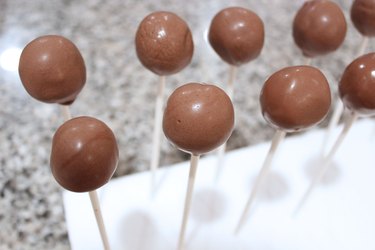
Insert the sticks in styrofoam so the cake pops are standing upright. Position the cake pops a few inches apart from each other, as you don't want them touching while they dry. Allow the coating to set for about an hour.

styrofoam

Step 10: Add Facial Features

For eyes, look for small white, round candies like jelly beans. I happened to find candy eyeballs in the baking aisle of my local supermarket. Attach the eyes by dabbing a drop of melted chocolate between the candy and the cake pop with a toothpick. The melted chocolate will act like glue.

eyeballs

For the nose, use a round M&M. I recommend a brightly colored one instead of brown so that it stands out more. And, of course, you'll want some red noses to make some Rudolphs.

nose

Step 11: Add the Antlers

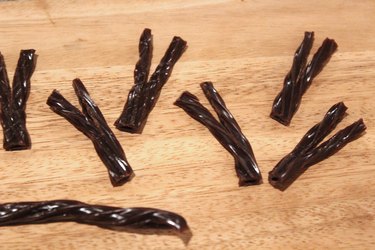
To make the antlers, cut chocolate licorice twists into 2-inch pieces. Then cut a slit half way through each piece. Spread the two halves apart.

antlers

Working with one antler at a time, dip the bottom of the antler in the melted chocolate and place it on one side of the reindeer's head. Hold the antler in place until the chocolate sets and the antler no longer moves, about one or two minutes. It helps to be in a cool room. I actually stood in front of the open door of a freezer to help the chocolate harden.

antlers

Then repeat with the other antler.

antlers

Step 12: Display the Cake Pops

Place a piece of styrofoam in a container, and hide the foam with tinsel or colored tissue paper. Then insert the sticks of the cake pops into the foam.

cake pops

How to Make a Watermelon Margarita

0

Nothing signals the arrival of summer more than a fresh watermelon – unless it's a margarita! This combination creates a refreshing summer drink that makes any outdoor gathering extra special.

margarita pitcher and glasses

Things You\’ll Need

  • 2 cups watermelon juice

  • 1 cup tequila

  • 1/4 cup orange liqueur

  • 2 tablespoons sugar

  • 1/4 cup lime juice

Step 1: Juice the Watermelon

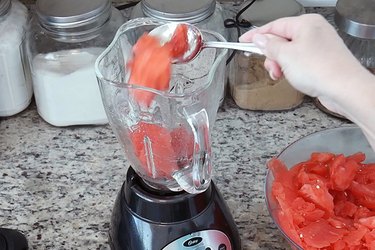
Place watermelon chunks into a blender or food processor.

watermelon in blender

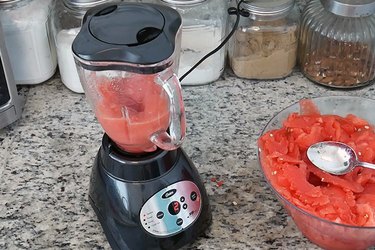
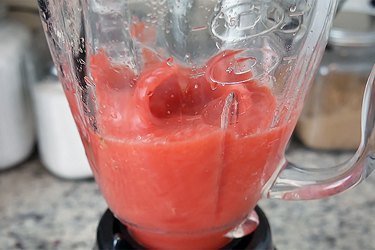
Run the blender until the chunks are liquified.

blending blending closeup

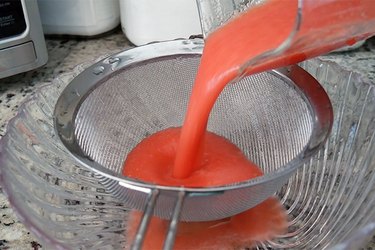
Pour the fluid through a strainer and catch the juice in a bowl.

strain the liquid

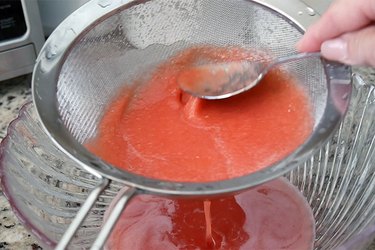
Press the pulp against the strainer to get all the juice. Discard the remaining pulp. Repeat until you have 2 cups of fresh watermelon juice.

press the pulp against the strainer

Step 2: Juice the Limes

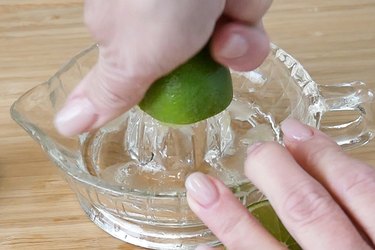
Press and roll limes against a cutting board to release the juice. Cut the limes in half and twist on a juicer to collect the juice. Repeat until you have 1/4 cup of fresh lime juice.

juice the limes

Step 3: Mix the Ingredients

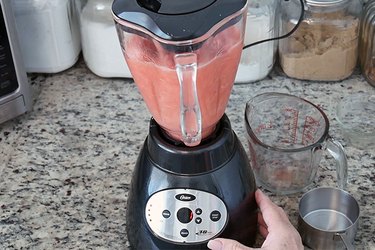
Return 2 cups of watermelon juice to the blender or food processor. Add the tequila, sugar, lime juice and orange liqueur to the blender. Process for about 30 seconds.

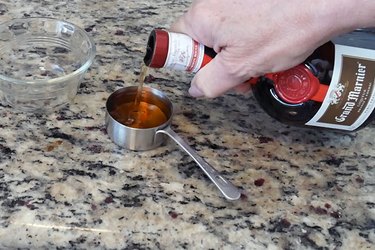
return juice to blender measure orange liqueur blend ingredients

Step 4: Sugar Rims

Rub a piece of lime against the rim of serving glasses. Dip the rims in sugar to frost the brim of the glass.

rub limes on glass rim

Step 5: Enjoy!

Add ice, garnish with a slice of lime, and pour the margarita.

pour margarita

Tip

Freeze extra chunks of watermelon to use as ice cubes or freeze the juice mixture for a frozen margarita version.

Do I Need to Refrigerate Hoisin Sauce?

Bok Choy , pork , shrimp , and lima beans Hoisin sauce nicely complements greens and white meats. Image Credit: Jupiterimages/Stockbyte/Getty Images

The classic Chinese condiment known as hoisin sauce lends its pungent flavor to dishes such as mu shu pork and Peking duck, as well as entrees and sides ranging from stir fry to sauteed bok choy. This rich, dark brown sauce features ingredients such as fermented soybeans or sweet potatoes, vinegar, sugar, chilies and garlic, making for a bold flavor that meets the taste buds with both sweet and tangy elements. If you take a bottle of hoisin sauce home, you don't absolutely need to refrigerate it, but doing so certainly increases its shelf life.

Video of the Day

Storing Your Sauce

According to "Fine Cooking" magazine, you can store hoisin sauce indefinitely in the refrigerator, even after opening. However, you must keep the condiment in a tightly sealed, nonmetal container. If your store-bought sauce comes in a can, transfer it to a nonmetal container and seal it securely before popping it in the fridge. Hoisin sauce manufacturer Kikkoman also recommends refrigerating the sauce after opening to better preserve its freshness and flavor.

All About Shelf Life

Store-bought hoisin sauce often features a printed "Best By," "Use By" or "Best if Used By" date. However, these freshness estimates simply serve as recommendations; they only concern the sauce's intensity, texture, flavor and color, not its safe consumption. While taste and color may fade or change over long periods of refrigeration or storage, refrigerated hoisin sauce remains safe to eat indefinitely. For optimal taste quality, Suzanne Rexford's book "Suzanne's Kitchen" recommends eating refrigerated hoisin sauce within 6 months, while Kikkoman suggests using its hoisin sauce within 18 minutes of its production date code.

Telltale Signs

If for any reason you suspect that your hoisin sauce has gone bad, trust your senses. Make a mental note of the sauce's initial, fresh scent upon its first use; an "off" odor serves as the most reliable indicator of spoiled sauce. Likewise, if any mold appears in the sauce or on its container, discard the sauce immediately.

More to Consider

Adding water or other ingredients to your hoisin sauce may cause it to spoil or lose its freshness more quickly. Hoisin sauce's close cousin, soy sauce, also benefits from refrigeration, though it can last for up three years in the refrigerator without taking a noticeable hit in the taste or texture department.

Kluski vs. Egg Noodles

0

Steaming strainer of noodles Kluski vs. Egg Noodles Image Credit: Shaiith/iStock/GettyImages

If your recipe calls for a particular type of noodle you don't happen to have, choosing a substitute can be confusing. Some ingredients are so unique that they can't be replaced without radically altering the dish and perhaps ruining it. Others are so similar that you hardly notice the difference if you swap them around. When it comes to kluski noodles and egg noodles, you can often make the swap without spoiling your recipe.

Video of the Day

What Are Kluski Noodles?

The word "kluski" refers to several types of pasta in traditional Polish cooking, including dumplings, drop noodles and kluski egg noodles. The main ingredients in homemade kluski egg noodles are flour and egg. Dried, commercial brands also include nutritional additives like iron, niacin, riboflavin and folic acid. This type of Polish noodle is often eaten in soups. Compared to regular noodles, kluski egg noodles are very similar to wide egg noodles and tagliatelle, and you can safely substitute one for the other.

On the other hand, if your recipe calls for something like Kluski kładzione, this is something different from the regular egg noodles in your kitchen cupboard. Kluski kładzione are Polish drop noodles. Though this type of noodle is also made from flour and eggs, drop noodles are like small dumplings, not long strips of pasta. Drop noodles are created by scooping walnut-sized pieces of dough with a spoon, dropping the noodles into boiling water to cook them and then adding them to a stew or casserole.

What Are Egg Noodles?

Most types of pasta are made from flour and water, but egg noodles are named for their additional ingredient of eggs. Whole eggs or egg yolks mixed with flour and a little water results in a richer, yellower type of pasta. This type of noodle is sold fresh and dried and comes in thin, medium and thick strips and squares.

The texture of homemade egg noodles is different from commercial products. Recipes for home cooking often contain more egg than the egg noodles in the shops, resulting in a thicker noodle and a more dumpling-like texture. This type of pasta suits casseroles and stroganoffs, though these noodles are so wholesome and filling that you can eat them on their own with only a little butter.

Homemade Kluski Noodles and Egg Noodles

The ingredients and procedure for making kluski noodles and egg noodles are similar, but for kluski egg noodles, you use more eggs. A typical kluski egg noodle recipe requires double the number of eggs to cups of flour. So, for 2 cups of flour, you use four eggs. To make egg noodles, you use the same number of eggs as cups of flour.

To make kluski egg noodles, after mixing the eggs and flour and a little salt, no additional ingredients are required to make a dough. However, to make egg noodles, you must add a little water or milk to bind the mixture of flour and eggs. You might also choose to add baking powder to your egg noodle ingredients. Baking powder supplies fluffiness as the noodles cook and is an effective substitute for the additional eggs in kluski noodles.

Once you've made the dough for both types of noodles, the process is very similar. After allowing the dough to rest for a period of time, you roll it out into thin sheets. At this point, you can wait for 15 minutes for the sheets to dry out a little, or you can cut the strips of noodles first and then allow them to dry for the same amount of time. Cook kluski egg noodles in boiling water until they rise to the top of the pan and cook egg noodles for two to four minutes until they are tender.

Healthy Baking Substitutions Ideas

0

Many common baking ingredients pose a challenge for those with dietary restrictions for medical reasons or lifestyle choices. But even if you yourself don't have any forbidden foods, you may find yourself in the position of baking for someone else who does. We've got your back! Check out our list of some of the most easy-to-find alternative ingredients for common ingredients used in baked goodies.
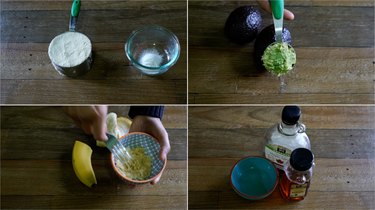
Healthy Baking Substitution Ideas

Tip

This tip is IMPORTANT, so pay attention! Before swapping out any of your recipe ingredients for the substitutions listed below, know that baking is a science. As such, this article is meant to provide information about a few of the many substitution possibilities available that will work well for many, but not all, needs. Please do additional homework on the specific item you’re baking and whether your chosen substitute might be a good fit. However, the absolute best way to find out what works is via your own personal experimentation.

Wheat Flour Substitutes

These are some of the most common substitutes for those intolerant to wheat flour, probably because they're easy to find in most supermarkets and work very well in many quick bread, cookie, and cake recipes.
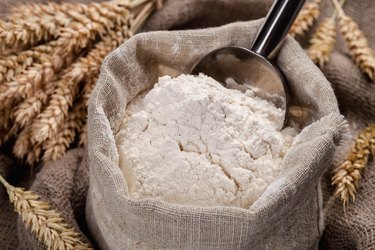
Flour in a bag on the table and spikelets

Tip

When trying out wheat flour substitutes for the first time, find recipes that require no more than 2 cups of flour.

Blanched Almond Flour

Not to be confused with coarser almond meal (ground, unblanched almonds with skins left on), finely ground almond flour is a common substitute for all-purpose flour in cakes, muffins, quick breads, cookies, and press-in pie crusts. It's not suitable for making yeast-risen bread, unless you're using a mix of almond and a gluten-containing flour. For rising power, you also might want to add ½ teaspoon baking powder or egg. You'll also need to lower the temperature and/or shorten the baking time, as almond flour browns and burns quicker than wheat flour.

If you don't want to give up wheat flour entirely, you can also just substitute ¼ of the wheat flour with almond flour with no other changes to the recipe needed.
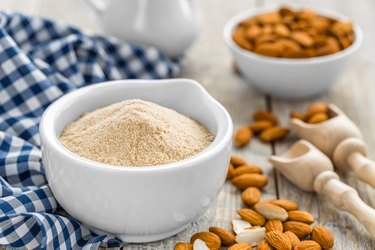
Almond flour and nuts

Coconut Flour

People with nut allergies use coconut flour as their wheat flour replacement instead of the more-common almond flour, but you won't be able to substitute it purely on its own without adding/altering other ingredients –typically more eggs and liquid. It's very absorbent, so unless you're making a bread that's meant to be on the dense and dry side (like scones, perhaps), you shouldn't opt for coconut flour. If you would like to use only coconut flour, a common conversion ratio is ¼ cup coconut flour for 1 cup all-purpose flour, plus the addition of about 2 eggs per ¼ cup coconut flour used (for binding and rising) and ¼ cup of additional liquid (water, your favorite type of milk, fruit juice, etc.) to prevent excessive dryness. Like almond flour, it's best used for cakes, muffins, quick breads, cookies, and roll-out pastry crusts.
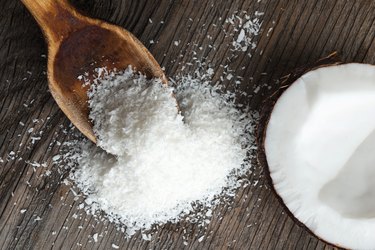
Coconut and coconut flour on wood, close up

Almond & Coconut Flour Blend

Using a combination of almond and coconut flour is a terrific substitution for all purpose flour for quick breads, cakes, and cookies, and typically does better than using just almond or coconut flour alone. Use a ratio of 3 parts almond flour to 1 part coconut flour and use this blend in place of wheat flour 1:1. However, because coconut flour is drying, you'll need to add an additional ¼ cup of liquid per 1 cup of almond and coconut flour blend. As with almond flour, if you need extra rising power in your recipe, add an additional 1 teaspoon baking powder to the recipe or an egg (if eggs are tolerated).
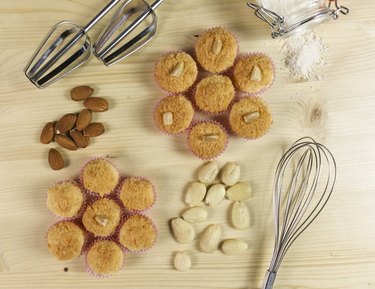
Cookies with coconut and almond flour - top view

Bean Puree

Pureed beans in place of flour? Yes! Black bean puree in particular is popular for making brownies and chocolate cookies/cake. Great northern, cannellini, and chickpea purees are also frequently used as flour alternatives. Many sources call for substituting pureed beans for flour 1:1, but you're probably better off searching for baking recipes that are specifically made for beans. For example, try our terrific Black Bean Fudge Brownies recipe.
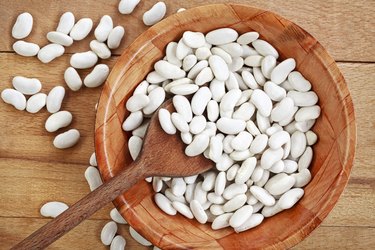
White beans on a wooden board

Refined Sugar Substitutes

Sugar

Maple Syrup or Honey

Here's a simple formula for replacing sugar with these natural liquid sweeteners (with more nutritive value): Use ¾ cup honey or maple syrup for 1 cup sugar and reduce ½ cup of the liquid.

maple syrup in glass bottle on wooden table

100% Pure Stevia Extract (Powdered or Liquid)

Stevia extracted (refined and concentrated) is just one of many low calorie sweeteners you can use in place of sugar in baked goods, but it's a bit trickier to substitute as it's much sweeter than sugar — 200 to 300 times sweeter. (Pure stevia extract is not to be confused with ground stevia leaves which is 10 to 15 times sweeter than sugar, but has a licorice-like aftertaste that is unpalatable for many.)

Small coffee cup on plate with stevia extract packet

If using powdered stevia extract, you'll typically use just ½ – 1 tsp stevia powder to one cup sugar. If using liquid extract, use about 1 tsp of liquid stevia extract per one cup of sugar. Amounts vary from product to product, so read the labels carefully.

Also, since you're taking away some of the density that sugar lends to baked goods, you should add ⅓ cup of unsweetened applesauce, plain yogurt, or egg whites — whichever is best tolerated or would work better for your recipe — to replace the bulk that sugar adds.

Sugar Alcohols

Sugar Alcohols (which occur naturally) don't dramatically affect blood sugar levels like regular sugar, making them a popular choice for many bakers. The two most commonly-used sugar alcohols for home baking (as opposed to commercial baking) are xylitol and erythritol. They can typically be substituted for sugar 1:1, although erythritol is slightly less sweet than sugar. Xylitol is a very close match to sugar in sweetness and taste, but the downside is that it can have a laxative effect if too much is ingested, and is very dangerous (possibly lethal) to pets, so it must be kept away from them at all times. Erythritol, however, is safe for animals and causes less gastrointestinal issues (for more people) than xylitol.

Egg Substitutes

In baked goods, eggs typically play two roles: 1) binding agent 2) rising agent. Because of that, you'll have to figure out whether your recipe includes eggs for binding, rising or both and use substitutes accordingly.

Prepared egg in white bowl

For Binding

You can use one half of a mashed banana in place of one egg. You can also combine 1 tablespoon chia (ground or whole) or ground flax seeds with 3 tablespoons of water for each egg.

Bananas in a wooden dish on a wooden background.

For Rising

One egg equals 1½ tablespoons apple cider vinegar (or other acid such as citric acid or lemon juice), I½ tablespoon oil t and 1 teaspoon baking powder.

Dairy Substitutes
Glass of milk standing on old wooden table

Butter

You can use the following at 1:1 ratio: unsweetened applesauce, mashed avocado for cookies, cakes and quick breads.
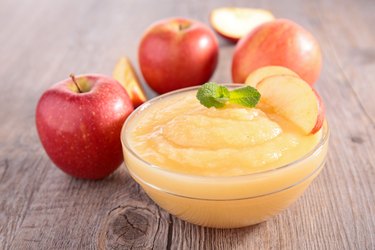
bowl of apple sauce

Cream

Light cream can be replaced 1:1 with full fat coconut milk or silken tofu that has been blended until smooth.

Heavy cream can be replaced 1:1 with coconut cream or with a non-dairy milk and oil blend using the following formula: 1 cup of soy or rice milk plus 1 tablespoon of avocado or extra light olive oil.
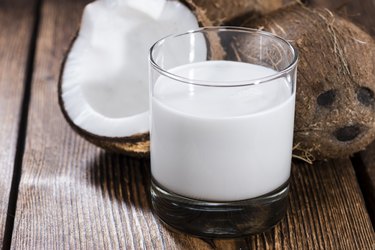
Coconut Milk

Buttermilk

Combine l tbs apple cider vinegar with 1 cup non-dairy milk of your choice such as almond, coconut, soy, flax, or hemp.

Oil Substitutes

Replace 50% – 100% of the oil in a recipe with unsweetened applesauce, mashed banana, or white bean puree.

Note that many more substitutes are out there for these and other baking ingredients — we've just provided few of the most commonly used and easy-to-find replacements. We hope that we were able to provide some useful tips and ideas to help kick off your own personal adventures in healthful baking!


Low-Carb Pizza Dough Recipe

0

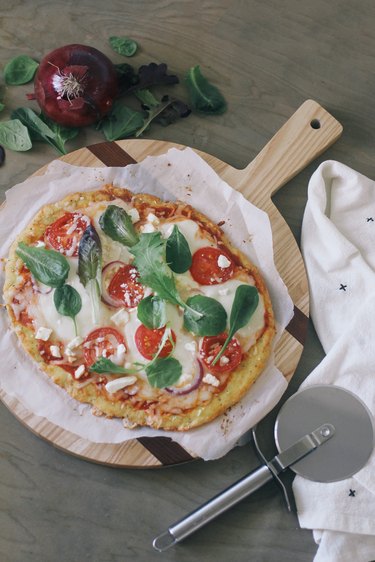
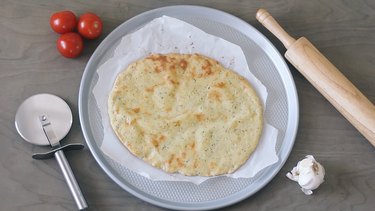
Living the low-carb lifestyle but missing those indulgent pizza nights? Then you must try this recipe for "Fat Head" dough. It's keto-friendly, gluten-free, grain-free, and quickly becoming the holy grail of low-carb crusts. Plus, there's no cauliflower in this dish. Load it up with your favorite toppings and enjoy your guilt-free pizza!
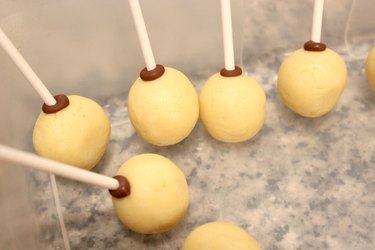
Fat Head Pizza Dough

Things You\’ll Need

  • 2 tablespoons cream cheese

  • 1 1/2 cups shredded mozzarella

  • 3/4 cup almond flour

  • 1 teaspoon garlic powder

  • 1 teaspoon onion powder

  • 1 teaspoon Italian seasoning

  • 1 egg

Fat Head Pizza Crust

Step 1

Preheat your oven to 400° F.

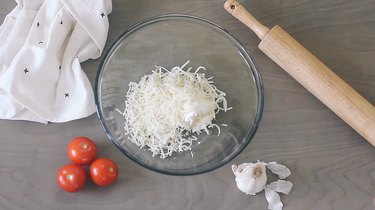
Place the cream cheese and shredded mozzarella in a microwave-safe bowl and microwave for 1 minute on high.

Cream cheese and mozzarella in a bowl

Step 2

Remove the bowl from the microwave and mix the two cheeses together until combined.

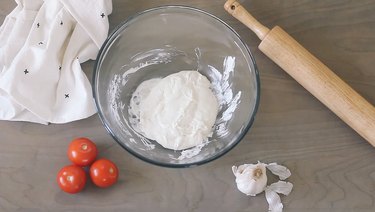
Cream cheese and mozzarella melted and mixed

Step 3

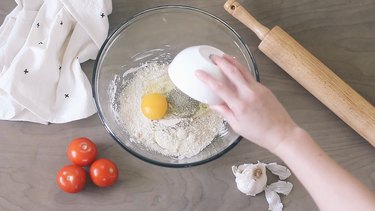
Add the almond flour, garlic powder, onion powder, Italian seasoning and egg to the cheese mixture and stir until the dough comes together.

Adding ingredients to bowl

Step 4

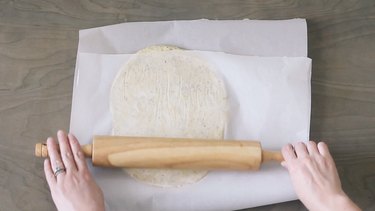
Form the dough into a ball and place it between two pieces of parchment paper. Use a rolling pin to roll the dough to 1/4" thickness.

Rolling pizza dough between sheets of parchment paper

Step 5

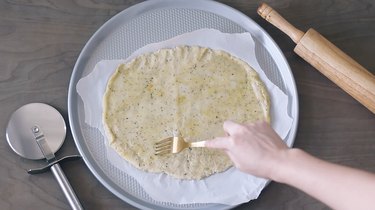
Place the pizza crust on a parchment-lined baking sheet and prick the dough all over with a fork to prevent bubbles from forming.

Pricking pizza dough with fork

Step 6

Bake at 400° F for 12 minutes until lightly browned.

Par-baked pizza crust

Step 7

Remove the crust from the oven and spread pizza sauce on top. Add more mozzarella followed by your favorite toppings.

Adding toppings to pizza

Step 8

Bake the pizza for 5 to 7 minutes until the cheese has melted and the toppings have cooked.

Tip

For a crunchier crust, bake the pizza a few minutes longer.

Pulling piece of cheesy pizza away

How to Preserve Cayenne Peppers

0

Things You\’ll Need

  • Kitchen towels

  • Coarse thread

  • Needle

  • 4 lbs. cayenne peppers

  • 3 lbs. sweet peppers

  • Rubber of plastic gloves

  • Knife

  • Baking tray

  • Bowl

  • Trash bag

  • 9 1-pint canning jars

  • Pot

  • 5 cups vinegar

  • 4 tsp. canning salt

  • 2 tbsp. sugar

  • 2 cloves garlic

  • Boiling water canner

... Cayenne peppers get hotter as they get redder.

Cayenne peppers from the store or garden add spice and nutrition to recipes and salads. Cayenne peppers can be used fresh within a few days of picking from the plant or they can be preserved for a longer shelf life. Preserving cayenne peppers is simple to do and can be achieved in a variety of ways dependent upon your preference and taste.

Video of the Day

Dried Cayenne Peppers

Step 1

Run tepid water over the cayenne peppers to remove dirt and debris. Move your fingertips over the peppers to remove stubborn dirt. Dry the cayenne peppers with a kitchen towel.

Step 2

... String cayenne peppers on needle and thread for drying.

Thread a sewing needle with coarse or heavy-duty thread. Pierce a cayenne pepper about 1/4 inch below the stem portion of the pepper. Bring the needle and thread all the way through the first pepper, leaving six or eight inches of thread at the end.

Step 3

String all the cayenne peppers on the thread, leaving two to three inches in between each pepper. Knot the end of the thread after stringing the last pepper.

Step 4

... Cayenne peppers drying.

Tie the peppers in a dry, well-ventilated location. Allow the peppers five or six weeks to dry. The peppers can be left to hang, then pinch one off each time it's needed.

Pickled Hot Peppers

Step 1

... Protect yourself from coming in contact with hot cayenne pepper oils.
Slip the hands into rubber or plastic gloves. The oils in hot peppers can burn the skin if transferred from peppers to hands to face.

Step 2

Run lukewarm water over the cayenne peppers and sweet peppers to remove any dirt. Dry the peppers with a clean kitchen towel then make two to four small slashes in the skin of each cayenne pepper. Cut the sweet peppers into four sections, removing the cores and seeds from each pepper.

Step 3

Set the scored and cut peppers in a single layer on a baking tray. Heat the oven to 400 degrees Fahrenheit. Bake the cayenne and sweet peppers for six to eight minutes until blisters form on the pepper skin.

Step 4

Immerse the baked peppers in a bowl of cool water. This causes the blistered skin to slip easily off the peppers. Remove the pepper skins with gloved hands and discard the skins in a sealed trash bag.

Step 5

... Canning jars help preserve cayenne peppers.

Press the heal of a gloved hand onto each cayenne pepper to flatten it. Put a mixture of cayenne peppers and sweet peppers in each of the nine one-pint canning jars until the jars are filled within one-half inch of the top.

Step 6

Pour 5 cups vinegar and 1 cup water into a pot. Bring the liquid to a boil then add 4 tsp. canning salt, 2 tbsp. sugar and 2 whole cloves of garlic. Simmer the ingredients in the liquid for 10 minutes.

Step 7

Take the garlic cloves out of the liquid, then pour the liquid into each canning jar. Use just enough liquid so there is still one-half inch space at the top of the jar, between the peppers and the mouth of the jar.

Step 8

Add the seals and lids to the jars and place them in a boiling water canner. Allow the cans of preserved cayenne peppers to process in the canner for 15 minutes. Remove carefully from the canner and allow the cans to cool completely before storing.

Tip

Add other peppers or vegetables, such as cubed carrots or onion slices, to your pepper mix for canning.

Warning

Avoid touching the face or eyes if the skin of the cayenne peppers breaks while preserving. The oils from the peppers are hot and can cause your skin to sting and burn.

Use caution when using a canner. The heat from the water and steam can cause serious burns.