Home Blog Page 25

Best Beer Brownies Recipe

0

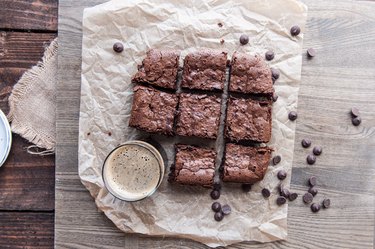
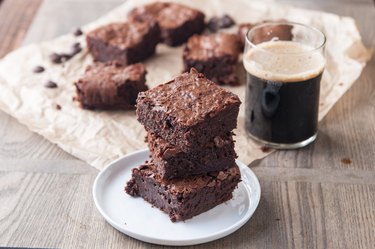
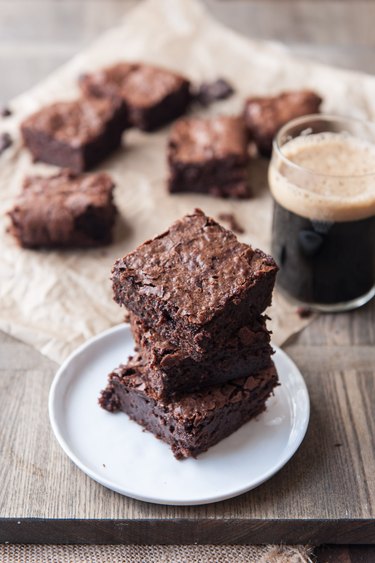
When it comes to brownies, a crackly top is nonnegotiable. That crispy, cracked, sugary top is an absolute necessity because without it, all you have is a pan of dense cake. So how do you get that? Eggs and sugar, which is why this recipe needs three eggs. These brownies are for those of us who need that crackly top, along with a dense, rich, and chocolatey flavor that is so decadent you'll need a big stout beer to wash them down. Never had a beer with your brownies? You now have a new weekend goal.

How to Make Beer Brownies

Video of the Day

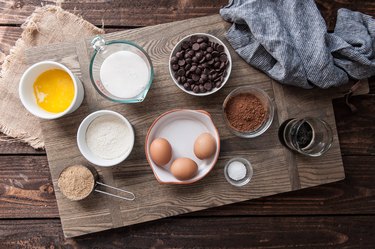
Things You\’ll Need

  • 6 weight ounce dark chocolate chips

  • 1/3 cup stout beer

  • 1/2 cup melted butter

  • 1 cup granulated sugar

  • 1/2 cup brown sugar

  • 3 large eggs

  • 3/4 cup all purpose flour

  • 1 teaspoon salt

  • 1/4 cup unsweetened cocoa powder

How to Make Beer Brownies

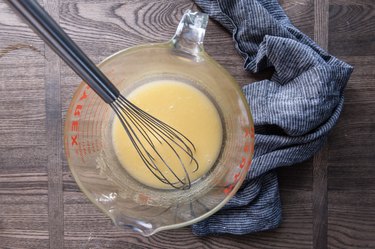
Step 1: Combine the Butter and Sugar

Preheat the oven to 350 degrees Fahrenheit. In a large bowl whisk together the melted butter, granulated sugar, and brown sugar until well combined.

How to Make Beer Brownies

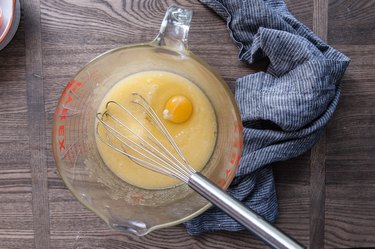
Step 2: Whisk in the Eggs

One at a time add the eggs, whisking until well combined before adding another (whisk more than you think necessary).

How to Make Beer Brownies

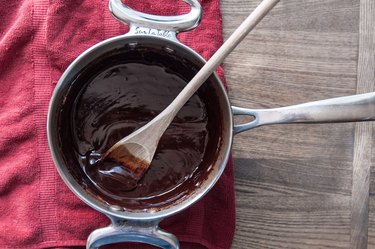
Step 3: Melt the Chocolate with the Beer

Add the chocolate and the beer to the top of a double boiler. Stir over medium heat until the chocolate is melted and well combined with the beer.

How to Make Beer Brownies

Tip

Don't have a double boiler? No problem! Just put a large metal or glass bowl over a pot of simmering water. Just make sure the bottom of the bowl does not touch the water.

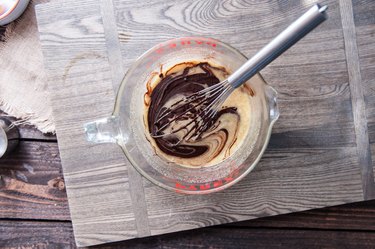
Step 4: Whisk in the Chocolate

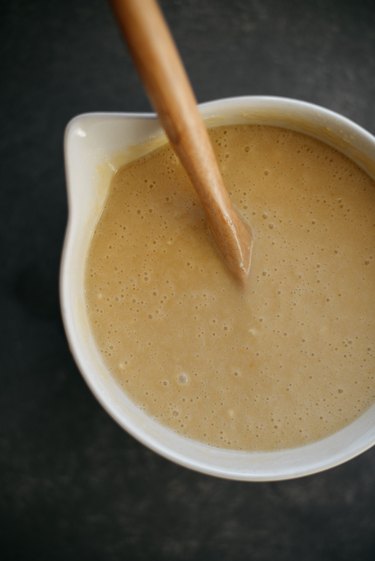
Add the chocolate to the butter mixture, whisk until well combined.

How to Make Beer Brownies

Tip

Wonder why there is no leavening agent (baking soda or baking powder)? Brownies don't need them — eggs and beer are mild leaveners and are more than enough. A leavening agent would make them cake-like.

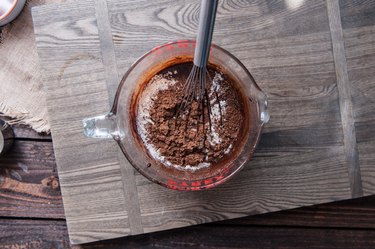
Step 5: Stir in the Dry Ingredients

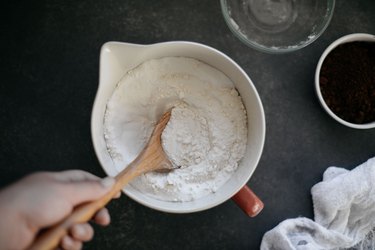
Add the flour, salt and cocoa powder to the bowl, stir until just combined.

How to Make Beer Brownies

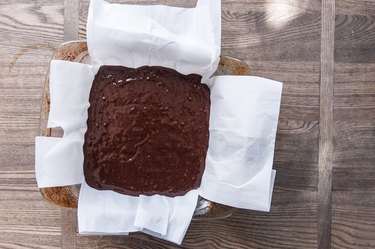
Step 6: Bake

Pour into an 8 X 8 pan that has been lined with parchment paper or sprayed with cooking spray. Bake at 350 degrees Fahrenheit for 22 to 25 minutes (do not over-bake) or until the brownies do not jiggle when the pan is shaken and a tooth pick inserted into the center returns with moist crumbs attached (but not raw batter).

How to Make Beer Brownies

Step 7: Cool, Then Cut

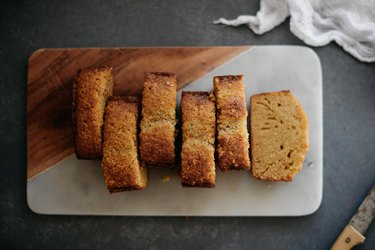
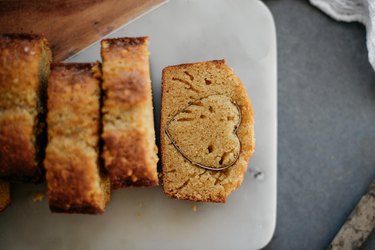
Allow to cool completely before cutting. This may take several hours. Brownies will be soft and fudgy. Brownies are best the day after being made.

How to Make Beer Brownies How to Make Beer Brownies

How to Open a Bottle of Don Julio

...

Don Julio is an upmarket tequila that, like most tequilas, comes from Mexico. It costs around $100 a bottle and is best enjoyed straight, unsullied by things such as salt, lime or other mixers. It is smooth enough to drink from a shot glass without the typical salt and lime, and it can also be used in a variety of cocktails, such as margaritas, mojitos and tonics.

Video of the Day

While the bottle looks complicated, it is actually easy to open.

Step 1

Twist the wooden ball of wood until it comes off. It is mounted on the bottle just like a standard cap.

Step 2

Twist the plastic screw cap underneath the ball of wood until it comes off.

Step 3

Open the valve, if there is one, by twisting it like a water tap. These are only present on bottles of Don Julio purchased in Mexico, and they do not come off. Rather, you just open it and pour the tequila through it.

Serve a Sandwich Cake With This Easy to Make Recipe

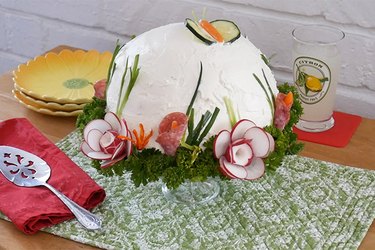
Turn grocery store staples into a lovely sandwich cake that transforms your luncheon, shower or afternoon tea into a very special occasion. Keep it simple and use purchased sandwich fillings or go fancy and make your own – the choice is yours.

sandwich cake

Video of the Day

Things You\’ll Need

  • Round loaf of unsliced bread

  • Wooden toothpicks

  • Prepared ham salad, 16 ounces

  • Pimento cheese spread, 16 ounces

  • Egg salad, 16 ounces

  • 8 ounce package of cream cheese, (2)

  • 1/2 cup milk

  • Fresh parsley

  • Assorted vegetables for garnish

Step 1: Cut the Bread Layers

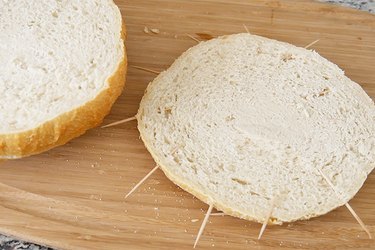
Place the bread round on a flat surface and insert toothpicks about 1/2 inch up the side of the bread all the way around the side. Using a large bread knife and the toothpicks as guides, slice all the way through the loaf.

cut first layer

Repeat this process two times, so the bread is cut into four layers.

Layer split

Step 2: Assemble the "Cake"

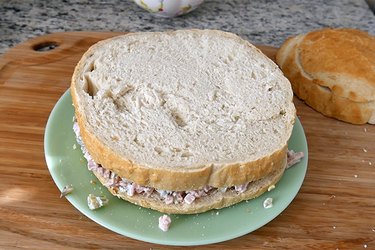
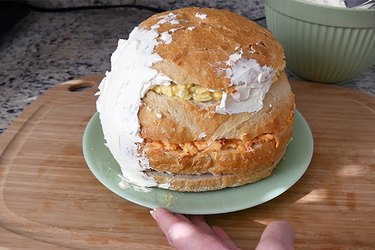
Place the first layer of bread on a plate or cake plate. Spread with a generous layer of prepared ham salad.

ham salad

Top with the next bread layer.

second bread layer

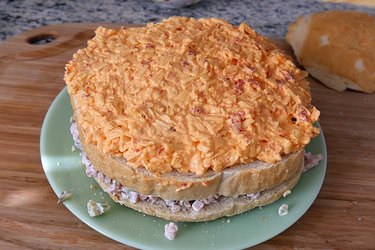
Add pimento cheese spread.

pimento cheese spread

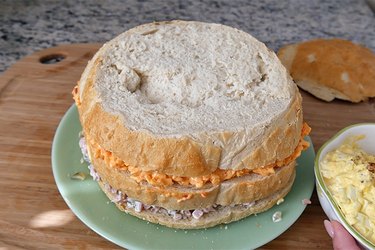
Top with the third bread layer.

third bread layer

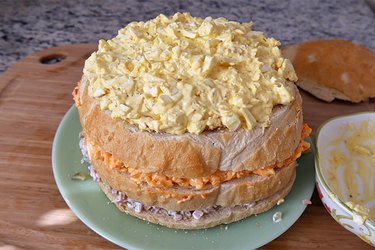
Add the egg salad. If you prefer to make your own, you can find a simple recipe here.

egg salad

Top it off with the final bread layer.

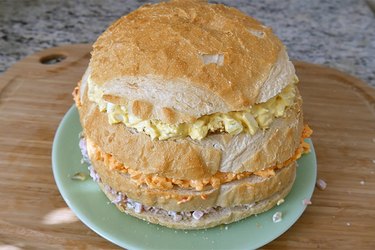
sandwich cake assembled

Step 3: Prepare the "Frosting"

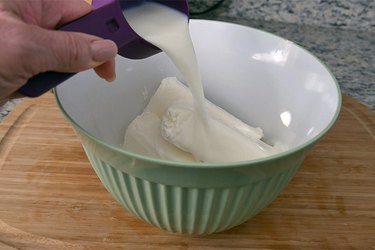
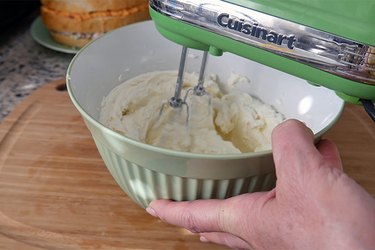
Place two eight ounce packages of cream cheese in a bowl and allow to come to room temperature. Add 1/2 cup of milk and beat with a rotary beater until smooth and light.

cream cheese and milk whipping cream cheese

Step 4: Frost the "Cake"

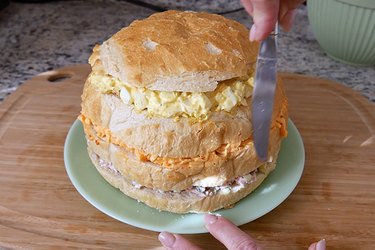
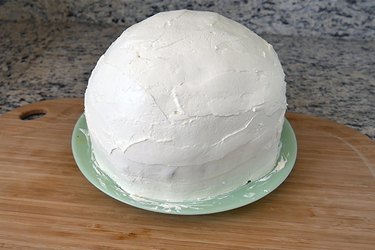
Scrape any protruding sandwich filling from the sides of the assembled sandwich cake.

scrape edges

Spread the whipped cream cheese on the edges and top as you would icing on a cake. Turn the plate as you need to and cover the entire surface.

spread the cream cheese frosted sandwich

Step 5: Decorate the "Cake"

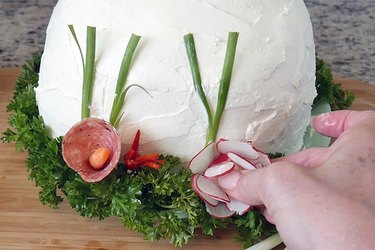
Cut small sprigs of parsley and place around the base.

trim with parsley

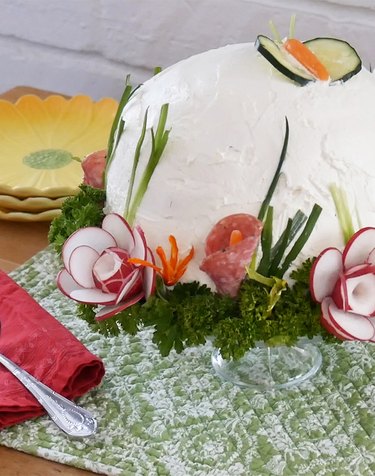
We split green onions to use as greenery, wrapped salami around a carrot to make a calla lily, and cut radishes into roses. However, you can decorate as much or as little as your imagination and the variety of vegetables on hand allows.

add vegetable decorations

Step 6: Serve

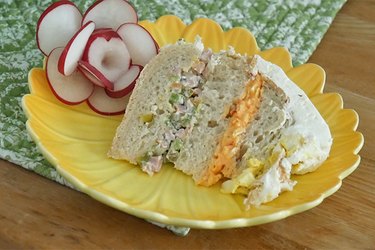
close view of finished sandwich  cake sandwich cake cut sandwich slice

How to Make a Wine F-Pack

Things You\’ll Need

  • Large pot

  • 17 oz.. fresh fruit juice

  • Spoon

  • Sterile container

... Wine can be made from any type of fruit.

A wine finishing pack (or F-Pack) is concentrated fruit juice used to add sweetness, aroma and flavor to wine during the wine-making process. The F-Pack is generally made from the same type of fruit juice that is being used to make the wine, although different juices can be used to adjust the flavors. F-Packs are used in the production of sweet and dessert wines; the F-Pack is added after the fermentation has stopped turning sugar into alcohol. A similar method is employed in German wine-making, where it is called Süssreserve.

Video of the Day

Step 1

... The pot should easily hold 17 oz.

Place the large pot on the stove and turn the heat to medium-high.

Step 2

... Store-bought juice has too many chemicals.

Pour the fruit juice into the pot and stir slowly with the spoon for about 10 minutes to ensure the juice does not scorch, just until the juice begins to simmer.

Step 3

... Too much heat will burn the juice.

Turn the heat down to medium and continue to simmer the juice for one to two hours, stirring occasionally, until the volume of liquid in the pot is reduced by half.

Step 4

Remove the pot from the stove and allow the concentrated juice to cool.

Step 5

Place the juice into a sterile, airtight container until ready for use. This process makes approximately 500 mL of concentrated juice, which is appropriate for 6 gallons of wine.

Tip

If the F-Pack will not be used immediately, add potassium sorbate to the concentrated juice to ensure the juice does not spoil or ferment. Mix a few different types of fresh juice together before heating to make the final juice concentrate more complex.

Warning

Bringing the juice to too high a boil or letting the juice scorch will result in cooked fruit and caramel flavors.

15 Copycat Recipes from America\’s Favorite Chain Restaurants

0

Recipes from America\'s favorite chain restaurants 1 of 16

Good news, folks: now you can make your favorite recipes from America's favorite chain restaurants right in the comfort of your own kitchen. No road trip needed. Just follow these steps to fast and easy flavor.

Image Credit: Leigh Ann Chatagnier Chili\'s Queso Dip Recipe 2 of 16

Chili\’s Queso Dip

Better stock up on tortilla chips because guests won't stop dipping until they see the bottom of the skillet.

Image Credit: Leigh Ann Chatagnier BJ\'s Pizzokie Recipe 3 of 16

BJ\’s Pizookie

It's a pizza-cookie hybrid. Need we say more?

Image Credit: Jackie Dodd Chipotle\'s Barbacoa Tacos Recipe 4 of 16

Chipotle\’s Barbacoa Tacos

Make a double batch of this to use in tacos, on nachos, with rice in a bowl…the list goes on!

Image Credit: Jackie Dodd Red Lobster\'s Cheddar Biscuits Recipe 5 of 16

Red Lobster\’s Cheddar Biscuits

Light, flavorful, addictive. For the biscuit lover in you.

Image Credit: Jackie Dodd Cinnabon’s Cinnamon Rolls Recipe 6 of 16

Cinnabon\’s Cinnamon Rolls

When these rolls are baking, your home will never smell better.

Image Credit: Jackie Dodd McDonald\'s McMuffins 7 of 16

McDonald\’s McMuffins

You've got to check out this clever way for cooking the eggs!

Image Credit: Jackie Dodd Applebee\'s Spinach Artichoke Dip 8 of 16

Applebee\’s Spinach Artichoke Dip

Say hello to bread's best friend. There aren't enough words to describe the deliciousness of this dish.

Image Credit: Jackie Dodd Panera\'s Cheddar Broccoli Soup Recipe 9 of 16

Panera\’s Broccoli Cheddar Soup

15 minutes to make and freezes like a dream.

Image Credit: Jackie Dodd P.F. Chang\'s Chicken Lettuce Wraps Recipe 10 of 16

P.F. Chang\’s Chicken Lettuce Wraps

Low in carbs yet high in flavor. Lettuce wraps for the win.

Image Credit: Jackie Dodd Olive Garden\'s Breadsticks 11 of 16

Olive Garden\’s Breadsticks

Even if you're not an experienced bread maker, you can easily make these (and make everyone happy).

Image Credit: Leigh Ann Chatagnier Red Robin\'s Prime Chophouse 12 of 16

Red Robin\’s Prime Chophouse

Let me break it down for you: crispy onion straws, provolone cheese, mushrooms, Dijon sauce. Ready to get grilling?

Image Credit: Leigh Ann Chatagnier Domino\'s Cheesy Bread 13 of 16

Domino\’s Cheesy Bread

Sunday night dinners, football parties, just-because… whatever the occasion, this cheesy bread always has a place at the table.

Image Credit: Leigh Ann Chatagnier TGI Friday\'s Loaded Potato Skins 14 of 16

TGI Friday\’s Loaded Potato Skins

This restaurant staple makes the world's best bar food and at-home snack.

Image Credit: Jackie Dodd Cheesecake Factory\'s Honey Oat Bread 15 of 16

Cheesecake Factory\’s Honey Oat Bread

Are you as obsessed with this brown bread as we are?!

Image Credit: Jackie Dodd Cracker Barrel\'s Hashbrown Casserole 16 of 16

Cracker Barrel\’s Hashbrown Casserole

It doesn't get much better than a casserole perfect for breakfast and dinner.

Image Credit: Jackie Dodd

How to Make a Hidden Heart Cake

0

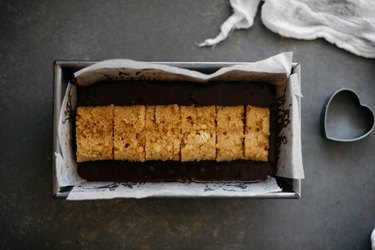
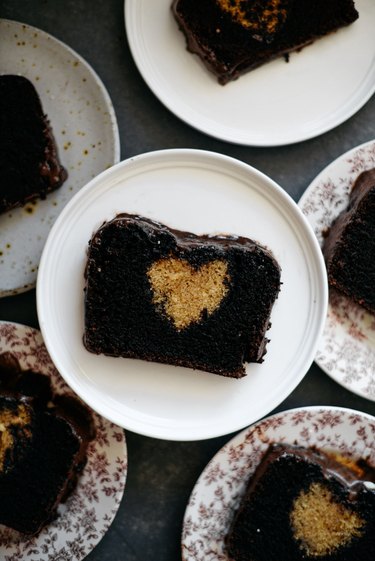
This very chocolatey loaf cake will reveal a surprise when it's sliced! The middle of the cake contains the most sweet and romantic hidden heart center, perfect to show off to your loved ones. The cake is also covered in a generous layer of the most delicious chocolate buttercream that's so simple to make as well. You can decorate and serve it however you like! If you choose to make any cake this Valentine's Day, make sure that it's this one!

Show off to your loved ones with this surprise Hidden Heart Cake!

Video of the Day

Things You\’ll Need

  • 11.8 ounces (335 grams flour), sifted

  • 2 teaspoons baking powder

  • 1 teaspoon baking soda

  • 1/2 teaspoon salt

  • 15.9 ounces (450 grams) granulated sugar

  • 3 large eggs, at room temperature

  • 8.1 ounces (230 millilitres) whole milk, at room temperature

  • 1 tablespoon vanilla bean extract

  • 6.3 ounces (180 grams) unsalted butter, melted

  • 1/2 teaspoon finely ground espresso powder

  • 4.9 ounces (140 millilitres) boiling water

  • 1.7 ounces (50 grams) dutch processed cocoa powder

  • 7 ounces (200 grams) unsalted butter, at room temperature

  • 6.7 ounces (190 grams) powdered sugar, sifted

  • 1.4 ounces (40 grams) dutch processed cocoa powder, sifted

  • 1 teaspoon finely ground espresso powder, optional

  • 2 tablespoons heavy cream

  • 1 teaspoon vanilla bean extract

Step 1: Prepare

Pre-heat the oven to 350 Fahrenheit (180 Celsius). Grease and line a 9-inch x 5-inch (23-cm x 12-cm) loaf tin with parchment paper. Let the paper hang over the edges. Set aside.

Let the parchment paper slightly overhang the loaf tin.

Step 2: Combine the dry ingredients

Sift the flour, baking powder, baking soda and salt into a large mixing bowl. Stir in the sugar.

Stir the dry ingredients together until evenly combined.

Step 3: Add in the eggs, milk and butter

Add in the eggs, milk and vanilla bean extract. Pour in the melted butter and stir until just combined.

Stir in the eggs, milk and vanilla until evenly combined.

Step 4: Pour in the boiling water

Add the finely ground espresso powder in with the boiling water. Stir to combine until dissolved.

Make sure that the espresso powder is completely dissolved in with the boiling water.

Pour the brewed espresso into the batter and whisk until smooth. The batter will be fairly liquid and runny.

Pour the brewed espresso water in with the batter. The batter should be fairly runny.

Step 5: Divide and bake the vanilla mixture

Pour half the mixture into one of the loaf tins then set aside the mixing bowl with the remaining batter. Bake this loaf, until it rises and the top springs back when lightly pressed, about 30 to 35 minutes. If you insert a toothpick into the middle, it should come out clean. Remove from the oven and let the cake cool in the pan for 15 minutes.

Bake until the cake is golden and risen.

Step 6: Make the chocolate mixture

Meanwhile, sift the 1.7 ounces (50 grams) of the dutch processed cocoa powder into the remaining batter set aside in the large mixing bowl. Stir it in until the mixture is evenly combined. Cover the bowl with a layer of plastic wrap or a kitchen towel and set the batter aside until the vanilla cake has finished baking and cooling.

Stir the cocoa powder into the remaining batter.

Step 7: Cut out the cake hearts

When the vanilla cake has cooled for about 15 minutes, turn it out of the pan. Cut the cake into even slices about 1.5 inches (4 cm thick). You should get about 6-7 slices.

Cut the cake into evenly sized slices.

Then, using a heart shaped cookie cutter (o_r whatever cookie cutter you desire_), cut out evenly sized hearts out of the cake.

Use a cookie cutter to stamp out hearts out of the cake.

Set the hearts aside until needed and discard the remaining cake scraps (or save them for something else, like cake pops!)

Set aside the cake hearts.

Step 8: Divide and bake the chocolate mixture

Pour half of the chocolate mixture set aside above into the loaf tin. Push the vanilla cake hearts into the batter so that they stand upright in a tightly packed row. Carefully pour over the remainder of the chocolate mixture over the vanilla cake hearts to cover.

Stand the cake hearts up in a tightly compacted row.

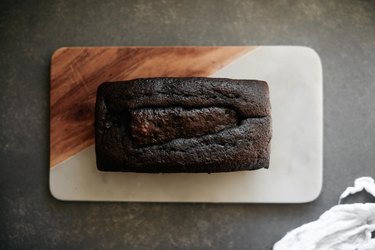
Bake for 30 – 35 minutes, or until the cake rises and the top springs back when lightly pressed. Let the cake cool in its pan for 15 minutes before turning out onto a wire rack to cool completely.

Bake until risen and a skewer inserted into the middle comes out clean.

Step 9: Make the chocolate buttercream

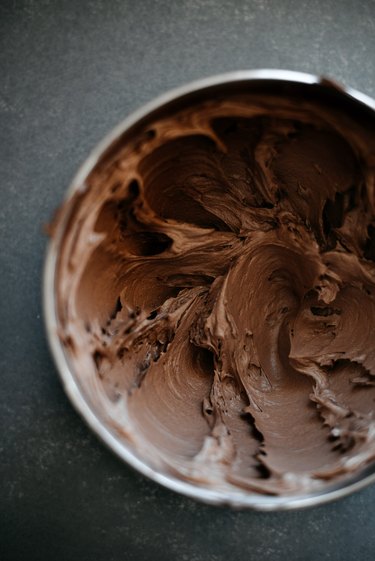
While the cake is cooling, begin the chocolate buttercream frosting. Place the remaining 7 ounces (200 grams) of unsalted butter into the bowl of a stand mixer fitted with a beater attachment (you can also use hand held electric beaters). Beat on medium-low speed, for 1 minute, or until the butter is soft and malleable. Pause mixing and add in the powdered sugar, 1.4 ounces (40 grams) of dutch processed cocoa powder and 1 teaspoon of the finely ground espresso powder (if using). Continue to beat, on medium speed, until evenly incorporated and fluffy, about 3 minutes. Add in the heavy cream and vanilla bean extract and continue to beat for a further 2 minutes. Stop mixing and set aside for decorating.

The buttercream will be slightly lightened in colour and fluffy when it is ready.

Step 10: Frost the cake

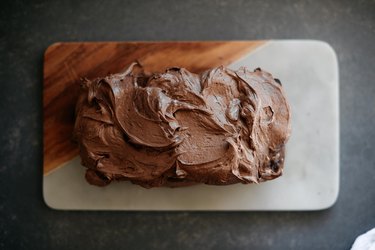
Once the cake has cooled completely, use a rubber spatula to generously frost the top and sides of the cake with swoops and swirls of the chocolate buttercream. At this point, you can also decorate the cake however you would like! With fresh raspberries or strawberries, sprinkles, edible glitter or gold, heart decorations or even a drizzle or shavings of white chocolate. Once decorated, chill the cake to set the frosting for 30 minutes before serving.

Thickly frost the top of the cake.

Step 11: Slice and serve.

Let the cake stand at room temperature for 15 minutes before slicing and serving! The cake will keep for 3 days stored in an airtight container in the refrigerator, or up to 1 month stored in the freezer. Make sure to defrost completely before eating.

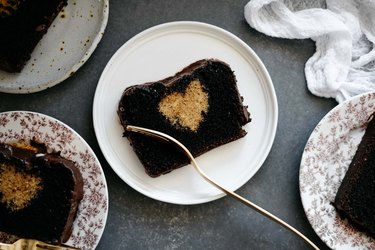
Slice and serve the cake!

Tip

It's easier to see the heart center if you cut thin slices too!

This Hidden Heart Cake is perfect for Valentine\'s Day!

Delicious Pound Cake Recipe

0

Pound cake is an eggy, dense, wonderful treat that can be served plain, with whipped cream, ice cream, or a simple sauce. It's a classic dessert, and with good reason! Once you learn the steps for preparing this basic recipe, you will be making it for years to come.

Delicious Pound Cake Recipe | eHow

Video of the Day

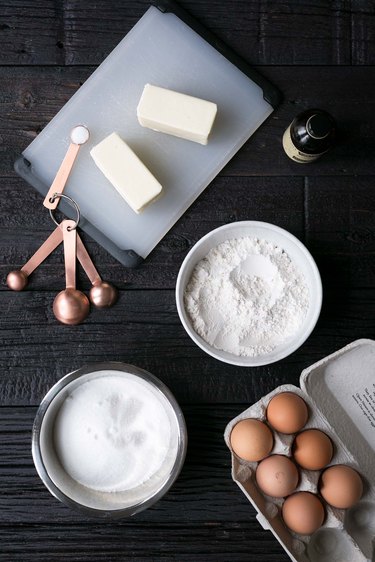
Things You\’ll Need

  • 8 ounces (2 sticks) unsalted butter, room temperature

  • 1 1/3 cups granulated sugar

  • 1 tablespoon pure vanilla extract

  • 3 large eggs, room temperature

  • 3 large egg yolks, room temperature

  • 6 ounces (approximately 1 1/2 cups) cake flour

  • 1/2 teaspoon kosher salt

  • Baking spray or butter for greasing pan

  • 9 x 5 inch loaf pan

  • Parchment paper

  • Stand mixer or electric mixer

Step 1: Gather Your Ingredients

One of the keys to preparing a successful pound cake is to use room temperature ingredients. I like to leave the butter out overnight. Make sure to use large, not extra large eggs, as that could dramatically change the results!

Delicious Pound Cake Recipe | eHow

Step 2: Cream the Butter and Sugar

Preheat the oven to 325 degrees Fahrenheit and place a rack in the center position. Grease a loaf pan with baking spray or butter, and line the bottom with parchment paper.

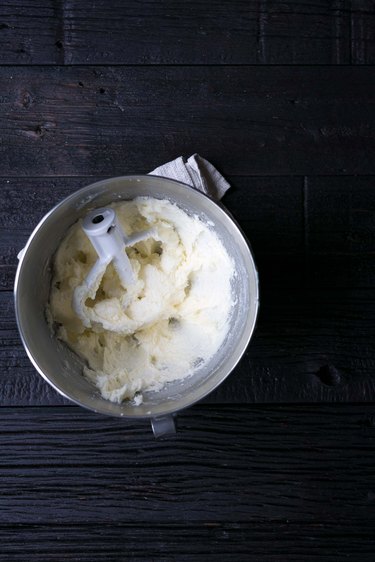
In a stand mixer fitted with the paddle attachment (or using a large bowl and an electric mixer), cream the butter and sugar until pale and very fluffy, 5 to 7 minutes. Scrape down the sides of the bowl, add the vanilla extract, and continue mixing on high speed for an additional 30 seconds.

Delicious Pound Cake Recipe | eHow

Step 3: Add Remaining Ingredients

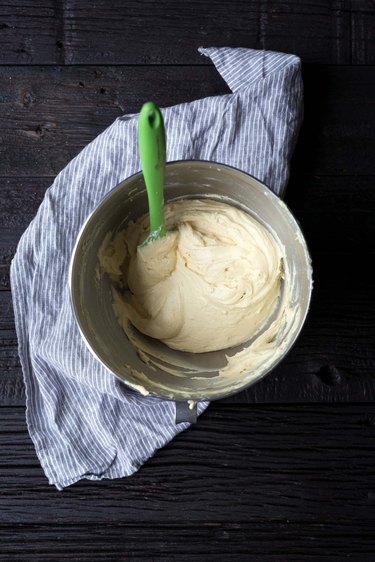
Turn the speed down to low and add the eggs and yolks, one at a time, allowing each to incorporate before adding the next. However, be mindful to not over-mix the eggs, which could cause the pound cake to collapse in the oven. Scrape down the sides of the bowl after every 2 to 3 eggs. Next, add the flour in 3 batches, mixing until just combined.

Delicious Pound Cake Recipe | eHow

Step 4: Transfer Batter to Prepared Loaf Pan

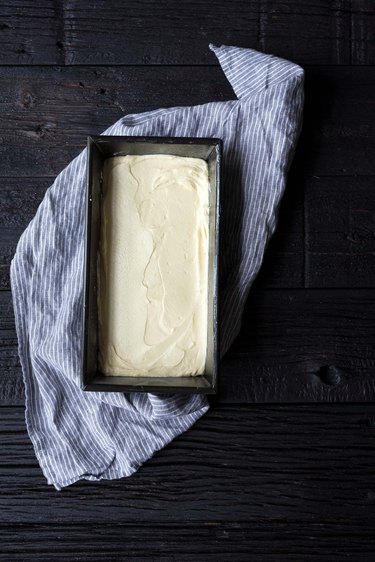
Pour the batter into the prepared loaf pan, using a spatula to even out the top.

Delicious Pound Cake Recipe | eHow

Step 5: Bake

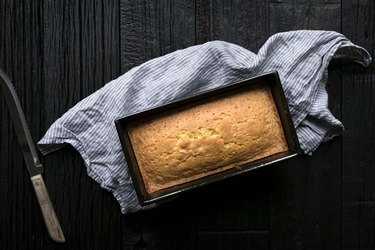
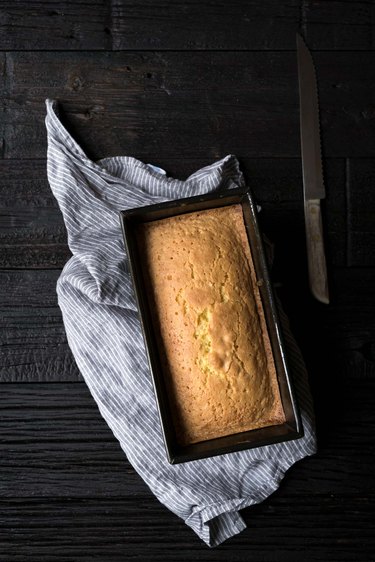
Bake for 70 to 75 minutes, or until a toothpick comes clean from the center. Remove from the oven and allow to cool for 5 minutes, then gently transfer to a cooling rack.

Delicious Pound Cake Recipe | eHow

Delicious Meatloaf Sauce Recipe

0

The sauce that goes on top of meatloaf is half the intrigue of the dish. While a meatloaf makes for a hearty, filling meal, it can sometimes be lacking in flavor and is always improved by a delicious meatloaf sauce. Using four basic ingredients – ketchup, Worcestershire sauce, Dijon mustard, and honey – you can make a mouth-watering sauce that requires only 2 minutes of preparation. Plus, this recipe can easily be adapted to fit your own palate with ample room for substitutions. (It's perfect on top of this homemade meatloaf recipe!)

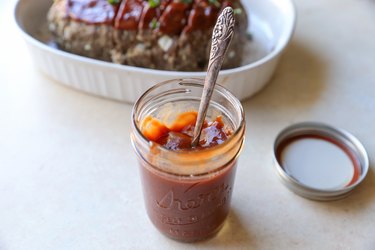
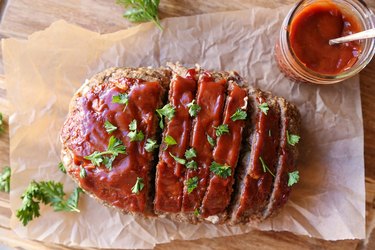
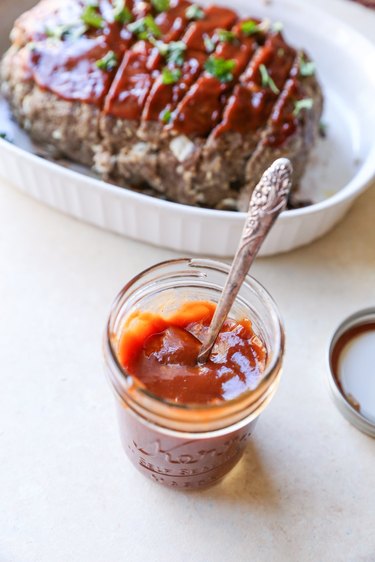
Jar of meatloaf sauce with meatloaf in the background 4-Ingredient Meatloaf Sauce Image Credit: Julia Mueller

Video of the Day

Things You\’ll Need

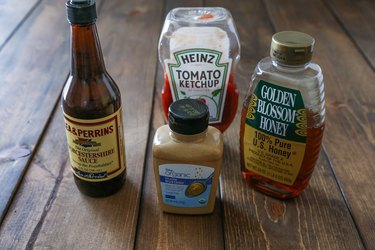
  • 3/4 cup ketchup

  • 2 tablespoons Worcestershire sauce

  • 2 tablespoons Dijon mustard

  • 2 tablespoons honey

Meatloaf sauce ingredients How to make meatloaf sauce with just 4 ingredients Image Credit: Julia Mueller

Tip

  • You can replace the honey with any jam or preserves – try apricot or fig preserves for a delicious, unique flavor!
  • Replace the Worcestershire sauce with soy sauce to add some Asian flair
  • Use any type of mustard you'd like – stone ground and whole grain mustard works great!
  • To make this recipe sugar-free and paleo-friendly, use a homemade or store-bought paleo ketchup

Step 1: Gather Your Ingredients

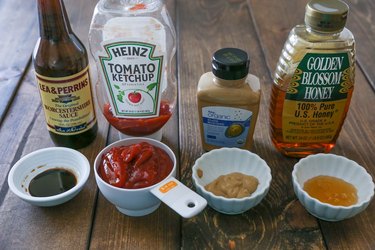
Measure out the ingredients for the meatloaf sauce.

Meatloaf sauce ingredients measured out Measure your ingredients Image Credit: Julia Mueller

Step 2: Combine the Ingredients

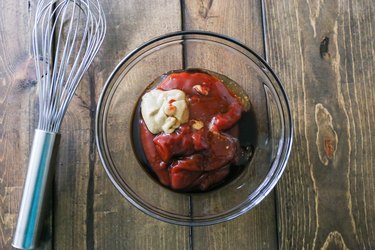
Add all of the ingredients for the sauce to a mixing bowl.

sauce ingredients in a bowl Add everything to a bowl Image Credit: Julia Mueller

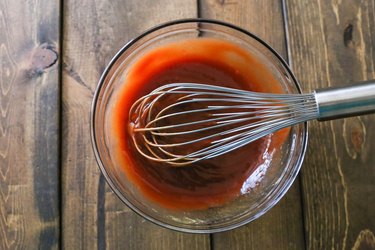
Whisk until well-combined. Taste the sauce for flavor. If desired, add more Worcestershire, mustard, and/or honey to taste.

Bowl of meatloaf sauce

Step 3: Serve on Meatloaf!

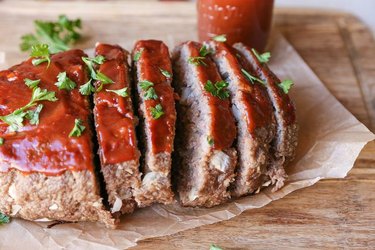
Prior to baking your meatloaf in the oven, spread about 2 to 3 tablespoons on top. Once the meatloaf is out of the oven, smear more sauce on top, and/or serve the meatloaf with sauce on the side.

Meatloaf with sauce on top Put sauce to use! Image Credit: Julia Mueller Meatloaf sauce with meatloaf in the background serve sauce on the side for added flavor Image Credit: Julia Mueller

Try It With This Homemade Meatloaf Recipe

You'll love it!

Recipe for Homemade Meatloaf

How Long Will Lemon Juice Keep?

Bottled Lemon Juice

...

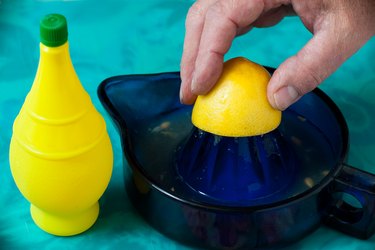
Bottled lemon juice offers a longer shelf life than fresh squeezed lemon juice. This is due to preservatives such as sodium bisulfate and sodium benzoate being added to commercially sold bottled lemon juice. On average, bottled lemon juices have a shelf life (or best-used-by date) of up to a few months clearly labeled on the caps or packaging label. Refrigeration is required after opening bottled lemon juice–it can store at room temperature prior to being opened because of the preservatives–and can still be used up to the "used-by" date. Although the "use-by" date is for quality assurance more so than an official expiration of the lemon juice, it should be used before the date labeled to optimize the quality and flavor of the product.

Video of the Day

Fresh Lemon Juice

...

Fresh lemon juice is much more vulnerable than commercially bottled lemon juice because it lacks the preservatives. To maximize the nutritional value of vitamin C in lemon juice, it should be squeezed and used immediately. Even one night in the refrigerator in a tightly sealed container will cause the vitamin C nutrients to decompose. The flavor of fresh squeezed lemon juice will be fine stored in the refrigerator for 2 to 4 days after squeezed.

Bottled Versus Fresh

...

The citric acid of lemon juice is where it gets its zestful flavor. Vitamin C is an important nutritional ingredient in lemons. However, once squeezed, the vitamin C begins to break down quickly. Because of this, bottled lemon juice does not contain as much of the natural vitamin C unless a manufactured and added to the formula. Although bottled lemon juice lacks the nutritional value of fresh squeezed lemon juice, it contains an average 4 percent citric acid. Fresh lemons vary between 2.5 and 4.5 percent, depending on the time of year and the quality of the lemon.

Freezer Storage

...

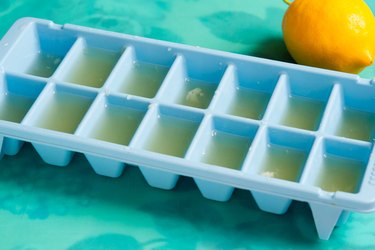
Both bottled and fresh squeezed lemon juice can be stored in the freezer. Many chefs will measure specific amounts of fresh squeezed lemon juice for recipes and freeze the amounts in ice cube trays. When they need to use the lemon juice, they simply thaw it out and add it to the recipe. The nutritional value of the fresh squeezed lemon juice will still be compromised, but not the flavor. Rarely is bottled lemon juice frozen, due to its longer shelf life, but it could be frozen to add a few more months to its shelf life if close to the "used-by" date. Fresh or bottled lemon juice can be stored in the freezer for up to four months.

10 Life-Changing Hacks for Cooking Rice Perfectly

0

Rice is one of the world's greatest staple crops, and billions of people eat it (and rely on it) every day. Surprisingly, despite its great popularity, cooks who didn't grow up in rice-eating cultures often struggle to cook it well. Don't worry – you don't need to invest hundreds of dollars in a microprocessor-controlled rice cooker or reconcile yourself to heat-and-eat pouches in order to have good rice. This list of simple hacks and solid basic techniques will make you a rice-cooking master in no time.
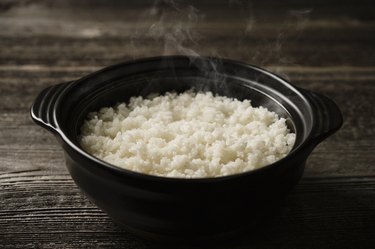
Steamed rice served in earthen pot

Video of the Day

1. Don't Treat Them All the Same

Even a relatively small supermarket will carry a dozen or more kinds of rice, and there are hundreds available from specialty markets or online vendors. The first thing you need to know about cooking rice is that they all cook differently, so no one set of instructions covers them all. Whole-grain brown rice needs more time, plump Spanish bomba or Italian arborio absorb more liquid and "glutinous" rice is supposed to stick together, while delicate Indian basmati decidedly is not. Your best bet? Start with one or two kinds you've liked in restaurants, and once you've mastered those, you'll be ready to try new ones.
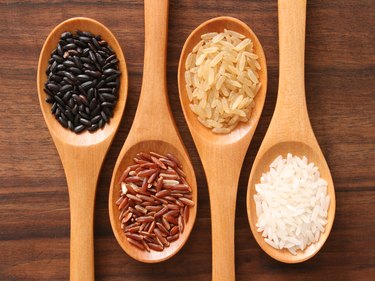
Different types of rice in spoons There are many kinds of rice, and they cook differently. Image Credit: FotografiaBasica/E+/GettyImages

2. Rinse Your Rice

The instructions on the package might not say to rinse your rice before you cook it, but it's one of the single biggest things you can do to help it come out right. Those grains of rice spend a long time rubbing against each other as they're packaged and shipped around the world, and the resulting friction means they're coated with fine rice powder. If you just add water and cook it, that starchy powder basically turns to glue and sticks the rice together. Instead, rinse the rice in a bowl until the water runs clear or put it in a mesh strainer and rinse it well under cold running water. Your rice (and fellow diners) will thank you.
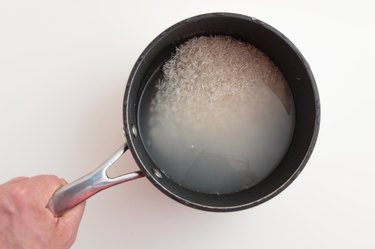
Basmati rice and water in cooking pan That cloudy-looking water is filled with sticky starch. Image Credit: annick vanderschelden photography/Moment/GettyImages

3. Use the Right Amount of Water

The standard instructions in many cookbooks and on the back of some brands of rice is to use 2 cups of water for every cup of rice. That's not always (or even usually) correct. Whole-grain brown rice often needs a bit more, and long-grain white rice is firmer and fluffier with less (the USA Rice Federation has a good chart). Also, that ratio only applies when you're making 1 cup. For larger batches, you need less water per cup of rice. There's no right answer, as some people like their rice a little softer, and some like it more al dente, so use more or less to suit your taste. Oh, and if you rinse your rice, reduce the water by a couple of tablespoons to compensate.
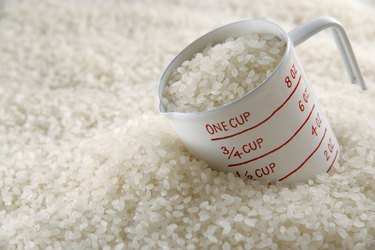
Uncooked rice and measuring cup The usual ratio of 2 cups of water to 1 cup of rice isn\’t always correct. Image Credit: MIXA/MIXA/GettyImages

4. Use Something Other Than Water

Usually, rice is a supporting player in a dish – a "blank canvas" that takes a back seat to the other ingredients. That's fine, but it doesn't have to be that way. You can up the ante by replacing some or all of the cooking water with other liquids, from stock or broth to vegetable or fruit juices. Just remember that some add-ins, like coconut milk or dairy products, are prone to sticking and scorching. Use low heat and a heavy-bottomed pot with those. You can also add flavor by dropping spices into your pot and then picking them out before serving the rice.
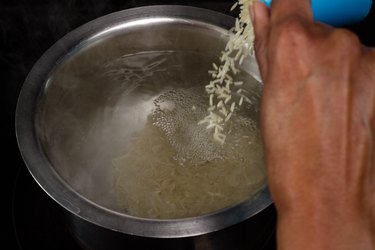
Pouring rice into hot water Plain water makes plain rice. To add flavor, use a flavored liquid instead. Image Credit: Saurav Pandey Photography/Moment/GettyImages

5. "Toast" the Rice in Oil

Before you add water (or another cooking liquid) to your rice, there's an optional step you can take to improve both the flavor and texture. Add a little bit of oil to the pot first and use it to "toast" the rice over moderate heat before you proceed. You don't want to brown the rice at all, just heat it until it starts to smell nutty and fragrant. Toasting rice this way is a traditional first step in making risotto, and it heightens the grain's flavor. The heat also helps your rice to hold its shape and texture better once it's cooked.
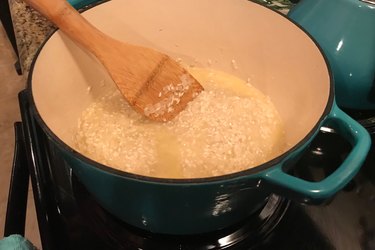
Making homemade risotto Stirring the rice in hot oil at the beginning of its cooking time improves flavor and texture. Image Credit: Jeff R Clow/Moment/GettyImages

6. Don't Rush It

A common mistake with rice is to crank the heat so it comes to a boil more quickly. It's better to keep the temperature moderate while your pot comes to a boil. Your rice is less likely to clump and stick, and in turn, you're less likely to find a layer of scorched-on rice at the bottom once it's done. You might even lose enough moisture in the form of steam to leave your rice undercooked at the end. Instead, bring it slowly to a boil, cover it with a lid and then turn the heat to a very low simmer. Your rice will come out better, and you won't have to hover anxiously over the pot to keep it from boiling over.

Metal pot boiling on stove Too much heat can lead to bad (and burnt!) rice. Image Credit: Prassanee Insrichan / EyeEm/EyeEm/GettyImages

7. Use a Kitchen Towel. Really.

One of the reasons it's hard to get just the right amount of water to cook your rice is that some of it escapes in the form of steam. Exactly how much varies depending on your pot and lid, and with some lids, a lot of water will condense and drip back into your rice instead. You can use a kitchen towel to limit this and help keep your rice from getting mushy. Once the water sinks below the top of the rice, lift the lid, drape a kitchen towel over the pot and then replace the lid. Gather the ends of the towel with an elastic or a piece of twine (you don't want them to burn) and leave the towel in place until the rice is done. It will absorb the excess and keep it from dripping back down.

Stack of linens An ordinary kitchen towel can surprisingly help improve your rice. Image Credit: Jennifer Causey/Moment/GettyImages

8. Let It Rest

One widespread (but misguided) instruction is to fluff rice with a fork once the rice has cooked. Don't do that – at least not when the rice is fresh-cooked. At that point, its starches are still very soft, and the rice won't hold its shape. Even if it is perfectly cooked, it will still mush a bit. Instead, leave it covered and let it rest for 10 to 15 minutes. The grains of rice will cool slightly and begin to firm, and it also provides time for moisture to migrate from the wetter rice at the bottom to the drier rice at the top. When you do lift the lid and apply the fork, your rice will fluff like it's supposed to.
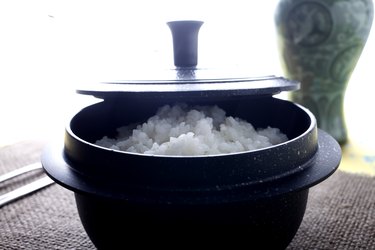
Korean rice in hot pot Let your rice rest for 10 to 15 minutes after cooking. Image Credit: RUNSTUDIO/Photodisc/GettyImages

9. Keep It Simple With the "Pasta Method"

What if all the usual tips and tricks don't work for you? What if you don't have a pot with a lid that fits properly or a stove that will maintain a gentle simmer? If that's you, you might want to follow the "pasta method" instead. It's exactly what it sounds like: Instead of fiddling with ratios of water to rice and a gentle simmer, just fill a big pot with water, bring it to a boil and cook your rice as if it was macaroni. Taste it periodically until it's done the way you want, drain it thoroughly and let it stand for 10 to 15 minutes uncovered for the steam to evaporate. There's no fuss and no muss (though you'll lose a few vitamins along the way).
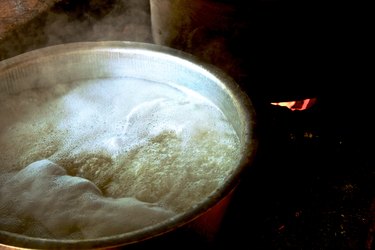
Boiling water with rice in large pot Cooking rice like pasta is a simple, effective "cheat." Image Credit: Roberto Bombardieri©Photographer/Moment/GettyImages

10. Finesse It With the Persian Method

If you've mastered basic rice and you're looking to up your game to "best rice ever" levels, the Persian method combines a few of these hacks for a really superior outcome. Start by rinsing the rice (basmati is your best choice) and then letting it soak for a few hours in the cold water. Bring the water to a boil as you would for pasta, cook until the rice is al dente and then drain it. Melt a bit of butter in the bottom of the pan. Iranians love a crusty, golden layer of rice at the bottom of the pot, so they'll mix yogurt or egg yolks into part of the rice and press that into the butter (this part is optional). Now, mound the rice back into the pot in a heap, place a towel under the lid and cook at medium-low for another 10 minutes to finish steaming the rice. It will be great!

Persian rice tahdig Iranian cuisine is loaded with sophisticated rice dishes and has a sophisticated cooking method to match. Image Credit: Martin Steinthaler/Moment/GettyImages