Home Blog Page 105

Easy Chocolate Strawberry Cupcakes

0

The moist dark chocolate cake and fresh strawberry buttercream in this cupcake recipe is such a winning combination, you'll want to eat a hundred of these. Plus, how pretty is the naturally dyed pink frosting? Bake a batch for a baby shower, Valentine's Day or a regular old Monday.

Chocolate cupcakes with strawberry frosting

Video of the Day

Make the Cupcakes

Things You\’ll Need

  • 1 cup sugar

  • 1 cup flour

  • ⅓ cup cocoa powder

  • ¾ teaspoon baking powder

  • ¾ teaspoon baking soda

  • ¾ teaspoon salt

  • 1 teaspoon instant espresso powder

  • 2 eggs

  • ½ cup milk

  • ¼ cup melted butter

  • 1 teaspoon vanilla

  • ½ cup boiling water

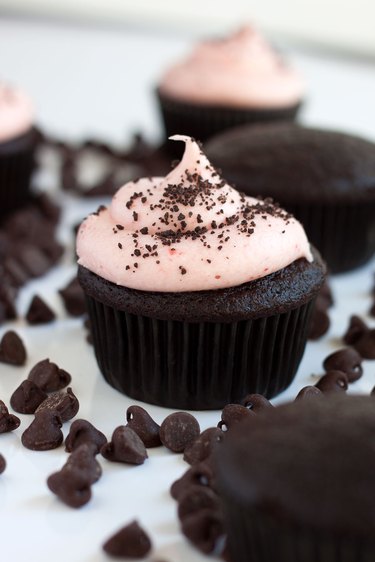
Close up of chocolate cupcake with strawberry frosting

Step 1

Preheat oven to 350 degrees Fahrenhiet.

Step 2

Line a cupcake tin with baking cups.

Step 3

Combine sugar, flour, cocoa powder, baking powder, baking soda, salt and espresso powder in a large bowl.

Step 4

Beat in eggs one at a time. Add melted butter, milk and vanilla and stir until batter is smooth. Fold in boiling water. The batter will be thin.

Step 5

Fill cupcake tins ¾ full. Bake 17 to 22 minutes or until inserted toothpick comes out clean. Let cool completely before frosting.

Frost the Cupcakes

Things You\’ll Need

  • 1 cup butter

  • 3 cups powdered sugar

  • Pinch of salt

  • 1 teaspoon vanilla

  • 3 Tablespoons strawberry puree

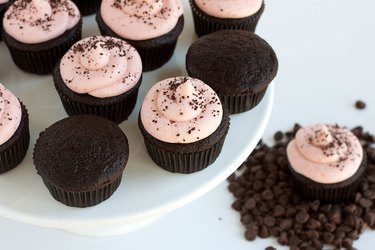
Aerial view of chocolate cupcakes with strawberry frosting

Step 1

While the cupcakes cool, prepare the frosting. In the bowl or a stand mixer, blend cream, butter and sugar.

Step 2

Add vanilla, salt and strawberry puree and mix until smooth. Keep the frosting refrigerated until the cupcakes are cool.

Step 3

Frost cupcakes. Serve and enjoy!

Tip

Garnish your cupcakes with chocolate cookie crumbles, sprinkles, shavings or chips!

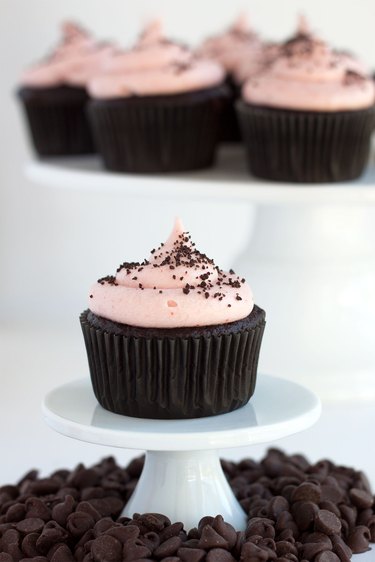
Chocolate cupcake with strawberry frosting on cupcake stand

How to Keep Avocados Fresh (See Our Test Results!)

0

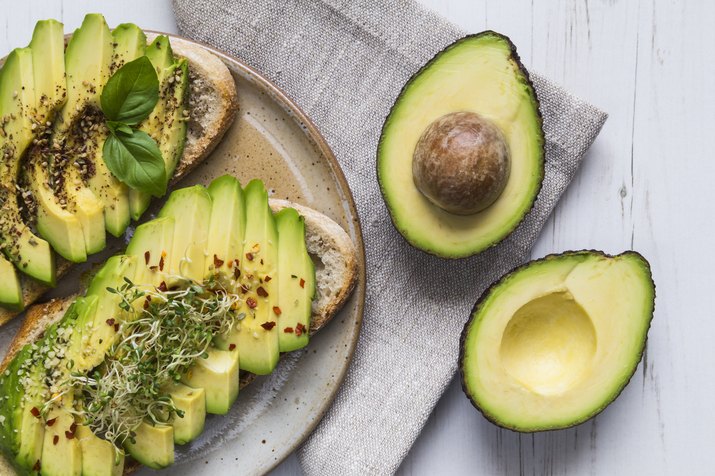
Toast with avocado and cress 1 of 10

Avocado is the bacon of fruits: everything tastes better with avocado. Unfortunately, avocados go bad quickly, taking on a brownish hue with a sometimes-rancid odor and bitter taste. This is because avocados have an enzyme called polyphenol oxidase that, when exposed to air, causes the avocados to oxidize and turn brown. To keep my avocados fresher for longer, I decided to test different methods people use to keep them from oxidizing.

Image Credit: locknloadlabrador/iStock/GettyImages Avocado with Pit after 10 days 2 of 10

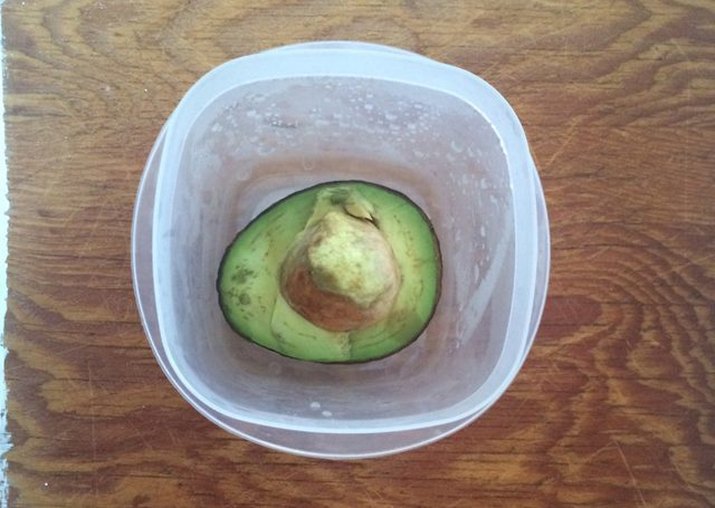
Avocado with Pit

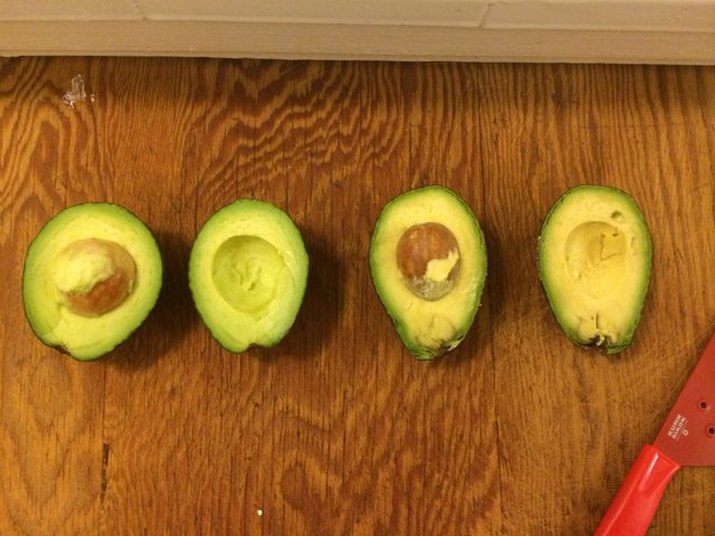
Three days: Little to no change in surface color or texture. One week: Very minimal browning, surface is softer, but otherwise still fresh. Ten days: Slight browning, but still predominately green. Texture was soft, but still edible and delicious!

Image Credit: Elizabeth Biscevic Avocado with chopped onion 3 of 10

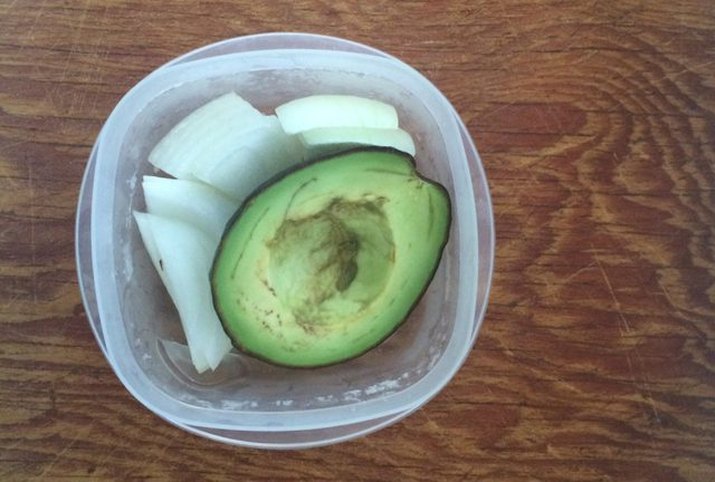
Method 2: Avocado with Onion

Three days: No change in surface color or texture. One week: No change in surface color, texture was slightly softened. Ten days: Very slight browning, but overall look and texture was the same as after three days. It did slightly take on the smell and taste of the onion.

Image Credit: Elizabeth Biscevic Avocado with lemon wedge 4 of 10

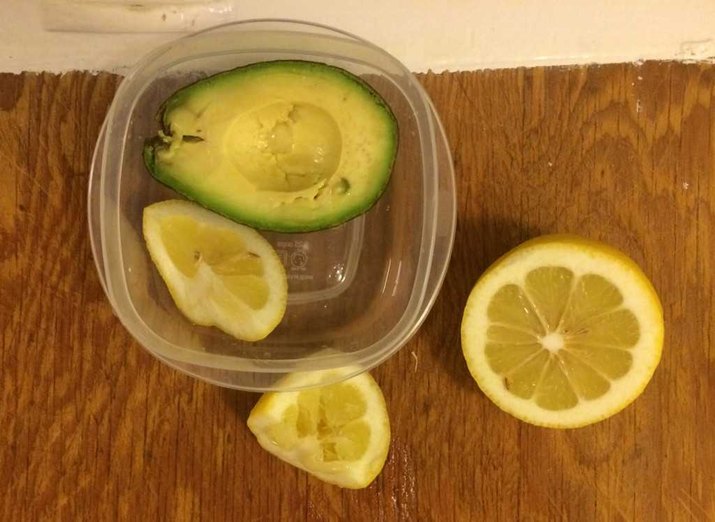
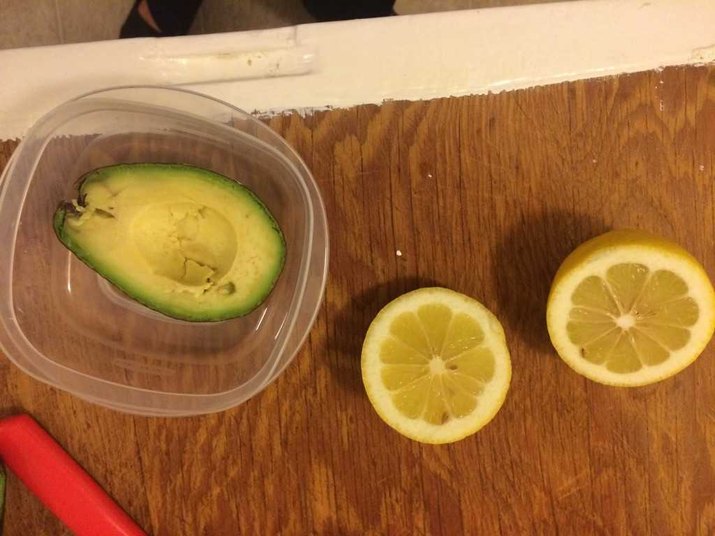
Method 3: Avocado with a Lemon Wedge

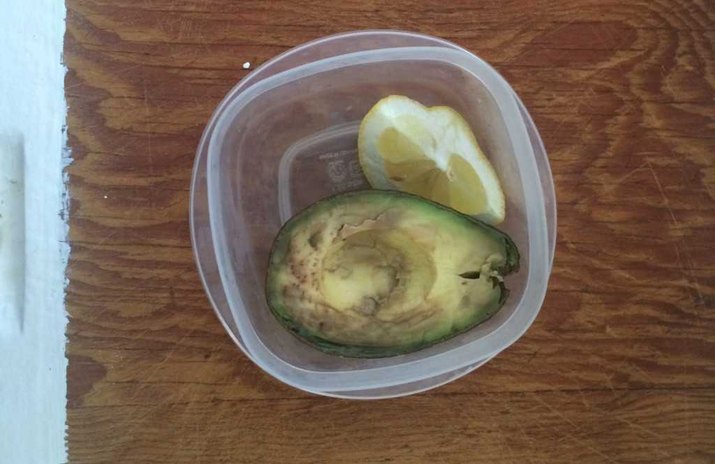
Three days: The avocado looked pretty similar to the first day, with very little change to the surface color and texture. One week: Slight browning and the texture was notably softer than before, but otherwise still okay. Ten days: The surface was bruised with a softer texture. It was questionably edible, but I didn't risk it. You can eat around the dark spots of an avocado, but it was a bit too soft for me to try.

Image Credit: Elizabeth Biscevic Avocado with lemon wedge after 10 days 5 of 10

Avocado with Lemon Wedge After 10 Days

The avocado after 10 days.

Image Credit: Elizabeth Biscevic Avocado with lemon juice 6 of 10

Method 4: Avocado with Lemon Juice

Three days: Slightly brown and bruised across the surface, texture was very soft and kind of slimy from the juice. One week: Surface of the avocado was brown and extremely soft. The avocado surface had changed to a slimy, stringy texture. Though it didn't smell rancid or rotten because of the lemon juice was still overpowering, the color and consistency indicated heavy oxidation and that the avocado was no longer edible. Using lemon juice may be a good short-term storage solution, but not for more than 3 days in the refrigerator. The avocado will still have a slimier texture and take on the flavor of the lemon; but I am personally okay with that, especially if I plan on using it for guacamole.

Image Credit: Elizabeth Biscevic Avocado in foil 7 of 10

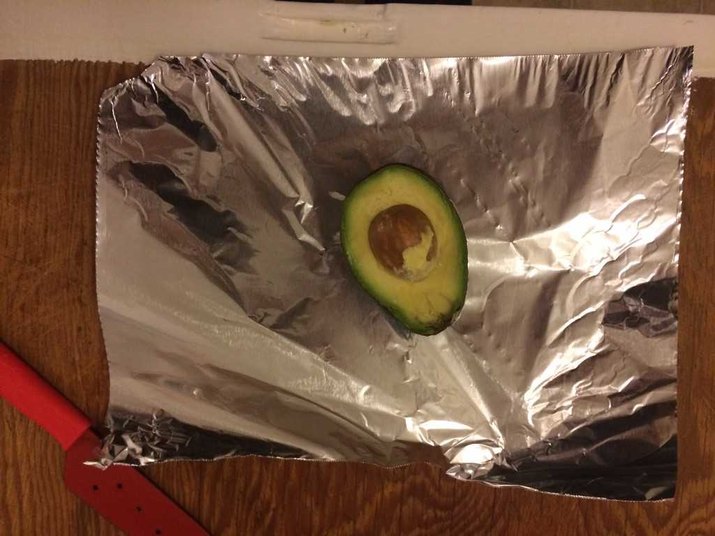
Method 5: Avocado Wrapped Tightly with Foil or Cling Wrap

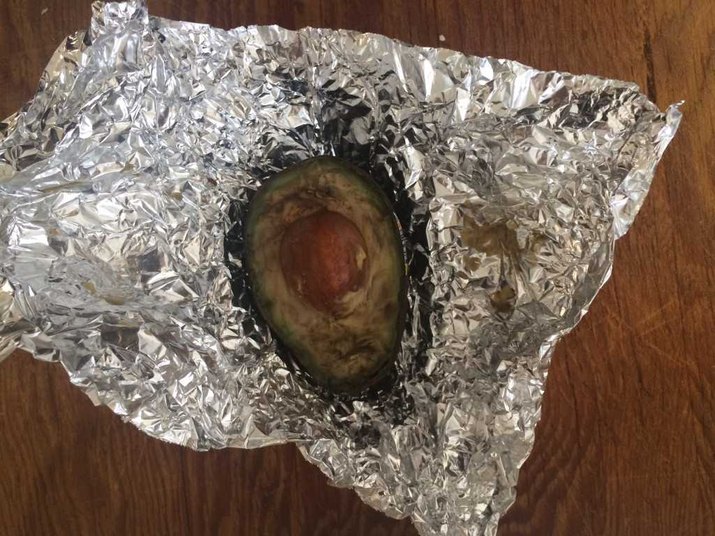
Three days: Some small, light, bruises on the surface, but the avocado looked and felt similar to the first day. One week: The avocado had darker and larger bruises across the surface, and the consistency was significantly softer than the first day. But there was no film, stringy texture or dangerously soft areas. The avocado was still edible, especially if you wanted to add some spices and lime for a batch of guacamole. Ten days: The avocado consistency was very soft, and its bruises were too dark for it to be considered edible. This method works best for short-term storage.

Image Credit: Elizabeth Biscevic Avocado in foil after 10 days 8 of 10

Wrapped Avocado After 10 Days

Avocado wrapped in foil after 10 days.

Image Credit: Elizabeth Biscevic avocado in a container 9 of 10

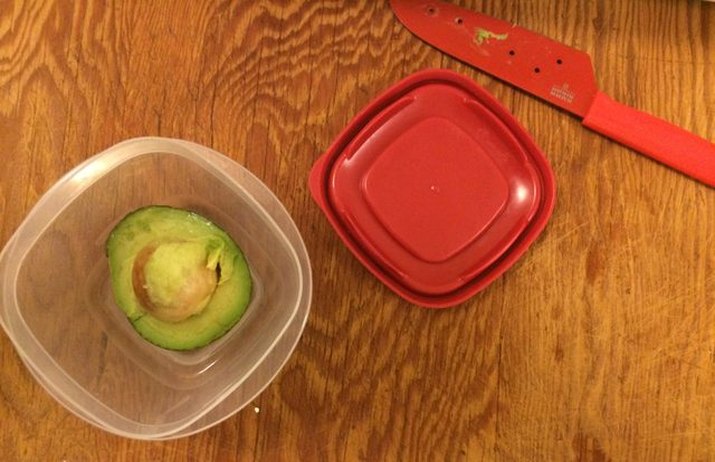
What Worked Best?

If you plan on keeping your avocado for only a few days, every option works as a way to keep your avocado fresh for a day or two. For longer storage, the best method is using cut-up onion, and the runner-up is keeping the pit inside. Depending on your personal preferences, you may opt for the avocado-with-pit method, as the avocado stored with onions will start to take on an onion-like smell and taste.

Image Credit: Elizabeth Biscevic Avocado 10 of 10

Keep in Mind…

Keep in mind, avocados that are slightly brown can technically be eaten; but they are generally bitter compared to a ripe avocado. In this case, I recommend cutting off and discarding the bruised sections or brown layers and using whatever is left for cooking or eating. If the avocado flesh is dark brown or stringy you should avoid eating it entirely. Additionally, avocados should not be left at room temperature for more than a few hours at most. Cut avocados left out overnight should always be thrown away.

Image Credit: Elizabeth Biscevic

How to Freeze Zucchini or Yellow Squash

Things You\’ll Need

  • Cutting board

  • Knife

  • Pot

  • Water

  • Bowl

  • Colander

  • Freezer Bags

... Store zucchini in the freezer for up to a year.

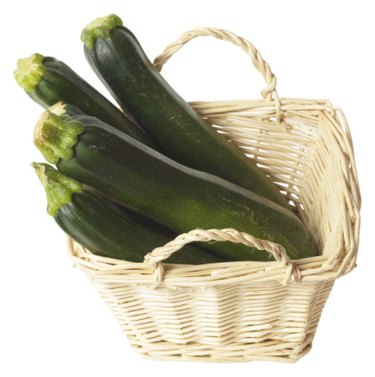
Frozen zucchini slices keep well for as long as a year if frozen and stored properly. Zucchini and yellow squash can be frozen in the same manner. Frozen zucchini slices stored in single-serving containers are convenient for quick recipes. Zucchini and yellow squash can be used in recipes such as casseroles, breads, grilled vegetable packets, cakes, soups and salads. If you prefer to store grated zucchini in the freezer, all you need to do is grate it and place it in a freezer bag.

Video of the Day

Step 1

Fill a pot with water and allow it to boil. As you wait for the water to boil, wash the zucchini with water.

Step 2

Cut the zucchini into ½-inch slices.

Step 3

Drop the zucchini into the boiling water, allowing it to boil for three minutes.

Step 4

Fill a bowl with cold water while you allow the zucchini to boil. Transfer the boiled zucchini to the bowl of cold water to cool.

Step 5

Drain the zucchini in a colander, and place the zucchini slices into freezer-safe bags. Place one serving per bag, or about one zucchini per bag.

The Best Immersion Blenders in 2022

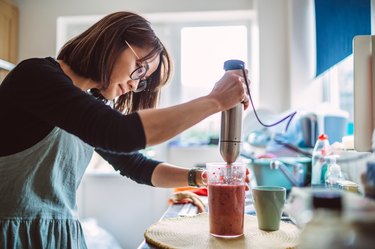
Young pretty woman making fruit smoothie at home

If you'd like to diversify your arsenal of food preparation tools in the kitchen, look no further than the immersion blender. Also known as a hand blender, this handheld tool has a motor inside the handle and blades on the other end. You might think of it as the more compact, sleeker cousin of the hand mixer. Immersion blenders are good for some bigger tasks like blending smoothies and puréeing soups (which you can do directly inside the pot), as well as smaller tasks like making pesto, dips, mayonnaise, dressing and whipped cream.

Video of the Day

While immersion blenders are equipped to blend and purée softer ingredients, just know that they won't work well with hard ingredients like nuts and seeds or with very fibrous foods like celery and carrots. You can still try, but the results won't be very smooth. Instead, for jobs that include tougher ingredients, opt for a food processor or blender. Also keep in mind that in order to function properly, the blades need to be fully submerged, so a hand blender may not work for very small, single-serve quantities. That said, the immersion blender is a useful and convenient tool that can save you time in the kitchen and doesn't take up a lot of drawer space.
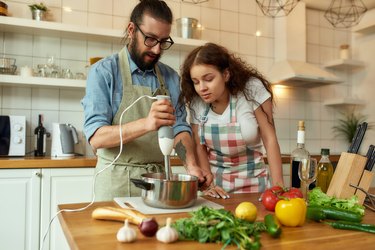
Italian man, chef cook using hand blender while preparing a meal. Young woman, girlfriend in apron looking at the process, helping in the kitchen

Read More:​ The Best Food Processors in 2022

What to Consider When Purchasing an Immersion Blender

Handle and Grip​: Immersion blenders are designed to be held with one hand so your other hand can secure the mixing bowl or pot containing your ingredients. Look for handles that are comfortable to grip and not too large, otherwise your hand may tire after continuous use. Well-designed handles will also feature conveniently-placed on/off or speed buttons that are easy to push with the same hand that's holding them. Non-slip rubber handles are generally the most comfortable to hold.

Blade Guard​: This dome-shaped part of the blender covers the blades to help avoid injuries. Wide blade guards with large vents are more adept at circulating food around than smaller ones, resulting in faster blending. They're also easier to clean because there are fewer nooks and crannies where food particles could get stuck. Another thing to consider is whether or not the blade guard will fit into the cups and containers you plan on using most often. For pots and bowls, this shouldn't be a problem, but if you're blending small servings in similarly small containers, it's something to keep in mind.

Corded Versus Cordless​: Corded immersion blenders offer constant power, but the electric cord may get in the way as you're working. Some cords may also run a little on the short side. Cordless immersion blenders are more convenient and portable, but are sometimes less powerful and may potentially run out of power before you finish your task.

Design​: No immersion blender should be very bulky to begin with, but if possible, look for design features such as detachable parts that are dishwasher-friendly to make storage and cleaning even easier.

Attachments​: Some immersion blenders also include interchangeable attachments for tasks like chopping, processing, frothing or whisking. If you already have these types of kitchen tools, you can save money by opting for a simpler model without any extras. Some hand blenders also come with a tall and narrow blending jar that reduces splashing and makes blending easier.

With these considerations in mind, we've selected the best immersion blenders in 2022.
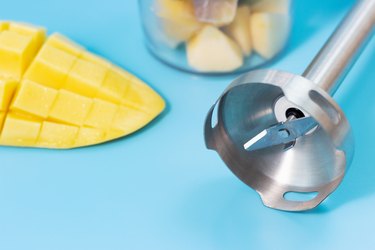
Immersion blender and mango on blue background close-up.

The Best Overall Immersion Blender

Breville Control Grip Immersion Blender

$119.95 at Sur La Table

Our top pick, the Breville Control Grip has many things going for it. It boasts 15 speeds with a trigger option for even more precise mixing and features an 8-inch stainless steel immersion shaft and ample 6-foot power cord for increased freedom of movement. Its ergonomic trigger grip allows for a very comfortable and natural holding position for your hand. Perhaps best of all, the innovative oval-shaped blade guard reduces suction for greater control and more thorough blending, something you don't see with other models. The blade guard's non-scratch edges also protect the surface of your pots, bowls and cups.

In addition to the hand blender, you get handy extras like a whisk attachment, 3-cup chopper bowl with a stainless steel blade, and a large 42-ounce mixing jar with a lid that doubles as an anti-slip mat—all of which are dishwasher-safe. If there's any point against the Breville Control Grip, it may be that it has more speed settings than you really need, which may get confusing. Overall, it's a smartly-designed and versatile immersion blender that produces superior results.
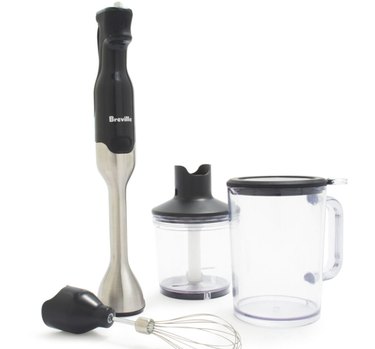
Breville Control Grip Immersion Blender

The Best Cordless Immersion Blender

KitchenAid Cordless Hand Blender

$69.99 at Amazon

For even more freedom of movement and portability, you can't go wrong with the KitchenAid Cordless Hand Blender. Its lithium ion battery (included) charges fully in two hours, which provides enough runtime to mix 25 bowls of soup in a row. A quick 20-minute charge is enough to make a smoothie or tomato soup. The battery indicator light signals when it's time to charge the battery. The handle features a variable speed trigger that's easy to access and even includes a safety switch to prevent accidental trigger movement. The blender's removable 8-inch blending arm features a four-point stainless steel blade design that effectively blends foods like milkshakes, smoothies, hummus, dips and more. The blade guard also comes with a removable pan guard to prevent scratches on your pots and other cookware. Along with the hand blender, you get a 5-cup blending jar with a lid.
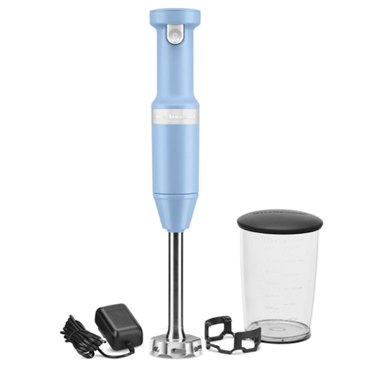
KitchenAid Cordless Hand Blender

The Best Budget-Friendly Immersion Blender

Nutribullet Immersion Blender

$25.99 at Amazon

If you're not looking to throw down lots of money for an immersion blender, the Nutribullet Immersion Blender is a competent and affordable option. It offers two speeds and comes with a whisk attachment in addition to its stainless steel blending arm. The soft-grip handle prevents it from slipping out of your hand. It's not cordless, but its 5 1/5-foot cord provides sufficient mobility so it's easy enough to use. The Nutribullet isn't fancy, but for anyone making their foray into the realm of immersion blenders, it's budget-friendly and practical.
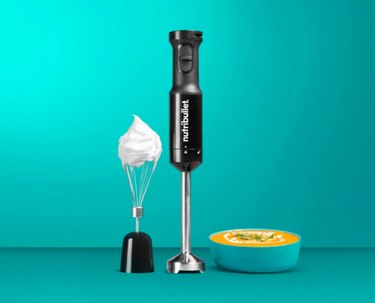
Nutribullet Immersion Blender

The Most Efficient Immersion Blender

Braun MultiQuick 7 Immersion Hand Blender

$84.99 at Bed Bath & Beyond

If you favor speed and versatility, the Braun MultiQuick 7 is sure to please. Unlike some other models that have various speed buttons, the MultiQuick 7 features one speed button that blends more powerfully the harder you press it. Braun's ACTIVEBlade technology enables the blades on the blender arm to move up and down, resulting in 250% more active cutting surface for finer blends. The blade guard's unique bell-shaped design decreases suction by up to 25%, producing faster and more even results than other models. It boasts an impressive 1,000 watts of power. The hand blender comes with a whisk attachment, as well as a 1 1/2-cup mini chopper and a 20-ounce blending cup, all of which are dishwasher-safe.
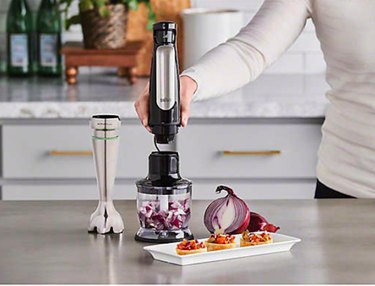
Braun MultiQuick 7 Immersion Hand Blender

The Best Immersion Blender for Soups

Cuisinart Smart Stick Hand Blender

$69.95 at Amazon

For purées and thick soups like bisques, we recommend Cuisinart's Smart Stick Hand Blender. It features a speed dial that makes it easy to control the intensity of your blending without making a mess. You can start slow and increase the speed throughout the process to get a smooth purée that won't splatter. Though the blade guard is on the narrow side and the motor offers just 300 watts of power, the Smart Stick is able to blend soup in around 60 seconds easily and minimizes unwanted suction. While the Smart Stick is ideal for making soups, it's less adept at blending smoothie ingredients like frozen fruit and ice and may leave some chunks remaining.

One plus is the safety feature that requires you to press the "unlock" button in order to activate the trigger on the handle, which isn't found on most models. The hand blender comes with a whisk attachment, a 3-cup mini chopper and a 2-cup mixing cup, all of which are dishwasher-safe. The main hand blender attachment itself, however, is not. It comes with a 5-foot power cord.
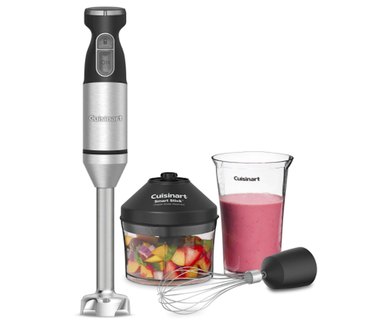
Cuisinart Smart Stick Hand Blender

The Best Immersion Blender for Smoothies

KitchenAid 2-Speed Hand Blender

$44.99 – $69.99 at Amazon

Where the Smart Stick excels in making soups, the KitchenAid 2-Speed Hand Blender succeeds in making smoothies and milkshakes. Despite its quiet operation, it's more than capable of blending ice, frozen fruit and even nuts into a smooth and creamy consistency, perfect for smoothie-making. The blender attachment also wins points for minimizing suction at the bottom of the blending container and for being dishwasher-safe. Another plus is the thick power cord that doesn't bunch up or tangle easily. The rubberized handle is comfortable to grip and its trigger is easy to press. While the hand blender doesn't come with any additional attachments, it does tout a 3-cup mixing jar that makes it easy to store any leftovers. However, the jar isn't lipped for easy pouring. The blender is available in a variety of colors which affect its price.
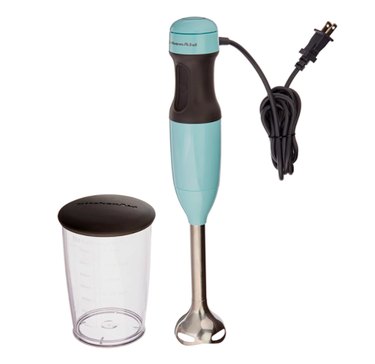

KitchenAid 2-Speed Hand Blender

How to Dehydrate Vegetables

0

...

Drying vegetables is one of the oldest methods of food preservation. Because bacteria, mold and yeast need moisture to grow, dehydrated veggies remain fresh and do not spoil. They also become lighter and take up less room, making storing them more convenient. As long as they are stored in an airtight container in a dry, dark area they will not spoil. Most dehydrated vegetables can be stored for up to a year at 60 degrees Fahrenheit or six months at 80 degrees.

Video of the Day

Preparing Veggies

...

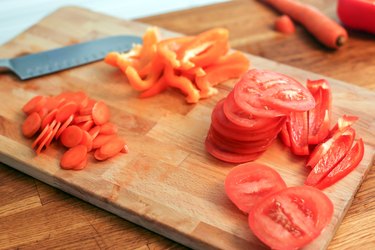
Vegetables need to be blanched before drying to stop the enzyme action responsible for ripening and spoilage. This means you need to clean, wash and chop the veggies into the desired size and then drop them into boiling water to blanch them. The Colorado State University recommends adding 1/4 teaspoon of citric acid (available in the canning aisle) to each quart of boiling water. Citric acid works to prevent microbial action and helps preserve the color of the veggies. The amount of time needed to blanch the vegetables depends on the type of vegetable and the size of the pieces. It can range from 2 to 7 minutes. Blanch your veggies first, regardless of the drying method you choose.

Solar Drying Vegetables

...

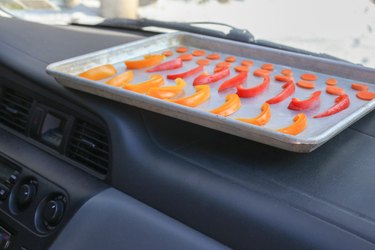
Many fruits can be safely dried by laying them out on trays in the sun, but most vegetables cannot because vegetables do not contain high amounts of acid. But, you can still use the sun to dehydrate vegetables by using solar drying. This typically means creating a solar box that is lined with aluminum foil and covered with a sheet of glass or plastic. The food trays are placed inside the solar dehydrator where they are subjected to higher heat and dehydrate before they can spoil. According to The Kitchn, an online cooking site, you can use your car for the same purpose by layering cut vegetables on a cookie sheet and placing it in the back window or on the dashboard to dry them.

Oven Drying Vegetables

...

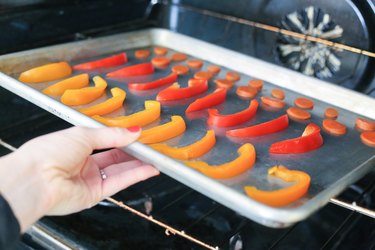
Your oven can be used as a dehydrator for drying your prepared veggies, but it does take monitoring. The temperature must be maintained at 140 degrees Fahrenheit and air must be circulated. If your oven does not have a circulating fan, prop the door open 3 to 6 inches and place a small fan near the door. Place your prepared veggies on trays that are 3 to 4 inches shorter than the depth of the oven and clear the sides of the oven easily. This allows for air to circulate freely around your veggies. Use caution with this method if you have pets or small children in your home.

Using a Food Dehydrator

...

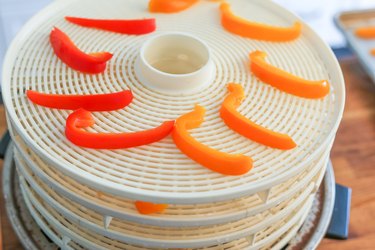
Food dehydrators are designed to provide the ideal environment for drying fruits and veggies. Layer the prepared veggie pieces on the tray of the dehydrator and set the temperature to 140 degrees Fahrenheit. Temperatures above 140 degrees will cook or harden the outside of the veggies before the inside has time to dry. Lower temperatures may allow the food to spoil before drying. Drying time ranges from 6 to 14 hours, depending on the vegetable and the dehydrator.

Can You Use Ganache to Pipe Roses?

24018195 Work quickly with a stiff ganache to pipe roses that set up and hold their shape. Image Credit: Jupiterimages/Photos.com/Getty Images

While ganache is often used as truffle centers or to glaze cakes, it can also be used for piping decorations. Creating ganache roses requires attention to the consistency of the chocolate and your piping technique. Once you decide which style of ganache you are most comfortable working with, a bit of practice is all that's required to produce beautiful roses. After creating them, you can place them on a cake glazed with ganache for a striking chocolate-on-chocolate look.

Video of the Day

The Right Ratio

The ganache used to glaze cakes often requires a one-to-one ratio of chocolate to heavy cream. If you desire to make roses out of leftover ganache from frosting the cake, you need to cool the chocolate to a much stiffer consistency. Either cover the ganache with plastic wrap and place in your refrigerator to chill or cool it down by placing the bowl in an ice bath, making sure not to allow water to touch the chocolate. Alternatively, for stiffer flowers that set up more firmly, make a new batch of ganache with a two-to-one ratio of chocolate to heavy cream. Allow the mixture to cool to room temperature before piping the roses.

Whip It Well

Whipping the ganache before piping results in a consistency similar to an American buttercream. Once your ganache has cooled and resembles pudding, place it in your mixer and whip it with the wire whisk until it reaches the consistency of frosting. Typically, this takes 30 to 60 seconds. If you over-whip the ganache, it separates and hardens, similar to the way whipping cream turns to butter with too much mixing. Once the ganache whips to this stage, there is no saving it, and you have to start a new batch to get the right consistency for roses.

Keep It Cool

Regardless of which style of ganache you use for piping roses, keeping the chocolate the correct temperature is key. If the ganache gets too cold, you will be unable to pipe the petals. But if it gets too warm, the chocolate will not hold its shape. Once your ganache is at the correct consistency, work quickly to avoid significant temperature changes. The warmth from your hands on the piping bag may cause the ganache to begin melting along the edges. If this happens, place the filled piping bag inside the refrigerator for a minute or two to cool it down.

Tips and Tricks

Affix a small square of parchment paper to the top of your rose nail with a bit of ganache, then pipe your rose as you normally would. Slide the rose off of the nail by pulling the parchment across it and place it on a plate or cardboard cake base in the refrigerator. This allows you to make a number of ganache roses and keep them cool until you are ready to position them on your cake. Once you've completed your ganache roses, keep them out of sunlight and heat to avoid altering the color of the chocolate; otherwise, you may end up with splotchy flowers. Allow any extra ganache roses to set up in the refrigerator, then cover them with plastic wrap and store for up to a week.

Cheesy Chicken Stuffed Jalapeños Recipe

0

From movie nights to poolside barbecues, cheesy appetizers are a must. But instead of buying store-bought snacks and calling it a day, try making these chicken and cheese stuffed jalapeños instead. Each pepper is filled with a rich, gooey mixture that's hard to resist. Your friends and family will love this homemade appetizer!

Chicken & cheese stuffed jalapeño peppers

Video of the Day

Things You\’ll Need

  • 12 to 15 large jalapeño peppers

  • 8 ounces cream cheese, softened

  • 3/4 cup shredded cheddar cheese

  • 1 cup shredded cooked chicken

  • 1 teaspoon onion powder

  • 1 teaspoon garlic powder

  • Salt and pepper, to taste

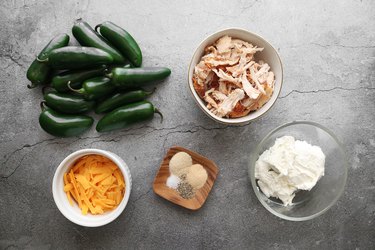
Ingredients for stuffed jalapeños

Tip

You may need more or less peppers, depending on their size. Also, if possible, use jalapeño peppers that are somewhat wide. Wider peppers will be able to hold more filling.

Step 1

Preheat the oven to 400°F. Lightly grease a baking sheet or dish.

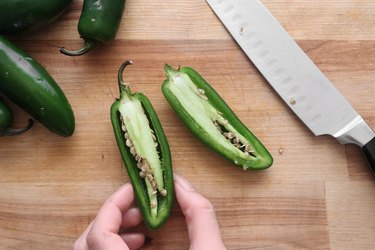
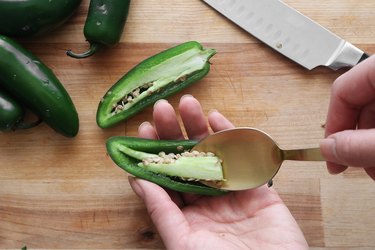
Slice each jalapeño in half, lengthwise.

Cut the jalapeño peppers

Warning

Do not touch your face while handling jalapeños; the juices will sting. Wash your hands first. Also, keep your eyes and face at a safe distance. If you have open cuts on your hands, use caution.

To protect your skin while handling jalapeño peppers, wear rubber gloves.

Step 2

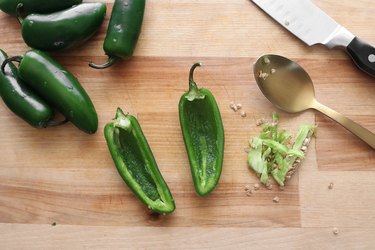
With a spoon, carefully scoop away the seeds and inner white parts (pith).

Remove seeds and pith

The peppers get their heat from the pith, so feel free to remove as little or as much as you'd like.

Remove seeds and pith

Step 3

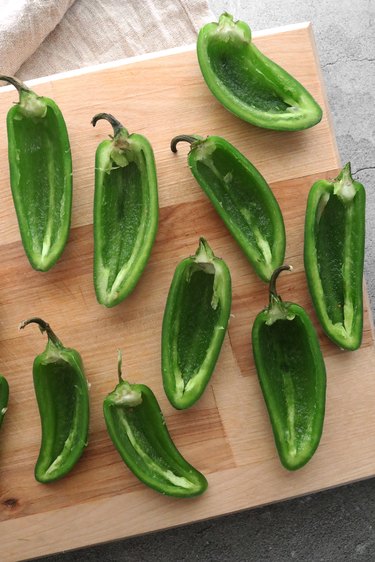
Repeat with the remaining peppers. Set aside.

Remove seeds and pith

Step 4

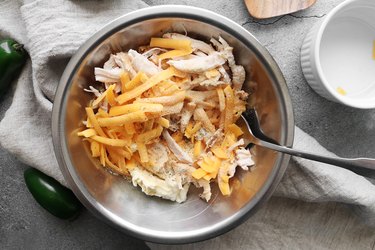
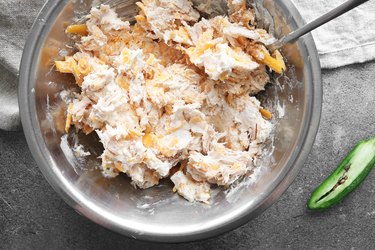
In a bowl, combine the cream cheese, cheddar cheese, chicken and spices.

Combine filling ingredients

Mix well until fully combined.

Stir filling ingredients

Step 5

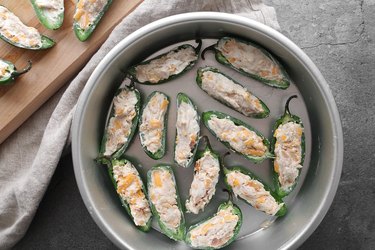
Pack the cream cheese mixture into the jalapeño peppers. Place on the baking sheet or dish.

Fill jalapeño peppers

Step 6

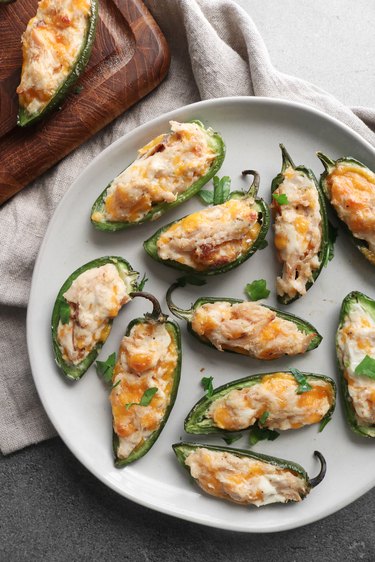
Bake for 20 to 25 minutes or until the cheese is melted and bubbly. Serve warm.

Bake jalapeño peppers

Can You Make Poppadoms Without Frying Them?

0

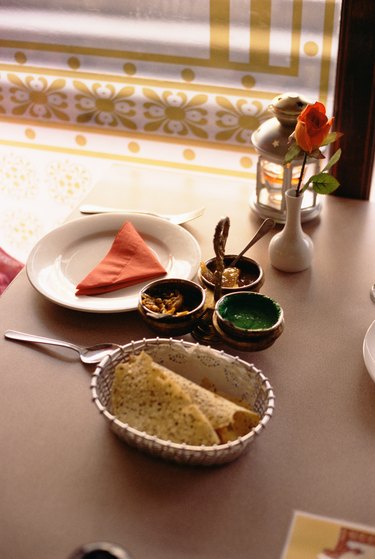
Poppadom and toppings, Bali, Indonesia Poppadoms can be served as an appetizer or along with the main meal. Image Credit: Jupiterimages/Photos.com/Getty Images

Peas, beans and lentils are valued in most of the world's cuisines for their keeping qualities and nutritive value, but India — with its long tradition of vegetarian dishes — is probably the world's champion in legume cookery. In India, legumes are cooked in every way imaginable, from hearty stews to crisp, feather-light poppadoms. Poppadoms, with their resemblance to an exotic potato chip, are usually deep-fried to make them puff. If that's more fat than you'd like, or if you're nervous about frying them at home, use an alternative method.

Video of the Day

Flat, Round, Delicious

Poppadoms are made primarily from lentil flour, though versions using chickpea flour, sago or even potatoes are widely available in India. Making them by hand, the traditional way, requires grinding the lentils to flour, sieving the flour to an even fineness, then mixing the flour to a stiff dough. The dough is rolled into individual rounds or into thin sheets and then cut; they must dry for a day or two in the hot sun. That's a lot of drudgery, and this long process has largely been abandoned in favor of commercial production in large factories. Commercial poppadoms are more consistent and provide reliable, predictable results.

Fried and Not Fried

When the dried discs of lentil flour are dropped into hot fat, the poppadums puff up as dramatically as popcorn in just seconds. Two to three seconds on each side in shallow oil, or four seconds total in a deep fryer, are usually all it takes. However, even brief frying in fat can leave the poppadoms oilier, and higher in calories, than many Western diners prefer. The poppadoms can be prepared through a number of other methods, and often are in their Indian homeland.

Baked or Dry-Fried

One option is to simply lay out the poppadoms in a single layer on a baking sheet, and bake them briefly at 375 or 400 degrees Fahrenheit. The poppadoms won't puff, as they do when fried; instead, they bake to a crisp, toasty texture not unlike a tortilla chip. They'll burn quickly, so watch them closely as they cook. You can also cook them in a heavy, dry skillet, turning them to prevent scorching. In India the equivalent is a tava, a sort of small, round griddle that's also used for roti or chapatti.

Grilling Poppadoms

One of the simplest and most authentic ways to cook poppadoms is over an open flame. You can cook them on your gas or charcoal grill, using tongs to turn them frequently until they're crisp. Alternatively, hold them in the kind of wire basket that's sold for grilling fish or vegetables. If you have a gas stove you can crisp them over the flame, holding them in place with tongs. They can even be heated over an electric stove element, using tongs or a campfire toaster to hold the poppadoms in place.

Zap \’Em

Perhaps the quickest and easiest way to prepare poppadoms, other than frying, is in the microwave. Lay out one or two poppadoms at a time on a paper plate or a piece of paper towel and microwave them for 20 to 40 seconds, depending on your microwave's power. The dried poppadoms are sometimes too dry to heat properly in the microwave, so you might need to moisten a paper towel in either water or oil and wipe the back of each poppadom with it. The poppadoms will cook quickly, and will often puff up almost as enthusiastically as they do when fried.

How to Remove Seeds From Oranges

Things You\’ll Need

  • Knife

  • Sieve

  • Bowl

... Oranges are great, but you need to extract the seeds.

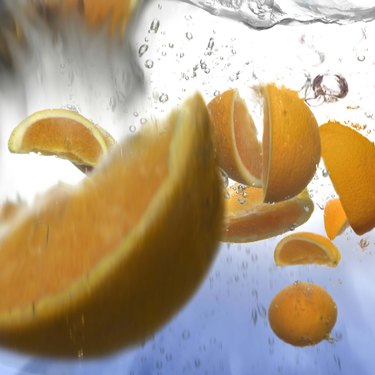
Oranges are a terrific citrus fruit full of vitamin C, and their sweetness means that most kids enjoy them. While there are a few orange varieties that are seedless, the vast majority have seeds. The method for removing the orange seeds depends on whether you are juicing an orange, intend to use a segment as a garnish or simply cut it up to be eaten.

Video of the Day

Garnish or to be Eaten

Step 1

Gently press down on the orange with your hand, and roll the orange around on a table. It makes removing the seeds easier.

Step 2

Slice the orange in half lengthways with a knife. Cut each half orange into four segments, so you have eight in total. You can see the orange seeds in each segment.

Step 3

Carefully insert the sharp, pointed end of the knife where you can see the orange seeds, and pry out each seed into a small bowl. You find they pop out fairly easily, because you loosened the seeds by rolling the orange on the table.

Juicing

Step 1

Roll the orange around on a table, and press down on it slightly. This softens the orange, makes it juice easier and loosens the seeds.

Step 2

Put a sieve that has fine mesh into a bowl. Cut the orange in half.

Step 3

Hold the orange just above the sieve. Squeeze the orange hard several times until the juice stops flowing. The orange juice collects in the bowl, and the seeds are kept in the sieve so you have pure orange juice and no seeds.

Tip

Bend each orange segment outward slightly so it opens up the inside of the segment. This enables you to find any hidden seeds. You can cut the orange into more segments if you want to, so you can extract any remaining seeds.

Warning

While the method described in the first section of this article will get out most seeds, it is possible that a few may remain.

How to Make Patriotic Jello Shots

... Enjoy red, white and blue jello shots for a patriotic holiday. Image Credit: Rachel Joy Horn

Red, white and blue jello shots are the perfect adult-friendly treat for a Fourth of July barbecue or any other patriotic celebration. The following recipe makes between 45 and 50 jello shots.

Video of the Day

Step 1

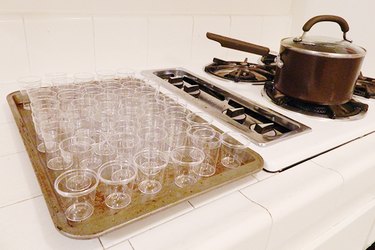
... Set up the plastic shot glasses before you start cooking. Image Credit: Rachel Joy Horn

Set up the plastic shot glasses on the baking sheet. This will make it easier to transfer them in and out of the refrigerator while each layer of jello sets.

Step 2

... Add the red layer. Image Credit: Rachel Joy Horn

Make the red layer of jello. Bring one cup water to a boil. Stir in 3 ounces of raspberry jello until fully dissolved, then add one cup vodka. Stir. Spoon the red mixture into the plastic shot glasses, filling each about a third full. Place the baking sheet of shot glasses in the refrigerator to quickly set the jello.

Step 3

... Add the white layer. Image Credit: Rachel Joy Horn

After the red layer is set (this should take about an hour) prepare the white layer, which is a bit trickier. In the sauce pan, heat 1/2 cup of water to a boil. Add the can of sweetened condensed milk. Add 1/2 cup cold water to a separate bowl, and sprinkle two packages of unflavored gelatin onto the cold water. Let sit for a few minutes, then add a 1/2 cup boiling water to the cold water and gelatin. Stir until the gelatin is dissolved. Add the gelatin/water mix to the sweet condensed milk mix and stir thoroughly. Add 3/4 cup vodka. Stir. Let cool, then spoon the mixture on top of the red layer of jello, filling up another third. Put the baking sheet with the shot glasses back in the refrigerator.

Step 4

... Add the blue layer. Image Credit: Rachel Joy Horn

After the white layer is set, prepare the blue layer. Bring one cup water to a boil. Stir in 3 ounces of blueberry jello until fully dissolved, then add one cup vodka. Stir. Spoon the blue mixture on top of the white layer of jello, filling up the final third. Put the baking sheet with the shot glasses back in the refrigerator.

Step 5

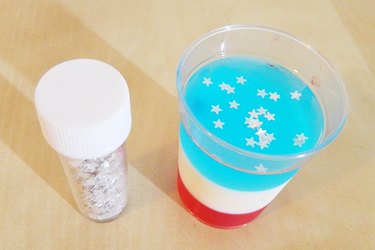
... Sprinkle with edible stars. Image Credit: Rachel Joy Horn

Let the jello shots set for at least one hour, but preferably two or three hours. When they're fully set, you can top them with edible star sprinkles to achieve the American flag effect.

Step 6

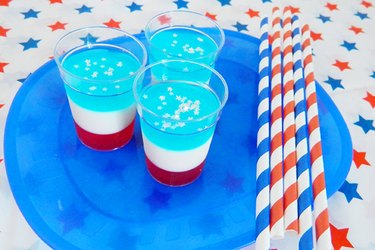
... Serve with colorful straws. Image Credit: Rachel Joy Horn

Serve with colorful straws or flag toothpicks so that your guests can easily remove the jello from the plastic shot glasses. Make sure to enjoy the jello shots responsibly—they are delicious, but they do have alcohol in them and should be consumed in moderation.

Things You\’ll Need

  • Raspberry jello, 3 ounces

  • Blueberry jello, 3 ounces

  • Sweetened condensed milk, one can

  • Water

  • Unflavored gelatin, two packets

  • Flavored vodka (we used pina colada flavor)

  • Decorative edible stars (optional)

  • Plastic shot glasses, 45-50

  • Baking sheet

  • Sauce pan

  • Straws or toothpicks for serving